

Christian Art | King James Audio Bible KJV | Daily Bible Verses For Advent
Luke 5: 17-26 | King James Audio Bible KJV | Daily Bible Verses For Advent
17 And it came to pass on a certain day, as he was teaching, that there were Pharisees and doctors of the law sitting by, which were come out of every town of Galilee, and Judæa, and Jerusalem: and the power of the Lord was present to heal them.
18 ¶ And, behold, men brought in a bed a man which was taken with a palsy: and they sought means to bring him in, and to lay him before him.
19 And when they could not find by what way they might bring him in because of the multitude, they went upon the housetop, and let him down through the tiling with his couch into the midst before Jesus.
20 And when he saw their faith, he said unto him, Man, thy sins are forgiven thee.
21 And the scribes and the Pharisees began to reason, saying, Who is this which speaketh blasphemies? Who can forgive sins, but God alone?
22 But when Jesus perceived their thoughts, he answering said unto them, What reason ye in your hearts?
23 Whether is easier, to say, Thy sins be forgiven thee; or to say, Rise up and walk?
24 But that ye may know that the Son of man hath power upon earth to forgive sins, (he said unto the sick of the palsy,) I say unto thee, Arise, and take up thy couch, and go into thine house.
25 And immediately he rose up before them, and took up that whereon he lay, and departed to his own house, glorifying God.
26 And they were all amazed, and they glorified God, and were filled with fear, saying, We have seen strange things to day.
The paralyzed man would not have been able to come to Jesus without the help of his friends. It is his friends’ faith, and their initiative and bravery, as well as his own that work together to find a way to come to Jesus. Jesus is touched by their faith and their friendship. We may think now as well about the help we give others and the help which we receive from others, in matters of faith and as we confess our sins and seek spiritual healing. Our sins can be like a form of spiritual paralysis, in which condition we may rely a great deal on our friends to bring us back to Jesus.
Jesus has travelled widely through the region of Galilee, healing and teaching great crowds of people. Now in a house, his company includes highly educated Jews, Pharisees and doctors of the law. We may imagine a high order of intellectual religious discussion taking place alongside the miracles of healing.
Christ now does not initially say that he is healing the paralyzed man of his paralysis. Rather he tells him that his sins are forgiven him. This must have seemed very mysterious, and perhaps hardly what the paralyzed man was looking for, and now Luke’s narrative develops our understanding of Christ’s healing, which is both spiritual and physical, as of his divinity.
The scribes’ and the Pharisees’ response suggests a scene of great tension. This is an outrage; it is blasphemy – and it is hard not to think that Jesus was deliberately provoking them, so that he could make his point more forcefully, to drive those people present to think again and so to understand his purpose in being here. So then, at this moment of heightened tension, Christ brings to mind the Jewish belief in physical handicap as a punishment for sin, and, by way of answer and challenge to the scribes and Pharisees, he heals and absolves in one utterance. Amazement seizes the people and they are afraid, not knowing how to understand what they have seen and heard. Christ has made a momentous claim, and his miracles prove it.
Concluding Prayer
Let our prayer rise like incense before you, Lord,
so that we may come
in humility and purity of heart
to celebrate the great mystery of your Son’s incarnation.
We make our prayer through our Lord.




Saint Augustine opens his sermon on pastors with a reflection that sets out the responsibilities of Christian leadership within the Church. He begins by affirming that Christ alone is the true Shepherd, the source of salvation and hope. The faithful are his flock, and all pastors serve only in relation to Christ’s own care [ … ]
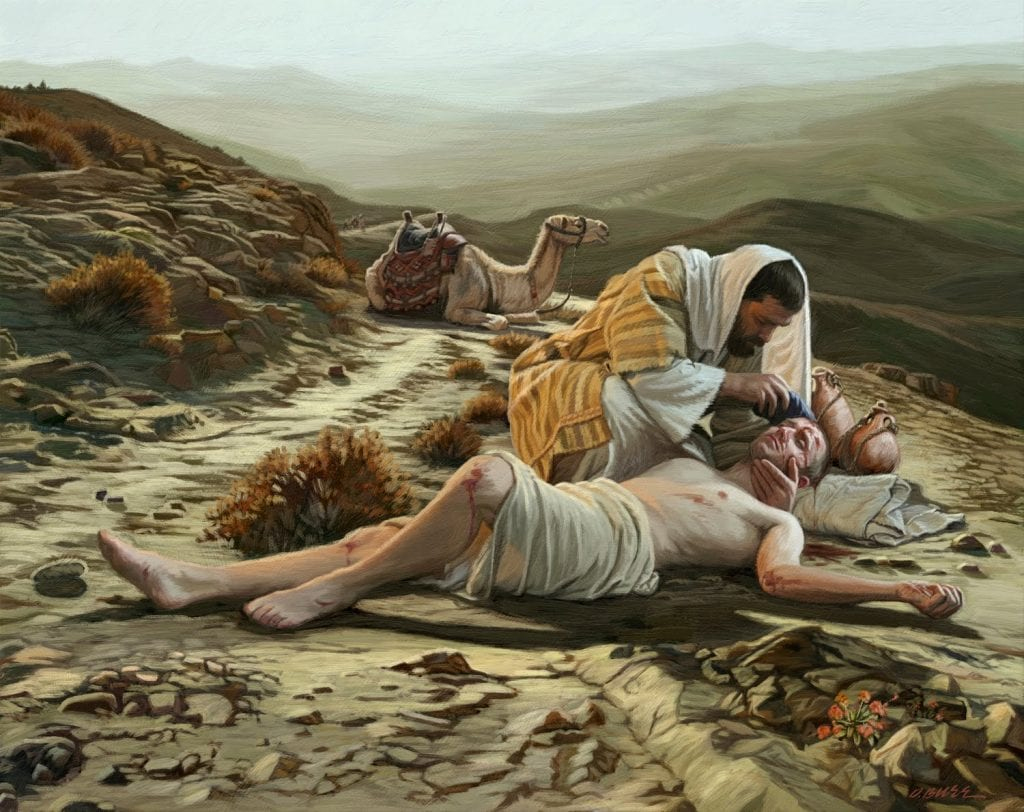
Jesus works so hard to overcome division and to bring people together. Jesus always in his teaching is breaking down the petty divisions that keep people apart: he drives a sword through ready made social definitions and prejudice, saying instead that we are all human beings, called to be together and to be with God, as God’s chosen [ … ]
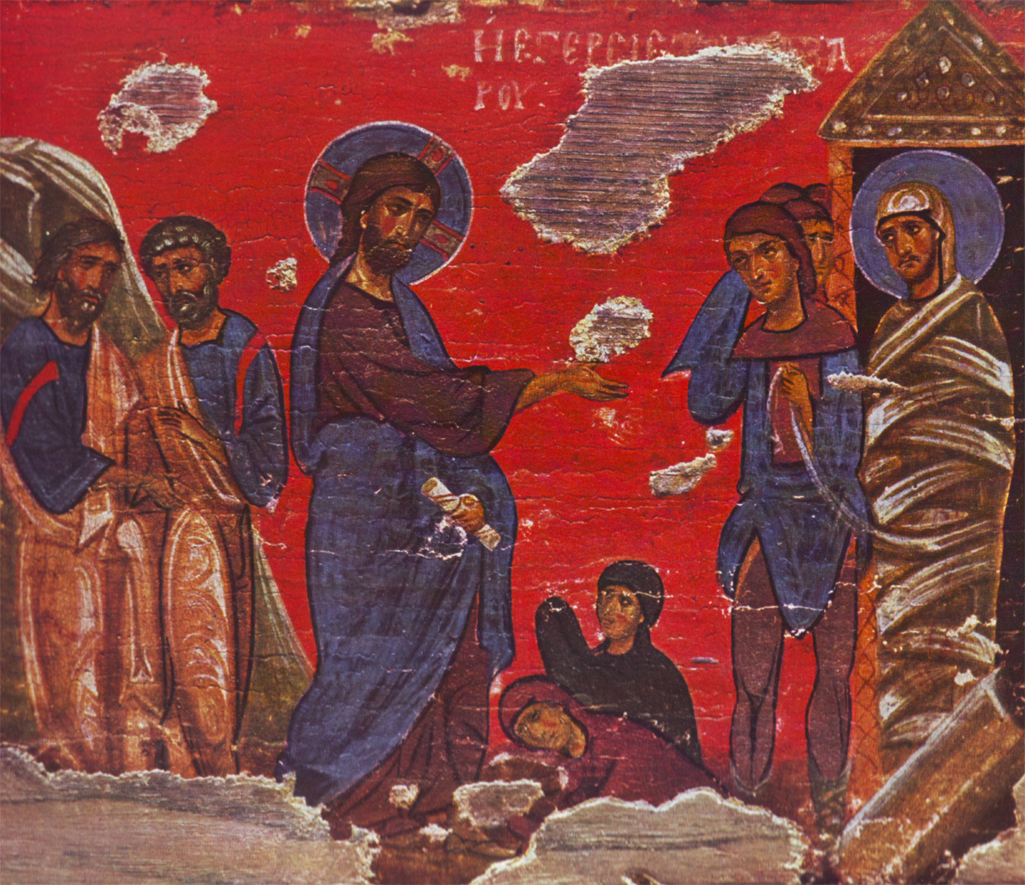
‘Death,’ says His Grace, ‘throws it all apart. For we are not as we should be. Faith requires our adjustment to God’s truth. God’s triumph in a very real sense requires in us the loss of our everything. Which, as with Mary at the other end of Jesus’s life, is God’s truth.’ The Gospel reading is of John 11: 1-45, which is a long passage, and His Grace’s homiletic theme commences in textual wilderness. Our brokenness – in this place – a family home. Our faith, our doubt, our death… The irruption – death, doubt, fear – within our precious scenes and our most intimate places. Our domesticity. His Grace speaks from the chair, as is a bishop’s prerogative, and says: ‘So much is obscure in the Gospels. We’re always reaching through them. We’re never there. Really, we never are. Our knowledge, our understanding, of the Gospels is never complete, and with each reading comes a new revelation. There are always new riches there. Just as there are between all of us, between myself and you. The Gospels are living texts. This is a part of the conversation we have with our own Christianity. It is a part of who we are in our relationship with Jesus. We are in this sense always on the brink. ‘So yes, there is plenty that doesn’t seem to make sense. As one of the order of bishops, we would be lying if we said that weren’t the case. They are not easy texts to encounter, if by that word we may signify something more than a superficial glancing off against, but rather a profound search for the word of God. The Gospels are written by people who had their own ideas, and often didn’t know what had really happened. Luke is quite explicit on this point. His is an investigation, from the explicitly claimed point of view of an historian, rather than that of a first-hand witness, who attempts, so he says, to set out an orderly account, out of the chaos, the sheer muddle, that has been handed down to him. It is possible to imagine Luke researching and composing his account after many years, when there has arisen a desire to know what exactly happened, and this implies a certain call to faith and certain demands of historicity, to historical exactitude. So in these different ways, the people of the first years of Christian faith are in the dark. There is also a decisive need to define the life of Jesus. And people didn’t get Jesus. The whole meaning of Christianity is only now beginning to take root throughout the composition. So much needs to be evangelized. The light shines almost in tentative fashion like that first star, which drew the wise men from the east to our Lord’s cradle. ‘John’s is widely held to be a very late Gospel. There are others who say that John’s Gospel might have been the first to acquire its true shape, because it most fully expresses Jesus, as we know him to be, as members of the Catholic Church. We don’t really know when any of this is being written, but we get a feel in John of a Gospel refined over many years, through a community. So there’s a lot going on there that I’d like you to think about. ‘What I would like to suggest to you is that, while within the Gospels we are often confronted with clues, guesswork, stories that have been handed down through so many people, and so in this sense we might find ourselves to be in the wilderness, this is the very desolate space itself to which we must give ourselves in order to experience Christ’s full redemption in our lives. I suggest it is for God’s glory that we do so. ‘As we become aware of ourselves, in this seminary, we find ourselves in a very secure, comfortable setting, and there are signs of Easter everywhere. Within the very fabric of these buildings, our Lord is risen; our Lord lives. But now this is our Lenten journey, where death enters, where death breaks us. We are to ride into Jerusalem in triumph, and then we are to be utterly broken, all hope gone, our hope extinguished. And really, I suggest to you, it is only by inhabiting this thought, as if we don’t know Easter is there, that our new life can follow, just when we have given up all hope, when every promise that Jesus made to us seems to have been cancelled. ‘And here now we have the story of Lazarus. I should like to suggest to you that we have a very powerful call now. In our very comfortable space, our domesticity, with all this comfort, where so very little might seem to happen each day, so it might seem to you, there is a disturbance within all of this comfort, and that is a disturbance within ourselves, and that is our call to Jesus. I think it is correct to say that our most comfortable places break in the light of Jesus from the inside, in order that we may take the necessary steps to be with Jesus. ‘Faith is not comfortable. I think that we can all receive the message of the rolling away of the rock from the tomb of Lazarus to say something of vital importance to ourselves concerning our openness to God’s love. The rock we roll away can come in all sorts of guises, but we know when we are blocked, and I firmly believe if we are truthful then we know where those blocks might be. ‘Next Sunday, which will be Palm Sunday, we process as it were to Jerusalem, to begin our Holy Week. Now as I speak to you we are on the brink. Even now, I suggest it might be very good for all of us to lay aside what we think we know, to fall apart a little, and so […]
