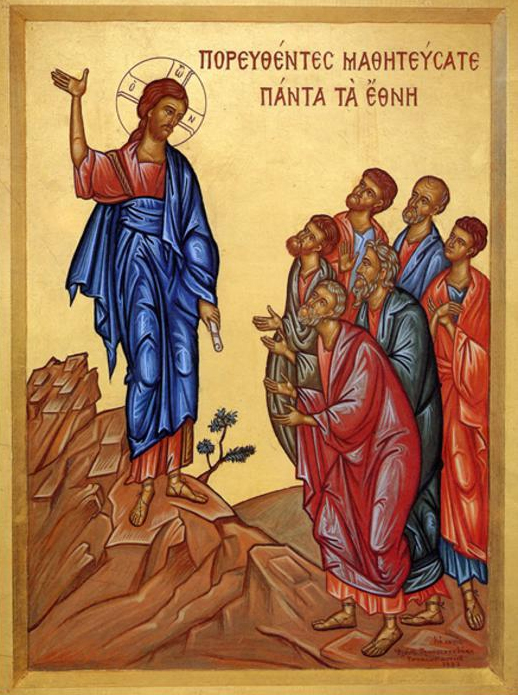
Christian Art | King James Audio Bible KJV | Daily Bible Verses Advent
Matthew 7: 21, 24-27 | Daily Bible Verses, Advent, Thursday Week 1 | King James Audio Bible KJV
21 ¶ Not every one that saith unto me, Lord, Lord, shall enter into the kingdom of heaven; but he that doeth the will of my Father which is in heaven.
24 ¶ Therefore whosoever heareth these sayings of mine, and doeth them, I will liken him unto a wise man, which built his house upon a rock:
25 And the rain descended, and the floods came, and the winds blew, and beat upon that house; and it fell not: for it was founded upon a rock.
26 And every one that heareth these sayings of mine, and doeth them not, shall be likened unto a foolish man, which built his house upon the sand:
27 And the rain descended, and the floods came, and the winds blew, and beat upon that house; and it fell: and great was the fall of it.
Matthew’s account of the Sermon on the Mount has been related through the whole of chapters five, six and seven of his Gospel. Jesus concludes his teachings with today’s Bible verses, which carry both a promise and a warning.
Commencing with the Beatitudes, Jesus’ Sermon on the Mount has presented to the people, toward the start of his ministry, a most beautiful, transformative understanding of God’s call to us to be with Him and to live according to the real, inner truth of the law. Hypocritical and hollow observances have been cast aside; the tedious accretions of years since the law was first given to Moses are overhauled as we are called by Jesus to be true to the innermost spirit of God’s call to us. We are called, then, to a spirit of love, humility, forgiveness, trust, peace, selflessness – to all that we now understand as the Christian virtues.
As he concludes his Sermon, Jesus is careful to tell us that ours is to be a true and real conversion, not of hearing and speaking alone, but of our whole way of being and doing. Jesus tells us that it is not enough to hear and to talk about the way which he preaches to us; we are, far more than this, to do the will of the Father.
This now, if we listen again to Jesus’ teaching through the Sermon on the Mount and through the Gospels as a whole, becomes a real challenge. A mere glance through these chapters of the Bible and we find verses which we may be tempted to think cannot be literally intended for us now to follow. Forgive all debts. Don’t worry about what you might eat tomorrow. Turn the other cheek to be assaulted there as well. Love your enemy. And later, sell everything you have and give it to the poor and follow me.
If we hear these sayings, and if we say them to others, but we don’t do what is asked of us, are we building our house upon sand or upon the rock?
We are called, then, in these Bible verses, to an account of faith. We have heard Jesus’ teachings. Are they just words, or are we – in whatever ways we can – applying Jesus’ words to the ways we are living life. Is our Christianity lip-service or is it live and real?
22 But be ye doers of the word, and not hearers only, deceiving your own selves.
23 For if any be a hearer of the word, and not a doer, he is like unto a man beholding his natural face in a glass:
24 For he beholdeth himself, and goeth his way, and straightway forgetteth what manner of man he was.
25 But whoso looketh into the perfect law of liberty, and continueth therein, he being not a forgetful hearer, but a doer of the work, this man shall be blessed in his deed.
26 If any man among you seem to be religious, and bridleth not his tongue, but deceiveth his own heart, this man’s religion is vain.
27 Pure religion and undefiled before God and the Father is this, To visit the fatherless and widows in their affliction, and to keep himself unspotted from the world. (James 1: 22-27)
Concluding Prayer | Love Revealed By Jesus Christ
Show forth your power, Lord, and come.
Come in your great strength and help us.
Be merciful and forgiving,
and hasten the salvation which only our sins delay.
Through Christ our Lord.



This poem centres on themes of spiritual nourishment and intimate connection between the divine and the individual soul. The poem begins by contrasting superficial wealth, symbolized by ‘rich furniture’ and ‘a wedge of gold’, with the poet’s experience of spiritual fulfilment. Here, material objects hold no power to convey the divine presence. Instead, the poet emphasizes a more personal and humble approach: sustenance provided by Christ in the Eucharist, which enters into the poet ‘by the way of nourishment and strength’. This nourishment implies a steady, almost unseen influence that fills the body and soul, offering rest and inner strength while combating the forces of sin [ … ]

This early Christian text, traditionally attributed to Barnabas and likely written by an anonymous Christian teacher in the late first or early second century, reflects on key themes of Christian belief and practice. The author addresses a group of Christians with a greeting of peace, expressing gratitude for the presence of God’s Spirit among them. He states that their spiritual condition has encouraged him to reflect on his own faith and prompted him to share what he has received in teaching [ … ]
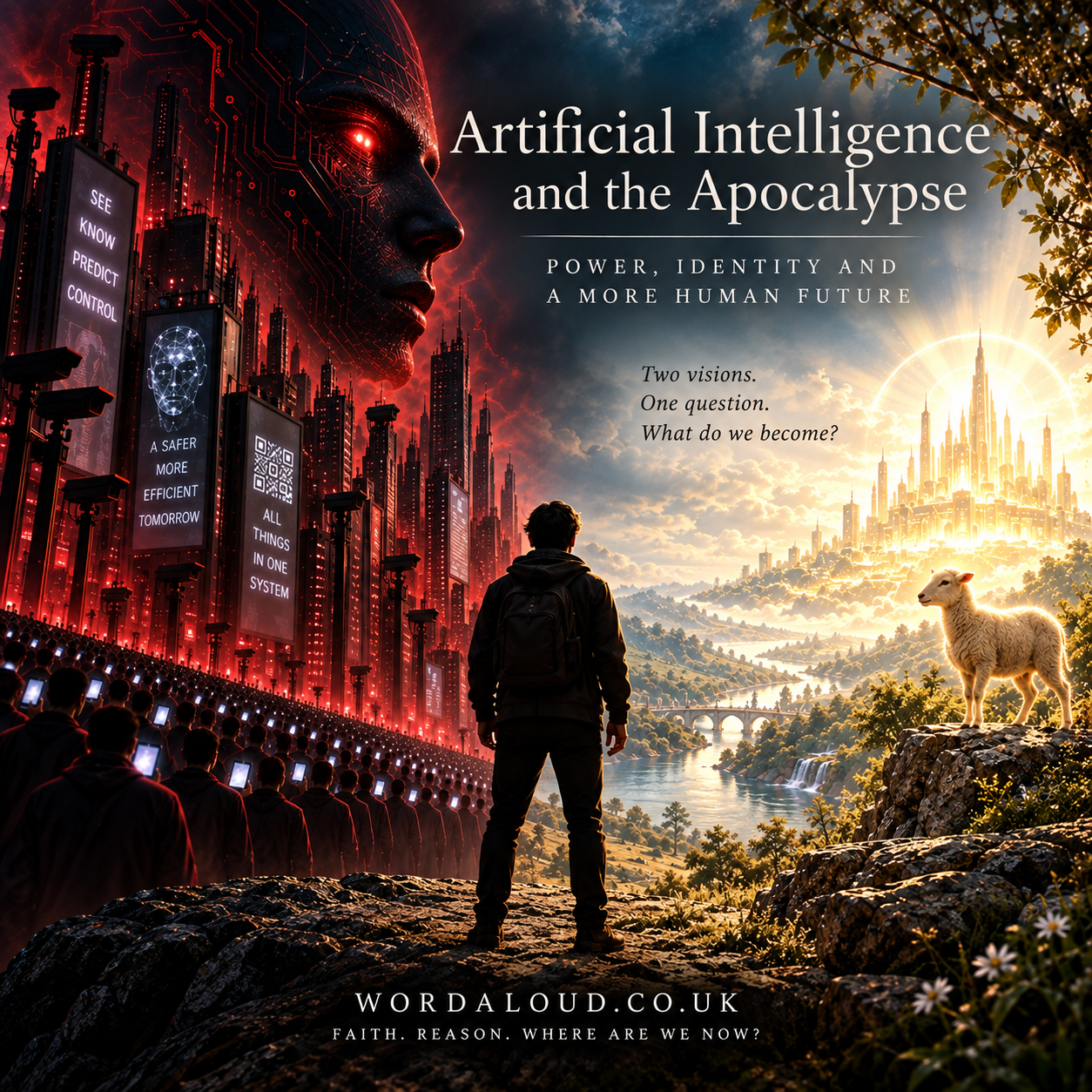
Artificial Intelligence (AI) has raised questions concerning the nature and value of the human person, and the future of humanity, to the forefront of public discussion. Possible consequences of the growth and development of AI include unemployment, the replacement of human labour by artificial systems, a concentration of wealth and economic power away from local communities and towards large technology corporations, civilizational collapse and, at the extreme, catastrophic extinction of humanity. Such possibilities have themselves produced an apocalyptic language around AI. In the light of the book The Revelation Of Saint John The Divine, or Apocalypse, we may interrogate modern technology and AI through the lens of Christian faith, and through an awakened sense of our humanity. In doing so, we follow here and draw upon the encyclical of Pope Leo XIV, Magnifica Humanitas. We consider what the real capabilities and dangers of AI amount to, what Revelation actually says about power and deception, and how a Christian account of the end of history judges both technological fear and technological hope [ … ]