
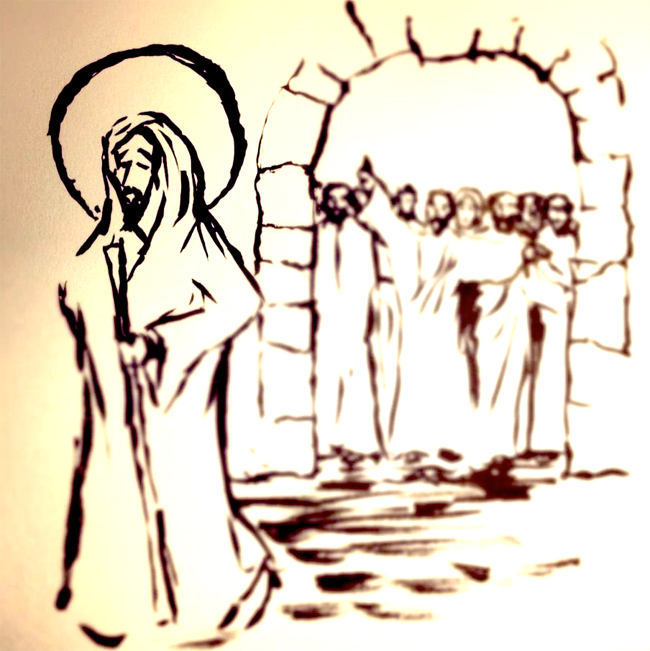
Christian Art | Jesus In Nazareth
Mark 6: 1-6 – Week 4 Ordinary Time, Wednesday (Audio Bible KJV, Spoken Word)
1 AND he went out from thence, and came into his own country; and his disciples follow him.
2 And when the sabbath day was come, he began to teach in the synagogue: and many hearing him were astonished, saying, From whence hath this man these things? and what wisdom is this which is given unto him, that even such mighty works are wrought by his hands?
3 Is not this the carpenter, the son of Mary, the brother of James, and Joses, and of Juda, and Simon? and are not his sisters here with us? And they were offended at him.
4 But Jesus said unto them, A prophet is not without honour, but in his own country, and among his own kin, and in his own house.
5 And he could there do no mighty work, save that he laid his hands upon a few sick folk, and healed them.
6 And he marvelled because of their unbelief. And he went round about the villages, teaching.
It is all too common in our time to see a beautiful gift or initiative rejected by those who are set against anything new and good. Imagine a child standing up in the midst of a small community filled with hatred, whatever form that hatred might take, and that child saying that there is an alternative to hatred, called love. That child could possibly be killed for so doing.
There are other people we may encounter each day, who hold themselves to be good, who are good, who stand by their values, and who are decent folk, rightfully esteemed by their community, and yet there is an even greater good, which exceeds and overflows the good of those worldly-decent people, which breaks apart all barriers in the act of giving and giving all, far, far more than civic society could possibly require of them, or even wish them to give.
We know this greater good as the ultimate love which is of Jesus. This is the good which demands each day that we overhaul our ready-made understandings, our preconceptions, that we empty ourselves and give ourselves once more to Jesus, the source of all that is truly good. It is through this giving of ourselves to Jesus, to God, that we transcend our limitations and become all that we were created to be, which we could not be through our own efforts. This is how we ask to be saints.
In today’s Bible reading, Jesus is, of course, not a little child; he is a full grown and very capable and challenging man. At the same time, Jesus is alive and asks us to be alive also with the questions, the challenges, the knowledge, that children have as they learn about their world and confront the evils they find with all innocence, baffling and disconcerting adults with their innate awareness of how Jesus, God, means us to live.
Jesus, in these Gospel verses, is rejected. Jesus marvels at the people’s unbelief. We may remember that we have been there, as children, observing the injustice of the world and feeling baffled.
Our Christian faith retains this clarity, love and vision. We know just how these qualities are rejected by those who cannot bear them shining in on their lives; even by those who are not so monstrous, who are held to be decent people, though after the way of the world, perhaps only passively doing wrong, by letting the wrong pass unchallenged, perhaps in part by stopping short of giving everything to God.
2 And Jesus called a little child unto him, and set him in the midst of them,
3 And said, Verily I say unto you, Except ye be converted, and become as little children, ye shall not enter into the kingdom of heaven.
4 Whosoever therefore shall humble himself as this little child, the same is greatest in the kingdom of heaven.
5 And whoso shall receive one such little child in my name receiveth me.
6 But whoso shall offend one of these little ones which believe in me, it were better for him that a millstone were hanged about his neck, and that he were drowned in the depth of the sea. (Matthew 18: 2-6)
Concluding Prayer
Remember your people, Lord, and show them mercy:
as you satisfy the hungry with food from heaven,
enrich our poverty from your abundance.
We make our prayer through our Lord.

Audio Bible KJV | Endnotes
Is Not This The Carpenter?
Mark 6:1-6 tells the story of Jesus returning to his hometown of Nazareth and teaching in the synagogue. The people who knew Jesus, including his family and childhood acquaintances, were astonished at his wisdom and his miracles. However, their amazement quickly turned to offence and disbelief when they realized that Jesus was claiming to be more than just a carpenter’s son.
The passage begins with Jesus arriving in Nazareth with his disciples. On the Sabbath day, Jesus went into the synagogue and began to teach. The people were amazed at his wisdom and his ability to perform miracles, saying: ‘From whence hath this man these things? and what wisdom is this which is given unto him, that even such mighty works are wrought by his hands?’ (Mark 6:2, KJV)
However, their admiration quickly turned to skepticism when they remembered that Jesus was just a carpenter, the son of Mary. They questioned how Jesus could have such knowledge and power, saying: ‘Is not this the carpenter, the son of Mary, the brother of James, and Joses, and of Juda, and Simon? and are not his sisters here with us?’ (Mark 6:3)
Their incredulity at Jesus’ implied claim to be the Son of God prevented them from fully embracing Jesus’ message, and as a result, Jesus was unable to perform many miracles in Nazareth. Jesus marveled at their lack of faith, saying: ‘A prophet is not without honour, but in his own country, and among his own kin, and in his own house.’ (Mark 6:4)
The story of Jesus’ rejection in Nazareth has been the subject of much discussion and interpretation.
One interpretation is that the people of Nazareth were unable to see beyond Jesus’ humble origins. They were so focused on Jesus’ background as a carpenter that they could not accept Jesus as a prophet or a miracle worker. This interpretation is supported by the fact that Jesus himself highlights his lack of honour in his hometown.
Saint Augustine, a Christian theologian of the fourth century, wrote about the importance of looking beyond external appearances and recognizing the divine in all people. In his sermon on the passage, Saint Augustine said: ‘Let us not regard the workman, but the work. Let us not think of the Carpenter’s son, but of the Carpenter. For the Carpenter made the wood, the Carpenter made the man, and the Carpenter made the world.’
Similarly, John Calvin, a Protestant theologian of the sixteenth century, emphasized the importance of faith in accepting Jesus as the Son of God. In his commentary on the passage, John Calvin wrote: ‘The reason why they did not receive Christ was, that they were too strongly attached to the outward condition of his flesh… Let us learn to hold in reverence, and to embrace with both hands, the gifts of God which are offered to us.’
In his 2018 homily on this passage, Pope Francis emphasized the importance of humility and openness in accepting the message of Christ. Pope Francis said: ‘Let us learn to open ourselves up to newness, to the surprises of the Lord. Let us not remain closed, but let us be open, because the Lord surprises us. He is the God of surprises.’
Pope Francis also noted that Jesus’ message of love and mercy is often rejected by those who are too attached to their own pride and self-righteousness. He said: ‘When Jesus comes, He always surprises us. Jesus never ceases to amaze us. But the attitude of those who heard Jesus’ words was different. They were scandalized.’
Pope Francis’ commentary on this passage echoes the themes of humility and openness that have been emphasized by other religious leaders throughout history. By reminding us to remain open to the surprises of the Lord and to resist the temptation to become too attached to our own preconceived ideas, Pope Francis invites us to deepen our faith and to become more receptive to the message of Christ.



The parable teaches us that we must be ready, because we do not know when Christ will come to us, for the final account of our lives. This is a warning, edging our lives with the unpredictable. One positive effect of this parable is that it helps us to remain alert to the present moment. While it is easy to allow our thoughts to drift from where we are here and now, to recall the past, to worry or hope for the future, or to slip into daydreams and fantasy altogether, it is when we bring our attention to this very moment of time that we find sharpness, significance, and vibrancy in our life. We may realise just how extraordinary this great gift of life truly is, and feel empowered to live well and offer ourselves wholly to God. When we are attentive to this moment in time we may walk with Jesus [ … ]
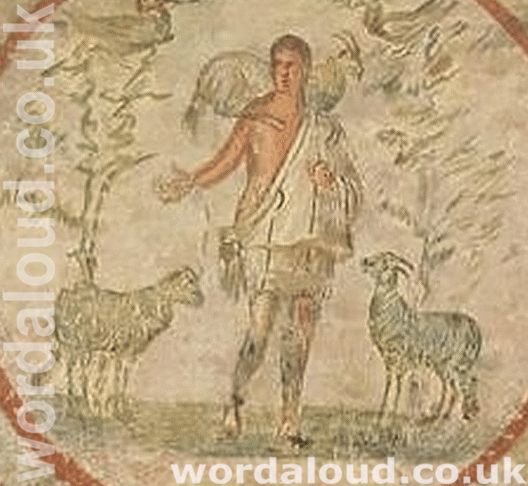
Saint Augustine continues his reflection on Ezekiel 34 and the charge against negligent shepherds. The Lord’s accusation—’You have failed to strengthen the weak’—is interpreted in relation to two categories of believers: the weak and the sick. Augustine distinguishes between the two. The weak are those who sincerely wish to live a good life and even attempt good works, but lack the endurance to withstand trials. Their danger is not wrongdoing but fragility under pressure. The sick, by contrast, are those weighed down by sinful desires that prevent them from doing good at all [ … ]

Psalm 93 declares the authority and lasting nature of God’s rule. The psalmist depicts God as a majestic ruler, emphasizing God’s enduring reign and unchanging authority. A thought is that God’s rule isn’t recent; it has been in place forever, representing a timeless and unwavering sovereignty [ … ]