Luke 1: 57-66 – 23rd December Weekday (Audio Bible, Spoken Word)
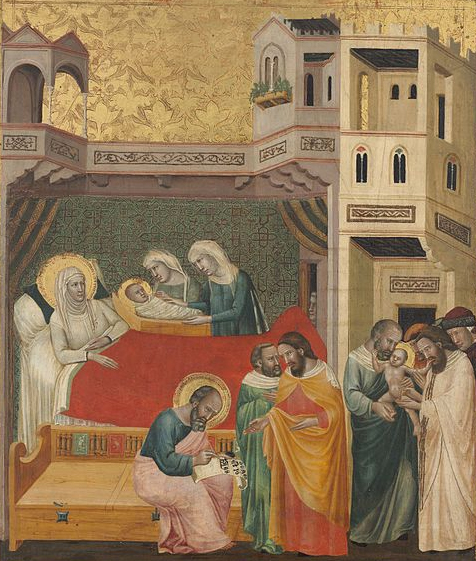
57 Now Elisabeth’s full time came that she should be delivered; and she brought forth a son.
58 And her neighbours and her cousins heard how the Lord had shewed great mercy upon her; and they rejoiced with her.
59 And it came to pass, that on the eighth day they came to circumcise the child; and they called him Zacharias, after the name of his father.
60 And his mother answered and said, Not so; but he shall be called John.
61 And they said unto her, There is none of thy kindred that is called by this name.
62 And they made signs to his father, how he would have him called.
63 And he asked for a writing table, and wrote, saying, His name is John. And they marvelled all.
64 And his mouth was opened immediately, and his tongue loosed, and he spake, and praised God.
65 And fear came on all that dwelt round about them: and all these sayings were noised abroad throughout all the hill country of Judæa.
66 And all they that heard them laid them up in their hearts, saying, What manner of child shall this be! And the hand of the Lord was with him.
John the Baptist is born into a small and close-knit community, in which all Elizabeth’s neighbours and family relations rejoice with her at the gift of new life the Lord has bestowed on her. This is clearly a good and healthy community environment, and this will be important to John’s formation, howbeit the people are, as small communities can often be, quite conservative in their ways, such that when Elizabeth tells them the child will be called John, she causes something of a fuss, because this is an unusual thing to do: ‘There is none of thy kindred called by this name,’ her friends complain to her.
While the angel Gabriel visited Zechariah and told him what the child’s name was to be, it is now for Elizabeth to announce the name on the occasion of John’s circumcision, which would also be the time of naming. Are we to assume Zechariah has communicated in writing what Gabriel said to him, or has Elizabeth an insight of her own? Either way, there is a certain authority to the woman here, which might seem suggestive when we compare Elizabeth with Mary. It is for Zechariah to assent and to accept in faith the miracle embodied in the woman. And it is with this assent in faith that his tongue is loosed to prophesy.
Jesus’ Jewish Heritage – Clarify This Truth
According to the New Testament, Jesus was born in Bethlehem, which was a city located in Judea, a region in the southern part of Israel. The New Testament also states that Jesus was a descendant of Abraham, a prominent figure in the Old Testament who is considered to be the father of the Jewish people.
As a Christian, it is important to recognize and appreciate the Jewish roots of Jesus and the fact that he was a Jew. This is because Christianity developed out of Judaism, and Jesus, as well as the early Christian community, were deeply connected to the Jewish faith and culture. In fact, Jesus himself was a practicing Jew and followed the Jewish law and customs of his time.
One passage that demonstrates the close connection between Jesus and Judaism is found in the New Testament book of Matthew, where Jesus is quoted as saying, “Do not think that I have come to abolish the Law or the Prophets; I have not come to abolish them but to fulfill them” (Matthew 5:17). This statement shows that Jesus saw himself as upholding and fulfilling the teachings of Judaism, rather than rejecting or contradicting them.
Jesus was a practising Jew who followed the Jewish law and customs of his time. For example, he worshipped in the synagogue, observed the Jewish festivals, and taught about the importance of living according to the commandments of the Torah.
It is important to consider the context in which Jesus lived and the fact that he was a part of the Jewish community of his time. The New Testament describes Jesus as being rejected and opposed by many of the Jewish leaders of his day, but it also shows that he had a significant following among the Jewish people. This demonstrates that Jesus was deeply connected to the Jewish faith and culture and that he was seen by many of his contemporaries as a Jewish teacher and leader.
Why Might People Struggle With The Thought That Jesus Was Jewish?
There are a variety of reasons why some people might struggle with the idea that Jesus was Jewish. Some of these reasons may be related to misunderstandings or misconceptions about the nature of Jesus’ identity, while others may be influenced by broader cultural or historical factors.
One reason that some people may struggle with the idea that Jesus was Jewish is that they may have a narrow or limited understanding of Jesus’ identity. Some people may view Jesus as a purely divine figure who is separate and distinct from the human world, and therefore may find it difficult to reconcile this view with the fact that Jesus was a human being who lived and operated within a specific cultural and historical context.
Another reason that some people may struggle with the idea that Jesus was Jewish is that they may be influenced by negative stereotypes or prejudices about Jews or Judaism. These attitudes may lead some people to view Jesus in a negative light because of his Jewish identity, or to see his Jewishness as somehow diminishing or detracting from his importance or significance.
Finally, some people may struggle with the idea that Jesus was Jewish because they are not familiar with the broader context of Jesus’ life and the fact that he was a part of the Jewish community of his time. Without this context, it may be difficult for some people to fully understand or appreciate the significance of Jesus’ Jewish identity and the close connection between Christianity and Judaism.
‘And after eight days again his disciples were within, and Thomas with them: then came Jesus, the doors being shut, and stood in the midst, and said, Peace be unto you.
27 Then saith he to Thomas, Reach hither thy finger, and behold my hands; and reach hither thy hand, and thrust it into my side: and be not faithless, but believing.
28 And Thomas answered and said unto him, My Lord and my God.
29 Jesus saith unto him, Thomas, because thou hast seen me, thou hast believed: blessed are they that have not seen, and yet have believed.’ (John 20: 26-29)


John the Baptist is born into a small and close-knit community, in which all Elizabeth’s neighbours and family relations rejoice with her at the gift of new life the Lord has bestowed on her. This is clearly a good and healthy community environment, and this will be important to John’s formation, howbeit the people are, as small communities can often be, quite conservative in their ways, such that when Elizabeth tells them the child will be called John, she causes something of a fuss, because this is an unusual thing to do: ‘There is none of thy kindred called by this name,’ her friends complain to her [ … ]
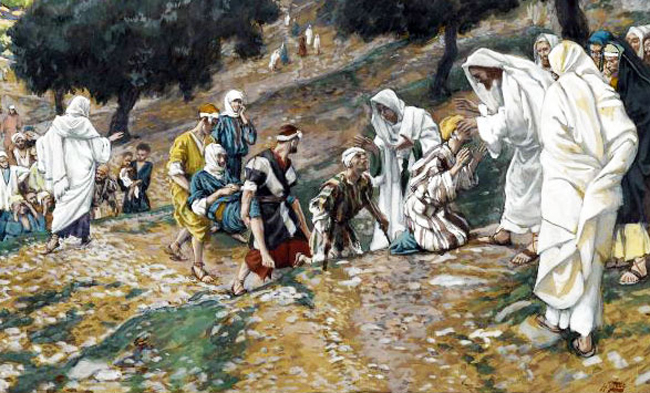
Jesus has challenged the malice of the Pharisees by curing the man with a withered hand on the Sabbath. In response to the pure goodness of Jesus, the Pharisees take council together and decide to kill Jesus. Their response to absolute good is evil, even as Jesus gives the Pharisees every reason to see the ways in which they have fallen into error. The refusal of the Pharisees to respond to Jesus’ call to reform compounds their evil. They have locked their hearts [ … ]

The Ten Commandments, also known as the Decalogue, are a set of religious and moral imperatives believed to have been given by God to the Israelites and recorded in the Hebrew Bible. They are traditionally understood to provide a code of conduct for the faithful to follow, and are of great significance in Judaism and Christianity. According to the biblical account, God delivered the Ten Commandments to Moses on tablets of stone on Mount Sinai, which he then brought down from the mountain and presented to the Israelites [ … ]