
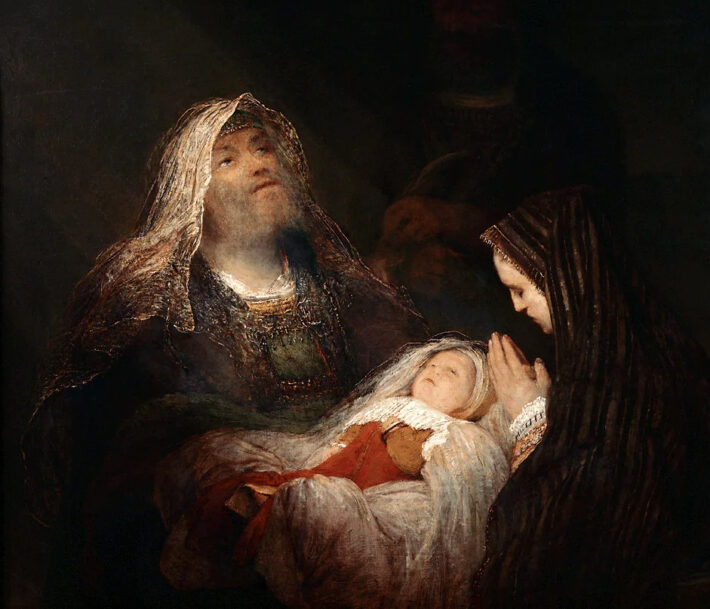
Luke 1: 67-79 – 24th December Weekday (Audio Bible, Spoken Word)
67 And his father Zacharias was filled with the Holy Ghost, and prophesied, saying,
68 Blessed be the Lord God of Israel; for he hath visited and redeemed his people,
69 And hath raised up an horn of salvation for us in the house of his servant David;
70 As he spake by the mouth of his holy prophets, which have been since the world began:
71 That we should be saved from our enemies, and from the hand of all that hate us;
72 To perform the mercy promised to our fathers, and to remember his holy covenant;
73 The oath which he sware to our father Abraham,
74 That he would grant unto us, that we being delivered out of the hand of our enemies might serve him without fear,
75 In holiness and righteousness before him, all the days of our life.
76 And thou, child, shalt be called the prophet of the Highest: for thou shalt go before the face of the Lord to prepare his ways;
77 To give knowledge of salvation unto his people by the remission of their sins,
78 Through the tender mercy of our God; whereby the dayspring from on high hath visited us,
79 To give light to them that sit in darkness and in the shadow of death, to guide our feet into the way of peace.
For the first Christian communities, almost all of them Jewish, the Benedictus would have been a song of joy, thanking God for His fulfilment of the promise of ages: God has visited his people and redeemed them. The faith of those early Christians is strong as they look back along the road they have travelled since Abraham, and forward to a time of peace, light, salvation.
A merciful God has, in his goodness, shaped history to ensure that his people will be enabled to live in accord with His will for them, to serve God without fear of persecution, to live in holiness and righteousness. There is thanksgiving to God for enabling his people to live in a way which most praises God, this being a perfectly reciprocal relationship of love between Creator and creation. This song of praise is born of humility.
We hear much in the Benedictus of what the Messiah will bring, of what the kingdom of God will truly be. Christ, the new Torah, will restore Israel to the two key commandments, to love God with all our mind, all our strength, all our heart, our entire soul, and our neighbour as ourselves. In the person of Jesus, Israel is visited and redeemed, the kingdom of God is come.
In the second part of the Benedictus, Zechariah prophesies that his son will be the Precursor of the Messiah. He will prepare the way for Jesus, bringing people to the knowledge of imminent salvation which Jesus may then fulfil. John the Baptist will lead the people to consciousness. As Jeremiah prophesied:
‘And they shall teach no more every man his neighbour, and every man his brother, saying, Know the Lord: for they shall all know me, from the least of them unto the greatest of them, saith the Lord: for I will forgive their iniquity, and I will remember their sin no more.’ (Jeremiah 31: 34)
2





Saint Cyprian of Carthage, writing in the 3rd century during times of persecution and doctrinal unrest, offers a spiritually profound and pastorally sensitive reflection on the opening petitions of the Lord’s Prayer. His meditation on ‘Hallowed be thy name’ invites us to reflect not only on what we say in prayer, but how we live as those who call God ‘Father’ [ … ]

In this reading, Bernard of Clairvaux reflects on the moment of the annunciation, focusing on Mary’s reply to the angel Gabriel. The reading does not retell the biblical narrative in a descriptive way but pauses at the moment before Mary speaks, treating her response as a decisive point in salvation history [ … ]

Saint Cyprian of Carthage, a third-century bishop and martyr, profoundly reflected on the Lord’s Prayer in his treatise: ‘On the Lord’s Prayer’. Saint Cyprian viewed the Gospel’s commands as foundational teachings that nourish faith, Strengthen hope, and guide believers toward salvation. Saint Cyprian emphasized that, while prophets conveyed God’s messages, Christ, the Word incarnate, personally delivered these teachings, illuminating the path from the darkness of death to the light of grace [ … ]
