
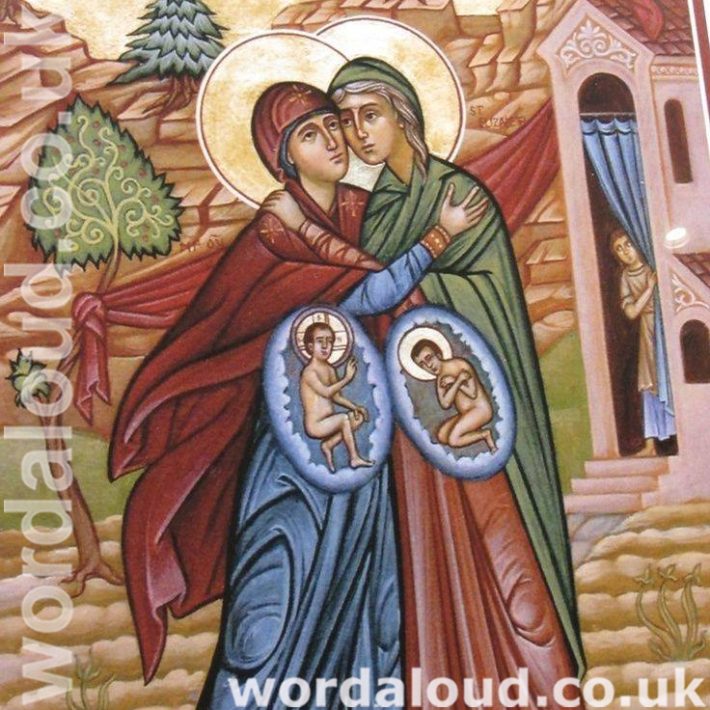
Christian Art | Mary And Elizabeth | Magnificat
Luke 1: 46-56 – 22nd December Weekday (Audio Bible, Spoken Word)
46 And Mary said, My soul doth magnify the Lord,
47 And my spirit hath rejoiced in God my Saviour.
48 For he hath regarded the low estate of his handmaiden: for, behold, from henceforth all generations shall call me blessed.
49 For he that is mighty hath done to me great things; and holy is his name.
50 And his mercy is on them that fear him from generation to generation.
51 He hath shewed strength with his arm; he hath scattered the proud in the imagination of their hearts.
52 He hath put down the mighty from their seats, and exalted them of low degree.
53 He hath filled the hungry with good things; and the rich he hath sent empty away.
54 He hath holpen his servant Israel, in remembrance of his mercy;
55 As he spake to our fathers, to Abraham, and to his seed for ever.
56 And Mary abode with her about three months, and returned to her own house.
In this, the Magnificat, Mary’s soul overflows with joy as she contemplates the wonderful blessing God has bestowed on her, surpassing indeed the gifts to any other person in history. Through her obedience and humility, Mary has been magnified herself by the Lord, such that we now recognize her greatness and call her blessed – each day, indeed, as we recite or sing the canticle as part of evening prayer.
Mary praises the strength and justice of God. He is a force at work in the world, scattering the proud and the boastful, upending the vanities of the world, feeding the hungry and exalting those of low degree, the poor, the oppressed, and the socially neglected. There is a revolutionary spirit to her words, to her Messianic vision, which recall Samuel’s mother Hannah’s prayer – with which Mary would have been very familiar:
AND Hannah prayed, and said, My heart rejoiceth in the Lord, mine horn is exalted in the Lord: my mouth is enlarged over mine enemies; because I rejoice in thy salvation.
2 There is none holy as the Lord: for there is none beside thee: neither is there any rock like our God.
3 Talk no more so exceeding proudly; let not arrogancy come out of your mouth: for the Lord is a God of knowledge, and by him actions are weighed.
4 The bows of the mighty men are broken, and they that stumbled are girded with strength.
5 They that were full have hired out themselves for bread; and they that were hungry ceased: so that the barren hath born seven; and she that hath many children is waxed feeble.
6 The Lord killeth, and maketh alive: he bringeth down to the grave, and bringeth up.
7 The Lord maketh poor, and maketh rich: he bringeth low, and lifteth up.
8 He raiseth up the poor out of the dust, and lifteth up the beggar from the dunghill, to set them among princes, and to make them inherit the throne of glory: for the pillars of the earth are the Lord’s, and he hath set the world upon them.
9 He will keep the feet of his saints, and the wicked shall be silent in darkness; for by strength shall no man prevail.
10 The adversaries of the Lord shall be broken to pieces; out of heaven shall he thunder upon them: the Lord shall judge the ends of the earth; and he shall give strength unto his king, and exalt the horn of his anointed. (1 Samuel 2: 1-10)
The Lord was with Samuel, ‘and did let none of his words fall to the ground’, and his word came to all Israel; he was prophet and judge. Through God’s blessing of Mary and through her perfect obedience, Christ will be born to fulfil the prayers, hopes and expectations of ages. A young woman’s joyful response to the Lord, to praise and thank the Lord for the child she carries, expands into a vision of God’s active presence with the people of Israel through history, which in itself carries the knowledge that the kingdom of God is now come in the person of Jesus. There is here a grand sense of the purpose of history up to this point, and this is aligned with a vision of the new generations to come, as the immense human family of the future worships Christ.
‘Now anyone who refuses to humble himself simply cannot be saved, nor can he say with the prophet: “Behold, the Lord is my helper; it is God who lifts up my life.” But whoever humbles himself like a child is the greatest in the kingdom of heaven.’ St Bede
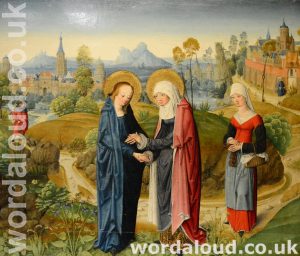
Magnificat | Endnotes | ‘My Soul Proclaims The Greatness Of The Lord’
The Magnificat expresses Mary’s deep awareness of God’s action in her life and in the world. Mary rejoices that God lifts the lowly, fulfils His promises, and brings salvation to all who trust in Him (Luke 1:46-55). Our recent leaders of the Church have reflected upon how this song of praise invites us into a living response of faith.
Pope Saint John Paul II spoke often of the Magnificat as a model of Christian discipleship. For him, Mary’s song is not simply praise, but a transformation of vision: Mary sees the world not by the standards of power or wealth, but through the eyes of faith. Her rejoicing comes from a heart opened to God’s mercy and justice. In this way, the Magnificat becomes a summons for believers to align our lives with God’s priorities — to lift up the humble, feed the hungry, and bear witness to the hope born of Christ.
Pope Benedict XVI emphasised the Magnificat as a revelation of God’s constant care for His people. Pope Benedict noted that Mary’s words reveal the ‘logic of God’ — a logic that overturns human expectations: the proud are scattered, the mighty cast down, and the hungry filled with good things. This is not a political manifesto, but a spiritual truth about how God’s kingdom grows. We are invited to trust God’s fidelity to his promises and to recognise that our salvation comes from God’s mercy, not from human effort alone.
Pope Francis often returned to the Magnificat when speaking of the Church’s mission. For Pope Francis, Mary’s praise is inseparable from her compassion for the poor and her attention to those on the margins. Mary’s song is lived out in concrete acts of mercy. Francis explains that Christians are called not only to proclaim God’s greatness but to live it by reaching out to the poor, the suffering, and those who feel forgotten. In this way, the Magnificat becomes not only a prayer but a way of life marked by tenderness and service.
Pope Leo XIV continues the teaching for our times. From his first words to the world — ‘peace be with you all’ — Pope Leo connects the gift of peace with the faithful witness of Christians in the world. Pope Leo underlines that peace is not static but a gift moving us toward others, requiring dialogue, charity, and unity. In his apostolic exhortation Dilexi Te, he calls the Church to see Christ in the poor and to respond to God’s love with concrete love for those in need. The peace proclaimed by Christ, and echoed by Leo, is a peace active in justice and mercy, mirroring Mary’s own response in the Magnificat.
As we pray and reflect with evening prayer, vespers, and during Advent and beyond, the Magnificat invites us to open our hearts to God’s transformative action. Like Mary, may we proclaim God’s greatness not only with words but with lives shaped by mercy, humility, and peace.



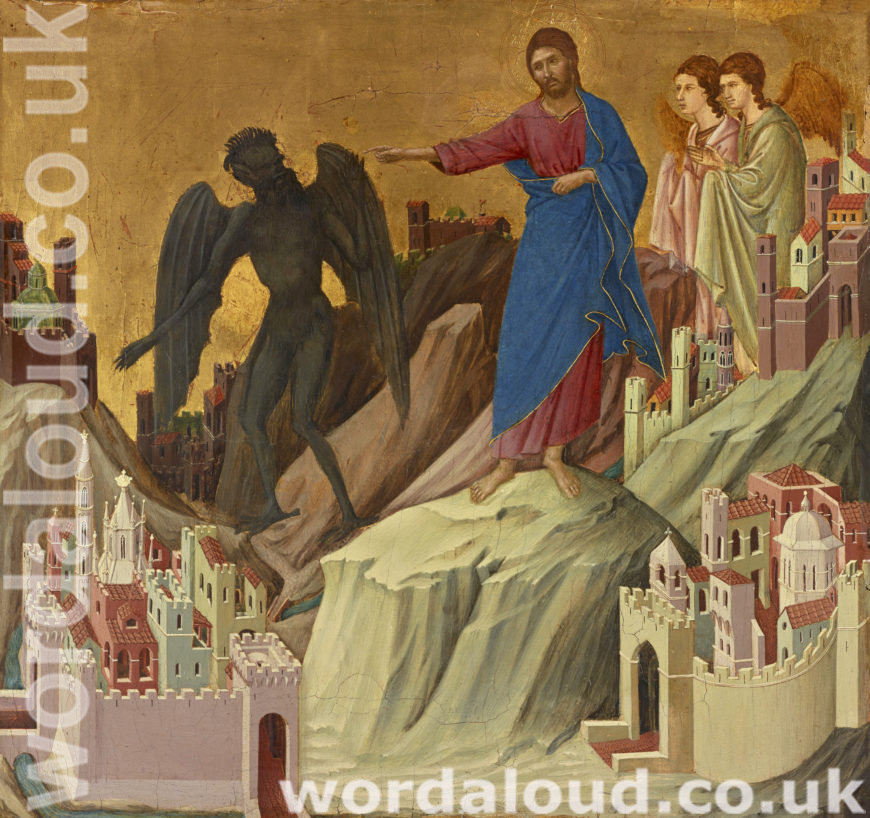
Saint Vincent of Lerins addresses one of the most enduring questions in Christian theology: how the faith can develop through time while remaining faithful to its original substance. Writing in the fifth century, at a time when the Church was clarifying its doctrine in the face of heresies, Vincent offers a nuanced account of continuity and growth. His central concern is to distinguish between true development and corruption of doctrine [ … ]

The poem offers Herbert’s desperate plea for divine mercy, structured as a series of direct appeals to God. The repeated cries of ‘O do not’ introduce a layered exploration of sin, justice, and grace, where Herbert acknowledges personal failure while seeking deliverance [ … ]
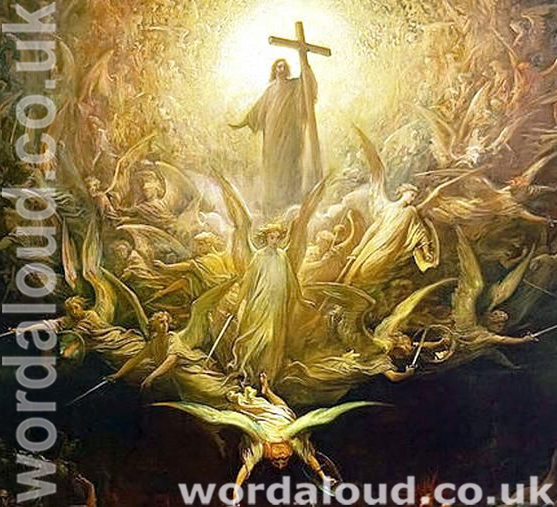
In this homily, Saint Augustine draws us into a tension at the heart of Christian life: we are invited to sing alleluia, but we are called to sing it in anxiety, in trial, in temptation. The alleluia of this present life is real but fragile, hopeful but trembling. It reflects the condition of a people who know they belong to God, yet still live in a world where danger surrounds them and weakness remains within [ … ]
