Christian Art | Jesus’ Second Coming | The Parousia | Apocalypse | Eschatological Christian Faith
Mark 13: 24-32 – 33rd Sunday Year B (Audio Bible KJV, Spoken Word)
24 ¶ But in those days, after that tribulation, the sun shall be darkened, and the moon shall not give her light,
25 And the stars of heaven shall fall, and the powers that are in heaven shall be shaken.
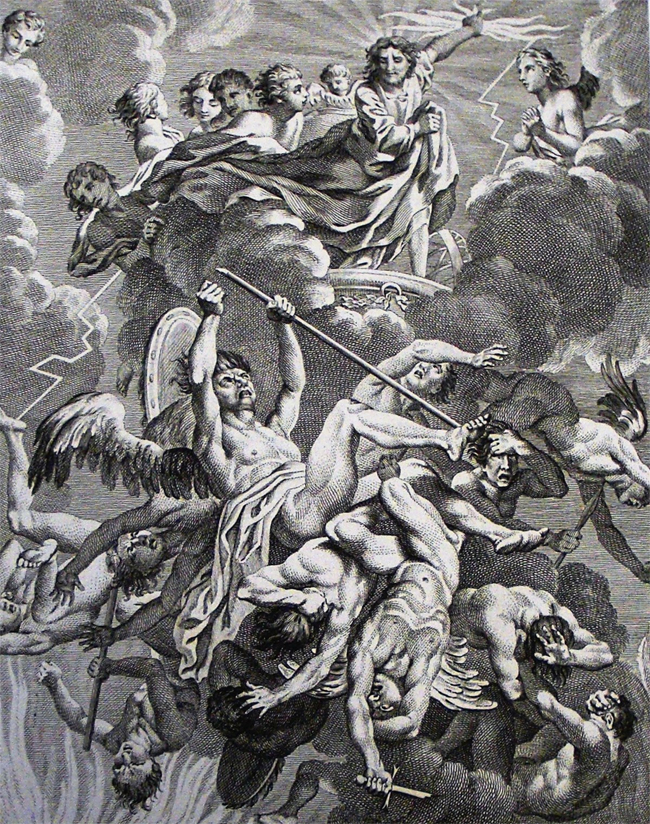
26 And then shall they see the Son of man coming in the clouds with great power and glory.
27 And then shall he send his angels, and shall gather together his elect from the four winds, from the uttermost part of the earth to the uttermost part of heaven.
28 Now learn a parable of the fig tree; When her branch is yet tender, and putteth forth leaves, ye know that summer is near:
29 So ye in like manner, when ye shall see these things come to pass, know that it is nigh, even at the doors.
30 Verily I say unto you, that this generation shall not pass, till all these things be done.
31 Heaven and earth shall pass away: but my words shall not pass away.
32 ¶ But of that day and that hour knoweth no man, no, not the angels which are in heaven, neither the Son, but the Father.
Mark’s account of Christ’s eschatological discourse reaches its climax with an apocalyptic vision and Christ’s announcement of the imminence of the parousia, the second coming of Christ, who is now called, following Daniel, the Son of man.
13 I saw in the night visions, and, behold, one like the Son of man came with the clouds of heaven, and came to the Ancient of days, and they brought him near before him.
14 And there was given him dominion, and glory, and a kingdom, that all people, nations, and languages, should serve him: his dominion is an everlasting dominion, which shall not pass away, and his kingdom that which shall not be destroyed. (Daniel 7: 13-14)
What can this mean? What do we mean now by speaking of imminence? Clearly Jesus could not have meant that the world would end within the lifetime of some of those living in Jesus’ time. The world did not end – although to many Jews, including perhaps Jesus’ disciples, it would have been inconceivable that the destruction of Jerusalem could be an event apart from the end of the world. In AD 70, failure in war with Rome thus devastated Israel. Jewish worship, the Temple destroyed, would never be the same again.
Christ’s meaning when he speaks of the coming of the Kingdom must, then, be something different from – or additional to – global and cosmic destruction as a precursor to renewal and our entry into the new world. He has said as much when, for example, speaking of the mustard seed, which begins as the smallest of seeds and is set to grow as the Church grows to include the whole world; such growth and flourishing must imply a long history of human endeavour to follow.
Christ’s words in these verses of Mark lie somewhere between metaphor and reality. The apocalyptic vision proclaims an overhauling of old ways of being and the coming of new life, the Kingdom of God, of which we are called to be part through Jesus Christ. Our faith in Christ, our death and rebirth through baptism, our redemption in Christ, our adherence to Christ’s new Law, all this, our lived Christianity, can be understood as the Kingdom of God made manifest already in this world, while we anticipate eternal joy. It is because of Christ and through his words that our life has a heavenly dimension. Heaven and Earth will indeed pass away, while through Christ we have life eternal.
Jesus Christ is coming. He comes to us each and every moment through the whole of our lives, and through his coming we are transformed. We become more than worldly history; we are creatures of light. There will be a definitive end, a definitive judgement. We will share in the new world and life everlasting. When we ask Christ to come to us we pray for this heavenly end, and through prayer we open our hearts, our minds, our souls, to receive Christ’s coming today.
Let the heavens rejoice, and let the earth be glad; let the sea roar, and the fulness thereof.
Let the field be joyful, and all that is therein: then shall all the trees of the wood rejoice
Before the Lord: for he cometh, for he cometh to judge the earth: he shall judge the world with righteousness, and the people with his truth. (Psalm 96/95)

Audio Bible KJV | Endnotes
Apocalypse | Revelation, Disclosure | Eschatological Christian Faith
The Old Testament contains prophecies that speak of a time when God will intervene in history to bring about His ultimate plan of salvation. For example, in the book of Daniel, we read: ‘At that time Michael shall stand up, the great prince who stands watch over the sons of your people; and there shall be a time of trouble, such as never was since there was a nation, even to that time. And at that time your people shall be delivered, everyone who is found written in the book.’ (Daniel 12:1)
In the book of Isaiah, we read: ‘Behold, the Lord maketh the earth empty, and maketh it waste, and turneth it upside down, and scattereth abroad the inhabitants thereof… The earth shall reel to and fro like a drunkard, and shall be removed like a cottage; and the transgression thereof shall be heavy upon it; and it shall fall, and not rise again.’ (Isaiah 24:1, 20)
Similarly, the New Testament contains several passages that speak of the end times and the second coming of Christ – the parousia. In the Gospel of Matthew, Jesus says, ‘Immediately after the tribulation of those days the sun will be darkened, and the moon will not give its light; the stars will fall from heaven, and the powers of the heavens will be shaken. Then the sign of the Son of Man will appear in heaven, and then all the tribes of the earth will mourn, and they will see the Son of Man coming on the clouds of heaven with power and great glory’ (Matthew 24:29-30).
In the book of Revelation, we read of a great war between the forces of good and evil, with the ultimate victory going to Christ: ‘And I saw heaven opened, and behold a white horse; and he that sat upon him was called Faithful and True, and in righteousness he doth judge and make war… And the armies which were in heaven followed him upon white horses, clothed in fine linen, white and clean. And out of his mouth goeth a sharp sword, that with it he should smite the nations: and he shall rule them with a rod of iron.’ (Revelation 19:11, 14-15)
In the passage from Mark 13: 24-32, Jesus speaks of the signs that will precede his coming: ‘But in those days, after that tribulation, the sun shall be darkened, and the moon shall not give her light, and the stars of heaven shall fall, and the powers that are in heaven shall be shaken. And then shall they see the Son of man coming in the clouds with great power and glory.’ (Mark 13:24-26)
Throughout the Bible, there is a consistent theme of God’s ultimate plan of salvation for humanity, which involves the coming of Christ to defeat evil and establish a new heaven and earth. While there may be differing interpretations of the specifics of the end times, there is a shared belief among Christians that the ultimate victory belongs to Christ and that believers must remain vigilant and prepared for his coming.
Throughout history, religious authorities have put forward different interpretations of these passages. Some believe that the signs described in the Bible have already been fulfilled, while others believe that they are still to come. One interpretation that has been put forward by some religious authorities is that the signs are not meant to be taken literally but rather symbolically.
For example, Saint Augustine of Hippo believed that the signs described in Mark 13 were symbolic rather than literal. Saint Augustine saw the darkening of the sun and moon as representing the loss of moral guidance and the falling of the stars as representing the fall of great leaders.
In contrast, other, Protestant, theologians, such as Martin Luther and John Calvin, took a more literal approach to the passage, seeing the signs as representing actual events that would occur in the future. They believed that the end of the world was imminent and that the signs were already beginning to appear.
The Catholic Church teaches that the signs described in the Bible are symbolic of the broader themes of sin, evil, and the ultimate victory of Christ. The Catechism Of The Catholic Church states: ‘The Church’s ultimate trial… will unveil the “mystery of iniquity” in the form of a religious deception offering men an apparent solution to their problems at the price of apostasy from the truth.’ (CCC 675)



This remarkable 6th century reflection from an anonymous African author offers a rich theology of Pentecost, drawing together ecclesiology, pneumatology, and missiology with great pastoral clarity. Writing within the context of the post-Roman North African Church—one marked by persecution, doctrinal strife, and cultural transition—this author bears witness to a theology of hope, rooted in the enduring and unifying presence of the Holy Spirit [ … ]

Saint Gaudentius, a 4th–5th century bishop and contemporary of Saint Ambrose, offers in this homily a profound reflection on the Eucharist as the enduring inheritance Christ has left his Church. Rooted deeply in the language and symbolism of Scripture and the early Church, his words provide a moving theology of presence, sacrifice, and transformation that remains strikingly relevant to Christian thought today [ … ]
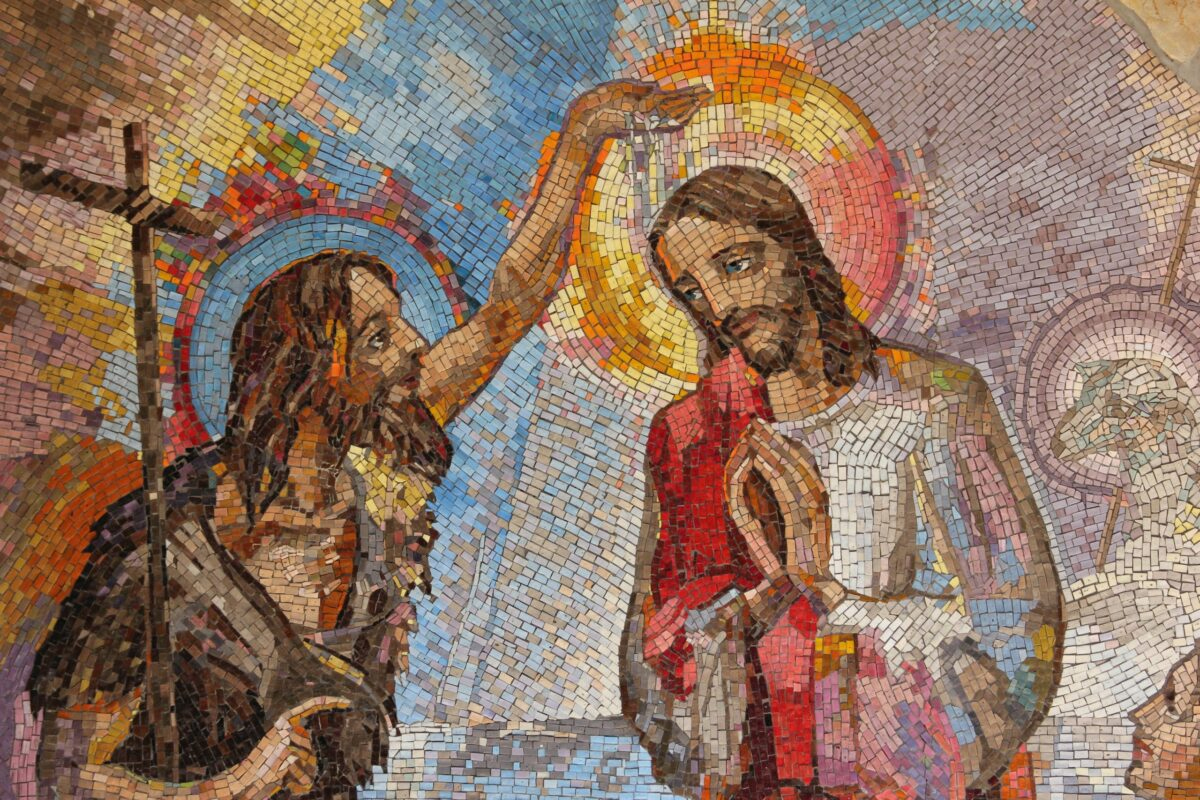
The impression clearly formed is that the Archbishop’s ideas are not mere bookish speculation but, as it were, bucket-and-spade, in the sense of his having visited the place where he thinks it was that Jesus was baptized. He tells us about the place, in the Holy Land, over the Jordan, where there is a confluence, troubled waters, and danger in entering into them. The picture he evokes of broiling surge, plunging deep, a GPS map-point, a trial in ways apart from our sacrament. Where waters churn and threaten to swallow you. And he is convinced it happened there. He is convinced. He relates it to our own baptism [ … ]