

Christian Art | Easter To Pentecost | I Am The Way, The Truth And The Light
John 14: 1-6 Audio Bible KJV | King James Audio Bible | King James Version | Daily Verses
1 LET not your heart be troubled: ye believe in God, believe also in me.
2 In my Father’s house are many mansions: if it were not so, I would have told you. I go to prepare a place for you.
3 And if I go and prepare a place for you, I will come again, and receive you unto myself; that where I am, there ye may be also.
4 And whither I go ye know, and the way ye know.
5 Thomas saith unto him, Lord, we know not whither thou goest; and how can we know the way?
6 Jesus saith unto him, I am the way, the truth, and the life: no man cometh unto the Father, but by me.
‘I am the way, the truth, and the life…’ Jesus sees that what he has so far said to the disciples during the Last Supper has left them troubled. His speaking of Peter’s imminent denial must have been especially upsetting. In these verses, Jesus now reassures the disciples. They will come to heaven, just as we all may. ‘In my Father’s house are many mansions.’ No matter our shortcomings, through faith we can find that there is a place in heaven prepared especially for us.
This is Christ’s promise. It is precisely for this purpose that he has become incarnate, to teach us, to lead by his example, and to die on the cross and then rise from death, so that we may come to him.
We are told too that Christ will come again to find us. This includes the second coming, and the individual meeting of each soul with Christ after death – the truth, the life.
The disciples are puzzled by what Jesus has said to them, and so it is that Thomas asks his question. As Jesus explains his meaning, we may recall the parable of the good shepherd, and Jesus presenting himself as the gateway to the sheepfold. I am the way, the truth, and the life. He is the way. It is through Jesus that we find our place in the sheepfold, that we may, as sons, come to the Father in heaven. It is in our beholding of Jesus that we may know the way to truth and life. Through faith, we may come to our heavenly home.
‘This is the way, dear friends, that we find our own salvation: even Jesus Christ, the high priest by whom our gifts are offered, and the protector by whom our feebleness is aided. Through him we can look up to the highest heaven and see, as in a glass, the peerless perfection of the face of God… He is the splendour of God’s majesty.’ Pope St Clement I
Audio Bible KJV | King James Audio Bible | King James Version | Endnotes
What Is The Meaning Of ‘In My Father’s House Are Many Mansions’?
One interpretation of the phrase is that Jesus is referring to the idea of a heavenly city, where people of different cultures and backgrounds can find their own place. As theologian and philosopher Augustine of Hippo wrote: ‘The city of God is not a physical place, but a community of people who share a common faith and way of life.’ In this sense, the many mansions represent the different communities and cultures that make up the heavenly city.
Another interpretation of the phrase is that Jesus is speaking metaphorically about the different levels of spiritual attainment that people can achieve in their journey towards God. As theologian and philosopher Thomas Aquinas wrote: ‘The various mansions in heaven correspond to the various degrees of perfection that are possible for human beings to attain.’ In this sense, the many mansions represent the different levels of spiritual growth that individuals may achieve in their lifetime.
The phrase ‘In my Father’s house are many mansions’ has also been interpreted in a more personal sense, as an expression of the individual’s relationship with God. Protestant theologian John Calvin wrote: ‘The mansion that each person will inhabit in heaven will be determined by the closeness of their relationship with God.’ In this sense, the many mansions represent the different levels of intimacy that individuals may experience in their relationship with God.
The phrase ‘In my Father’s house are many mansions’ has inspired works of art and literature over the centuries.
One such work is the hymn ‘Mansion Over the Hilltop’ by Ira Stanphill, which draws upon the imagery of John 14: 1-6 to offer a message of hope and comfort to those facing difficult times. The lyrics of the hymn describe a longing for a place in heaven, where the worries and troubles of this world are left behind: ‘I’m satisfied with just a cottage below, / A little silver and a little gold; / But in that city where the ransomed will shine, / I want a gold one that’s silver-lined.’
The poet Robert Frost wrote a poem entitled ‘The Star Splitter,’ which uses the phrase ‘many mansions’ as a metaphor for the different paths that individuals may take in their spiritual journey. The poem tells the story of a man who gazes up at the stars, seeking answers to life’s mysteries: ‘The heavens declare the glory of God; / The firmament proclaims the work of his hand. / But night and day travel the two old road’s / That lead through the mansions of the dead.’
In the 17th century, the English poet John Donne wrote: ‘Heaven is a single and entire place, made up of innumerable mansions, so that every blessed soul may have its own mansion, its own heaven.’
Similarly, the American poet Emily Dickinson wrote in the 19th century: ‘There is a mansion in the heart that opens to the sky.’ Her words suggest that the idea of many mansions can be understood not only as a literal place, but also as a metaphor for the human heart, which is capable of experiencing the divine in many different ways.
The phrase ‘In my Father’s house are many mansions’ has been a source of comfort and inspiration for those facing death and bereavement. The idea of a place in heaven, prepared by Jesus himself, offers a message of hope and assurance that death is not the end, but rather a passage to a new and glorious life. As the Protestant theologian John Owen wrote: ‘The mansions in heaven are the pledges of our inheritance, the earnest of our hope, the assurance of our security.’
Catholic theologian Karl Rahner wrote that the phrase ‘many mansions’ should be understood in a more symbolic and mystical sense, as an expression of the infinite diversity and richness of God’s love and grace. Rahner argued that the language of mansions and dwelling places is merely a way of speaking about the ineffable mystery of God’s presence, which cannot be fully grasped or comprehended by human language or imagination.
Protestant theologian Paul Tillich argued that the idea of heaven as a physical place is too limited and anthropomorphic, and that the true nature of heaven is something more abstract and spiritual. Tillich wrote that heaven is not a place that we go to after we die, but rather a state of being that we enter into when we are united with God. In this sense, the ‘mansions’ that Jesus refers to are not literal dwellings, but rather different levels of spiritual consciousness and awareness.



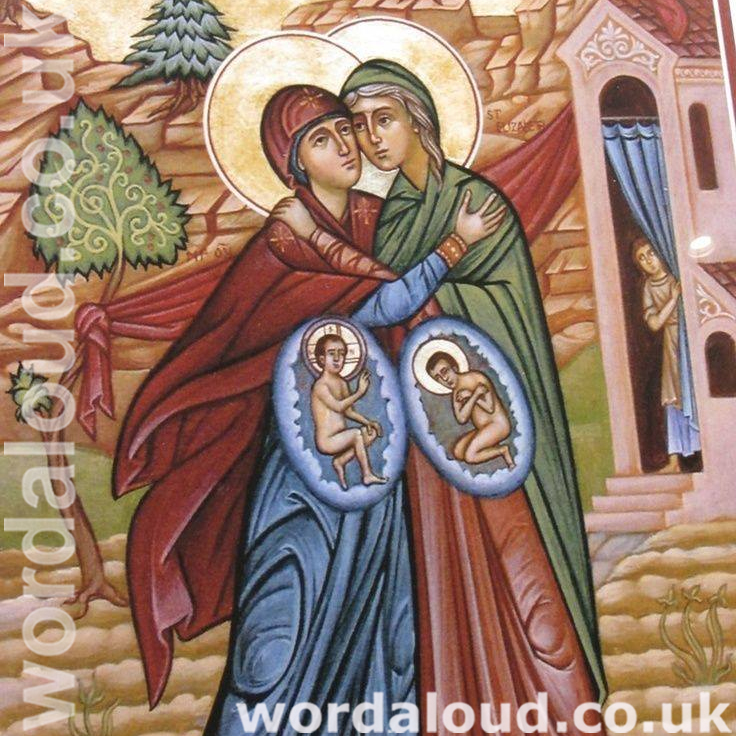
In this, the Magnificat, Mary’s soul overflows with joy as she contemplates the wonderful blessing God has bestowed on her, surpassing indeed the gifts to any other person in history. Through her obedience and humility, Mary has been magnified herself by the Lord, such that we now recognize her greatness and call her blessed – each day, indeed, as we recite or sing the canticle as part of evening prayer [ … ]
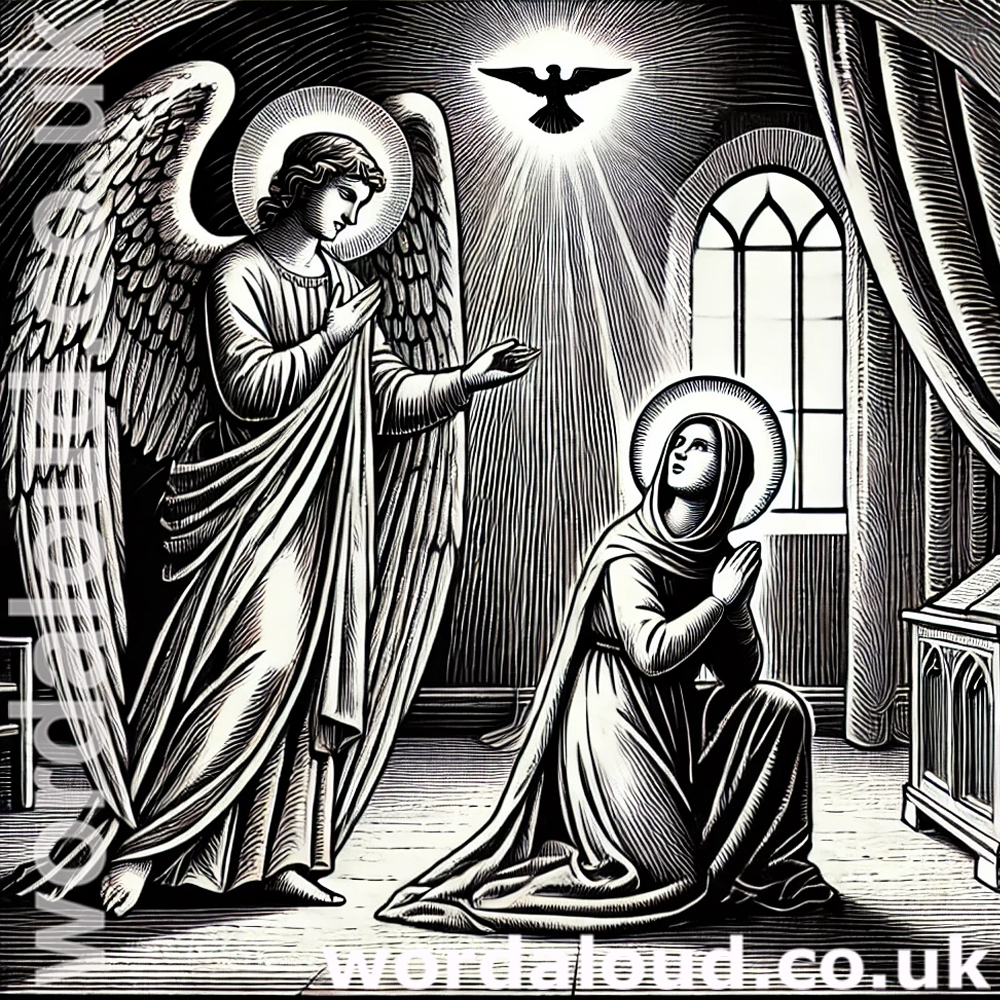
This reading explains why the true humanity of Jesus Christ is essential for salvation. Saint Leo insists that it is not enough to say that Jesus was human in a general sense. Jesus must be recognised as truly belonging to human history, descended from the line traced in the Gospels [ … ]

Psalm 29 is a hymn that celebrates glory, power and sovereignty of the Lord. The psalm reflects on the divine might displayed through elements of nature, emphasizing the voice of the Lord as a significant force [ … ]
