

Christian Art | Easter To Pentecost
John 6: 44-51 Audio Bible KJV | King James Audio Bible | King James Version | Daily Verses
44 No man can come to me, except the Father which hath sent me draw him: and I will raise him up at the last day.
45 It is written in the prophets, And they shall be all taught of God. Every man therefore that hath heard, and hath learned of the Father, cometh unto me.
46 Not that any man hath seen the Father, save he which is of God, he hath seen the Father.
47 Verily, verily, I say unto you, He that believeth on me hath everlasting life.
48 I am that bread of life.
49 Your fathers did eat manna in the wilderness, and are dead.
50 This is the bread which cometh down from heaven, that a man may eat thereof, and not die.
51 I am the living bread which came down from heaven: if any man eat of this bread, he shall live for ever: and the bread that I will give is my flesh, which I will give for the life of the world.
The Jewish authorities have begun to take note of Jesus. While Jesus has attracted the people, now ‘the Jews’, a term which in John’s Gospel is often used to refer to the Jewish authorities, are beginning to murmur against him. Jesus’ relationship with the Jews is to become increasingly tense.
This is the context of today’s Bible verses. Jesus truly affirms to the people, that it is through their calling by God, to be with God, that they may come to Jesus. We believe in Jesus, God the Son, as we believe in God the Father, through the gift of faith. In other words, our capacity to believe and so to be saved, is given to us through the grace of God.
When we believe in Jesus, we are wholly with God and aligning our lives to be in accord with the intentions of God. Jesus tells this to the Jewish people, asking them to look again at everything they know about the Old Law, which they have inherited, and so to see and to find the truth they have longed for in the body of Jesus, who is the bread of life.
We are called again to think of the miracle of the manna, the bread of heaven, which came to the Jews during their Exodus from the servitude and confinement of Israel in Egypt. We are asked again to consider the miracle of the loaves and the fishes, the feeding of the five thousand, and to see through this great act of Jesus to the deeper significance, that we have life through Jesus Christ, that we have our spiritual sustenance in the body of our Lord, which is given for us.
Jesus tells those who disbelieve in him to consider their fathers and their national history. Through the ages, the Jewish people have been called to God; now God has answered their prayers in Christ’s person incarnate. Had they known the Father, now they would see the Son.
‘If the flesh is not saved, then the Lord did not redeem us with his blood, the chalice of the Eucharist is not a share in his blood, and the bread which we break is not a share in his body. For blood cannot exist apart from veins and flesh and the rest of the human substance which the Word of God truly became in order to redeem us with his blood, as his own apostle states: “In him we have redemption, the forgiveness of sins.”’ St Irenaeus


Audio Bible KJV | King James Audio Bible | King James Version | Endnotes
‘No Man Can Come To Me, Except The Father Which Hath Sent Me Draw Him.’ What Does This Mean?
Jesus speaks to a crowd of people who are following him because they are interested in the miracles Jesus has been performing. Jesus tells them that in order to truly come to him, they must be drawn by the Father who sent him. Jesus says: ‘No man can come to me, except the Father which hath sent me draw him.’ (John 6:44, KJV)
There are interpretations of what it means to be drawn by the Father to Jesus. One interpretation is that the Father draws people to Jesus by giving them the gift of faith. This idea is based on the belief that humans are unable to believe in Jesus on their own, but that God must enable them to do so.
Protestant theologian John Calvin believed in this interpretation of Jesus’ statement. He wrote that ‘faith is a special gift of God, which he bestows on whom he pleases, and therefore we ought to consider that it is not in the power of human nature to procure faith for itself’ (Institutes Of The Christian Religion, Book 3, Chapter 2, Section 27).
Catholic theologian Saint Augustine believed that faith is a gift from God. Augustine wrote that ‘it is the gift of God, lest any man should boast’ (On Grace And Free Will, Chapter 16).
A further interpretation of Jesus’ statement is that the Father draws people to Jesus by giving them a deeper understanding of his teachings. This idea is based on the belief that humans are unable to fully understand the significance of Jesus’ teachings without the help of the Holy Spirit.
Catholic theologian Saint Thomas Aquinas believed in this interpretation of Jesus’ statement. Aquinas wrote that ‘the light of faith…is infused by God into the soul’ (Summa Theologica, Part II-II, Question 1, Article 1).
Similarly, Protestant theologian Jonathan Edwards believed that understanding of spiritual truths is a gift from God. Edwards wrote that ‘the Scriptures teach us that the natural man…cannot understand the things of the Spirit of God’ (A Divine And Supernatural Light).
A Call To God Through Sin And Conscience
A further interpretation of Jesus’ statement is that the Father draws people to Jesus by convicting them of their sinfulness. This idea is based on the belief that humans are sinful and need to be made aware of their need for salvation before they can truly come to Jesus.
Saint Thomas More believed in this interpretation of Jesus’ statement. More wrote that ‘the Spirit of God…strives with man’s conscience, and so stirs it up to repentance and to seek after God, that he may draw him to Christ’ (A Dialogue Concerning Heresies).
Similarly, Protestant theologian Charles Spurgeon believed that the Father draws people to Jesus by making them aware of their need for salvation. Spurgeon wrote that ‘men must first feel their need of a Saviour before they can come to Jesus’ (The Soul Winner).
Evangelize | Preach The Gospel
A further interpretation of Jesus’ statement is that the Father draws people to Jesus through the preaching of the Gospel. This idea is based on the belief that the Gospel is the means by which people hear about Jesus and are drawn to him.
Saint Bonaventure believed in this interpretation of Jesus’ statement. Bonaventure wrote that ‘faith comes by hearing, and hearing by the word of Christ’ (Breviloquium, Chapter 7).
Similarly, John Stott believed that the preaching of the gospel is essential for drawing people to Jesus. Stott wrote that ‘the gospel is the power of God for salvation…and it is through the preaching of the gospel that the Holy Spirit works to draw people to Christ’ (Basic Christianity).
Predestination
It is worth noting that there are also some who interpret Jesus’ statement in John 6:44-51 as an indication of predestination. This interpretation suggests that the Father only draws a select group of people to Jesus, and that these individuals are predetermined for salvation.
The Protestant theologian John Piper is one example of someone who holds this view. Piper writes that ‘God is sovereign in the work of salvation, and he chooses to draw some to himself and not others’ (Desiring God). This idea is often associated with the Reformed tradition, which emphasizes the sovereignty of God in all things, including salvation.
Many argue that the idea of predestination runs counter to the idea of God’s love and justice, and that it overlooks the importance of human free will in the process of salvation.
The Catholic Church, for example, has traditionally rejected the idea of predestination as it is commonly understood in the Reformed tradition. The Catechism of the Catholic Church states that ‘God predestines no one to go to hell; for this, a wilful turning away from God (a mortal sin) is necessary’ (paragraph 1037).


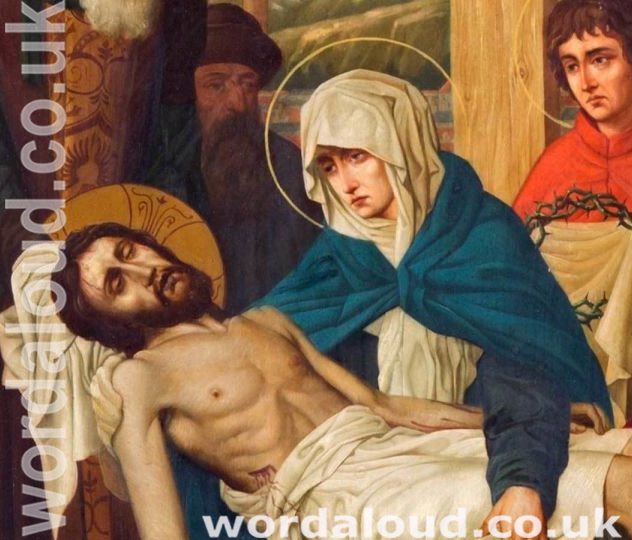
Saint Ambrose’s reflection on Philippians 4:4–6 centres upon the Apostle Paul’s call to rejoice in the Lord always. Written in the context of Ambrose’s pastoral work in Milan during the late fourth century, this passage draws together joy, moderation, and trust in God as essential expressions of Christian life [ … ]

When he saw the young man who had died, and his mother, Jesus had compassion. Compassion means literally to suffer with. This is what Jesus experienced as he entered Nain: Jesus suffered with the young man who had died and with his mother. Then Jesus touched the bier and he restored the young man to life. Jesus said to the man who was dead: Arise [ … ]
In the Garden of Gethsemane, Jesus prays and struggles desperately with the weight of his coming Crucifixion. He sweats blood – he is in agony. Jesus enters into his Passion fully cognizant of the horror of it [ … ]
