
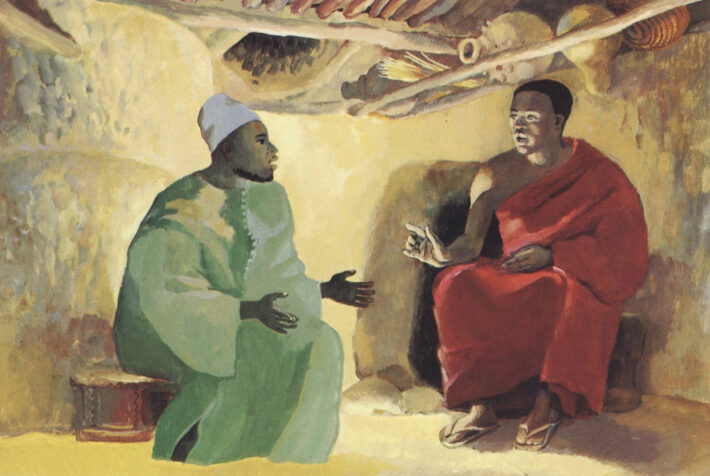
Christian Art | Easter To Pentecost
John 3: 7-15 Audio Bible KJV | King James Audio Bible | Daily Verses
7 Marvel not that I said unto thee, Ye must be born again.
8 The wind bloweth where it listeth, and thou hearest the sound thereof, but canst not tell whence it cometh, and whither it goeth: so is every one that is born of the Spirit.
9 Nicodemus answered and said unto him, How can these things be?
10 Jesus answered and said unto him, Art thou a master of Israel, and knowest not these things?
11 Verily, verily, I say unto thee, We speak that we do know, and testify that we have seen; and ye receive not our witness.
12 If I have told you earthly things, and ye believe not, how shall ye believe, if I tell you of heavenly things?
13 And no man hath ascended up to heaven, but he that came down from heaven, even the Son of man which is in heaven.
14 ¶ And as Moses lifted up the serpent in the wilderness, even so must the Son of man be lifted up:
15 That whosoever believeth in him should not perish, but have eternal life.
Jesus declares his divinity. No one, he tells Nicodemus, has yet ascended into heaven. Only Jesus knows heaven. Even while he is on earth as man, he is in heaven as God. Once Jesus has died and has risen from the dead, and then through the Ascension, then Jesus will be in heaven as man also.
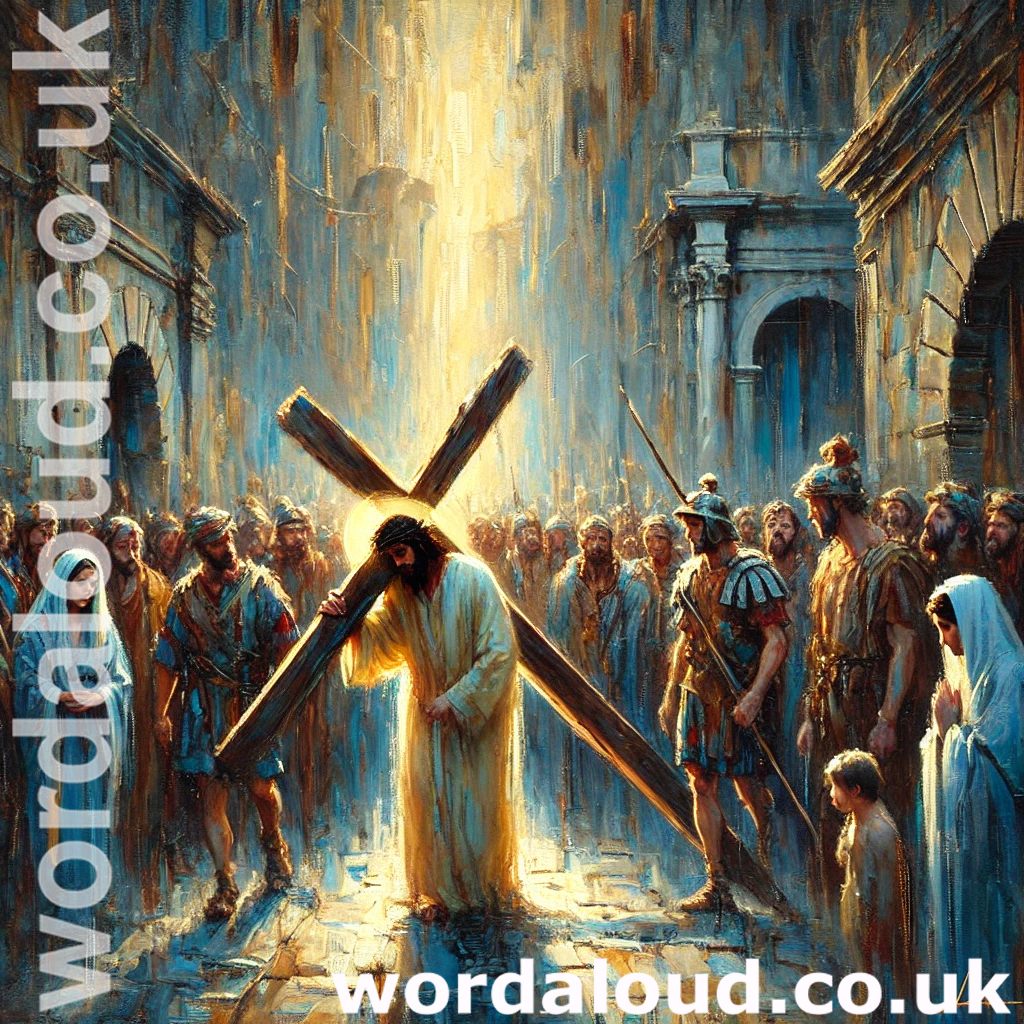
This is to be our gateway to heaven. Moses set the bronze serpent on the pole to cure those people who had been bitten by poisonous snakes in the wilderness (Numbers 21: 8-9). Jesus compares this to the crucifixion he must undergo. He will be raised on the cross so that we who look on Jesus with faith may be saved and enter into heaven also to enjoy eternal life.
Jesus has become man to make known to us the hidden mysteries of God and to free us from sin and death. It is difficult for us to understand the truth Christ brings to us with our intellect. We are not stupid when we cannot through human reason understand the totality of Christ’s life and teaching. We are called to behold Christ through faith, and to pray for an increase of faith so that we may the better behold the truth of Christ.
We may then welcome the gift of faith. Just as the wind blows, and we hear the sound of the wind and feel the wind blowing over us, so we experience the proximity and effects of the Holy Spirit.
Jesus has spoken to us in ways which have used an earthly language – he has taught us in terms of things we know about, quite everyday, normal things, through his parables – to direct us to some understanding of heavenly things. We are asked to reflect upon Jesus’ teaching and, through faith, to find our attention directed from the earth toward heaven. God became man, flesh, and lived with us as flesh, so that we should be able to transcend our fleshly, earthly understanding and attain to the life of the spirit in heaven.
‘For the Holy Spirit, the one Spirit of the Father and the Son, produces the same effect in those to whom he has granted the grace of divine adoption, as he also produced among those who in the Acts of the Apostles can be seen to have received the same Spirit. Concerning them it says that the multitude of those who believed were of one heart and soul; for the one Spirit of the Father and the Son, who is one God with the Father and the Son, had created a single heart and soul in the multitude of those who believed in God.’ St Fulgentius of Ruspe

Audio Bible KJV | King James Version | Endnotes
What Does It Mean To Be Born Again In Jesus?
To be born again in Jesus is to experience spiritual transformation that is necessary for a person to enter the kingdom of God. In John 3:3, Jesus tells Nicodemus that ‘unless one is born again, he cannot see the kingdom of God’. This transformation involves both a physical birth and a spiritual rebirth, as Jesus clarifies in John 3:5: ‘unless one is born of water and the Spirit, he cannot enter the kingdom of God.’
To Nicodemus, this idea seemed absurd. He couldn’t comprehend how a person could physically enter into his mother’s womb and be born again. Jesus then clarifies his statement by saying: ‘Except a man be born of water and of the Spirit, he cannot enter into the kingdom of God.’ (John 3:5) Jesus is emphasizing the importance of both physical birth and spiritual birth. Just as a person is physically born into the world, they must also be spiritually reborn to enter the kingdom of God.
Christian theologians have expounded upon the concept of being born again in Jesus. In his book Confessions, Saint Augustine of Hippo describes his own conversion experience, which he considers to be a rebirth. He writes: ‘Late have I loved you, O Beauty ever ancient, ever new, late have I loved you! You were within me, but I was outside, and it was there that I searched for you. In my unloveliness I plunged into the lovely things which you created. You were with me, but I was not with you.’ (Confessions, Book 10, Chapter 27) Augustine’s conversion experience was a moment of profound spiritual rebirth, in which he realized his need for God and turned his life towards Him.
In the Protestant tradition, the concept of being born again has been central to many revival movements.
One famous revival was the Great Awakening, which took place in the 18th Century. The Great Awakening was characterized by powerful preaching, emotional conversions, and a renewed emphasis on personal piety. One of the key figures of the Great Awakening was Jonathan Edwards, a Congregationalist minister who preached a sermon called ‘Sinners in the Hands of an Angry God’. In this sermon, Edwards describes the human condition as being utterly sinful and in need of divine intervention. He writes: ‘The God that holds you over the pit of hell, much as one holds a spider, or some loathsome insect over the fire, abhors you, and is dreadfully provoked: his wrath towards you burns like fire; he looks upon you as worthy of nothing else, but to be cast into the fire.’ (‘Sinners in the Hands of an Angry God’)
In the Catholic tradition, the concept of being born again is closely tied to the sacrament of baptism. In the Catechism of the Catholic Church, baptism is described as ‘the sacrament of faith’ and ‘the gateway to life in the Spirit’ (CCC 1213). Through baptism, a person is cleansed of their sins and receives the Holy Spirit. This spiritual rebirth is a necessary step towards salvation. As Pope John Paul II wrote: ‘In baptism we are immersed in the mystery of Christ’s death and resurrection and become new creatures, reborn in the Holy Spirit and incorporated into the Church, the Body of Christ.’ (Crossing The Threshold Of Hope)
Born Again Christians: Baptists And Evangelicals
Baptists and Evangelical Christians often speak of being born again as a personal experience in which a person accepts Jesus Christ as their Lord and Saviour. This transformation is seen as a moment of profound spiritual rebirth that challenges individuals to turn away from sin and to follow Christ with their whole hearts.
Baptists are a Christian denomination that emphasizes the authority of scripture and the importance of individual faith. They view baptism as an outward symbol of an inward change and believe that a person must be born again in order to be saved. For Baptists, being born again involves a personal experience of accepting Jesus Christ as one’s Lord and Savior and experiencing forgiveness for one’s sins. This experience is often described as a moment of profound spiritual transformation that leads to a new relationship with God.
Evangelicals are a broad category of Christians who share a commitment to the authority of scripture, personal faith, and the importance of evangelism. Like Baptists, Evangelicals place a strong emphasis on the concept of being born again as a necessary step towards salvation. They often see this experience as a moment of spiritual rebirth that leads to a new life of faith and service.
In the Evangelical tradition, being born again often involves a personal decision to accept Jesus Christ as one’s Lord and Savior. This decision is often accompanied by a sense of conviction about one’s sinfulness and a desire to turn away from sin and live a life that is pleasing to God. Many Evangelical Christians believe that being born again is not just a one-time experience, but an ongoing process of spiritual growth and transformation.
For both Baptists and Evangelicals, being born again is a central concept that shapes their understanding of salvation, faith, and Christian life. It represents a moment of profound spiritual transformation that leads to a new relationship with God and a life of faith and service.


Irenaeus reflects on the words of Hosea, repeated by Jesus, that God desires mercy rather than sacrifice. Irenaeus presents this not as a rejection of ritual worship in itself, but as a statement that God seeks faith, obedience, and righteousness as the basis for human salvation. Jesus uses the prophet’s teaching to challenge those who condemn the innocent, aligning his own authority with that of the prophetic tradition [ … ]
In the Bible, a miracle is an event that is not explicable by natural or scientific laws and is therefore attributed to a divine agency. Miracles are often seen as a sign of the intervention of God in the affairs of human beings. In the Old Testament, the most famous miracles are the Ten Plagues of Egypt, in which God punished the Pharaoh for refusing to release the Israelites from slavery, and the parting of the Red Sea, in which God allowed the Israelites to escape from the pursuing Egyptians by opening a path through the sea. In the New Testament, the miracles of Jesus are a central part of his ministry and are seen as evidence of his divinity. These include healings, such as the restoration of sight to the blind and the raising of the dead, and acts of nature, such as turning water into wine and walking on water. Is There A Theological Significance To Jesus’ Miracles? In the Christian tradition, the miracles performed by Jesus are seen as a manifestation of his divinity and as proof of his authority to teach and heal. Many of these miracles are described in the Gospels of the New Testament, which are the primary source of information about the life and teachings of Jesus. The purpose of the miracles, according to the Gospels, was to demonstrate Jesus’ power over natural forces and to show that he had the authority to forgive sins and offer salvation to those who believed in him. Why Did Jesus Ask To Keep His Miracles Secret? ‘Tell No One Of This.’ In the Gospels, there are a few instances where Jesus tells people not to tell others about what he has done for them. For example, in the Gospel of Matthew, after Jesus healed a man who was possessed by demons, he told the man, ‘See that you tell no one anything, but go, show yourself to the priest and offer the gift that Moses commanded, as a proof to them’ (Matthew 8:4). In this case, it seems that Jesus was concerned that the man’s testimony might not be believed or might be misunderstood, and so he asked him to keep the experience to himself for the time being. It is difficult to say for sure why Jesus might have asked someone to keep quiet about a miracle without knowing the specific context in which the request was made. However, some possible reasons that come to mind include: To avoid drawing unnecessary attention to himself. In the Gospels, Jesus often tries to avoid drawing too much attention to himself, especially from the authorities who are hostile to him. Asking someone to keep quiet about a miracle might be one way of avoiding unwanted attention and allowing Jesus to continue his ministry without interference. To allow the person who was healed to experience the transformation for themselves. In some cases, the person who was healed might have been skeptical or unsure of what had happened to them. Asking them to keep quiet about the miracle might have given them time to reflect on the experience and come to their own understanding of it without being influenced by others. To test the person’s faith. In some cases, Jesus might have asked someone to keep quiet about a miracle as a test of their faith. If they were truly grateful for what Jesus had done for them, they would be willing to follow his instructions and trust that he had a good reason for asking them to keep quiet. These are just a few possible reasons why Jesus might have asked someone to keep quiet about a miracle. It is important to remember that the Gospels are ancient texts and that we must be careful not to impose our own interpretations on them without considering the historical and cultural context in which they were written. To avoid creating conflict or division. In the Gospels, Jesus often encounters people who are skeptical or hostile to his teachings, and he sometimes tries to avoid confrontations with them. Asking someone to keep quiet about a miracle might be one way of avoiding a confrontation or a heated debate that could disrupt his ministry. To avoid being misunderstood or misrepresented. In some cases, the person who was healed might not have understood the full significance of what Jesus had done for them, and they might have tried to explain it in a way that distorted or misrepresented the truth. Asking them to keep quiet might have given Jesus time to explain things to them more fully and help them to understand the true meaning of the miracle. To avoid becoming a spectacle. In the Gospels, there are many instances where people are amazed by the miracles that Jesus performs, and they often try to make him into a kind of celebrity or showman. Asking someone to keep quiet about a miracle might have been one way of avoiding this kind of attention and keeping the focus on the message that Jesus was trying to convey. What Is The Significance Of Miracle Of The Wedding At Cana? In the Christian tradition, the wedding at Cana is significant because it is the first of the miracles performed by Jesus that is recorded in the Gospels of the New Testament. This event is described in the Gospel of John, where it is said that Jesus, along with his mother Mary and his disciples, attended a wedding in the town of Cana. At the wedding, the host ran out of wine, and Mary asked Jesus to help. In response, Jesus turned water into wine, which is seen as a miraculous act that demonstrated his power and authority. In the Gospel of John, after Mary asks Jesus to help with the wine at the wedding in Cana, he replies, “Woman, what does this have to do with me? My hour has not yet come” (John 2:4). This statement is often seen as indicating that Jesus was aware […]
This powerful reading from Saint Fulgentius offers a rich meditation on the meaning of Christ’s sacrifice, drawing us deeply into the mystery at the heart of the Christian faith. It’s a fitting reflection for the final days of Lent, as we prepare to enter into Holy Week and contemplate Christ’s passion, death, and resurrection [ … ]