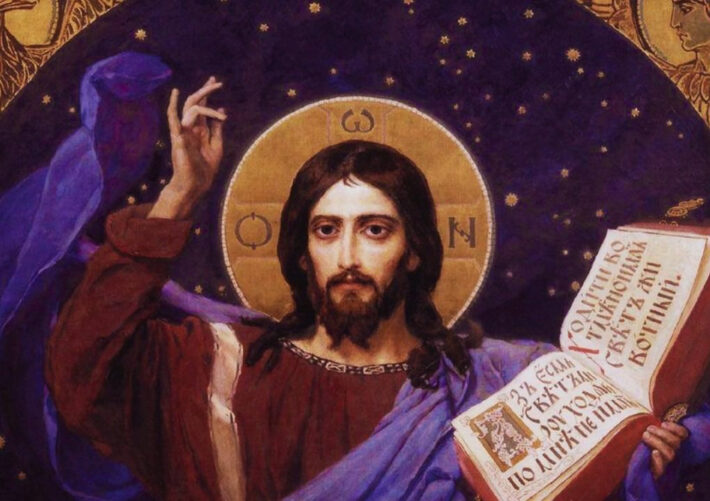
Christian Art | The Holy Spirit At Pentecost
John 16: 12-15 | King James Audio Bible | Daily Verses
12 I have yet many things to say unto you, but ye cannot bear them now.
13 Howbeit when he, the Spirit of truth, is come, he will guide you into all truth: for he shall not speak of himself; but whatsoever he shall hear, that shall he speak: and he will shew you things to come.
14 He shall glorify me: for he shall receive of mine, and shall shew it unto you.
15 All things that the Father hath are mine: therefore said I, that he shall take of mine, and shall shew it unto you.
We have heard Christ’s teachings, the clearest declarations of his divinity as God the Son, and his parables; we have witnessed his signs and miracles; and we have suffered and rejoiced through his death and resurrection. We know too that it is through the gift of the Holy Spirit that we are called to believe, and enabled to do so.
In these Bible verses, Jesus reveals some part of the truth of the mystery of the Trinity. Jesus tells us that, as everything the Father has belongs to the Son, and as everything the Son has belongs to the Father, so also the Spirit has what belongs to the Father and the Son, that is, the divine essence. The three persons of the Blessed Trinity are one. They are, indeed, the ultimate model of Christian brotherhood, and of the Church.
The coming of the Holy Spirit at Pentecost will bring clarity, truth and faith. It is through the action of the Holy Spirit that we glorify God. Inspired by the Holy Spirit, we recognize the Father through the Son. It is the gift of the Holy Spirit that enables our prayer. Through the gift of the Holy Spirit at Pentecost, the Revelation is made perfect and complete.
‘The days between the Lord’s resurrection and his ascension, my dear brethren, did not pass away to no purpose: great mysteries were established in them, and great truths revealed.
‘During these days fear of the horror of death was taken away, and the immortality of the body as well as the soul was made known. During them the Lord breathed on all his apostles and filled them with the Holy Spirit.’ Pope St Leo the Great
King James Audio Bible KJV | King James Version Endnotes
What Is The Holy Spirit?
The Holy Spirit is no mere theological concept or distant idea, rather a person, a living and active presence who empowers us to live out our faith in the world.
Saint Augustine saw the Holy Spirit as the bond of love between the Father and the Son, while Martin Luther emphasized the role of the Holy Spirit in bringing us to faith and keeping us in the faith.
In more recent times, theologians Karl Rahner and Jürgen Moltmann have explored the nature of the Holy Spirit. Rahner saw the Holy Spirit as the ‘transcendental horizon’ of human existence, while Moltmann emphasized the role of the Holy Spirit in bringing about social and political transformation.
As Christians, we believe that the Holy Spirit is the ‘living presence’ of God in our lives, guiding us, inspiring us, and sanctifying us. In the words of Pope Francis, the Holy Spirit ‘moves us, makes us walk, helps us to go forward in life and in the Christian vocation’ (Homily, 2015).
To understand the nature of the Holy Spirit is to keep in mind our journey in faith. As Pope Francis writes, ‘Faith is a response to the word of God, which invites us to entrust ourselves to him and to be transformed by his grace.’ (Lumen Fidei, 40) In other words, faith is not just a matter of intellectual assent, but a lived experience that involves our whole being.
The Holy Spirit Changes Us
As Christians, we are called to be open to the workings of the Holy Spirit in our lives. This means being willing to step out of our comfort zones and to follow where the Spirit leads us, even if it means taking risks or going against the prevailing culture.
In the words of Pope Francis, ‘The Holy Spirit upsets us because it moves us, it makes us walk, it pushes the Church forward. And we are like Peter at the Transfiguration: “Ah, how wonderful it is to be here like this, all together!”… But don’t bother the Holy Spirit; let him continue to upset us, but always to move us forward’ (Homily, 2013)
This call to openness and transformation can be challenging, but it is also deeply rewarding. As we allow ourselves to be guided by the Holy Spirit, we are transformed from within, and we become more fully the people that God has called us to be.
In the words of Saint Paul, ‘For all who are led by the Spirit of God are children of God.’ (Romans 8:14) As children of God, we are called to live lives of love, compassion, and service, and to be agents of God’s love and grace in the world.
Our understanding of the Spirit is not fixed or static. Rather, it is something that grows and evolves over time, as we deepen our relationship with God and with one another.
In the words of Pope Francis, ‘The Holy Spirit is the living presence of God in the Church. He keeps the Church going, keeps the Church moving forward. More and more, beyond the limits, onwards. The Holy Spirit with his gifts guides the Church. You cannot understand the Church of Jesus without this Paraclete, whom the Lord sends us for this very reason.’ (Homily, 2013)
This understanding of the Holy Spirit as a dynamic and living presence is echoed in the teachings of many theologians throughout the centuries. For example, in the words of medieval theologian Thomas Aquinas, ‘The Holy Spirit is called the love of God…because He unites and links us to God, and communicates to us the love by which He loves Himself.’ (Summa Theologica)
Protestant theologian Karl Barth described the Holy Spirit as ‘the third mode of the divine being’ (Church Dogmatics), emphasizing the Spirit’s essential role in bringing about God’s redemptive work in the world.


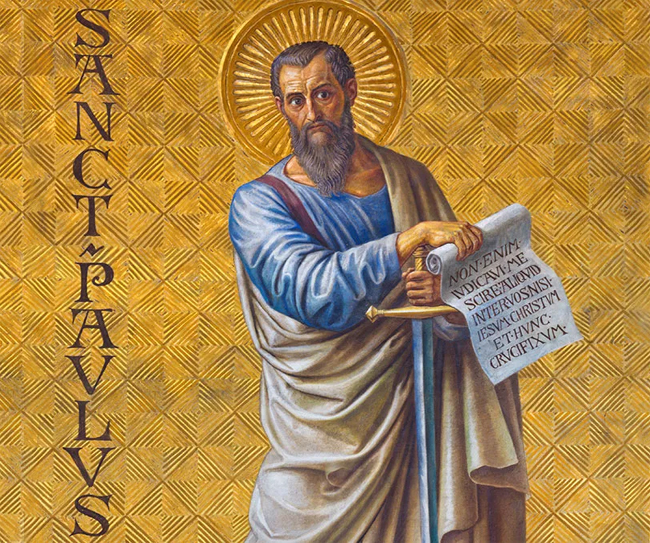
Saint Paul, whose birth name was Saul, was born in Tarsus in the first century. Saint Paul was a member of the Jewish diaspora, meaning that he grew up outside of Palestine, in a community of Jews living in the Roman Empire. This would be in the Hellenic lands, meaning that these were Greek-speaking areas, as such dating from the conquests of Alexander the Great. Saul’s parents were both devout Jews, and he was raised in a strict religious environment that emphasized obedience to the Jewish law and traditions [ … ]
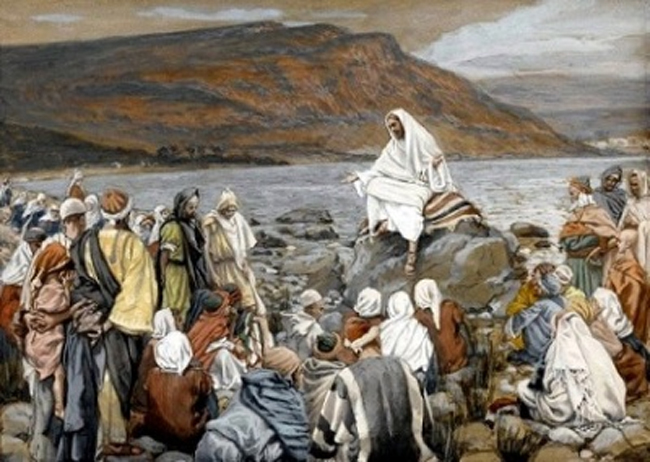
We learn so much about our true relationship with God and with other people in these Gospel verses. Perhaps we might say rather, we are reminded of so much, because these are Christian truths we have long been taught and have long known, but which often are neglected and forgotten. We are recalled in these Gospel verses to Christian truth [ … ]
Psalm 49 is a psalm of balance, expressing an engagement with life’s realities while maintaining a perspective beyond the material. The psalm examines pursuit of prosperity and calls for humility in recognizing ultimate limitations of material wealth. The psalm invites solace in redemption offered by the Divine, affirming such vanity of riches and that worth transcends wealth – money [ … ]