
Christian Art | Thy Faith Hath Made Thee Whole
Matthew 9: 18-26 – Week 14 Ordinary Time, Monday (King James Audio Bible KJV, Spoken Word)
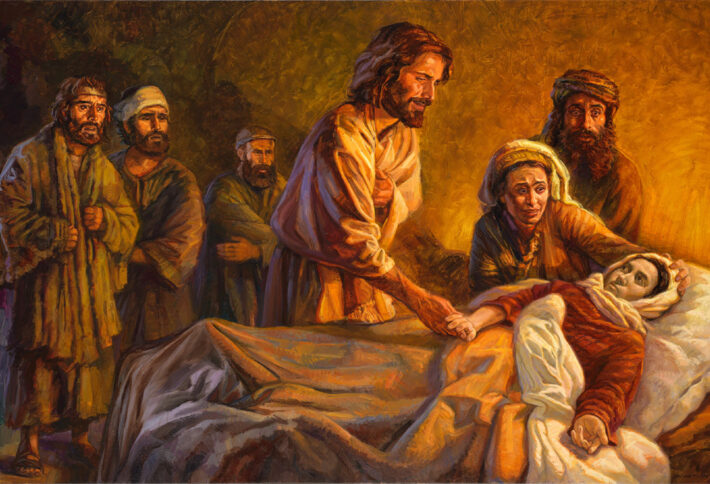
18 ¶ While he spake these things unto them, behold, there came a certain ruler, and worshipped him, saying, My daughter is even now dead: but come and lay thy hand upon her, and she shall live.
19 And Jesus arose, and followed him, and so did his disciples.
20 ¶ And, behold, a woman, which was diseased with an issue of blood twelve years, came behind him, and touched the hem of his garment:
21 For she said within herself, If I may but touch his garment, I shall be whole.
22 But Jesus turned him about, and when he saw her, he said, Daughter, be of good comfort; thy faith hath made thee whole. And the woman was made whole from that hour.
23 And when Jesus came into the ruler’s house, and saw the minstrels and the people making a noise,
24 He said unto them, Give place: for the maid is not dead, but sleepeth. And they laughed him to scorn.
25 But when the people were put forth, he went in, and took her by the hand, and the maid arose.
26 And the fame hereof went abroad into all that land.
The two miracles, which occur almost simultaneously in these Gospel verses, shed light upon one another, as Jesus brings two people back to their communities, the woman with the issue of blood, a haemorrhage, because this would render her impure and so outcast, and the girl from death. Two aspects of the Law regarding purity are juxtaposed, and with them sin and death.
The ruler who comes to Jesus is named as Jairus in the Gospels of Mark and Luke. He is the leader of the synagogue, an important man in the community, and yet now he doesn’t care what others might think as he humbles himself before Jesus, showing obeisance. Such is his faith in Jesus, and the overriding imperative of his concern to restore his daughter. He asks Jesus for an extraordinary miracle, restoring the dead to life. We are alerted to the capacity for Christian faith in the Jewish community.
Mark tells us that the woman with the haemorrhage has spent all she had on doctors, but her situation, far from improving, has only grown worse. It is in hearing of Jesus that a new hope has grown up in her. She has told herself that if she can but touch Jesus’ clothes, she can be saved – quite contrary to the religious orthodoxy of the time, and a bold step as she embraces the new wine Jesus offers. Moved by faith, the woman overcomes obstacles, including the religious teachings of the time, to be healed by Jesus – though Jesus says it is her own faith that has healed her. The woman is accepted into the new community of Jesus as Jesus calls her, ‘my daughter.’
The crowds and the hired flute players have assembled to provide, as was customary, a very visible and noisy show of mourning for the death of the little girl. They laugh when Jesus tells them the girl is not dead. It is the laughter of Abraham and Sarah (cf. Genesis 17: 17, and 18: 12-14), the laughter of those who refuse to believe that with God, everything is possible.
Jesus crosses a boundary to touch the girl, since to touch a dead body would lead to ritual impurity, and the girl returns from death to life. This is a sign of the ultimate miracle for all of us. As Jesus raises this little girl, as he raises Lazarus and also the son of the widow of Nain, so in his own resurrection we are saved from death to life eternal, our first inheritance finally restored to us.
Miracle | Prayer | Healing
Concluding Prayer
Father, Creator of all that is good,
you have called men to work in your world,
and by their co-operation to better the condition of mankind.
Grant that we may always work together as children of your family,
and love all men as our brethren.
Through Christ our Lord.


King James Audio Bible | Endnotes
Thy Faith Hath Made Thee Whole
The passage Matthew 9:18-26 depicts two instances where Jesus heals individuals through their faith. In both cases, the faith of those seeking healing is recognized by Jesus as the key to their recovery. The words ‘Thy faith hath made thee whole’ are spoken by Jesus to the woman who touches his cloak and is healed of her long-standing issue of blood.
The passage begins with a ruler, who falls at Jesus’ feet and pleads for his daughter’s life, saying: ‘My daughter is even now dead: but come and lay thy hand upon her, and she shall live.’ (Matthew 9:18) This man, Jairus, is a respected member of the Jewish community, and his act of falling at Jesus’ feet demonstrates both his humility and faith in Jesus’ power to heal. Jesus agrees to go with Jairus to his home.
On the way to Jairus’ house, a woman who has been suffering from an issue of blood for twelve years approaches Jesus from behind and touches the hem of his garment, saying to herself: ‘If I may but touch his garment, I shall be whole.’ (Matthew 9:21) This woman, who is unnamed in the text, is considered ritually unclean and is thus shunned by society. She is desperate for healing and believes that even touching Jesus’ cloak will be enough to heal her.
When Jesus feels the touch, he turns to the woman and says: ‘Daughter, be of good comfort; thy faith hath made thee whole.’ (Matthew 9:22) This phrase, ‘thy faith hath made thee whole,’ is significant in that it demonstrates the importance of faith in Jesus’ healing power. The woman is not healed because of her physical contact with Jesus, but because of her faith in him.
Jesus then arrives at Jairus’ house, where he is met with skepticism from mourners who are already present. Jesus says: ‘Why make ye this ado, and weep? the damsel is not dead, but sleepeth.’ (Matthew 9:24) Jesus proceeds to raise Jairus’ daughter from the dead, saying in intimate language: ‘Maid, arise.’ (Matthew 9:25)
Hebrews 11:1 defines faith as ‘the substance of things hoped for, the evidence of things not seen’. a fundamental aspect of one’s relationship with God.
The Church has emphasized the importance of faith in healing throughout its history. Saint Augustine wrote about the power of faith in healing, saying: ‘Faith is to believe what we do not see; and the reward of this faith is to see what we believe.’ Similarly, Saint Thomas Aquinas emphasized the role of faith in healing, stating that ‘faith is necessary for the healing of the soul, as well as for the healing of the body’.
Protestant theologians have also emphasized the importance of faith in healing. Martin Luther wrote that ‘Faith is a living, daring confidence in God’s grace, so sure and certain that a man could stake his life on it a thousand times’. Similarly, John Calvin emphasized the role of faith in healing, stating that ‘faith alone distinguishes between God’s true children and the devil’s counterfeits’.
In contemporary Christianity, Evangelist and faith healer Benny Hinn, for example, has emphasized the role of faith in healing, stating that ‘Faith is the key to everything in the kingdom of God. Faith in God releases His power to heal and to do miracles’.
Similarly, Joyce Meyer, a popular Christian speaker and author, has emphasized the importance of faith in healing, stating that ‘Faith is the force that releases God’s power into our lives. We cannot separate faith and healing’.
We ought to note that there is also a danger of placing too much emphasis on faith as the sole factor in healing. This can lead to blaming the sick for their lack of faith or to dismissing the importance of medical treatment.
In his book Miracles, C.S. Lewis cautions against this kind of thinking, saying: ‘I do not mean that faith healing is never miraculous…But what is quite certain is that if we cannot bring ourselves to grant any other kind of miracle, granting faith healing is a mere fake. For the whole question is whether miracles occur, and that is not a question about healing but about the supernatural.’


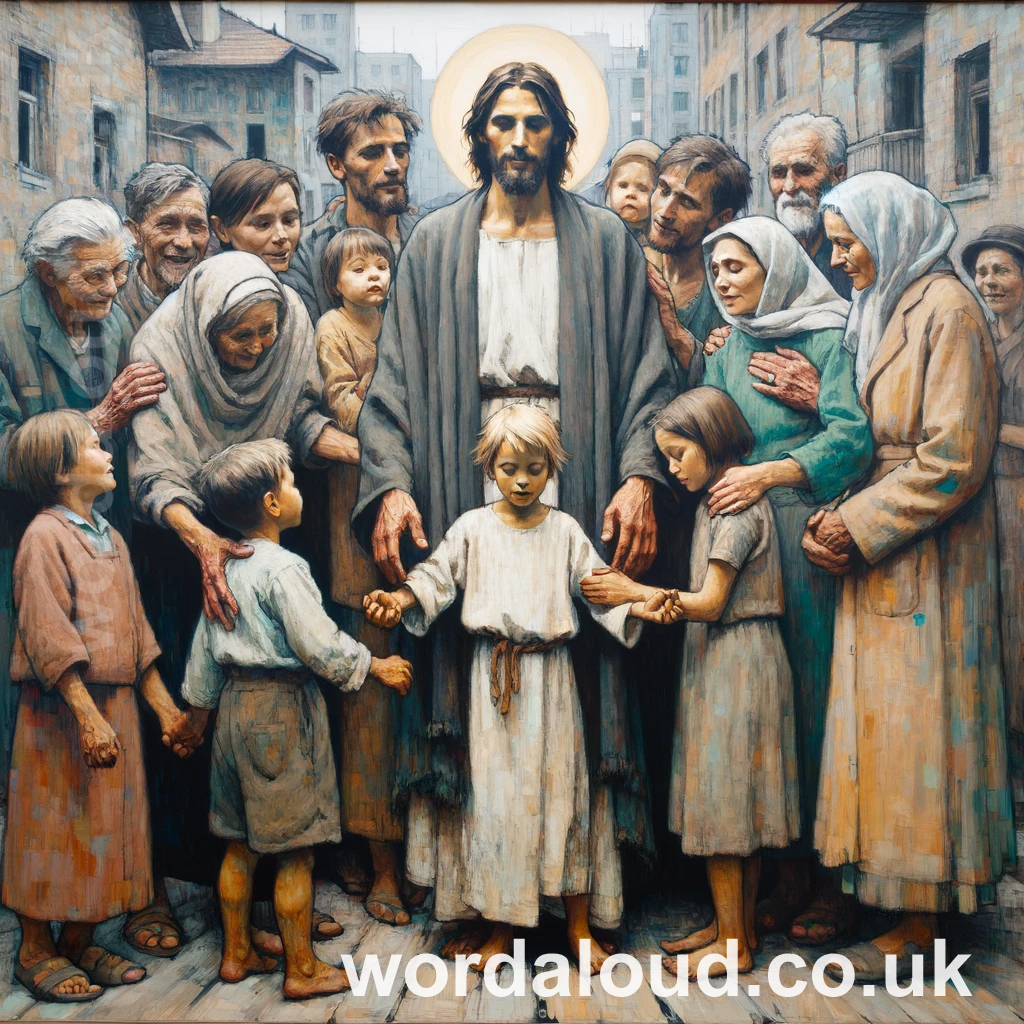
Dear Jesus, Thank you for the blessing of family. Help me to appreciate and cherish my family members, both biological and spiritual. Guide me to be a source of love, support, and encouragement to them. Grant us the strength to overcome challenges together and to celebrate our joys with gratitude. May our family be a reflection of your love and grace. Help us to forgive one another, to be patient, and to build each other up. Let your peace reign in our home, and may we always seek to do your will. Amen [ … ]
When we bear false witness about ourselves, pretending to be faultless or righteous, we deceive not only others but also ourselves. Jesus calls us to be authentic, acknowledging our need for his grace and our dependence on his power to live according to his commandments [ … ]
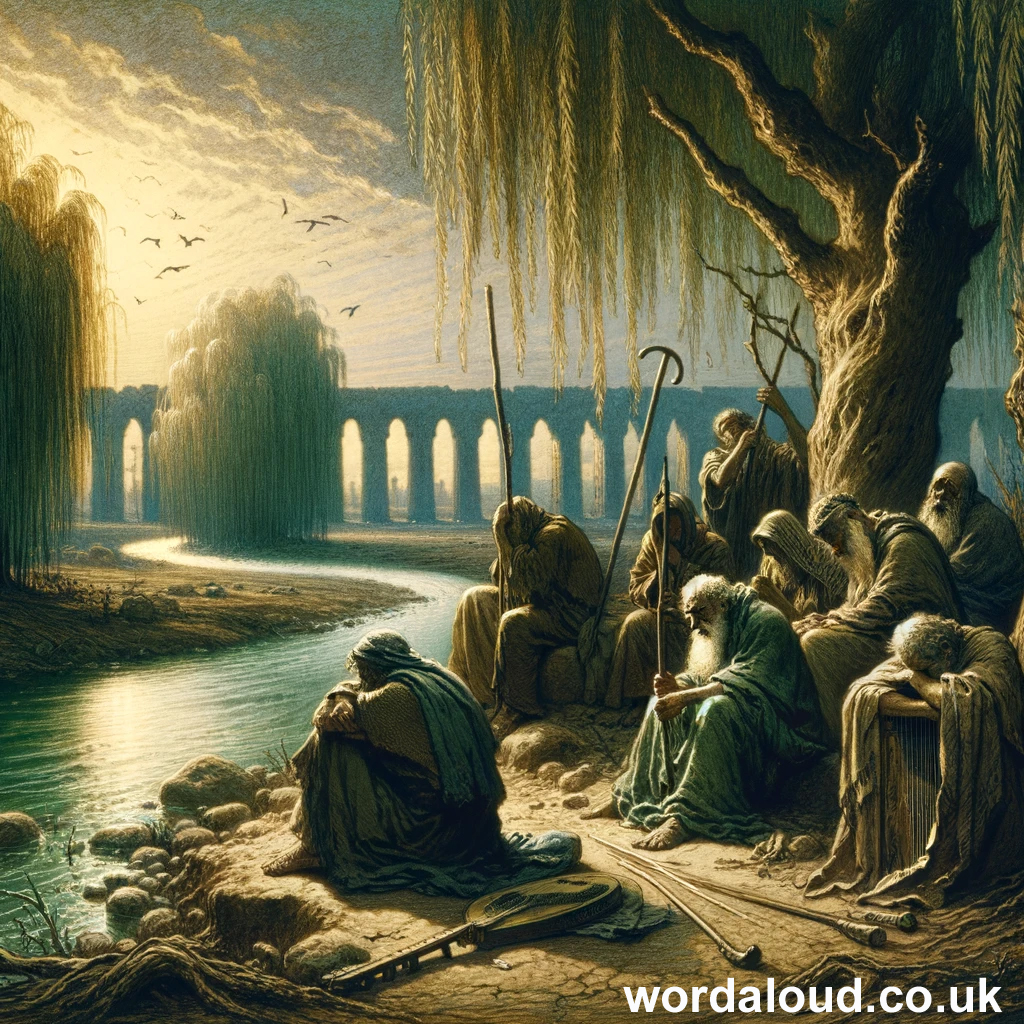
Psalm 137 expresses complexities of exile and displacement. The psalm’s candid expression of sorrow, defiance, and longing for justice offer insights into an enduring human struggle to maintain identity and to seek justice in the face of overwhelming odds [ … ]
