
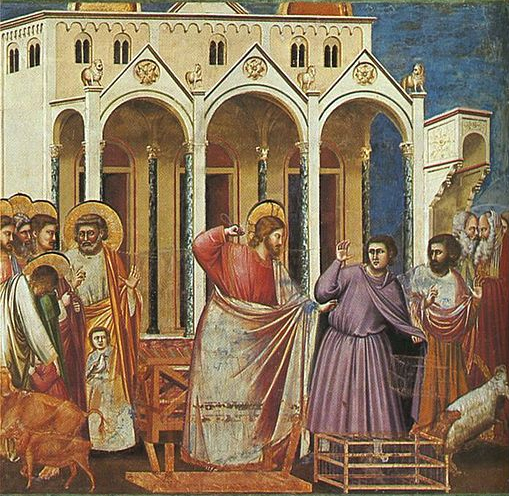
Christian Art | Jesus Cleans The Temple
John 2: 13-25 – Lent Week 3 (Year B), Sunday (Also: Dedication of the Lateran Basilica, as John 2: 13-22) (Audio Bible KJV, Spoken Word)
13 ¶ And the Jews’ passover was at hand, and Jesus went up to Jerusalem,
14 And found in the temple those that sold oxen and sheep and doves, and the changers of money sitting:
15 And when he had made a scourge of small cords, he drove them all out of the temple, and the sheep, and the oxen; and poured out the changers’ money, and overthrew the tables;
16 And said unto them that sold doves, Take these things hence; make not my Father’s house an house of merchandise.
17 And his disciples remembered that it was written, The zeal of thine house hath eaten me up.
18 ¶ Then answered the Jews and said unto him, What sign shewest thou unto us, seeing that thou doest these things?
19 Jesus answered and said unto them, Destroy this temple, and in three days I will raise it up.
20 Then said the Jews, Forty and six years was this temple in building, and wilt thou rear it up in three days?
21 But he spake of the temple of his body.
22 When therefore he was risen from the dead, his disciples remembered that he had said this unto them; and they believed the scripture, and the word which Jesus had said.
23 ¶ Now when he was in Jerusalem at the passover, in the feast day, many believed in his name, when they saw the miracles which he did.
24 But Jesus did not commit himself unto them, because he knew all men,
25 And needed not that any should testify of man: for he knew what was in man.
The Passover was the most important religious feast for the Jewish people. It was celebrated on the fourteenth day of the month of Nisan, a spring month whose date, according to our solar calendar, varies following the lunar cycle, just as Easter does. It was followed by the festival week of Azymes, an English word (derived from the Greek ἄζυμος) for unleavened bread in Biblical times.
During this period, according to the Law of Moses, every male had to appear before God, in Christ’s time by making a pilgrimage to the Temple in Jerusalem. By going to Jerusalem, Jesus shows that he observes the Law of God.
Jesus, though, is no ordinary pilgrim. Just as in our time Jesus enters into the Christian soul to reform abuses and to purify us of our sins, so when he enters the Temple he sees the abuses there and is determined to reform them.
The Temple authorities have allowed these abuses to develop, because they made money from them. The necessary Passover sacrifices are sold in the Temple grounds. Moreover, the permitted currency to purchase the offerings, the shekel, required an exchange of other coins, such as drachmas and denarii, which bore the image of pagan rulers and were considered impure. We may imagine a noisy, stinking combination of a livestock market and a stock exchange: hardly a devout place of prayer.
Jesus is furious and, as he cleanses the Temple, he reveals himself as the Son of God, calling the Temple his Father’s house. His disciples recognize that he is fulfilling the words of Psalm 69/68: ‘For the zeal of thine house hath eaten me up; and the reproaches of them that reproached thee are fallen upon me.’ The verse anticipates Jesus’ treatment by those who will seek to destroy him.
In response to the Jews’ challenge, Jesus identifies the Temple with his own body. The Temple was an imperfect prefiguring of the full presence of God among men, which is Jesus, the Word of God made flesh. It is fitting that he alludes to the destruction of the Temple, which will occur in the year 70, while he speaks of his own resurrection from the dead. Jesus is both the Temple and the High Priest of the New Covenant. The Temple we read of in these Bible verses is obsolete.
Jesus’ meaning is, for the moment, obscure. It is later, following his resurrection, that the disciples remember his saying and understand it.
Father, you have constituted your Son, Jesus, new temple of the new and eternal alliance, built not by the hands of human beings but by the Holy Spirit. Grant that, as we welcome in faith his Word, we may dwell in him and thus adore you in spirit and in truth. Open our eyes to the needs of our brothers and sisters who are the members of the body of Christ, so that in serving them we may offer you the cult that you desire from us. We ask you this through Christ our Lord. Amen.
Audio Bible KJV | Endnotes
Jesus Is The Temple | The Holy One | Purity Of Faith
Jesus enters the Temple and drives out the merchants and money changers who are conducting business within its walls. He declares: ‘Take these things hence; make not my Father’s house an house of merchandise.’ (John 2:16, KJV) When the Jews ask him to show a sign that he has the authority to do this, he responds cryptically: ‘Destroy this temple, and in three days I will raise it up.’ (John 2:19, KJV)
This is understood as a reference to Jesus’ own body as the new Temple, which will be destroyed through his crucifixion but then raised up again in his Resurrection. Saint Paul writes: ‘Do you not know that you are God’s temple and that God’s Spirit dwells in you?… For God’s temple is holy, and you are that temple.’ (1 Corinthians 3:16-17, ESV)
Jesus not only announces his death and Resurrection, but also the transformation of the entire concept of the Temple. The old Temple, made of stones and located in a specific physical location, is replaced by the new Temple of Jesus’ body, which is present wherever his followers gather in his name. As St. Augustine wrote: ‘The old Temple was destroyed and the new Temple of Christ’s body was raised up, because the reality of which the old Temple was a type had now appeared.’ (Sermon 339A on the New Testament)
The passage also is understood as a prefiguration of the crucifixion and Resurrection. The destruction of the old Temple and the raising up of the new Temple of Christ’s body are seen as foreshadowing of Jesus’ own death and Resurrection. As St. Thomas Aquinas wrote: ‘Christ spoke of the destruction of the Temple, which was a figure of his body, and of its restoration, which was a figure of his Resurrection.’ (Commentary on John, 2:19-22)
Furthermore, the passage can be seen as a call to embrace the way of the Cross. Jesus’ announcement of his own death and Resurrection is a reminder that the path to eternal life involves sacrifice and suffering. As St. Bonaventure wrote: ‘In these words [Destroy this temple, and in three days I will raise it up] he taught us that there is no Resurrection without the Cross.’ (The Life of St. Francis) By embracing the way of the Cross, we can be transformed into the new Temple of Christ’s body and enter into the fullness of eternal life.
True Faith | The Body Is A Temple
Within the passage is a contrast between the external and internal aspects of religious practice. The merchants and money changers in the Temple engage in external practices of religion, buying and selling items for sacrifice, but they miss the internal essence of what it meant to worship God. Jesus’ action of driving them out is a call to prioritize the internal aspect of our relationship with God and to recognize the futility of external practices without true faith and devotion.
This theme is also present in Jesus’ dialogue with Nicodemus in the following chapter, where he speaks of the need for spiritual rebirth rather than merely external adherence to religious laws. This emphasis on the internal aspect of faith and the need for spiritual transformation is a key aspect of the Christian understanding of the Cross and the Resurrection.
In addition, the passage can be seen as a challenge to religious authority and tradition. Jesus’ actions in the Temple are a challenge to the religious establishment, who saw Jesus as a threat to their power and authority. In this sense, Jesus’ announcement of his own destruction and Resurrection can be seen as a rejection of the religious traditions and practices of his time and an affirmation of a new way of relating to God based on faith, love, and sacrifice.
As St. Paul writes: ‘For the word of the cross is folly to those who are perishing, but to us who are being saved it is the power of God.’ (1 Corinthians 1:18, ESV) The Cross and Resurrection of Christ represent a radical transformation of the way we understand and relate to God, calling us to a deeper and more authentic faith and a willingness to embrace sacrifice and suffering as definitive of our journey towards eternal life.
The Temple As The Body In Christian Faith
The passage in Saint John’s Gospel speaks to the concept of Jesus as the new Temple, the dwelling place of God among his people. In the Old Testament, the Temple was the physical place where God’s presence was believed to reside among the Israelites. However, with the coming of Jesus, he becomes the new Temple, the place where God’s presence dwells among his people in a new and profound way.
Through Jesus’ death and Resurrection, Jesus becomes the new Temple, the place where God’s presence dwells among his people in a new and transformative way.
Additionally, we understand Christian faith to be thoroughly embodied. Our physical body is a temple – we are not an esoteric religion in the sense of imagining we are disembodied. Indeed, in the credo we look forward to the bodily resurrection and a new world.
This understanding of Jesus as the new Temple is further developed in the book of Revelation, where John sees a vision of the New Jerusalem, the dwelling place of God among his people. In this vision, there is no physical Temple, but rather, ‘the Lord God Almighty and the Lamb are its temple’ (Revelation 21:22, ESV). The Cross and Resurrection of Christ represent the fulfilment of this vision, where Jesus becomes the new Temple and the means by which we are reconciled to God and receive eternal life.
Through his actions in the Temple, Jesus challenges Christians to prioritize internal aspects of our faith and recognize the futility of external religious practices without true faith and devotion. Jesus also declares himself to be the new Temple, the place where God’s presence dwells among his people in a new and transformative way. Ultimately, the Cross and Resurrection of Christ represent a radical transformation of the way we understand and relate to God, calling us to a deeper and more authentic faith and a willingness to embrace sacrifice and suffering as part of our journey towards eternal life.




In the Catholic Church, Purgatory is believed to be a place or state of suffering that is temporary and where the souls of those who have died in a state of grace but are not yet fully purified are purified before they can enter heaven. It is believed to be a place of spiritual and moral purification, where the soul is cleansed of any remaining attachments to sin [ … ]
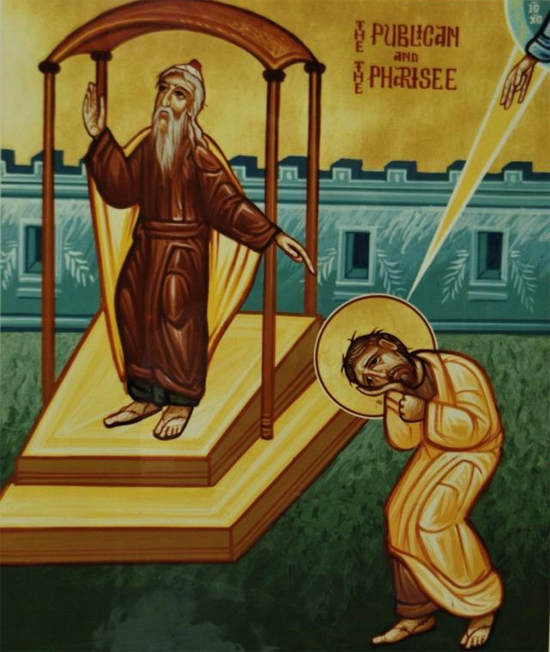
Jesus’ critique of the scribes and the Pharisees continues in today’s Gospel verses. The accusation is constant: they are hypocrites. The imagery in part remains constant: these hypocrites put on outward shows of purity, and yet their hearts are corrupt and their behaviour is corrupt. This imagery now develops. Woe unto you! For you are as painted tombs, all white and purportedly pure and true on the outside, while within the dead flesh rots. In their souls, the scribes and the Pharisees are unclean. Ironically, they are in themselves a violation of the laws of purity. In their hearts, the scribes and the Pharisees carry spiritual death [ … ]
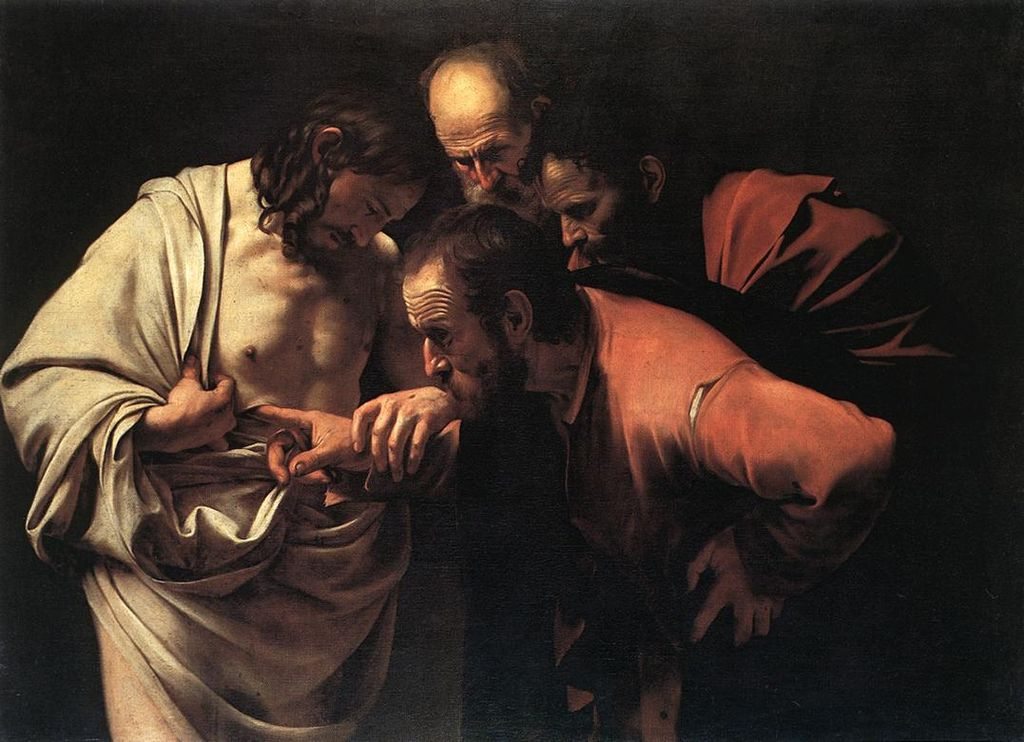
Jesus visits the disciples, where they meet in a locked house, to bring them faith and reassurance, and to entrust them with their evangelical mission to spread the good news about Christ throughout the world. Christ’s is now a glorified body. A locked door is no obstacle to him. He is no longer bound by the limitations of space and time. In Luke’s Gospel, we are told how the disciples are, understandably, frightened by the appearance of Jesus. They think he must be a spirit. Now, to reassure the disciples and help them to know the truth of his resurrection, Jesus offers his body to them. This, he lets them see, is Jesus of Nazareth, who was crucified and, as he promised, has risen from the dead [ … ]
