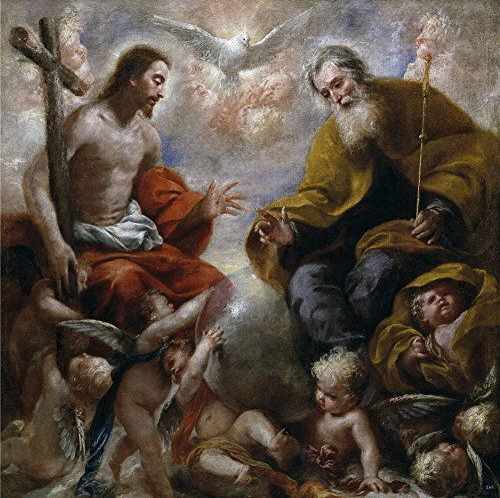
Christian Art | God The Son
John 5: 31-47 – Lent Week Four, Thursday (Audio Bible KJV, Spoken Word)
31 If I bear witness of myself, my witness is not true.
32 ¶ There is another that beareth witness of me; and I know that the witness which he witnesseth of me is true.
33 Ye sent unto John, and he bare witness unto the truth.
34 But I receive not testimony from man: but these things I say, that ye might be saved.
35 He was a burning and a shining light: and ye were willing for a season to rejoice in his light.
36 ¶ But I have greater witness than that of John: for the works which the Father hath given me to finish, the same works that I do, bear witness of me, that the Father hath sent me.
37 And the Father himself, which hath sent me, hath borne witness of me. Ye have neither heard his voice at any time, nor seen his shape.
38 And ye have not his word abiding in you: for whom he hath sent, him ye believe not.
39 ¶ Search the scriptures; for in them ye think ye have eternal life: and they are they which testify of me.
40 And ye will not come to me, that ye might have life.
41 I receive not honour from men.
42 But I know you, that ye have not the love of God in you.
43 I am come in my Father’s name, and ye receive me not: if another shall come in his own name, him ye will receive.
44 How can ye believe, which receive honour one of another, and seek not the honour that cometh from God only?
45 Do not think that I will accuse you to the Father: there is one that accuseth you, even Moses, in whom ye trust.
46 For had ye believed Moses, ye would have believed me: for he wrote of me.
47 But if ye believe not his writings, how shall ye believe my words?
The Jews – often in the Gospel of John a generic term for those who reject Christ, or those who are so muddled, contentious and sectarian among themselves that they threaten the continuity of themselves in the Law – do not reject Jesus for any good reason. They do so rather because they cling to what precious little they have, within their prison walls, and so they deliberately blind themselves to the universal, and universalizing, truth which Christ brings. Jesus knows this. Nevertheless, through justice, he must give to the Jews this additional opportunity to listen to his teaching and recognize the truth of who he is. We may imagine that Jesus is truly desperate for the people of God to put aside their differences and truly be with God.
Jesus, God the Son, humbles himself now by saying that he will not now ask to be recognized by his own testament. Nonetheless, he wishes to save the people and, in order to achieve this, have them recognize the truth of his being and of his preaching.
Jesus cites, therefore, the witness of John the Baptist, of his own miracles, of his Father, and of the prophets of the Old Testament of the Bible.
Jesus celebrates the life of John the Baptist. His doing so points additionally to some of the failings of the Jews, who may not have been true and constant in their regard for the teachings offered to them. ‘He was a burning and a shining light: and ye were willing for a season to rejoice in his light.’ There is the suggestion of a passing regard, whereas in truth John the Baptist prepared the way for the people to welcome Christ.
We recall the fate of John the Baptist, as of other prophets.
Jesus tells the Jews to search the scriptures. He implies both that through doing so they will discover the truth about who he is and also that they have been blind to the scriptures for too long, reading and re-reading and re-reading them, while failing all the while to grasp the truth of God. Their persistence in their false way of reading will not bring any benefit; rather the converse, as they will grievously discover in AD 70.
Jesus is here, on earth, in the name of the Father. He is God the Son. He wants people to know this because this is important. Jesus must feel great frustration, and this also because the Jewish people not only do not recognize him for who he is but also do not seem to have read the scriptures properly. ‘For had ye believed Moses, ye would have believed me.’
John’s Gospel tells us that it is through the whole course of the Bible, not the New Testament alone, that Christ’s message is proclaimed. In this passage of the Bible, we are taught a part of what has been missing from our reading of the Bible. The people have not responded to the Old Testament Bible teaching of the Law with love; they have not welcomed God into their hearts and souls; belief has gone missing amid a mass of confused detail.
Now God has seen this and cares so much that he has sent his Son to remedy the situation. Some will listen, some will not. The sacrifice of Christ will, though, be the central redeeming fact of all time.
‘He was in the world, and the world was made by him, and the world knew him not.’
‘Ignorance has been taken away, difficulties have been made easier, and the sacred blood of Christ has extinguished the flaming sword which blocked the way to life. The darkness of the former night has given way to the true light.’ Pope St Leo the Great
Audio Bible KJV | Endnotes
Jesus Christ The Son Of God | The Torah | Moses Witnessed Jesus
To expand upon the idea that Jesus is the Torah, we can look at how the Gospel of John emphasizes Jesus as the embodiment of God’s Word. In the opening verses of John, it states: ‘In the beginning was the Word, and the Word was with God, and the Word was God.’ (John 1:1, KJV) The Greek word used here for ‘Word’ is ‘logos’, which can also mean ‘reason’ or ‘thought’, or indeed ‘talk’ or ‘discourse’ or ‘conversation’.
The idea that Jesus is the Torah can be seen as an extension of this concept. The Torah is the foundation of Jewish law and tradition, containing the teachings and commandments given by God to Moses. The Jewish tradition is linguistic – it is talkative. There is no graven image in the holy of holies. Mostly the Bible is made up of stories. Jesus, as the embodiment of God’s Word, represents the ultimate fulfillment and embodiment of the Torah.
In John 5, Jesus is defending his authority against accusations from the Jewish leaders. He says: ‘Search the scriptures; for in them ye think ye have eternal life: and they are they which testify of me.’ (John 5:39, KJV) Here, Jesus is pointing to the Torah as a witness to his divinity and mission. He is saying that the Torah is not an end in itself, but rather it points to him as the ultimate fulfillment of God’s plan for salvation.
This idea is further developed in the Gospel of John through the use of metaphors. In John 6, Jesus calls himself the ‘bread of life’ and says: ‘I am the living bread which came down from heaven: if any man eat of this bread, he shall live forever.’ (John 6:51, KJV)
That Jesus is the Torah has been explored by religious leaders and authorities. St. Augustine of Hippo, a prominent Catholic theologian from the 4th century, wrote in his book The Trinity: ‘He who is the Word of the Father, by whom all things were made, was made flesh and dwelt among us… He is the Law, and the Lawgiver, and the Law fulfilled.’ (Book 15, Chapter 28) Martin Luther, a key figure in the Protestant Reformation, also wrote about Jesus as the fulfilment of the law in his commentary on Galatians, saying: ‘Christ is the end of the law… [he] fulfilled the law for us.’ (Commentary on Galatians 3:23)
In the context of Lent, the idea that Jesus is the Torah can inspire us to delve deeper into the meaning of the scriptures and to see them as pointing towards the ultimate revelation of God in Jesus. It can also remind us that our observance of Lent is not an end in itself, but rather a means of drawing closer to Christ, who is the ultimate fulfilment of God’s plan for our salvation.
Indeed, Jesus as the Word made flesh can be understood as the ultimate revelation of God’s message to humanity, fulfilling and completing the earlier covenants and prophecies of the Old Testament. In this sense, Jesus is the ultimate embodiment of the Torah and the fulfilment of its prophetic and legal aspects. Jesus embodies the principles of the Torah, including love, compassion, and justice, and offers a new perspective on the nature of God and humanity’s relationship with God.
As we reflect on this truth during the season of Lent, we are called to deepen our understanding of Jesus as embodiment of the Torah and as ultimate revelation of God to humanity. This understanding can transform our relationship with God and our approach to ethical living. As St. Augustine said: ‘The New Testament is in the Old Testament concealed, and the Old Testament is in the New Testament revealed.’ By recognizing Jesus as the Torah, we can come to a deeper appreciation of the unity and continuity of God’s message throughout history.
Moreover, as we contemplate Jesus as Torah made flesh, the Word incarnate, we are called to imitate Jesus and to follow his teachings, living a life of love, compassion, and justice, and embodying the principles of the Torah in our daily lives. As Pope Francis said: ‘The Gospel is a living word, a word that speaks to us, that touches our hearts, and that changes our lives.’ By living according to the teachings of Jesus, we can be transformed and become more fully the people that God created us to be.
In addition, this thought of Jesus can help us to understand the role of Scripture in our lives. The Bible is not merely a collection of books or a historical record, but rather a living and active expression of God’s message to humanity. Through Jesus, we can understand that Scripture is not a static text to be analyzed, but a dynamic encounter with the living Word of God.
In this way, this understanding of Jesus as Torah has significant implications for our spiritual journey during Lent. By approaching Scripture with a deeper understanding of its connection to Jesus, we can engage in a more profound and transformative encounter with God’s message. As St. Jerome said: ‘Ignorance of Scripture is ignorance of Christ.’ By deepening our knowledge and understanding of Scripture, we can deepen our relationship with Christ and be more fully transformed by his message.




Jesus speaks of Judas’ treachery. The evil one has for a time been worming his way into Judas’ soul and Judas has given himself up to evil. Judas has ‘lifted up his heel’ against Jesus. The verse suggests a brutal act of violence, and so it is; this is the violent enmity of a friend; it is a terrible betrayal. The verse recalls Psalm 41/40 [ … ]
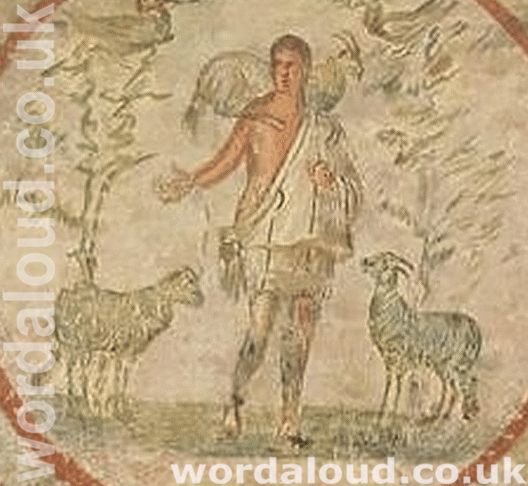
Saint Augustine continues his reflection on Ezekiel 34 and the charge against negligent shepherds. The Lord’s accusation—’You have failed to strengthen the weak’—is interpreted in relation to two categories of believers: the weak and the sick. Augustine distinguishes between the two. The weak are those who sincerely wish to live a good life and even attempt good works, but lack the endurance to withstand trials. Their danger is not wrongdoing but fragility under pressure. The sick, by contrast, are those weighed down by sinful desires that prevent them from doing good at all [ … ]
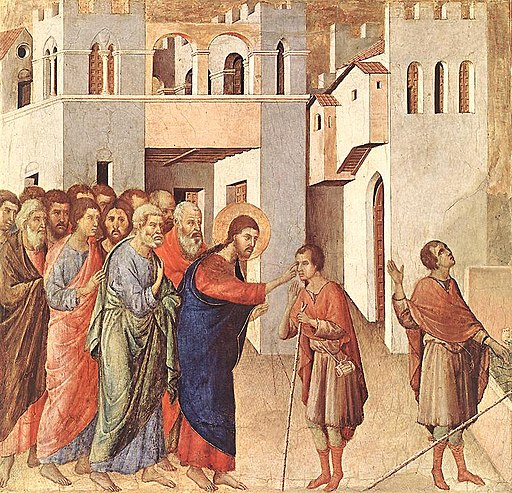
Mark has shown Jesus earlier (Mark 7: 32-33) using the sign of the laying on of hands as part of the miracle of healing. Normally when Jesus heals, the healing is instant. With the blind man at Bethsaida this is not the case. The healing is more gradual, passing through stages before being complete [ … ]