
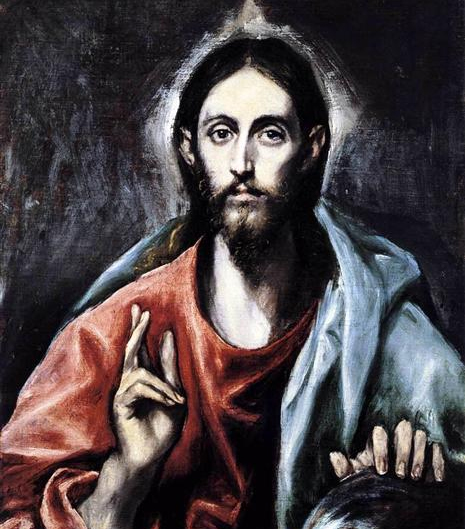
Christian Art | Jesus Fulfils The Law
Matthew 5: 17-19 – Lent Week 3, Wednesday; Ordinary Time Week 10, Wednesday (King James Audio Bible KJV, Spoken Word)
17 ¶ Think not that I am come to destroy the law, or the prophets: I am not come to destroy, but to fulfil.
18 For verily I say unto you, Till heaven and earth pass, one jot or one tittle shall in no wise pass from the law, till all be fulfilled.
19 Whosoever therefore shall break one of these least commandments, and shall teach men so, he shall be called the least in the kingdom of heaven: but whosoever shall do and teach them, the same shall be called great in the kingdom of heaven.
It is the Sermon on the Mount. Our Lord has presented the crowd with the Beatitudes. We have been taught to know the gateway to heaven. These are the great Christian truths to which we aspire.
Jesus now wishes to explain the relationship between what he has just said and given to the people, and the Old Law. Jesus’ preaching of the Beatitudes has already been revolutionary in terms of the Law. To be poor, to be hungry, to be peaceful, to be merciful – these are among the cardinal virtues of Christ’s New Law.
Now Jesus aligns his present teaching with the teachings of the Law through the Bible preceding his Incarnation. Jesus tells the people present at the Sermon on the Mount that what he is telling them is a completion of all that they part-know already. Jesus is the crucial piece that has been missing from what they thought they knew. He is the corner-stone. It is now that we receive again the teaching of mercy and love – and, through this, of perfection.
The mercy and love of God are present throughout all of the Bible. Jesus comes both to remind his people of this key strand of the Bible which they have neglected, and also to embody this truth of love and mercy and bring it and us to perfection.
Matthew’s Gospel is particularly concerned to heal rifts among the communities of those following Jesus. By the time that Matthew is writing this book of the Bible, there are some people who continue to wrap themselves up in all the minutiae of the Old Law, at the expense of the spirit of the New. At the other extreme, there are those who imagine themselves freed by the Holy Spirit from all Law, even including the teachings of Jesus Christ. And there is a spectrum of faith between. Matthew wishes to show all of these people that, through Jesus, the Old Law, truly realised, and our salvation in Christ are one.
Jesus asks us to consider the Old Law and to consider it properly. We are not to be saved by empty ritual and empty observances. We are not saved by external parades of piety. Rather, considered properly and through faith, the whole of the Bible teaches us that we are here to obey the Law in our relationship with God and our fellow human beings. We are to look to the heart of it: justice, mercy, faith, hope, charity. We are to know, as the whole of the Bible teaches us, God is love.
These great truths of the Law are one. Justice, faith, hope, mercy, charity, love. Because these truths are one it is impossible to take away one piece of it – because there is only one piece; it is not divisible. Even speaking of the truth of God like this is imperfect: we see aspects of the one Law as several when really they are only different glimpses of the one. This is why Jesus says: ‘Till heaven and earth pass, one jot or one tittle shall in no wise pass from the law, till all be fulfilled.’
At this point of fulfilment, our several words and ways of comprehending shall pass away and we shall be one with the Word of God.
We are called now to consider the least of the commandments. We are called to examine the things we have overlooked. No-one is without sin. We have broken His commandments. God knows this.
Now is the time to be reconciled. God will forgive us.
‘If you know these things, and live in purity, holiness and righteousness, you can see God. But before all, faith and the fear of God must take the lead in your heart; then you will understand these things. When you put off what is mortal and put on imperishability, then you will rightly see God. For God raises up your flesh immortal with your soul; after becoming immortal you will then see the Immortal, if you believe in him now.’ St Theophilus of Antioch


King James Audio Bible | Endnotes
Jesus Is The Law And The Prophets
At its core, this passage emphasizes the continuity between the Law and the Prophets and the teachings of Jesus. Jesus asserts that he did not come to abolish the Law and the Prophets but to fulfill them, which can be interpreted as a call to understand his teachings in light of the Jewish legal tradition.
Scholars have identified several key themes in this passage, including the importance of obedience to God’s commands and the notion of righteousness as a prerequisite for entry into the kingdom of heaven. Jesus’ warning against setting aside even the least of these commands and teaching others to do the same highlights the seriousness with which he viewed obedience to God’s law.
Jesus’ claim that not the smallest letter, not the least stroke of a pen, will disappear from the Law until everything is accomplished underscores the enduring importance of the Jewish legal tradition. It is a call to understand Jesus’ teachings in light of this tradition and to recognize the continuity between the Old and New Testaments.
Lent is a time for Christians to reflect on their own sinfulness and the sacrifice that Jesus made for them on the cross. As we approach Easter, we are reminded of the importance of Jesus’ death and resurrection, and how it fulfilled the prophecies of the Old Testament.


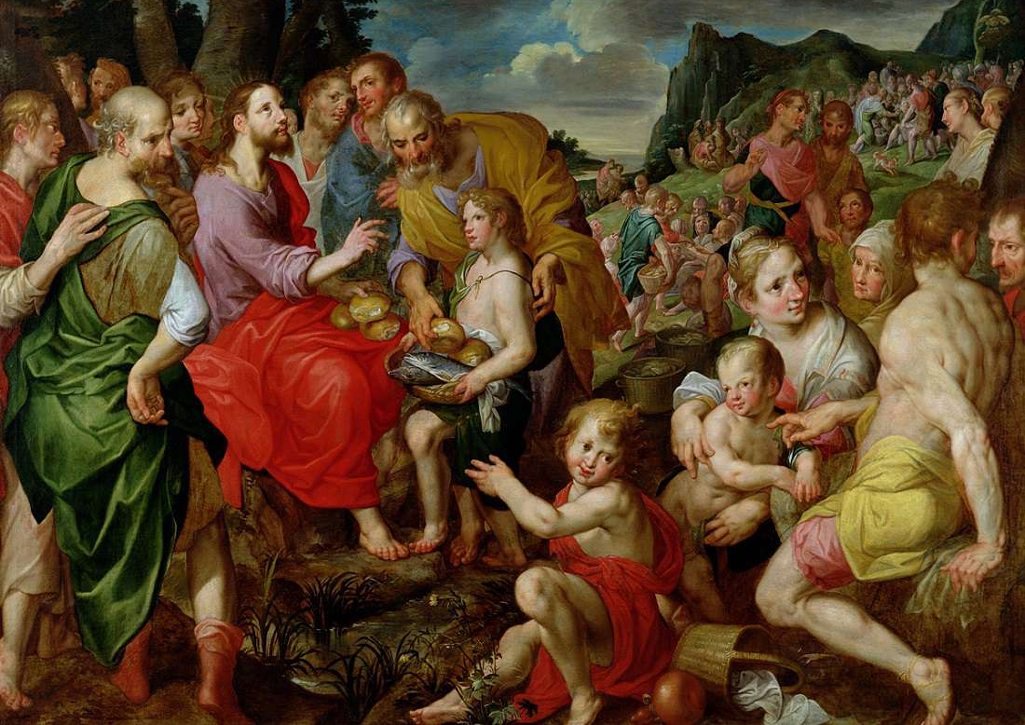
The people have gathered to be with Jesus, following Jesus on foot, out of the cities, to be near Jesus and to be healed, in a desert place. It may seem strange to us that the disciples wanted to send the people away! The disciples’ thought is that the people must go and buy themselves food to eat. Jesus knows differently. Jesus tells the disciples themselves to give the people the food they need to eat [ … ]

Jesus once more contrasts the gift of his own body with the manna given to the Israelites to eat during the Exodus, which bread of heaven they ate and yet they still went on to die. Christ is the living bread. He is the bread that has come from heaven. Christ’s origin in heaven is, as John tells us, what sets him apart and enables our redemption. Jesus explains: just as he lives because of the Father, so we live through Christ. We are called to share in his supper and so to have life eternal [ … ]

Psalm 147 begins with an instruction: ‘Praise ye the LORD: for it is good to sing praises unto our God; for it is pleasant; and praise is comely.’ This command introduces a composition that details God’s interactions with the world and His people, grounding the act of praise in observable actions and attributes of God [ … ]
