
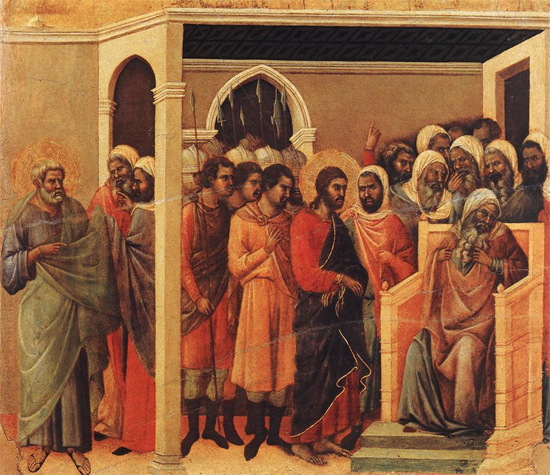
Christian Art | A Plot To Kill Jesus
John 11: 45-56 – Lent Week 5, Saturday (King James Audio Bible, Spoken Word)
45 Then many of the Jews which came to Mary, and had seen the things which Jesus did, believed on him.
46 But some of them went their ways to the Pharisees, and told them what things Jesus had done.
47 ¶ Then gathered the chief priests and the Pharisees a council, and said, What do we? for this man doeth many miracles.
48 If we let him thus alone, all men will believe on him: and the Romans shall come and take away both our place and nation.
49 And one of them, named Caiaphas, being the high priest that same year, said unto them, Ye know nothing at all,
50 Nor consider that it is expedient for us, that one man should die for the people, and that the whole nation perish not.
51 And this spake he not of himself: but being high priest that year, he prophesied that Jesus should die for that nation;
52 And not for that nation only, but that also he should gather together in one the children of God that were scattered abroad.
53 Then from that day forth they took counsel together for to put him to death.
54 Jesus therefore walked no more openly among the Jews; but went thence unto a country near to the wilderness, into a city called Ephraim, and there continued with his disciples.
55 ¶ And the Jews’ passover was nigh at hand: and many went out of the country up to Jerusalem before the passover, to purify themselves.
56 Then sought they for Jesus, and spake among themselves, as they stood in the temple, What think ye, that he will not come to the feast?
Jesus has raised Lazarus from the dead. This is the seventh sign, or miracle, of John’s Gospel. We know more through this sign of our own resurrection. Jesus has power over death. Jesus is life and he gives us life.
It might seem strange that some people, following this miracle, go to the Pharisees to tell them what Jesus has done. One explanation is that many people in Jerusalem depended financially on the Temple and on the Temple authorities. They may have felt the status quo to be threatened by Jesus and so worried about their livelihoods. Money, and corruption, in other words, may have been at the root of this instance of evil.
It is also the case that many Jews in Jerusalem would have been terrified by the thought of an insurrection, or even the suspicion on the part of the Romans that there was to be an insurrection. The reprisals the Romans would then take would be very bloody, and would not discriminate between those who were and who were not involved. These were Jews: to the Romans, these people, with their strange monotheistic beliefs, were as little or nothing: there wouldn’t have been a fair trial.
The Romans, as they had done before, would murder randomly, storming into the city to ‘put people to the sword’, at random, to the hilt, spilling their guts out in the market place, and then crucify however many hundreds or – literally – thousands to make the point clear that you do not rebel against Rome, to terrorize the subject people into further submission. The Jews, and the Jewish authorities, knew this.
We may imagine the Gospels, before and leading up to Christ’s crucifixion, as being enacted against a background of hundreds upon thousands of people being nailed to die on crosses. There is torture to death all surrounding Christ and his people. Modern civilized people may not be able to imagine this: this is an unimaginably brutal and disgusting land and polity. This is where Jesus lived and worked. This is the Empire of Rome.
We may now also remember that the freed Barabas is stated by the Bible as having been a part of some unknown insurrection: the fears of the people were real. We may also consider this fact as we wonder why Jesus was so keen for his people to turn the other cheek, i.e. so that they may live and not be slaughtered by Romans. These thoughts may give us something of the terror of these times.
God’s plan, though, is coming into effect as the chief priests and the Pharisees gather to consider what they might do about Jesus. Caiaphas prophesizes that Jesus will die for the nation, ‘And not for that nation only, but that also he should gather together in one the children of God that were scattered abroad.’ Caiaphas does not know the meaning of his own words; nevertheless, the Holy Spirit speaks through him. Jesus is to be the scapegoat, both in this moment of Jewish history and for all time, for all people.
We see the fear of those gathered to plot against Jesus. This is expressed through their worries about what the Romans might do to them, and this is the mind-set of a people subject to an occupying power. We may recall the response of the people of Israel in Egypt when Moses came to them to free them, and when they travelled with Moses in the wilderness and suffered hardship, as recounted in the Bible in the Book of Exodus.
Even in the light of the events of the 20th Century, it is difficult to imagine being so wholly subject to oppression and slavery – and the ever present threat of arbitrary slaughter.
This council of the Jewish authorities decides that it will be expedient to have Jesus die so as to avoid troubles at the hands of the occupying Roman power. We might think that it is craven on their part. We might also recognize that this is what oppression, and the fear of mass murder, can drive us to. The Jewish authorities have no wish for a massacre for Jesus’ sake.
This is a powerful and wonderful passage of the Bible. Just as this council of the Jewish authorities decides that Jesus must die, we also hear that the feast of the Passover is near. We know that it is through this feast of the Passover that Jesus will indeed suffer and die and that it is through this great event that we can all be saved.
Jesus retreats from Jerusalem. He goes to a place near the wilderness. Once again, Jesus spends some time at the margins of society, preparing for his entrance into Jerusalem, to inaugurate our celebration of Easter, to endure his passion and to be crucified.
Meanwhile, the people gather. There would be preparations to make prior to the Passover. There would be rituals of cleansing and fasting. This is a period of anticipation for the rite of purification and expiation of sins, which was the Passover.
It is through Christ that the meaning of the Passover is about to be utterly transformed. When the Jews speak to each other, and in the Temple, wondering where Jesus is and asking, ‘What think ye, that he will not come to the feast?’ we can now answer this question. Our answer is, resoundingly: ‘Yes!’ Jesus is coming to this feast, and we are invited now to feast with Jesus forever.
‘Come then, let us also share in the law, not in the letter but in the spirit of the Gospel, perfectly and not incompletely, for eternity and not for a period of time only. For our capital let us take not the earthly Jerusalem but our mother city in heaven, not the city now trampled by armies but the one extolled by angels.’ St Gregory Nazianzen

Audio Bible KJV | King James Version | Endnotes
What Is Fear In The Bible? | Fear Of The Romans | Fear Of God
We see the Jewish leaders becoming increasingly afraid of Jesus’ growing popularity and influence, fearing that it will lead to a Roman crackdown on their religious authority and power. This fear leads them to make a calculated decision to put Jesus to death, even though they know that he has performed many miracles and has a large following.
Fear can be a powerful motivator, driving people to take actions that they might not otherwise take. In the case of the Jewish leaders, their fear of the Romans and their desire to maintain their own power and authority led them to reject Jesus and to plot his death.
This theme of fear and rejection when confronted with God is a common one in both Catholic and Protestant theology. In Catholicism, the concept of fear of the Lord is seen as a healthy respect and reverence for God, but fear in the sense of being afraid of God’s judgment or punishment can lead to a distorted understanding of God and our relationship with Him.
Protestant theologian John Calvin believed that fear of God can lead us to a deeper understanding of our own sinfulness and our need for salvation. He wrote: ‘Fear of the Lord is the beginning of wisdom, but not the end. We must go on to trust and love Him as well.’
A thought is to recognize that fear is a natural human emotion, but that it should not drive us to make decisions that are contrary to God’s will or to reject the truth when it is presented to us. Instead, we should seek to understand and overcome our fears through faith and trust in God’s love and mercy.
John 11:47-48: ‘Then the chief priests and the Pharisees called a meeting of the Sanhedrin. “What are we accomplishing?” they asked. “Here is this man performing many signs. If we let him go on like this, everyone will believe in him, and then the Romans will come and take away both our temple and our nation.”’
We see that the fear of the Roman authorities and their potential crackdown on Jewish religious authority was a key motivator in the decision to put Jesus to death. This fear drove the Jewish Temple authorities to make a calculated decision to reject the truth and to plot Jesus’ death.
Pope Francis has spoken on this topic, saying:
‘The fear of God is a gift of the Holy Spirit, but this gift too, like all the others, must be activated by us. A gift, if not used, does not grow, it remains small. And the fear of God is the same: it grows with the love of God. If a person does not cultivate the gift of the fear of God, he or she will live in fear of everything: of life, of others, of everything. But if the gift of the fear of God is cultivated, then it becomes a beautiful thing, a grace that saves us.’
In Protestant theology, fear of God is often seen as a natural response to God’s holiness and power, but it should not drive us away from Him. Martin Luther wrote: ‘The fear and love of God should be so mingled that we neither become reckless in our fear nor presumptuous in our love.’
The fear of God can save us from many temptations, including the temptation to reject God’s truth in favour of worldly power and prestige. This is precisely the temptation that the Jewish leaders faced in John 11:45-56, and it is a temptation that we still face today.
In his book Mere Christianity, C.S. Lewis writes about the danger of allowing fear to drive us away from God. He says: ‘The safest road to Hell is the gradual one – the gentle slope, soft underfoot, without sudden turnings, without milestones, without signposts.’ In other words, it is often the slow erosion of our faith, driven by fear and complacency, that leads us away from God.
Facing our fears and trusting in God can lead to great spiritual growth and transformation. In his book The Way Of The Heart, Henri Nouwen writes about the importance of confronting our fears in order to deepen our relationship with God. He says: ‘The spiritual life is not a life before, after, or beyond our everyday existence. No, the spiritual life can only be real when it is lived in the midst of the pains and joys of the here and now.’
In addition to confronting our fears, it is important to acknowledge the role that power and prestige play in our lives, and how they can lead us away from God. This thought relates also to our fear and reluctance in terms of ongoing conversion in Christian faith – to set the truth of God far and away above and beyond the false promises of human societies. The Jewish leaders in John 11 were motivated by their desire for power and prestige, which led them to reject Jesus and plot his death.
In his book The Cost Of Discipleship, Dietrich Bonhoeffer writes about the dangers of seeking power and prestige at the expense of our relationship with God. He says: ‘The disciples had to learn that power, position, and prestige are not the means of salvation, but rather its opposites. They must relinquish all these things if they are to follow Jesus.’
Pope Francis in a homily in 2013 said: ‘The spirit of the world leads us to vanity, arrogance, pride. And this is not the spirit of Jesus. The spirit of Jesus is humility, meekness, service, charity.’
As we reflect on the rejection of Jesus by the Jewish Temple leaders, may we be mindful of the ways in which thought of power and prestige can lead us away from God. May we beware of our baptismal vow to reject the false promises of Satan. May we seek to follow Jesus in humility, meekness and service, and may we be willing to relinquish all that stands in the way of our relationship with God.



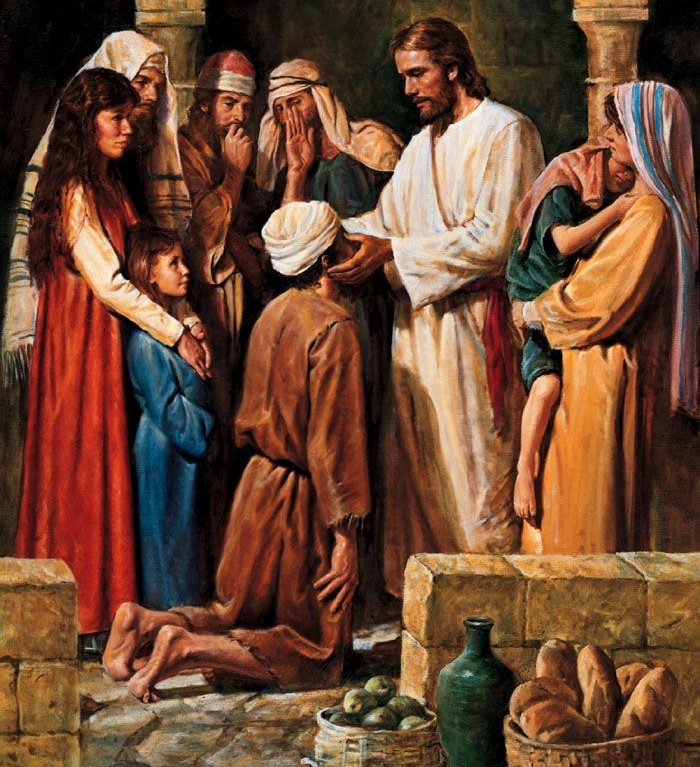
Instead of objectifying others for our own gratification, Jesus invites us to see people as individuals created in the image of God, deserving of love, care, and understanding. Jesus teaches us to foster genuine connections built on mutual respect, emotional intimacy, and the desire for the well-being of others [ … ]
Psalm 97 commences with a declarative burst: ‘The Lord reigneth; let the earth rejoice; let the multitude of isles be glad thereof.’ The proclamation sets the tone for universal celebration, urging the earth and its distant isles to exult in response to the Lord’s sovereign rule. The very essence of the psalm lies in the rejoicing prompted by recognition of the Lord’s reign—a theme that resonates through each verse [ … ]
Blessed Isaac of Stella reflects on the close unity between Christ and the Church, especially in relation to the forgiveness of sins. He begins by affirming that two things belong to God alone: the right to receive confession and the power to forgive. Yet, he immediately links this divine prerogative with the mystery of Christ’s union with his bride, the Church [ … ]
