
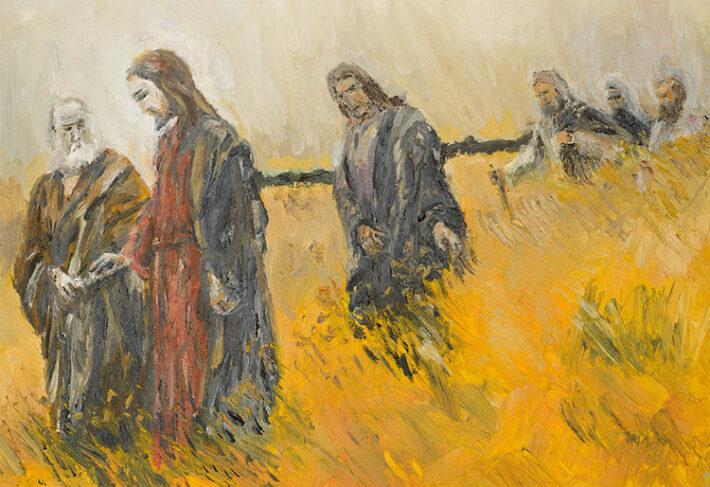
Christian Art | Jesus’ Disciples Pluck Corn | Meditations On The Love Of Jesus Christ
Matthew 12: 1-8 – Week 15 Ordinary Time, Friday (King James Audio Bible KJV, Spoken Word)
1 AT that time Jesus went on the sabbath day through the corn; and his disciples were an hungred, and began to pluck the ears of corn, and to eat.
2 But when the Pharisees saw it, they said unto him, Behold, thy disciples do that which is not lawful to do upon the sabbath day.
3 But he said unto them, Have ye not read what David did, when he was an hungred, and they that were with him;
4 How he entered into the house of God, and did eat the shewbread, which was not lawful for him to eat, neither for them which were with him, but only for the priests?
5 Or have ye not read in the law, how that on the sabbath days the priests in the temple profane the sabbath, and are blameless?
6 But I say unto you, That in this place is one greater than the temple.
7 But if ye had known what this meaneth, I will have mercy, and not sacrifice, ye would not have condemned the guiltless.
8 For the Son of man is Lord even of the sabbath day.
Jesus’ Ministry has entered into a time of conflict, during which people begin to react against Jesus’ teachings, despite the many and beautiful miracles he has performed. In today’s Bible verses, the Pharisees accuse Jesus and his disciples of breaking the Sabbath. Jesus defends himself, justifying his actions, and in doing so suggests both his own divinity and a greater dignity for all people than that which the Pharisees can admit.
The Sabbath, instituted by God, was the day set aside for the Jews to worship God. Certain kinds of work were forbidden, in order to enable people to have time to focus their thoughts upon God. By Jesus’ time, the list of prohibited activities had grown. It is sheer casuistry as the scribes accuse Jesus and his disciples of breaking the Sabbath, by plucking ears of corn as they walk and eating them – thereby ‘harvesting’ the corn and ‘milling’ it.
In response to the Pharisees, Jesus cites three examples, and aspects, of Scripture, which are historical, legislative, and prophetic. David himself ate the showbread, while the priests work very hard in the Temple on the Sabbath, more so than on other days of the week. Jesus then quotes the prophet Hosea: ‘I want mercy and not sacrifice.’ To show mercy, to live mercifully, is to place oneself at the service of those who live difficult, everyday lives; while the sacrifice would be a consecrated offering, set apart from the day to day traffic of human kind. To show mercy is to bring what is consecrated within oneself to the service of others. This concern for everyday well-being sits with Jesus at the heart of that which we hold most sacred. In this sense, the Sabbath was made for man, as we are brothers and sisters in Jesus, the Son of man, and Lord of the Sabbath.
Concluding Prayer
Almighty Father,
let your light so penetrate our minds,
that walking by your commandments
we may always follow you, our leader and guide.
We make our prayer through our Lord.

King James Audio Bible | Endnotes
What Was The Shewbread?
The shewbread, also known as the bread of the Presence or the bread of the Face, was a special bread that was placed on a table in the Holy Place of the Tabernacle or Temple. According to Exodus 25:30, it was to be made of fine flour and baked into twelve loaves, which were arranged in two stacks of six on the table. The loaves were replaced every Sabbath, and the old ones were eaten by the priests in a holy place.
The name ‘shewbread’ comes from the Hebrew word lechem ha-panim, which literally means ‘bread of the face’, as it was placed before the face of God. This bread was a symbol of the covenant between God and the people of Israel, as it represented the twelve tribes of Israel and their communion with God.
The shewbread was also closely associated with the high priesthood. Only the priests were allowed to eat the bread, and it was considered holy food. In Leviticus 24:5-9, we read that the bread was to be set out on the table each Sabbath and remain there for a week, after which it would be replaced with fresh loaves. The old loaves were to be eaten only by the priests, and only in a holy place.
Over time, the shewbread became an important symbol of Israel’s relationship with God, and its ritual significance was highly valued by the Jewish people. According to some Jewish traditions, the shewbread was said to have miraculous properties, and it was believed to have the power to bring blessings and healings.
Christian scholars and theologians have offered various interpretations of the shewbread and its significance in the Bible. Some see it as a symbol of the Eucharist, the bread that is used in the Christian sacrament of Communion. Others view it as a symbol of the Word of God, which sustains and nourishes us spiritually.
One of the earliest Christian interpreters of the shewbread was the Church Father Origen, who saw it as a symbol of the divine Word that sustains and nourishes our souls. In his Homilies On Leviticus, Origen writes: ‘For just as the shewbread is the food of the priests, so too is the Word the food of the soul. And just as the shewbread was replaced every Sabbath, so too must we constantly receive the Word of God.’
In the Middle Ages, the shewbread continued to be an important symbol of the divine presence in the world. In his Summa Theologica, Saint Thomas Aquinas writes: ‘The shewbread was a figure of the Eucharist, which is the true bread of the Presence, for Christ is truly present in the Eucharist as He was in the shewbread.’
Today, the shewbread remains an important symbol in both Catholic and Protestant theology. In the Catholic Church, the shewbread is seen as a precursor to the Eucharist, which is believed to be the true body and blood of Christ. In Protestant theology, the shewbread is seen as a symbol of the Word of God, which sustains and nourishes our souls.
Throughout the ages, the shewbread has been seen as a symbol of the divine presence and a source of spiritual nourishment. In addition to the interpretations mentioned earlier, some have also seen the shewbread as a symbol of the unity of the church, as represented by the twelve loaves, or as a symbol of the consecrated life of the priesthood.
The significance of the shewbread reminds us of the importance of food in our relationship with God. Just as we need physical sustenance to survive, we also need spiritual nourishment to grow in our faith. The shewbread was a reminder to the people of Israel that their relationship with God was sustained by their faithfulness to his covenant and their obedience to his laws.
Jesus uses the example of David and his men eating the shewbread to illustrate the importance of compassion and mercy over legalistic adherence to the Law. Jesus reminds us that the law was given to serve us, not to enslave us, and that love and compassion should always take precedence over rigid adherence to rules and regulations.


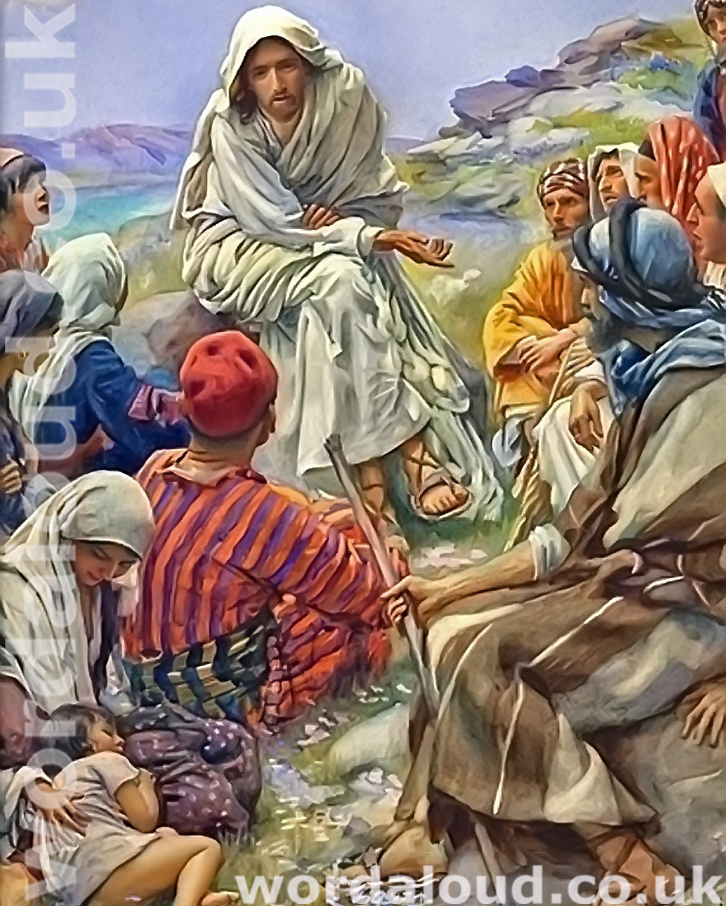
Pope Saint Leo the Great situates the Sermon on the Mount within the wider pattern of salvation history. Christ’s ministry begins with acts of physical healing that attract crowds, but these serve as a preparation for his deeper teaching. The miracles are signs intended to draw attention to the doctrine that heals the soul. Thus, Leo highlights the shift from outward cures to inward remedies, presenting Christ as both healer of the body and physician of the heart [ … ]
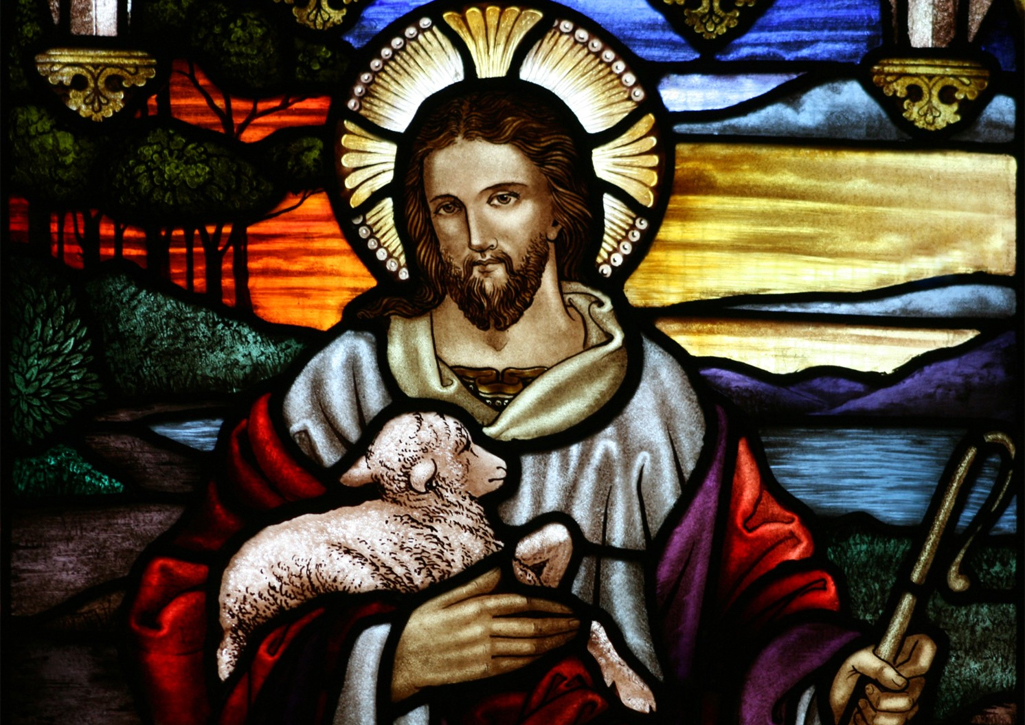
Christ offers himself to the people as the good shepherd, recalling a favourite theme of Old Testament prophecy. Priests and kings are so described, and indeed God is spoken of as a shepherd, as we hear, for example, in Psalm 23: THE Lord is my shepherd; I shall not want. 2 He maketh me to lie down in green pastures: he leadeth me beside the still waters [ … ]
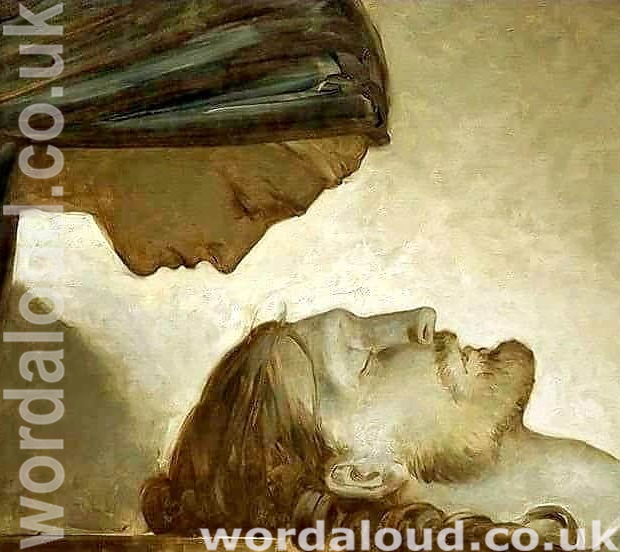
Saint Polycarp brings together the pastoral, theological, and practical elements that have characterised his message to the Philippians. Written in the early second century, it reflects the steady, humane tone of a bishop who has guided his community through times of trial and who now speaks from long experience in faith [ … ]