

Christian Art | Love Your Enemies | Love Revealed By Jesus Christ
Luke 6: 27-38 – Week 23 Ordinary Time, Thursday (King James Audio Bible KJV, Spoken Word)
27 ¶ But I say unto you which hear, Love your enemies, do good to them which hate you,
28 Bless them that curse you, and pray for them which despitefully use you.
29 And unto him that smiteth thee on the one cheek offer also the other; and him that taketh away thy cloke forbid not to take thy coat also.
30 Give to every man that asketh of thee; and of him that taketh away thy goods ask them not again.
31 And as ye would that men should do to you, do ye also to them likewise.
32 For if ye love them which love you, what thank have ye? for sinners also love those that love them.
33 And if ye do good to them which do good to you, what thank have ye? for sinners also do even the same.
34 And if ye lend to them of whom ye hope to receive, what thank have ye? for sinners also lend to sinners, to receive as much again.
35 But love ye your enemies, and do good, and lend, hoping for nothing again; and your reward shall be great, and ye shall be the children of the Highest: for he is kind unto the unthankful and to the evil.
36 Be ye therefore merciful, as your Father also is merciful.
37 Judge not, and ye shall not be judged: condemn not, and ye shall not be condemned: forgive, and ye shall be forgiven:
38 Give, and it shall be given unto you; good measure, pressed down, and shaken together, and running over, shall men give into your bosom. For with the same measure that ye mete withal it shall be measured to you again.
We learn so much about our true relationship with God and with other people in these Gospel verses. Perhaps we might say rather, we are reminded of so much, because these are Christian truths we have long been taught and have long known, but which often are neglected and forgotten. We are recalled in these Gospel verses to Christian truth.
Jesus presents us with the Golden Rule, to do to other people as we would have people do to us. There is a natural morality here, but with Christ it goes further: this is not a tit-for-tat morality, you scratch my back and I’ll scratch yours; rather, it is predicated upon the gift of love and our true, loving response to God, in which sense this teaching of Jesus is entirely radical. We are to love not merely pre-emptively but absolutely and regardless of how our love might be received. We are to display and to embody in our heart of hearts an attitude of complete humility. Here is obedience, fellowship, selflessness – a response to life which is to give love, or we might say, to reflect what precious little we can of God’s love, which precedes our own.
Through his teaching in these Bible verses, Jesus wishes to do more than to ask us to be just, in the sense of an eye for an eye, a tooth for a tooth, or to be merely nice to and tolerant of our fellow human beings. Rather, the change Jesus calls for is systematic; Jesus intends us to change the entire system of understandings by which we live, such that our lives may become more fully in accord with God’s intentions. Should we achieve this, this would be the way of perfection.
We are compelled by Jesus to try to live in such a way, such that our lives be perfect. We will no doubt fail – we will sin. We will sin, we will fall, we will confess our sins, asking for God’s forgiveness, as we pick ourselves up again to continue our journey – to fail again and, with prayer and God’s Grace, hope we might fail better.
Judge not, and ye shall not be judged; condemn not, and ye shall not be condemned; forgive, and ye shall be forgiven. How many times each day do we fail to abide by Jesus’ teachings, and so the truth of these words compels us once again and each day to ask God’s forgiveness?
Concluding Prayer | Love Revealed By Jesus Christ
Almighty, ever-living God,
shed the light of your glory
on the peoples who are living in the shadow of death,
as you did long ago,
when our Lord Jesus Christ, the Sun of Justice,
came among us from on high.
We make our prayer through our Lord.


King James Audio Bible | Endnotes
Love Your Enemies
The Bible teaches us to love our enemies and do good to those who hate us. In the Old Testament, we see examples of loving one’s enemies in the story of David and Saul. Saul was pursuing David and trying to kill him, but David had the opportunity to kill Saul and refused, saying: ‘The Lord forbid that I should stretch forth mine hand against the Lord’s anointed.’ (1 Samuel 26:11) This act of mercy towards his enemy was an act of love, and it ultimately led to Saul’s repentance.
In Proverbs 25:21-22, it is said: ‘If thine enemy be hungry, give him bread to eat; and if he be thirsty, give him water to drink: For thou shalt heap coals of fire upon his head, and the Lord shall reward thee.’ This teaches us that when we show kindness to our enemies, it can lead to their repentance and bring glory to God.
In the New Testament, Jesus takes the idea of loving one’s enemies even further. He says in Matthew 5:44: ‘Love your enemies, bless them that curse you, do good to them that hate you, and pray for them which despitefully use you, and persecute you.’ Jesus’ teaching challenges us to love not just our friends and family, but also those who have hurt us.
In Romans 12:20-21, it is said: ‘Therefore if thine enemy hunger, feed him; if he thirst, give him drink: for in so doing thou shalt heap coals of fire on his head. Be not overcome of evil, but overcome evil with good.’ This reminds us that even when we are wronged, we should not seek revenge, but rather respond with love and kindness.


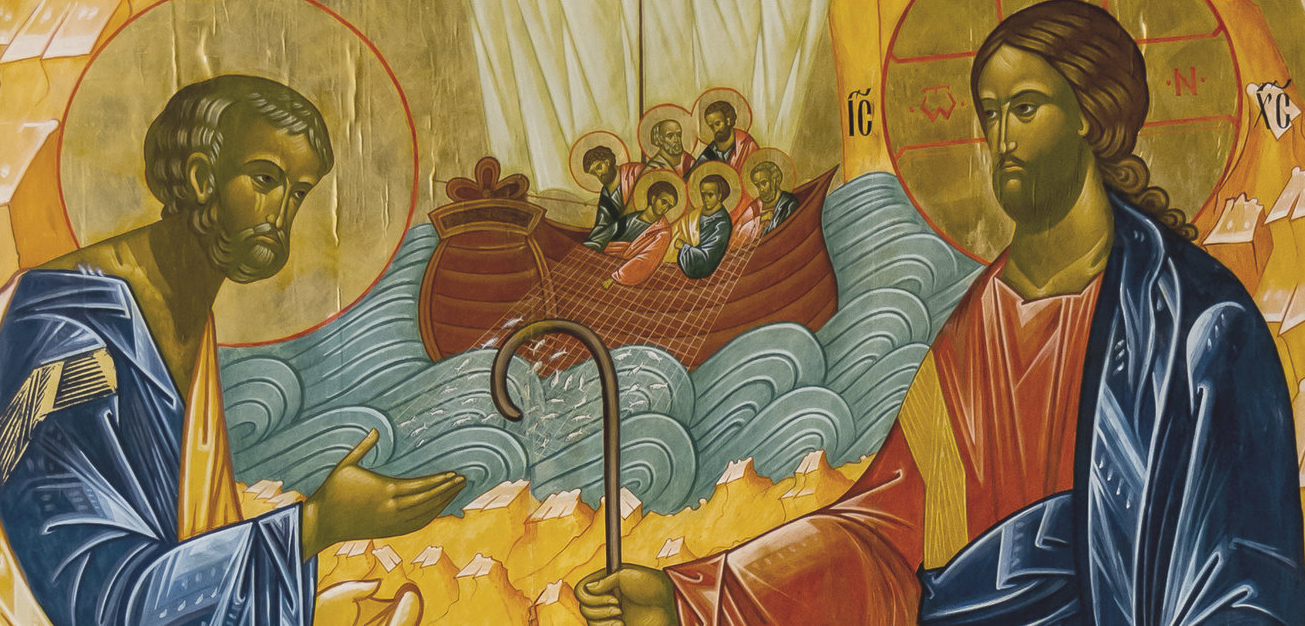
Our verses begin with Jesus asking two questions. The first gives us a sense of the rumour and speculation surrounding Jesus as he preaches. The crowds see Jesus as a prophet, wondering if he might be one of the prophets returned. Jesus’ next question, ‘But whom say ye that I am?’ is a call to his disciples for faith and clarity, and Peter obliges, affirming that Jesus is the Messiah. Once more, Jesus charges his disciples to keep this knowledge secret. It is not yet time for our Lord to reveal himself, perhaps because the social situation is too dangerous, perhaps because the multitudes are not yet ready to receive such spiritual truth – we do not know [ … ]

Dear Jesus, Thank you for the blessing of family. Help me to appreciate and cherish my family members, both biological and spiritual. Guide me to be a source of love, support, and encouragement to them. Grant us the strength to overcome challenges together and to celebrate our joys with gratitude. May our family be a reflection of your love and grace. Help us to forgive one another, to be patient, and to build each other up. Let your peace reign in our home, and may we always seek to do your will. Amen [ … ]

Saint Christopher is believed to have been born in the third century in the region of Canaan. According to the ‘Golden Legend’ by Jacobus de Voragine, Saint Christopher was initially named Reprobus, meaning ‘Outcast’, and was of considerable physical stature, often described as a giant. Seeking to serve the greatest king in the world, he initially offered his services to a local king. However, upon seeing the king’s fear of the devil, Reprobus decided to serve the devil instead. This narrative is a critical turning point that showcases Saint Christopher’s relentless pursuit of serving true greatness [ … ]