
Christian Art | Jesus And His Disciples | Love Revealed By Jesus Christ
Luke 9: 18-22 – Week 25 Ordinary Time, Friday (King James Audio Bible KJV, Spoken Word)
18 ¶ And it came to pass, as he was alone praying, his disciples were with him: and he asked them, saying, Whom say the people that I am?
19 They answering said, John the Baptist; but some say, Elias; and others say, that one of the old prophets is risen again.
20 He said unto them, But whom say ye that I am? Peter answering said, The Christ of God.
21 And he straitly charged them, and commanded them to tell no man that thing;
22 Saying, The Son of man must suffer many things, and be rejected of the elders and chief priests and scribes, and be slain, and be raised the third day.
Today’s Gospel verses invite us once more to consider the true identity of Jesus. This scene is filled both with a sense of preconceptions and expectations, and with the over-riding knowledge of the new, which is the truth of Jesus. Additionally, we are asked by Jesus to declare the truth of our knowledge of who Jesus is. We are invited by Jesus to confess our Christian faith.
Jesus asks his disciples to consider the speculations in the land concerning his true identity. The disciples know that some people are saying that Jesus must be John the Baptist risen again, or Elijah, or another of the prophets. This would be because this would then help to account to the people for the signs and miracles Jesus performed. This would be conventional knowledge, of a sort, even as it would entail a fundamental misrecognition, a falling short of true knowledge.
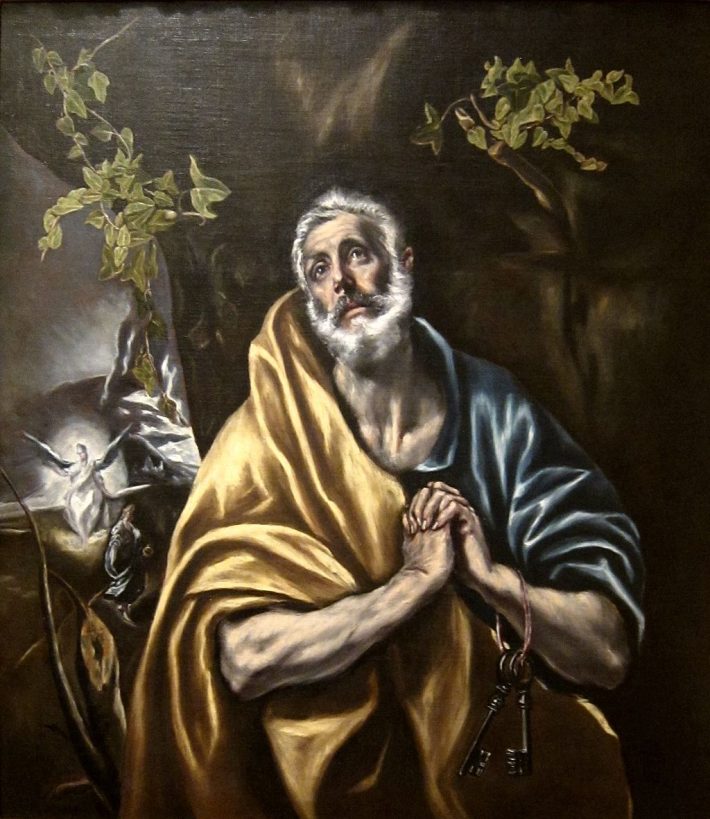
The disciples, however, have lived with Jesus. Their knowledge is different from that of the crowd. The disciples have intimately learned the truth about Jesus. This is why Peter is able to answer Jesus’ question, by replying that Jesus is the Christ of God, the Anointed One.
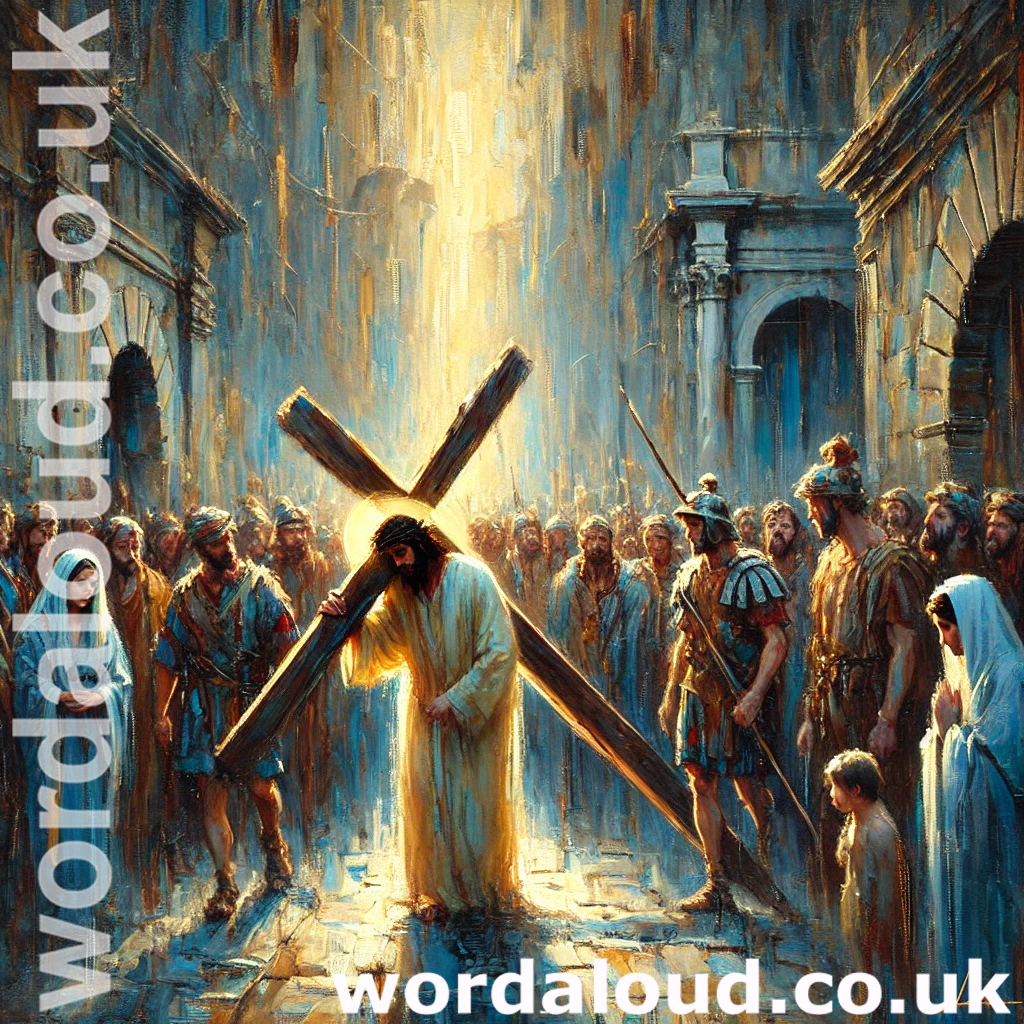
This is truth. Jesus, though, tells his disciples to maintain the hiddenness of Jesus’ full purpose. This is because the cross must be fulfilled. It is identical with Jesus’ true identity that he must suffer the Passion and die upon the cross to be reborn. Jesus draws his disciples toward full and complete knowledge of his being on Earth.
Concluding Prayer | Love Revealed By Jesus Christ
Lord God,
you hold out the light of your Word
to those who do not know you.
Strengthen in our hearts the faith you have given us,
so that no trials may quench the fire
your Spirit has kindled within us.
We make our prayer through our Lord.


King James Audio Bible | Audio Bible | Endnotes
Take Nothing For Your Journey | The Story Of Abraham
The story of Abraham is a powerful example of trusting in God’s provision, even when it means leaving behind everything that is familiar and comfortable.
In Genesis 12:1-4, God calls Abram (later renamed Abraham) to leave his country, his people, and his father’s household and go to a land that God would show him. This was a daunting call, as Abram was being asked to leave behind everything he knew and journey to an unknown land. However, Abram responded in faith, trusting that God had a plan and a purpose for his life.
The author of Hebrews reflects on Abraham’s faith in Hebrews 11:8-10, saying: ‘By faith Abraham, when he was called to go out into a place which he should after receive for an inheritance, obeyed; and he went out, not knowing whither he went. By faith he sojourned in the land of promise, as in a strange country, dwelling in tabernacles with Isaac and Jacob, the heirs with him of the same promise: for he looked for a city which hath foundations, whose builder and maker is God.’
Despite not knowing where he was going, Abraham trusted in God’s provision and continued to follow Him. God blessed Abraham’s faithfulness, promising to make him a great nation and to bless all the families of the earth through him (Genesis 12:2-3).
However, Abraham’s journey was not without its challenges. In Genesis 12:10-20, we read about how Abraham and his wife Sarah journeyed to Egypt during a time of famine. Abraham was afraid that the Egyptians would kill him and take Sarah as their own, so he asked her to pretend to be his sister instead of his wife. This deception led to Pharaoh taking Sarah into his household, but God intervened to protect her and eventually returned her to Abraham.
Despite his mistakes and missteps, Abraham’s faith in God remained strong. He continued to trust in God’s provision, even when it meant leaving behind everything he knew and loved. And in the end, God’s faithfulness to Abraham was evident, as He fulfilled His promises and blessed Abraham and his descendants in countless ways.
In our own lives, we may be called to take a journey of faith like Abraham. It may involve leaving behind our comfort zone or taking a step into the unknown. But as we trust in God’s provision and follow Him, we can be confident that He will guide us and bless us, just as He did with Abraham.



Gospel Reading: Matthew 11:28-30 ‘Come unto me, all ye that labour and are heavy laden, and I will give you rest. Take my yoke upon you, and learn of me; for I am meek and lowly in heart: and ye shall find rest unto your souls. For my yoke is easy, and my burden is light.’ In this passage, Jesus extends an invitation to all who are weary and burdened. Jesus promises rest and relief, urging us to take his yoke and learn from him. Jesus’ gentle and humble heart offers rest for our souls, emphasizing that his yoke is easy and his burden light. This passage is a reminder of the hope we have in Christ, who offers us rest and peace amid our struggles. Prayer Dear Jesus, In times of uncertainty and despair, I turn to you, the source of all hope. Fill my heart with your hope that transcends understanding. Help me to trust in your promises and to find joy and peace in your presence. May your hope renew my spirit and give me the strength to face each day with confidence and faith. Let your hope shine through me, bringing light to others who are in need. Amen. Personal Reflection What are the situations in your life that seem hopeless? How can you invite Jesus’ hope into these areas? Reflect on a time when you experienced renewed hope through your faith in Christ. Meditation On The Prayer And Gospel Matthew 11:28-30 is a passage that speaks directly to our need for hope and rest. Jesus’ invitation to come to him is extended to all who are weary and burdened, offering a refuge from the struggles of life. This invitation is not just a call to physical rest but a deeper spiritual rest that brings peace to our souls. Jesus understands the burdens we carry and offers a yoke that is easy and a burden that is light. The imagery of a yoke suggests partnership and guidance; by taking on his yoke, we align ourselves with him, allowing him to share our burdens and guide our steps. This partnership is marked by learning from Jesus, whose gentle and humble heart sets an example for us. The promise of rest for our souls is comforting. In a world where we often feel overwhelmed and stressed, Jesus assures us that he is our source of true rest and peace. His rest is not temporary or superficial but a peace that sustains us through life’s challenges. This promise gives us hope, knowing that no matter what we face, we can find solace in Jesus. Reflecting on this passage, we are reminded of the importance of surrendering our burdens to Jesus. It requires trust and faith to let go of our anxieties and allow him to take control. This surrender is an act of faith, acknowledging that Jesus is capable and willing to carry our burdens. As we learn to trust him more, we experience the peace and rest he promises. The hope we find in Jesus is transformative. It renews our spirits and gives us the strength to persevere. This hope is not dependent on our circumstances but on the nature of Jesus and his promises. It is a hope that empowers us to face each day with confidence, knowing that we are not alone. As we embrace this hope, we are called to share it with others. The hope we receive from Jesus is not meant to be kept to ourselves but to be a light for others who are struggling. Through words of encouragement, acts of kindness, and simply being present, we can extend Jesus’ invitation of hope and rest to those around us. By living out this hope, we reflect Christ’s love and bring his light into the world. In practical terms, fostering hope involves daily practices that keep us connected to Jesus. Spending time in prayer, reading Scripture, and being part of a faith community help us to stay grounded in our faith and renew our hope. These practices remind us of Jesus’ promises and keep our focus on him rather than on our circumstances. Prayer Lord Jesus, You are the anchor of my hope. In moments of doubt and despair, remind me of your promises. Fill my heart with your joy and peace, and let your hope overflow in my life. Help me to trust in your plans and to find strength in your presence. May your hope shine in me, guiding me through every trial and illuminating the path ahead. Use me as a beacon of your hope, bringing comfort and encouragement to those in need. Thank you for the gift of your eternal hope. Amen. Jeremiah 29:11 ‘For I know the thoughts that I think toward you, saith the Lord, thoughts of peace, and not of evil, to give you an expected end.’ Blessing May the God of hope fill you with all joy and peace as you trust in Him. May you overflow with hope by the power of the Holy Spirit, and may His hope guide and sustain you in all things. Amen.

Up until this point, Luke has told us several times that Jesus taught the people, but he has not told us what Jesus was teaching. This is the first time that Luke in his Gospel shares with us the teachings of Jesus. Jesus gives four blessings, four Beatitudes, and four curses. We are drawn to the heart of Jesus’ teaching, and must sharply reflect on what we are taught here [ … ]
This deeply moving letter from Saint Ignatius of Antioch, composed on his journey to martyrdom in Rome around AD 107, is one of the earliest and most passionate testimonies to Christian witness through suffering. Ignatius, the bishop of Antioch and a disciple of the Apostle John, wrote this letter to the Christian community in Rome to plead that they not intervene in preventing his execution. Far from fearing death, he embraces it as the culmination of his discipleship in Christ. The letter is both a theological reflection and a spiritual testament on martyrdom, discipleship, and union with Christ [ … ]
