

Christian Art | I Came Not To Send Peace But A Sword
Matthew 10: 34 – 11: 1 – Week 15 Ordinary Time, Monday (King James Audio Bible KJV)
34 Think not that I am come to send peace on earth: I came not to send peace, but a sword.
35 For I am come to set a man at variance against his father, and the daughter against her mother, and the daughter in law against her mother in law.
36 And a man’s foes shall be they of his own household.
37 He that loveth father or mother more than me is not worthy of me: and he that loveth son or daughter more than me is not worthy of me.
38 And he that taketh not his cross, and followeth after me, is not worthy of me.
39 He that findeth his life shall lose it: and he that loseth his life for my sake shall find it.
40 ¶ He that receiveth you receiveth me, and he that receiveth me receiveth him that sent me.
41 He that receiveth a prophet in the name of a prophet shall receive a prophet’s reward; and he that receiveth a righteous man in the name of a righteous man shall receive a righteous man’s reward.
42 And whosoever shall give to drink unto one of these little ones a cup of cold water only in the name of a disciple, verily I say unto you, he shall in no wise lose his reward.
1 AND it came to pass, when Jesus had made an end of commanding his twelve disciples, he departed thence to teach and to preach in their cities.
In today’s Gospel reading, Jesus’ message may strike us as difficult to understand. Throughout the Gospels, Jesus’ message is one of peace and Christian brotherhood, of reconciliation with our fellow human beings and with God, whom we are asked to call Father. Today Jesus speaks of variance and contradiction. Jesus tells us that he has not come to bring peace, but a sword.
Jesus has not come to bring us a false and earthly peace, the sort of stupefied tranquillity a worldly and self-seeking person might yearn for; rather Jesus draws us away from fleshly longings and from sin and toward God. Jesus recalls us to know the difference between false and worldly longings on the one hand and, on the other, the truth of God.
There is a sword, then, that pierces our own hearts, exposing sin and truth, and enabling the choice for Jesus. In families and communities, the choice of good or evil is also given to us. There will be those who embrace the truth, which is faith in God, in Jesus, being rejected and regarded as enemies by those who cling to falsehood. Here the greater loyalty to love of God overrides other commitments. The first and the fourth commandments, to love God and to honour our parents, should go together; but at times there may be contradiction. We may imagine the difficult times experienced by those early Christians who embraced Christ and so found themselves painfully at odds with their families. It must certainly have been a cross to bear.
Jesus, then, proposes a new and alternative set of values to the world. There is a drawing away from old relationships, old customs, and old securities, and instead a vow to lead a life of love and charity – we are to give away everything we have and follow Jesus. Through this conversion of heart, we learn to see and greet Jesus in our fellow human beings, to receive and value those we meet, our neighbours in Christ, and to give them a glass of water, metaphorical or literal. This is the greater peace brought to us by Jesus, which transcends old and partial loyalties. It is a calling to a universal brotherhood and sisterhood – a new family in which there is love and charity for all.
‘People who are constantly concerned with themselves, who act above all for their own satisfaction, endanger their eternal salvation and cannot avoid being unhappy even in this life. Only if a person forgets himself and gives himself to God and to others, in marriage as well as in other aspects of life, can he be happy on this earth, with a happiness that is a preparation for, and a foretaste of, the joy of heaven.’ (St Josemaria Escriva.)


Concluding Prayer
King of heaven and earth, Lord God,
rule over our hearts and bodies this day.
Sanctify us,
and guide our every thought, word and deed
according to the commandments of your law,
so that now and for ever
your grace may free and save us.
Through Christ our Lord.


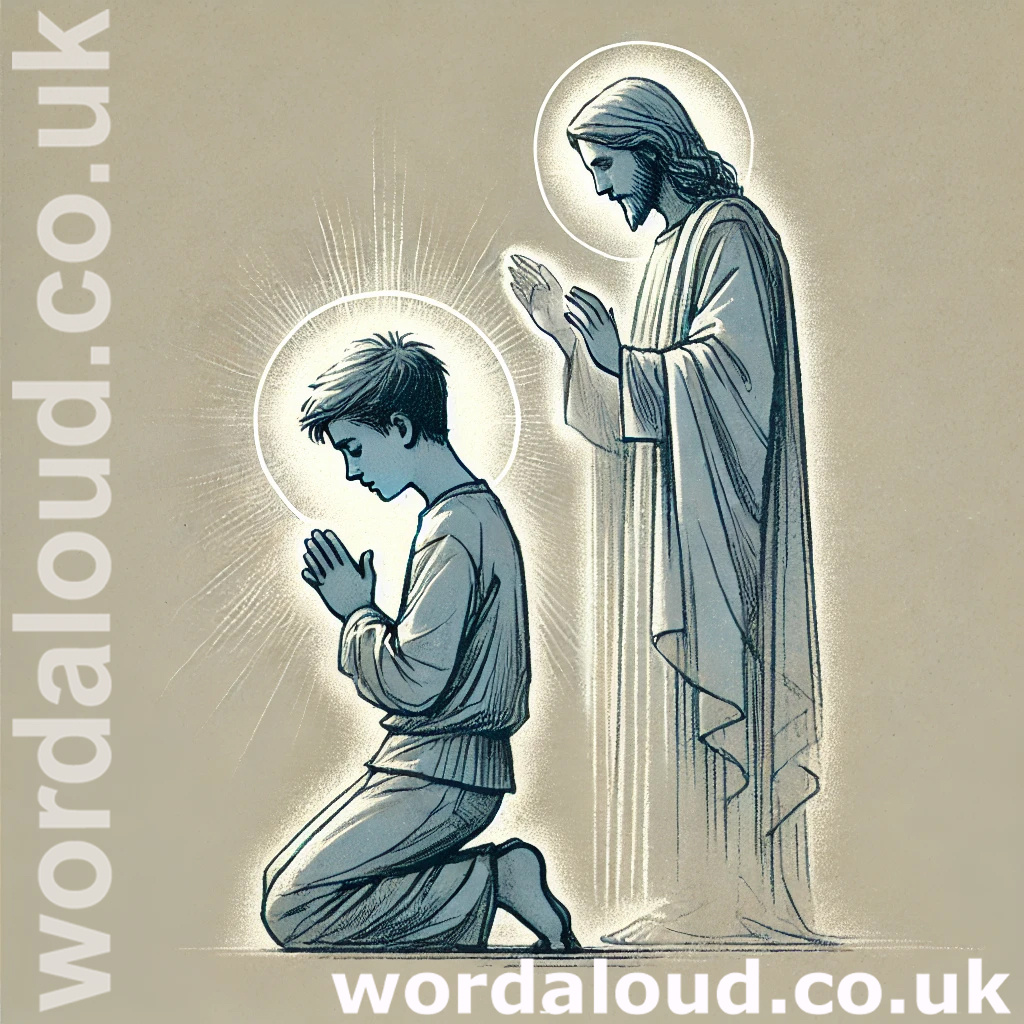
In his homily on Romans 12:1 – ‘I appeal to you… to offer your bodies as a living sacrifice, holy and pleasing to God’ – Saint Peter Chrysologus delivers a striking call to every Christian: not only to follow Christ but to become a priest and a sacrifice. Drawing deeply from early Christian theology, scriptural tradition, and the liturgical life of the Church, Chrysologus offers a spiritual vision of the Christian life that is both challenging and empowering [ … ]

Psalm 144 expresses themes of warfare, divine benevolence, human frailty, and societal well-being under the guidance of God. Traditionally held to be authored by David, a king and warrior deeply conscious of his reliance on divine support, the psalm unfolds as both a personal entreaty for victory and protection and a communal hymn envisioning a society flourishing under God’s favour [ … ]

The Sabbath is rooted in God’s own example. After creating the heavens and the earth in six days, God rested on the seventh day and blessed it, setting it apart as a holy day (Genesis 2:2-3). This pattern of rest and blessing established the foundation for the observance of the Sabbath [ … ]
