

Christian Art | Take No Money On Your Mission | Discourse Of The Mission | Trust In God
Matthew 10: 7-15 – Week 14 Ordinary Time, Thursday (King James Audio Bible KJV, Spoken Word)
7 And as ye go, preach, saying, The kingdom of heaven is at hand.
8 Heal the sick, cleanse the lepers, raise the dead, cast out devils: freely ye have received, freely give.
9 Provide neither gold, nor silver, nor brass in your purses,
10 Nor scrip for your journey, neither two coats, neither shoes, nor yet staves: for the workman is worthy of his meat.
11 And into whatsoever city or town ye shall enter, inquire who in it is worthy; and there abide till ye go thence.
12 And when ye come into an house, salute it.
13 And if the house be worthy, let your peace come upon it: but if it be not worthy, let your peace return to you.
14 And whosoever shall not receive you, nor hear your words, when ye depart out of that house or city, shake off the dust of your feet.
15 Verily I say unto you, It shall be more tolerable for the land of Sodom and Gomorrha in the day of judgment, than for that city.
The Discourse of the Mission continues as Jesus mandates his disciples to preach the good news that the Kingdom of heaven is at hand. This is a wonderful, new message. For other Jews, the Kingdom to come remained far in the future. It would come after they had done their own part. The Pharisees believed that the Kingdom would come once the Law were perfectly observed, the Essenes when the country would have purified itself. For Jesus, the time is already fulfilled. Independently of any good works the people could do, the Kingdom of God is here already, as a completely gratuitous gift of God. What is now required is to teach the people to perceive this fact. This will mean to look at the world in a new way.
The disciples are sent to give signs of the presence of the Kingdom to the people. They are to perform the very miracles which Christ has performed in the preceding two chapters of Matthew’s Gospel, to heal the sick, cleanse lepers, raise the dead and perform exorcisms, casting out devils – there is no limit on the powers the disciples are given; they are to do as Jesus has done. Through all these miracles, the theme of inclusion predominates: the outcasts of society are to be brought back within the fold; there is to be solidarity in Jesus, a revolutionary advance on the policies of the old religion; there is to be community.
True to this mission statement, the disciples are to give themselves in trust to the people they go to serve. They are not to take money. Rather, the disciples are to have faith in the hospitality of others. In this way, they are to be a living example of what they are to preach, and so to encourage the revitalization of the Jewish communities.
The disciples go to share the sign of peace. There is to be cheerful communion. There will be those who do not accept this message, though they seemed worthy, and they will be blameworthy, judged, for their rejection. In truth, we judge ourselves already when we reject the saving message of Christ’s love, and of mutual acceptance, forgiveness and mercy, when we presume to judge others’ sins. In these Gospel verses, Jesus calls us to absolute, unconditional love, and so to a new world, the Kingdom come, with our own sins acknowledged, forgiven, which is a new community.
Concluding Prayer
Almighty God,
you are all light,
in you there is no darkness.
Let your light shine upon us in all its radiance,
so that we may walk gladly in the way of your commandments.
Through Christ our Lord.
King James Audio Bible | Endnotes
Jesus’ Disciples Are To Take No Money On Their Mission
In Matthew 10:7-15, Jesus gives his disciples instructions for their mission. Among these instructions is the command for the disciples to take no money with them on their journey: ‘Provide neither gold, nor silver, nor brass in your purses, Nor scrip for your journey, neither two coats, neither shoes, nor yet staves: for the workman is worthy of his meat.’ (Matthew 10:9-10, KJV)
This instruction may seem puzzling at first glance, but upon closer examination, it reveals important truths about the nature of Christian ministry and the provision of God.
The command to take no money on their mission is not a call to poverty or asceticism, but rather a recognition of the fact that God will provide for the needs of those who are doing His work. Jesus is telling his disciples that they should not rely on their own resources, but rather on the provision of God.
This idea is echoed throughout the Bible, from the Israelites in the wilderness being provided for by manna from heaven to the widow of Zarephath who was sustained by God’s miraculous provision of oil and flour during a time of famine (1 Kings 17:8-16). In the New Testament, Jesus himself provides a similar example when he feeds the five thousand with just five loaves and two fish (Matthew 14:13-21).
Furthermore, the command to take no money on their mission is also a call to trust in the hospitality of others. Jesus tells his disciples to rely on the generosity of those they meet along the way, saying: ‘And into whatsoever city or town ye shall enter, enquire who in it is worthy; and there abide till ye go thence. And when ye come into an house, salute it.’ (Matthew 10:11-12, KJV)
This call to rely on the hospitality of others is not just a practical consideration, but also a reminder of the importance of community in Christian ministry. The disciples are to rely on the kindness of strangers, but in doing so, they are also building relationships and spreading the message of Christ.
Throughout the ages, this idea of relying on the provision of God and the hospitality of others has been a central theme in Christian ministry. St. Francis of Assisi, for example, took Jesus’ command to ‘take no money’ quite literally and relied on the charity of others to support himself and his fellow friars. Similarly, Mother Teresa and her Missionaries of Charity relied on donations and the generosity of others to fund their work with the poorest of the poor.
It has been said that Jesus’ command to his disciples to take no money on their mission is not a universal call for all Christians to abandon their possessions and rely solely on the provision of God. Rather, it is a specific instruction for the disciples as they embark on their mission.
Martin Luther wrote in his commentary on Matthew: ‘This command applies only to the apostles, who were sent out on a special mission, for a specific time, and in a unique way. We must be careful not to make a general rule out of this particular command.’
In this sense, the command for Jesus’ disciples to take no money on their mission is a call to trust in the provision of God and the hospitality of others. It is a reminder that Christian ministry is not about relying on our own resources, but rather on the provision of God and the support of our community. As we seek to follow in the footsteps of the disciples and share the message of Christ with the world, may we always remember to trust in God’s provision and the kindness and comfort of strangers.



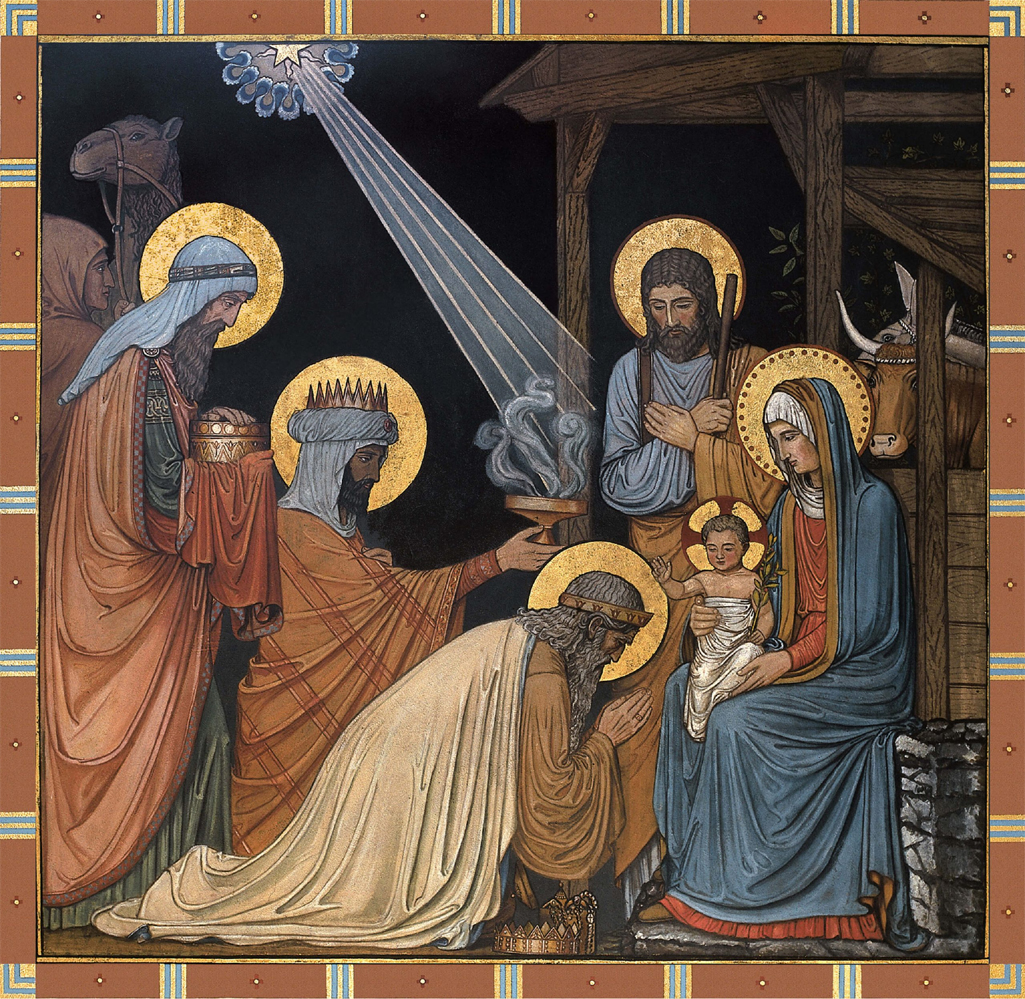
The Epiphany is an extraordinary event in the Bible, whereby we hear of the gift and revelation of Christ to all mankind. The three wise men have long studied the heavens; they have been looking for signs, for truths to guide them. They are of the east, of the orient, not of the Jewish people. They have seen the new star that is there to signify Christ and have come on pilgrimage to seek, to find and to worship Jesus [ … ]

On Thursday, there is more lost-history to contemplate. More Christian life unknown. Certainly, His Grace tacitly withdraws some measure of the veil of – more creative years. Though what he has to say does not overtly contradict received Church teaching. His Grace moves the beginnings of Christian faith – the Church – as from stunned remains: Jerusalem razed – as our first generations looked back onto it. This nexus of salvation-history – all history pointed forwards-backwards either way in faith in Jesus. As, in intervening centuries, disparate communities scatter through what is becoming a wreckage of Empire, spiritual waste, gather their scraps, and they begin to communicate. Truth-recalled – reverse-transcribed like RNA like a retrovirus – penetrated into the pagan world laid out for it – became life [ … ]

Saint Augustine reflects on the contrast between the hidden riches of Christ and the visible poverty of his humanity. What appears small and limited in Christ’s earthly life conceals the fullness of divine wisdom and knowledge. Augustine draws on the language of scripture to show that Christ’s poverty is not a loss but a means: through it, humanity is brought to a greater inheritance [ … ]
