

Christian Art | Jesus In The Temple
Mark 11: 27-33 – Week 8 Ordinary Time, Saturday (King James Audio Bible Bible | Spoken Word)
27 ¶ And they come again to Jerusalem: and as he was walking in the temple, there come to him the chief priests, and the scribes, and the elders,
28 And say unto him, By what authority doest thou these things? and who gave thee this authority to do these things?
29 And Jesus answered and said unto them, I will also ask of you one question, and answer me, and I will tell you by what authority I do these things.
30 The baptism of John, was it from heaven, or of men? answer me.
31 And they reasoned with themselves, saying, If we shall say, From heaven; he will say, Why then did ye not believe him?
32 But if we shall say, Of men; they feared the people: for all men counted John, that he was a prophet indeed.
33 And they answered and said unto Jesus, We cannot tell. And Jesus answering saith unto them, Neither do I tell you by what authority I do these things.
Just a few days earlier, the chief priests and the scribes and the elders have looked for a way to destroy Jesus, but they have not been able to do so because of the many people who have heard Jesus’ teaching and marvelled at it. Now they come to Jesus to try to trap him again.
The Jews demand to know by what ‘authority’ Jesus heals and teaches. By ‘authority’, the Jews mean a power which is worldly, which is capable of enforcing laws in the world, which is worldly dominion over other people.
Jesus’ authority is different from this; it arises from his kinship with his Father, his oneness in being with his father. On earth, this authority is expressed through Jesus’ humility, through his obeying the will of the Father. Similarly, Jesus does not force himself upon us; he asks us to welcome him into our lives with humility.
Jesus, then, turns these two aspects of the word ‘authority’ into a question for the leaders of the Jews. He asks them to think of John, the one who came before Jesus, and to think of the truth proclaimed by John. They are trapped. They do not wish to acknowledge that John’s authority was of heavenly origin, but they cannot publicly reject John, and this is for political reasons, because of their fear of the people.
Jesus, then, refuses to tell them anything more. Since they are caught within the trap of their own mistake, and of their own clinging to their worldly authority, it is futile for Jesus to explain to them his divine authority. They have refused Jesus’ invitation to ‘answer me’, which he asks of us all.
‘For I will take you from among the heathen, and gather you out of all countries, and will bring you into your own land. Then will I sprinkle clean water upon you, and ye shall be clean: from all your filthiness, and from all your idols, will I cleanse you. A new heart also will I give you, and a new spirit will I put within you: and I will take away the stony heart out of your flesh, and I will give you an heart of flesh. And I will put my spirit within you, and cause you to walk in my statutes, and ye shall keep my judgments, and do them.’ Ezekiel 36: 24-27
Concluding Prayer
All-powerful, eternal God,
splendour of true light and never-ending day:
at the return of the morning hour
chase away the night of sin,
and fill our minds with the glory of your coming.
We make our prayer through our Lord.
King James Audio Bible | Endnotes
What Was The Authority Of John The Baptist?
In Mark 11:27-33, the Pharisees and scribes asked Jesus: ‘By what authority doest thou these things? And who gave thee this authority to do these things?’ This question was prompted by Jesus’ cleansing of the temple in Jerusalem and Jesus’ teaching in the temple. Jesus, in turn, asked them whether the baptism of John the Baptist was from heaven or of men. This exchange raises an important question: what was the authority of John the Baptist?
John the Baptist was a prophet who prepared the way for Jesus Christ. John preached a baptism of repentance for the forgiveness of sins and called on people to turn away from their sinful ways and to turn to God. John the Baptist’s authority came from God, and his message was not his own, but one that was given to him by God. John was a messenger of God, and his ministry was part of God’s plan for the salvation of humanity.
The Gospel of Matthew records that John’s message was foretold by the prophet Isaiah, who wrote: ‘The voice of one crying in the wilderness, Prepare ye the way of the Lord, make his paths straight.’ (Isaiah 40:3) John was seen as the fulfillment of this prophecy, and his ministry was seen as part of the preparation for the coming of the Messiah.
The Gospel of Luke tells us that John the Baptist’s father, Zechariah, was a priest who served in the temple. Zechariah received a message from an angel that his wife, Elizabeth, would conceive and give birth to a son who would be named John. The angel said that John would be great in the sight of the Lord and that he would be filled with the Holy Spirit even from his mother’s womb. John’s birth was a miraculous event, and it was clear that he had been chosen by God for a special purpose.
John the Baptist’s authority was further confirmed by the signs and wonders that accompanied his ministry. People came from all over Judea to hear him preach and to be baptized by him. He was seen as a prophet, and many believed that he might even be the Messiah. However, John was clear that he was not the Messiah but that he had been sent to prepare the way for Him.
The question of John the Baptist’s authority was not just a matter of academic debate. It had significant theological implications. The Pharisees and scribes were the religious leaders of the time, and they had a vested interest in maintaining their authority and influence. They were suspicious of anyone who challenged their interpretation of the law or who claimed to speak for God.
John the Baptist baptized people as a sign of their commitment to turning away from sin and following God. This baptism was a symbol of spiritual cleansing and renewal, and it was seen as a necessary step in preparing for the coming of the Messiah.
John’s authority was demonstrated through his willingness to confront those in positions of power and influence. He did not hesitate to rebuke the Pharisees and scribes for their hypocrisy and their failure to live up to the standards of God’s law. His message of repentance was not just for the common people but for everyone, regardless of their social status or position.
In the centuries since John the Baptist’s ministry, there has been discussion about the nature of John’s authority. Some have seen him as a prophet in the tradition of Elijah, while others have seen him as a new Moses, preparing the way for a new exodus from sin and death. Still others have seen him as a radical preacher, challenging the status quo and calling for a new way of living based on the values of the kingdom of God. The Catholic Church has recognized John as a saint, and his feast day is celebrated on June 24. In Catholic theology, John is seen as a precursor to Christ and as a model of repentance and humility.
In Protestant theology, John’s authority is seen as deriving from his faithfulness to the message that God had given him. Martin Luther, founder of the Protestant Reformation, saw John as a model of the preacher who spoke the truth boldly and without compromise. Luther wrote: ‘John is a master and an example of preachers, for he holds fast to God’s Word and does not let himself be deterred from it by anyone, not even by the devil himself.’




Jesus family and friends have worried in earlier verses about Jesus’ sanity. His friends have tried to seize him, to save him from himself. Now his mother and his brothers come to find him. It seems natural to assume they are still very concerned, and that there has been what they perceive to be a breach in the family, which may be linked in some way to Jesus’ move to Capernaum [ … ]
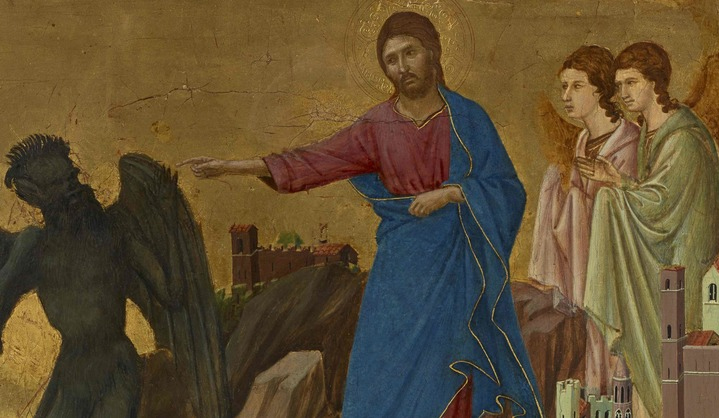
Jesus has performed miracles and his redeeming power over the devils which possess people is clearly apparent; Jesus’ power over evil is manifest. The people marvel, and yet their hearts are hardened to the truth of Jesus. Rather than see with their eyes and understand, they reject the truth of Christ. They retreat to within the evil that holds them captive, which prevents them from seeing the truth of Jesus. They mutter and grumble and gossip, actively seeking to suggest the worst possible and false interpretation of what they have witnessed. They have seen the work of absolute good. They choose to accuse this good of being evil. They do not rise to the message of Christ [ .. ]

In this reading from his letter to the Ephesians, Saint Ignatius of Antioch reflects on the importance of unity within the Christian community. Writing as a prisoner on his way to martyrdom, Ignatius speaks with humility and urgency. He does not present himself as a figure of authority, but as a fellow disciple who is still learning what it means to follow Christ [ … ]