

Christian Art | The Poor Widow’s Mite
Luke 21: 1-4 – Week 34 Ordinary Time, Monday (Audio Bible KJV, Spoken Word)
1 AND he looked up, and saw the rich men casting their gifts into the treasury.
2 And he saw also a certain poor widow casting in thither two mites.
3 And he said, Of a truth I say unto you, that this poor widow hath cast in more than they all:
4 For all these have of their abundance cast in unto the offerings of God: but she of her penury hath cast in all the living that she had.
The poor widow’s offering of two small coins in the Temple is to Jesus the greatest gift of all, because it is offered out of her poverty – it is money she really needed for herself – and with a pure spirit of love and generosity.
In Jerusalem, in the Temple, Jesus has continued to teach his disciples, and to correct their understanding of what is truly of value in God’s eyes. The disciples continue to think in very worldly and material ways; they are still the same men who, on the occasion of the multiplication of loaves and fishes, asked the Lord: ‘Shall we go and buy two hundred pennyworth of bread, and give them to eat?’ It seemed a lot of money to spend.
Perhaps it is because of her poverty that the poor widow feels solidarity with those who, through charitable alms-giving, might benefit from her offering. Perhaps we are to listen to this act of selflessness and recall the communal sharing of wealth among the early Christians as described in Acts. Certainly, we contrast the widow’s offering with the display and hypocrisy of those with much.
Of course, the great wealth cast into the treasury by the rich will be useful, including in terms of works of charity; but here in the person of the poor widow we see such faith and such charity as transcends this and is of a different order of being; she has given to God all she has.
‘Blessed are the poor in spirit: for theirs is the kingdom of heaven.’
‘The man who loves God thinks it enough to please him whom he loves, for no greater reward can be sought than that love itself. Love comes from God in such a way that God himself is love. The pure religious soul delights in being so filled with God that it seeks pleasure in nothing beyond him.’ Pope St Leo the Great


Audio Bible KJV | Endnotes
The Poor Widow’s Mite
The story of the poor widow’s mite is a powerful reminder of the importance of sacrificial giving and the value of generosity, no matter how small the gift may seem. In this Gospel passage, Jesus observes a poor widow who gives two small coins, or mites, to the temple treasury. Despite the seemingly insignificant amount, Jesus praises her for her generous spirit and says that she has given more than all the wealthy donors who gave out of their abundance.
The Gospel passage begins with Jesus watching as people come and go from the temple treasury, where they would deposit their offerings. Jesus notices many rich people putting in large sums of money, but then sees a poor widow come forward and put in two small coins. Jesus immediately points her out to his disciples and says: ‘Verily I say unto you, That this poor widow hath cast in more than they all: For all these have of their abundance cast in unto the offerings of God: but she of her penury hath cast in all the living that she had.’ (Luke 21:3-4)
This story teaches us several important lessons about giving and generosity. Firstly, it reminds us that God values the spirit of giving more than the amount given. The poor widow gave sacrificially, giving all that she had, while the rich donors gave out of their abundance. Jesus acknowledges that the rich gave more in terms of quantity, but Jesus commends the widow for giving more in terms of the spirit of her gift.
Secondly, this story challenges us to examine our own attitudes towards giving. Do we give out of a sense of obligation or duty, or do we give with a spirit of generosity and joy? Are we willing to give sacrificially, even if it means giving up something that we value or need? The poor widow’s gift was a reminder that true giving involves sacrifice and selflessness, and that it is an act of faith and trust in God’s provision.
The Gospel story has been a source of inspiration for Christians. Saint Augustine of Hippo wrote that ‘the widow who threw in two mites gave more than all the rich men who cast in their gifts; because they gave of their abundance, she of her penury, and therein gave more’. In other words, the poor widow’s gift was not only generous in terms of the spirit behind it, but it was also a testament to her faith and trust in God’s provision.
In the Protestant tradition, theologian John Wesley also drew upon this story to teach the importance of sacrificial giving. John Wesley wrote that ‘we are to observe her generosity, who, being poor herself, yet gave all her living to God. She did not give only a part, as others did, out of their abundance; but, whatsoever she had, even all her living’. Wesley believed that giving was a vital aspect of Christian faith, and that it should be done with a spirit of joy and selflessness.
Pope Francis has spoken about the significance of the poor widow’s mite in his teachings. In a homily given in 2013, Pope Francis said: ‘This woman teaches us that the measure of our gift to God is not what we give, but what we keep for ourselves. She teaches us that the meaning of our lives is not found in accumulating things for ourselves, but in giving ourselves to others in love.’
Pope Francis has also emphasized the importance of giving without seeking recognition or praise, saying: ‘The widow does not put on a show. She goes to the temple, gives her offering, and leaves. She does not remain to receive applause or congratulations. Her gift is between her and God.’
Pope Francis has repeatedly emphasized the importance of caring for the poor and marginalized, and the story of the poor widow’s mite serves as a reminder that even the smallest acts of generosity can have a significant impact on those in need. In a general audience given in 2015, Pope Francis said: ‘The gift of the widow is not negligible, it is a sign of an attitude of trust in God and of love for the temple, which represents his dwelling place among the people.’



Today’s Bible verses conclude the first half of John’s Gospel, known as the Book of Signs. The verses mark the end of Christ’s public ministry. He will go on, through the Last Supper, to teach his disciples, and then to endure his Passion and crucifixion. The verses bring together Christ’s teaching to now. Key, fundamental themes are restated. Christ and the Father are one. To believe in Jesus is to believe in God. To see Jesus is to see God [ … ]
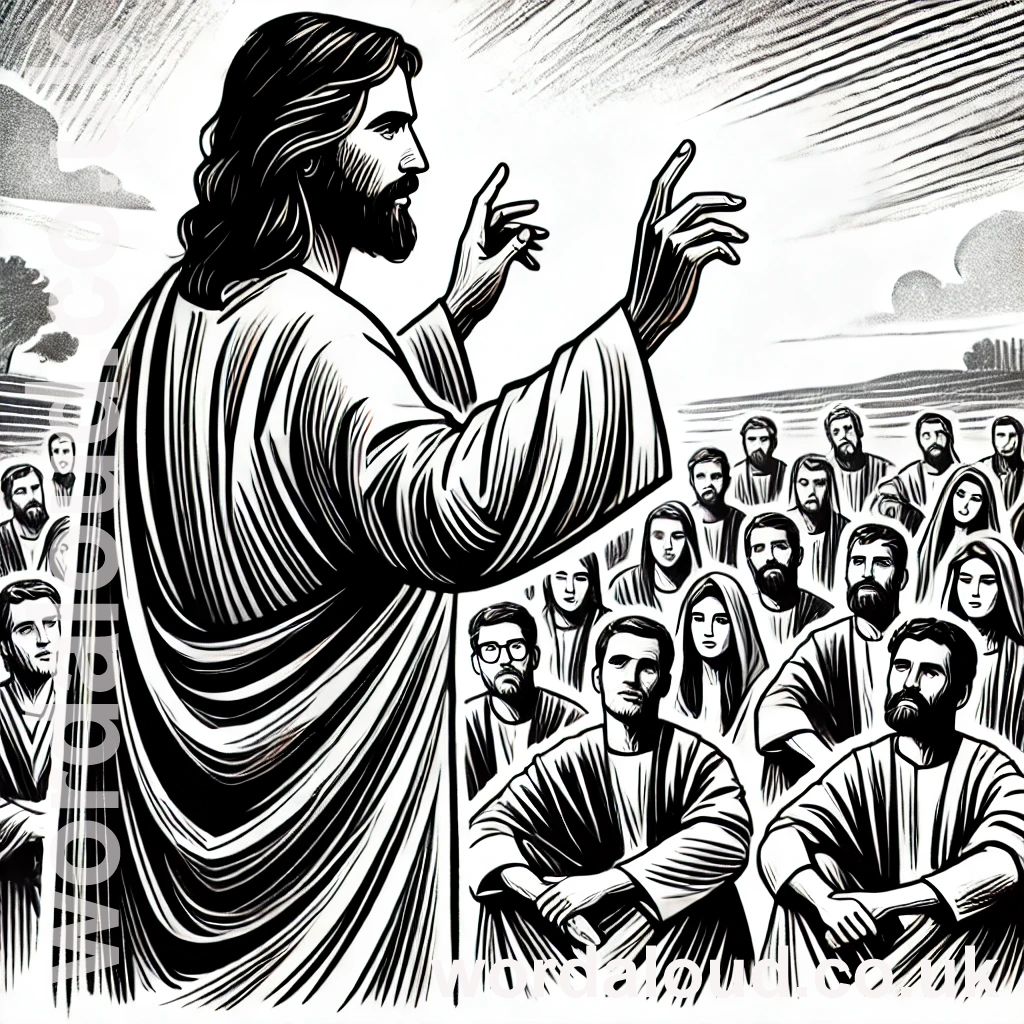
The world into which Jesus was born was not just one of imperial power—it was a world of cruelty, excess, and moral depravity beyond modern comprehension. The Caesars were not merely rulers; they were demigods in their own eyes, demanding worship, reveling in debauchery, and enforcing their will through brutality. Rome was a world where the strong crushed the weak, where spectacles of torture and death entertained the masses, and where mercy was seen as weakness [ … ]

Up until this point, Luke has told us several times that Jesus taught the people, but he has not told us what Jesus was teaching. This is the first time that Luke in his Gospel shares with us the teachings of Jesus. Jesus gives four blessings, four Beatitudes, and four curses. We are drawn to the heart of Jesus’ teaching, and must sharply reflect on what we are taught here [ … ]
