

Christian Art | The Pharisee And The Publican | Meditations On The Love Of Jesus Christ
Matthew 23: 23-26 – Week 21 Ordinary Time, Tuesday (King James Audio Bible KJV, Spoken Word)
23 Woe unto you, scribes and Pharisees, hypocrites! for ye pay tithe of mint and anise and cummin, and have omitted the weightier matters of the law, judgment, mercy, and faith: these ought ye to have done, and not to leave the other undone.
24 Ye blind guides, which strain at a gnat, and swallow a camel.
25 Woe unto you, scribes and Pharisees, hypocrites! for ye make clean the outside of the cup and of the platter, but within they are full of extortion and excess.
26 Thou blind Pharisee, cleanse first that which is within the cup and platter, that the outside of them may be clean also.
Jesus’ rebuke of the scribes and the Pharisees continues in today’s Gospel verses. Woe unto you – hypocrites. Jesus’ hard condemnation of the scribes and the Pharisees centres upon hypocrisy as upon clerical abuse. These two evils erode life together within the practice of the scribes and the Pharisees.
It is through their hypocrisy that the scribes and Pharisees have corrupted what could have been their true ministry, as they have turned to exploitation of what should have been their flock for financial and prideful ends; and as their concern for their own financial gain and social recognition, as socially important people, has drawn the scribes and the Pharisees away from true exercise of ministry. ‘Woe unto you, scribes and Pharisees, hypocrites!’ This is strong and necessary talk on the part of Jesus. We may hear these words as being entirely relevant in our day.
The charge in today’s Bible verses is twofold, relating to two aspects of the abuses of the scribes and Pharisees. Firstly, Jesus speaks of their pettiness, in terms of paying concern to utterly trivial matters, while the most weighty matters concerning our relationship to God, in the most fundamental ways, have been ignored, undermined or rejected entirely.
Secondly, Jesus speaks of the hollowness of the rituals of purity observed, whereby there is so much attention paid to cleansing the pots and the pans, the outside of the cup, while inside all is extortion and rapacity. There is a shiny, squeaky clean outside, and the heart is evil. These are no small claims.
Jesus’ charge against the Pharisees concerning the swallowing of a gnat is almost comical, as the Pharisees would strain their drinks through a linen cloth so as to avoid inadvertently swallowing that which would render them unclean. Perhaps our sense of the comedy here is a sign of how far we have come with love of Jesus, no matter all our failings.
The core charge Jesus levies, though, is far from comical. It is to do with hypocrisy. It is to do with an outward appearance of purity while inside there is corruption. For the Christian, there is grace to be discovered here. We know to look into ourselves and to confess our sins and to know that God sees through to the heart of us, and there God is ready with open arms, full of mercy, always waiting for each one of us to hear the call to come home – for the lost sheep.
Jesus strips away the outward pretence. Jesus speaks to the scribes and the Pharisees and he speaks to all people for all time, including very much ourselves. What is in our hearts? Where are we, in our hearts, in relation to God’s law? Do we accept God’s forgiveness and God’s love? Are we ready to be as little children and to enter God’s Kingdom?
Concluding Prayer | Love Revealed By Jesus Christ | Christian Prayer
Look with favour on our prayer, Lord,
and in your saving love
let your light penetrate the hidden places of our hearts.
May no sordid desires darken our minds,
renewed and enlightened as we are by your heavenly grace.
We make our prayer through our Lord.


King James Audio Bible | Daily Bible Verses | Endnotes
What Was Ritual Cleanliness For The Pharisees?
Jesus rebukes the Pharisees for their emphasis on outward appearances and neglect of inner righteousness. In particular, he criticizes their practice of tithing even the smallest herbs, while neglecting justice, mercy, and faithfulness.
To understand the Pharisees’ emphasis on ritual cleanliness, we must first understand their broader worldview. The Pharisees were a Jewish sect that emerged in the Second Temple period (around 200 BC to 70 AD). They were known for their strict adherence to the written Law (the Torah) and their oral tradition (the Talmud), which they believed contained the authoritative interpretation of the Law. They were also known for their belief in the resurrection of the dead, which distinguished them from other Jewish groups of the time.
The Pharisees believed that observance of the Law, including its many ritual purity laws, was essential for maintaining a covenantal relationship with God. They believed that these laws were not only a matter of personal piety but also had national significance, as Israel’s obedience to the Law was crucial for the restoration of God’s kingdom. As such, the Pharisees placed great emphasis on the meticulous observance of these laws, believing that even the smallest transgression could lead to divine judgment.
Ritual purity laws governed many aspects of daily life, including food, childbirth, and bodily emissions. They required that one maintain a state of purity in order to approach God or participate in certain religious activities. The laws were complex and varied, with different levels of purity and impurity, and different rituals for purifying oneself after becoming impure.
The Pharisees believed that the meticulous observance of these laws was a way of expressing their love for God and their desire to live a holy life. However, as Jesus points out in Matthew 23, they had lost sight of the heart of the Law. They had become so focused on the external aspects of observance that they neglected justice, mercy, and faithfulness, which were the weightier matters of the Law.
In subsequent Christian history, religious authorities have had varying opinions on the role of ritual cleanliness. Some have emphasized the importance of maintaining purity in order to approach God, while others have criticized this emphasis as legalistic and Pharisaical.
In the Catholic tradition, the Catechism of the Catholic Church affirms the importance of purity but this is emphasized to be inner purity: ‘The purification of the heart and soul achieved through prayer and the sacraments is the most important means of preparing oneself to encounter God.’ (CCC 2518)
Protestant theologian John Calvin, in his Institutes Of The Christian Religion, criticizes the Pharisees’ emphasis on external observance: ‘They thought that they had a good conscience when they washed cups and platters, but Christ rebukes them because they neglected the more important things of the Law.’ (Institutes, 3.4.32)
The Pharisees’ emphasis on ritual cleanliness was a manifestation of their commitment to the Law and their desire to live a holy life. However, as Jesus points out in Matthew 23, they had lost sight of the heart of the Law, which was to love God and neighbour.


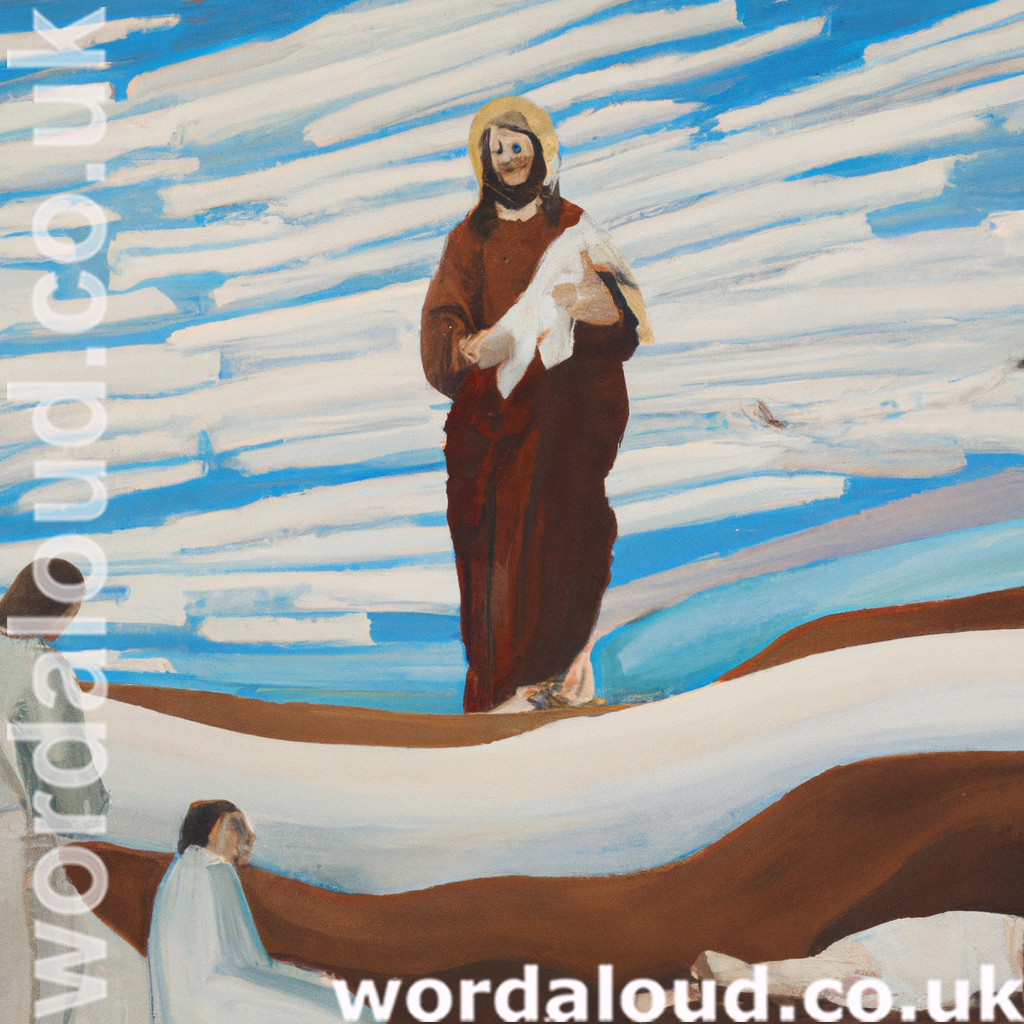
Christian Art | Parousia | Second Coming | Lamb Of God, You Take Away The Sins Of The World Luke 17: 26-37 (Audio Bible KJV, Spoken Word) Early Christian thought about the Parousia – the second coming – was largely influenced by the teachings of Jesus and the writings of Saint Paul. In the early Christian community, expectation of Christ’s return was strong, and many Christians believed that it would happen in their lifetime. This belief is evident in the New Testament, where the authors express a sense of urgency in their writings and encourage their readers to be prepared for Christ’s imminent return. As Christianity spread throughout the Roman Empire, the idea of the Parousia became more complex and nuanced. Theological debates arose around the nature of Christ’s return and the events that would precede it. Some theologians, such as Origen and Augustine, saw the Parousia as a spiritual event that was already happening in the Church. Others, such as the Montanists and the millenarians, believed in a literal, physical return of Christ and the establishment of a new, earthly Kingdom. In the Middle Ages, the Parousia was often associated with apocalypticism and the idea of a final, cataclysmic battle between good and evil – the last battle. The idea of the Antichrist, who would precede Christ’s return, became a popular theme in Christian literature, and the book of Revelation (Apocalypse – meaning to reveal, to uncover) was interpreted as a prophetic guide to the end of the world. Biblical Basis For The Parousia | The Second Coming The concept of the Parousia, or the Second Coming of Jesus Christ, is central to Christian eschatology and is supported by numerous biblical passages in both the Old and New Testaments. In the Old Testament, there are numerous passages that refer to the coming of a Messiah who will restore Israel and bring about the final judgment. For example, in Daniel 7:13-14, it is written: ‘I saw in the night visions, and, behold, one like the Son of man came with the clouds of heaven, and came to the Ancient of days, and they brought him near before him. And there was given him dominion, and glory, and a kingdom, that all people, nations, and languages, should serve him: his dominion is an everlasting dominion, which shall not pass away, and his kingdom that which shall not be destroyed.’ This passage describes a divine figure who comes in the clouds and is given dominion over all nations. In the New Testament, the Parousia is described in greater detail, particularly in the teachings of Jesus and the writings of Saint Paul. Jesus speaks of his return in many passages, including Matthew 24:30-31, where Jesus says: ‘And then shall appear the sign of the Son of man in heaven: and then shall all the tribes of the earth mourn, and they shall see the Son of man coming in the clouds of heaven with power and great glory. And he shall send his angels with a great sound of a trumpet, and they shall gather together his elect from the four winds, from one end of heaven to the other.’ Here, Jesus describes his return in power and glory, accompanied by angels who gather Jesus’ elect from all over the world. In Saint Paul’s letters, the Parousia is also described in detail. In 1 Thessalonians 4:16-17, Saint Paul writes: ‘For the Lord himself shall descend from heaven with a shout, with the voice of the archangel, and with the trump of God: and the dead in Christ shall rise first: Then we which are alive and remain shall be caught up together with them in the clouds, to meet the Lord in the air: and so shall we ever be with the Lord.’ This passage describes a resurrection of the dead and the gathering of believers to meet the Lord Jesus in the air. The language and imagery used to describe the Parousia are often dramatic and apocalyptic in nature. The Parousia is often described as a time of judgment, when the righteous will be separated from the wicked, and God’s justice will be fully revealed. The imagery of clouds, trumpets, and angels is used to depict the power and glory of Christ’s return. Theological Interpretations Of The Parousia | Jesus’ Second Coming The concept of the Parousia has been interpreted in a variety of ways throughout Christian history. Dispensationalism Dispensationalism is a theological framework that emerged in the 19th Century and has since become popular among some evangelical and fundamentalist Christians. Dispensationalists believe that history is divided into distinct periods or ‘dispensations’, each of which is marked by a particular mode of divine revelation and a specific plan of salvation. According to dispensationalist theology, the Parousia will be preceded by a period of tribulation, during which the Antichrist will establish a one-world government and the Jews will be restored to their homeland. The Parousia itself will involve a physical, visible return of Christ, who will establish a thousand-year reign on earth before the final judgment. Preterism Preterism is a theological interpretation of the Parousia that holds that many of the prophecies in the New Testament, particularly those in the book of Revelation, were fulfilled in the first century AD. According to this view, the Parousia occurred in a spiritual sense when Christ ascended to heaven and sent the Holy Spirit to empower the Church. Preterists argue that the tribulation and other end-time events predicted in the New Testament were fulfilled in the destruction of the Temple in Jerusalem in AD 70. Postmillennialism Postmillennialism is a theological view that holds that the Parousia will occur after a period of history in which the Church will gradually bring about the kingdom of God on earth. According to this view, the Church will spread the gospel throughout the world, and social, political, and economic conditions will gradually improve. Eventually, Christ will return to a world that has been largely transformed by the Gospel. Amillennialism […]

The psalm begins with an invocation, a plea to the Lord on behalf of the one in need. The psalmist implores God to hear his supplication in times of trouble, invoking the name of the God of Jacob, a symbol of the covenant between God and the people of Israel. This sets the tone for the psalm, emphasizing reliance on God’s divine protection and guidance [ … ]

Saint Augustine’s sermon offers a profound meditation on Psalm 51 (‘Miserere mei, Deus’), a penitential psalm attributed to King David after his fall into sin with Bathsheba. In the early Church, Psalm 51 was foundational in catechesis on repentance and featured prominently in the liturgy, especially during Lent. It was often recited or sung by those preparing for baptism or undergoing public penance. By the time Augustine preached this sermon in the late 4th or early 5th century, the Church had already begun to develop a rich theology of repentance that would eventually blossom into the sacrament of confession. Augustine himself was a pivotal figure in shaping the Church’s understanding of the inner dimensions of conversion—a turning not just of actions, but of the heart and will [ … ]