

The Gospel Of Saint Mark – Chapter 16
1 AND when the sabbath was past, Mary Magdalene, and Mary the mother of James, and Salome, had bought sweet spices, that they might come and anoint him.
2 And very early in the morning the first day of the week, they came unto the sepulchre at the rising of the sun.
3 And they said among themselves, Who shall roll us away the stone from the door of the sepulchre?
4 And when they looked, they saw that the stone was rolled away: for it was very great.
5 And entering into the sepulchre, they saw a young man sitting on the right side, clothed in a long white garment; and they were affrighted.
6 And he saith unto them, Be not affrighted: Ye seek Jesus of Nazareth, which was crucified: he is risen; he is not here: behold the place where they laid him.
7 But go your way, tell his disciples and Peter that he goeth before you into Galilee: there shall ye see him, as he said unto you.
It is a time of vigil while Jesus rests and we await his resurrection on Easter Sunday. Jesus has died to free us from our sins. While he rests, the church is a quiet and sombre place. We think of Jesus’ first followers and of what they must have felt and thought through this time. They must have felt very alone and abandoned, and indeed at risk of losing their own lives.
The strict Jewish laws meant that the holy women could not arrange things on the Sabbath day to anoint the body of our Lord Jesus. It is now, which day is what we now call the Lord’s Day, that the women have their first opportunity to go to care for Jesus’ body. They do so very early in the morning. Such is their devotion to our Lord that they are impatient to tend to him.
Their strength and devotion to Jesus is manifest. Through the Passion and crucifixion of Jesus, the women have proven stronger than those of the men who fled from what was happening. Perhaps it is strange as well that the first news of Christ’s resurrection should be given to the women. In Bible times, their testimony, as women, would not have been seen as being as valid as that of men. Indeed, in Mark’s Gospel, when Jesus appears to Mary Magdalene and she tells the disciples, they do not believe her. We may, therefore, be additionally assured of the historical veracity of the events recorded.
The women, Mary Magdalene, and Mary the mother of James, and Salome, are confused by what they see now. Perhaps they may have feared that something terrible had happened, that the body of our Lord had been taken away, perhaps because of the Jewish authorities’ fear and for political reasons, perhaps for some other nefarious purpose. It is now that they meet the angel who has come to give them the good news, sent by God to reassure those he cares about.
The angel confirms that the man who was crucified and who has risen from the dead are one and the same: Jesus of Nazareth. He tells the women to go and share the good news, to tell Jesus’ disciples that Jesus’ promise was true, and he has gone before them to meet them again, as he said he would. Peter is mentioned by name, perhaps to indicate especially that his denials have been forgiven him. As we have died with Christ, so now we are freed from the power of sin and death; we are raised.
‘What is happening? Today there is a great silence over the earth, a great silence, and stillness, a great silence because the King sleeps; the earth was in terror and was still, because God slept in the flesh and raised up those who were sleeping from the ages. God has died in the flesh, and the underworld has trembled.
‘Truly he goes to seek our first parent like a lost sheep; he wishes to visit those who sit in darkness and the shadow of death. He goes to free the prisoner Adam and his fellow-prisoner Eve from their pains, he who is God, and Adam’s son.’ An ancient homily
Audio Bible KJV | Endnotes
Between Cross And Resurrection | Narrative Of Faith
The story reads forwards and backwards. It is a story. We tend to have second reading or nth reading, but what about the first? An important theology of Holy Saturday is that we are before the first Easter. It is entirely plausible to argue that without this grasp we may not recognize the full and entire significance of Good Friday and of Holy Saturday, conditioned as we are by Easter. And yet in a sense if we cannot forget the knowledge of Easter, then our sense of Jesus’ crucifixion as of Holy Saturday is gone from us. This is to say that the narrative reads both forwards and backwards. It is full of contradictions. This is in part the point. Jesus is contradictions. It is perhaps to say that in order to understand the crucifixion and the Easter to follow, we must in a sense forget Easter – forget the resurrection – and only in an abject contemplation of God attached to a corpse do we understand.
That Jesus was crucified as a slave is rooted in context. During the Roman occupation of Palestine, crucifixion was a common form of punishment for slaves and non-citizens who committed crimes against the state. There is no reason not to believe that Jesus was crucified by order of the Roman authorities – presumably at the instigation of the Jewish/Temple authorities who would not themselves have had the technical juridical capacity to put a man to death.
Protestant and Catholic theologians have offered interpretations of the significance of Jesus’ crucifixion as a slave. For example, Protestant Reformer Martin Luther saw Jesus’ crucifixion as a voluntary submission to God’s will and a demonstration of his obedience and love for humanity. Catholic theologian St. Augustine of Hippo viewed the crucifixion as a form of redemption, through which Jesus’ death on the Cross paid the penalty for humanity’s sins. Pope Pius XII in his Encyclical Letter ‘Mystici Corporis’ wrote that ‘Christ, by his obedience unto death, even death on a Cross, merited justification for us’.
Crucifixion | Theology Of Counter-Oppression
Other theologians have emphasized the political and social dimensions of Jesus’ crucifixion as a slave. German theologian Jürgen Moltmann has argued that Jesus’ death on the cross was a challenge to the oppressive systems of his time, and that his resurrection represents a victory over oppression and injustice. Similarly, liberation theologians such as Gustavo Gutiérrez have interpreted the crucifixion as a symbol of resistance against the Roman Empire and its exploitation of the poor and marginalized.
Christian Faith And God’s Love
In my novel, The Gospel According To Tomàs, the good Archbishop says in his Palm Sunday homily:
‘Our palm fronds may seem to us today rather dry. I mean this not in a literal sense, but by the standards of those who originally lined the roadways in order to welcome Jesus into Jerusalem, as they proclaimed Jesus to be the Messiah, who would be clambering up and ripping their palm branches fresh from off the trees. I think perhaps also our faith is somewhat distant from that of the people there on that highroad into Jerusalem, and something of our sense of the meaning has shifted in vividness from what it was then. And of course the expectation of all those many people is markedly different, but in many important respects the same. There are the same essential qualities to all our faith in God, which springs complete from our humanity, and that is one and the same in value for all of us, and time is consistent on this point. So then, let us renew the fullness of Catholic faith, and let us ask the Lord’s blessing as we embark upon our Holy Week.’ [The Gospel According To Tomàs ]



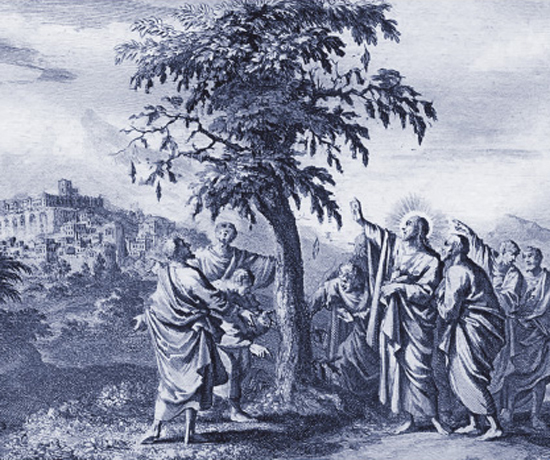
Just as Jesus’ listeners know how to interpret signs in nature, the trees beginning to bud and shoot new leaves as they come to life in spring, so Jesus tells them that, when they see and experience the upheavals described by Jesus in our Gospel verses of the past few days, they will know that the Kingdom of God is near [ … ]
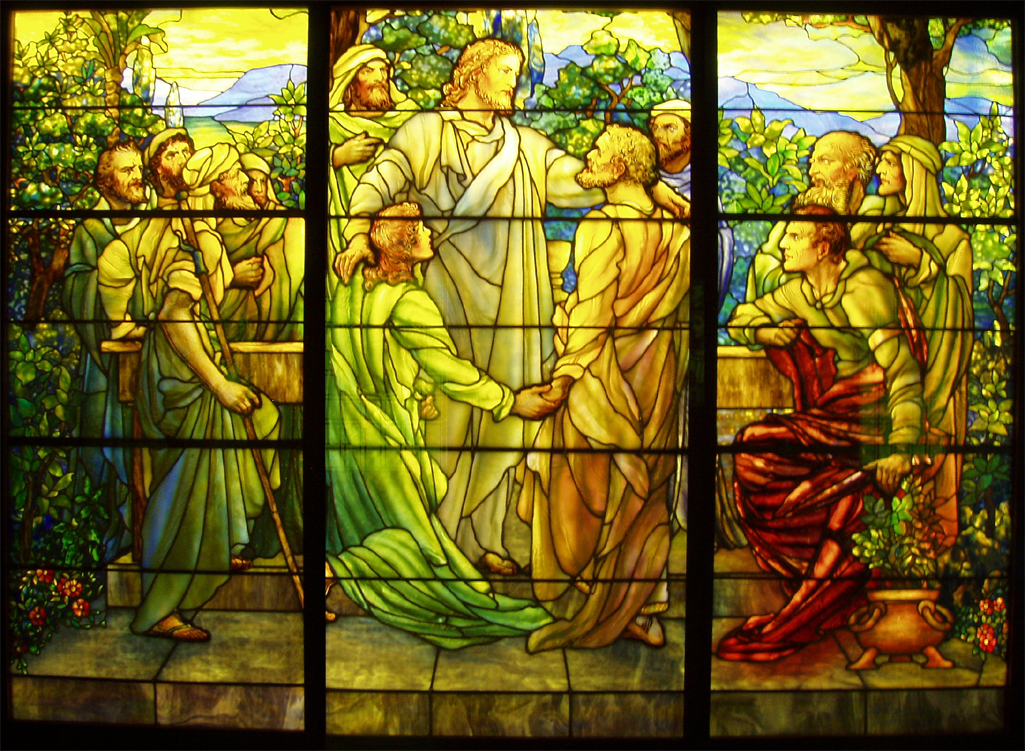
In today’s Gospel verses, Jesus teaches that the Pharisees have got it all wrong in relation to the Sabbath. While God gave the Sabbath to man as an opportunity to rest and to devote himself to divine worship, the Pharisees have choked the meaning of the Sabbath in a mass of legalese, turning it from being a time of joy into a time of anxiety and empty observance [ … ]
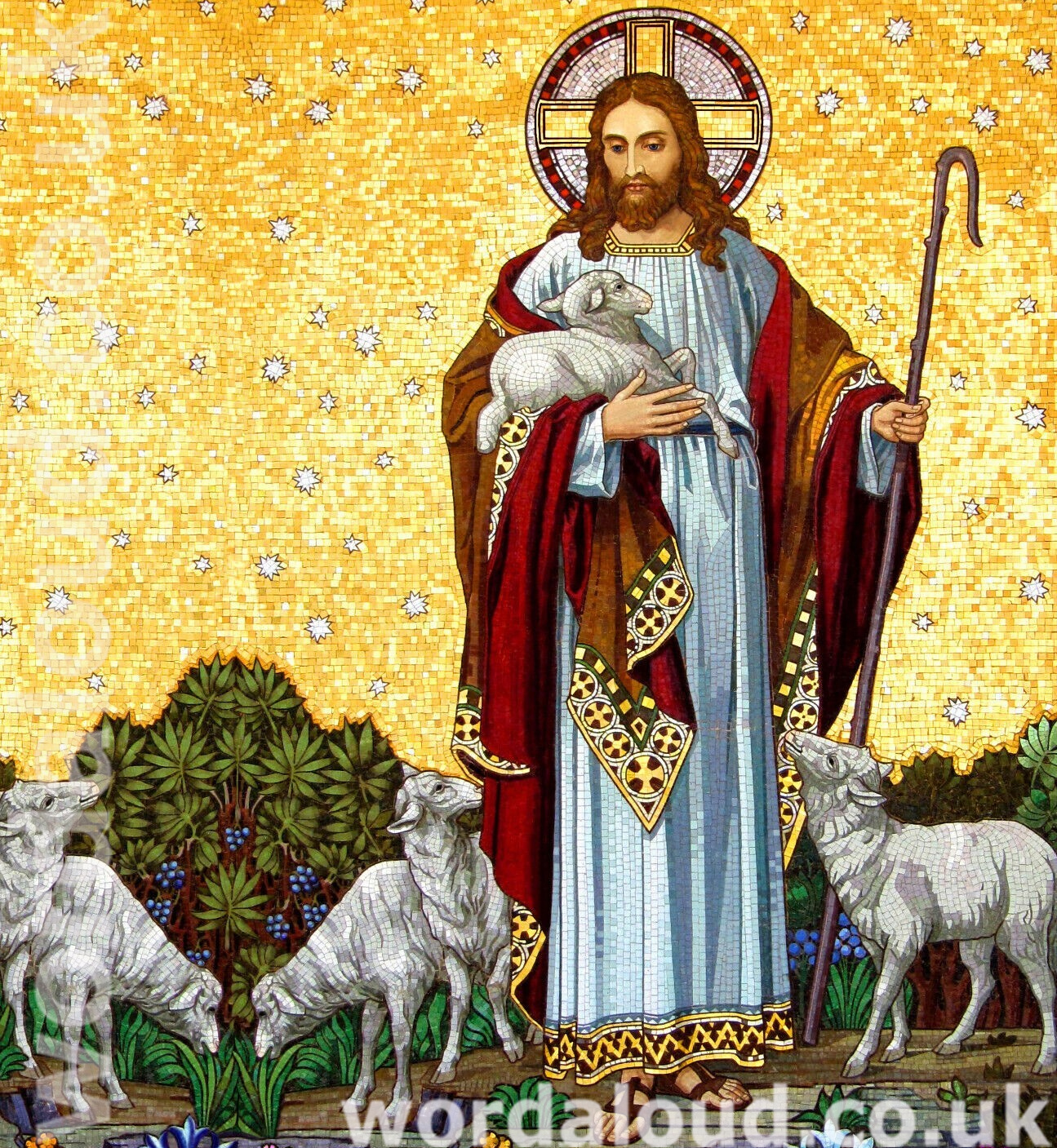
Saint Augustine reflects on Ezekiel’s image of scattered sheep and applies it to the life of the Church. Scattering is linked to pride, which leads individuals to pursue earthly goods rather than finding their life ‘buried in Christ’. Pride isolates, generating division and self-concern, while love unites through communion in the Church. The Church, as mother and shepherd, responds by seeking out the lost, binding up the weak, and maintaining unity across the whole world [ … ]
