

Christian Art | Prayer With Jesus | Psalms | God The Helper Of The Needy | King David As A Boy | Audio KJV | Love Revealed By Jesus Christ | King James Audio Bible
Psalm 113 | King James Audio Bible
YouTube: Psalm 113 | KJV | King James Version | Audio Bible | Word Aloud
Psalm 113 is a hymn of praise within the ‘Hallel’ collection (Psalms 113-118). Traditionally recited during significant Jewish holidays, especially Passover, this psalm is prayed in liturgical practices of both Judaism and Christianity. The psalm’s composition, themes, and stylistic elements reflect its historical and religious context and spiritual and literary significance.
Historical And Liturgical Context
The composition of Psalm 113 is commonly attributed to the post-exilic period, a time when the Israelite community was re-establishing itself following the Babylonian exile. This era was marked by renewed emphasis on identity and communal worship. The psalm’s inclusion in the Hallel psalms, which are recited during Passover, aligns the psalm with celebration of the Exodus — in Jewish history symbolizing deliverance and divine intervention.
Structure And Literary Style
Literary structure and style of Psalm 113 are central to the psalm as a hymn of praise:
- Inclusio Structure: Psalm 113 employs an inclusio structure, opening and closing with ‘Hallelujah’ (Praise the LORD). This bracketing serves to unify the psalm and emphasize its primary theme of unceasing praise. Nancy deClaissé-Walford, a noted scholar, observes that Psalms 111 and 112 are ‘summary statements of what faith is all about: who God is and what humans must do in response to God’.
- Symmetry And Contrast: The psalm’s symmetry, portraying God’s transcendence and immanence, highlights His supreme majesty and intimate concern for humanity. The contrast between these aspects is a central theme, underscoring breadth of God’s nature.
- Poetic Devices: The psalm uses parallelism and rhythm, characteristic of Hebrew poetry. These elements enhance the psalm’s recitation and musical rendition, contributing to the psalm’s role in worship and liturgy.
- Rhythmic And Musical Qualities: Rhythmic flow of the psalm, suited for chant or song, demonstrates the musicality inherent in the Psalms. This aspect has made Psalm 113 a vital part of communal and individual worship.
- Imagery And Symbolism: The psalm expresses vivid imagery of God’s stooping to look upon heaven and earth, and the transformation of a barren woman into a joyful mother, to convey spiritual truths about God’s power and compassion.
Themes And Theological Implications
Psalm 113’s themes are both universal and specific:
- Divine Transcendence And Immanence: Portrayal of God as transcendent yet intimately involved in worldly affairs is a key theological aspect of the psalm.
- Universal Call To Praise: Psalm 113 extends a call for universal praise to God, transcending cultural and temporal boundaries.
- Social Justice: Depiction of God as the uplifter of the poor and needy reflects a divine concern for social justice, an enduringly relevant theme.
- Role Of Women: The final verse’s focus on the barren woman highlights the value of women and their roles in society and within the divine plan.
Contemporary Relevance
Today, Psalm 113 remains a source of inspiration and comfort. Its themes resonate with modern concerns of social justice, equality, and spiritual searching. The psalm’s call for universal praise speaks to a globally interconnected world, reminding us of our shared spiritual heritage.

Psalm 113 | King James Audio Bible
Praise ye the LORD. Praise, O ye servants of the LORD, praise the name of the LORD.
Blessed be the name of the LORD from this time forth and for evermore.
From the rising of the sun unto the going down of the same the LORD’S name is to be praised.
The LORD is high above all nations, and his glory above the heavens.
Who is like unto the LORD our God, who dwelleth on high,
Who humbleth himself to behold the things that are in heaven, and in the earth!
He raiseth up the poor out of the dust, and lifteth the needy out of the dunghill;
That he may set him with princes, even with the princes of his people.
He maketh the barren woman to keep house, and to be a joyful mother of children. Praise ye the LORD.


Psalm 113 | King James Audio Bible
- Divine Transcendence And Immanence: The psalm illustrates God’s supreme majesty and His intimate involvement in the world.
- Universal Praise: Psalm 113 calls for global praise to God, transcending cultural and temporal boundaries.
- Social Justice And Compassion: The psalm highlights God’s concern for the marginalized, particularly the poor and needy.
- God’s Power To Transform: The psalm portrays God’s ability to dramatically change lives, as seen in lifting the needy and transforming the barren woman into a joyful mother.
- Celebration Of Women: The psalm acknowledges the significant role and value of women in society and in the divine plan.
- Righteousness Of God: Psalm 113 reflects on the enduring righteousness of God mirrored in the actions and lives of the righteous.
- Blessing of the Righteous: There is a focus on the blessings and prosperity that accompany righteous living.
- Enduring Nature of Praise: The psalm underscores the everlasting aspect of praising God, from the present into eternity.
- Contrast Between Divine And Human: By highlighting God’s attention to the humble and lowly, the psalm contrasts the divine perspective with human viewpoints.
- Liturgical Significance: The placement of Psalm 113 in the context of Hallel psalms underlines its importance in Jewish liturgical traditions, especially during Passover.




Matthew Arnold’s ‘Dover Beach’, written in the mid-19th century, reflects religious uncertainty of the Victorian era. The poem captures the emotional and spiritual turmoil of a time when traditional Christian beliefs were being questioned by the rise of scientific discoveries and changing social attitudes. Arnold’s work has been read as a lament for the loss of faith; it is a valuable text for exploring Christian response to modernity [ … ]
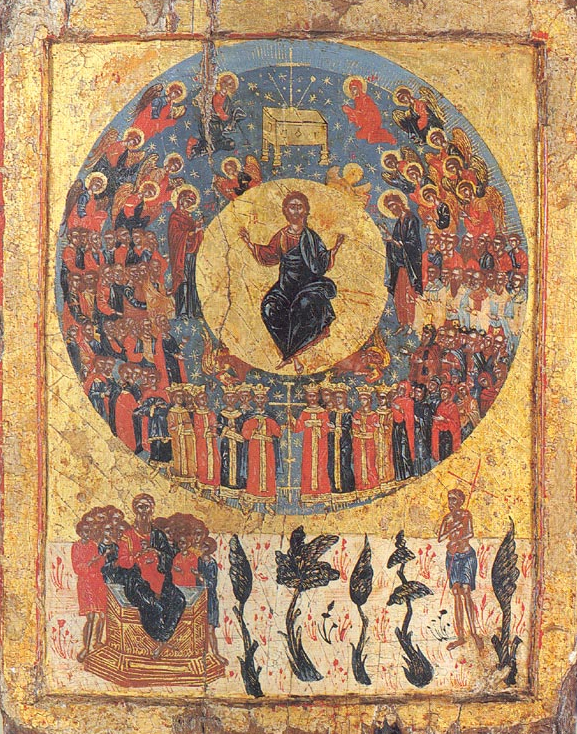
Most of the signs Christ describes to his listeners in the eschatological discourse had already been realized by the time Luke’s first audience would have heard his Gospel. There had been, and were, wars, persecutions, family conflict, and Jerusalem with the Temple had been destroyed. The Christians of Luke’s time listening to these Gospel verses, of today and since Tuesday, could then have been encouraged to know that they were very close to Christ’s full revelation, his apocalypse, and so have courage to bear persecutions and other great challenges of the early Church [ … ]

Aphraates was a prominent Syriac Christian writer of the early Church, active in the 4th century. He is best known for a series of homilies called the Demonstrations, which provide valuable insights into the theology, liturgy, and practices of the early Syriac Church. Aphraates is often referred to as the Persian Sage, reflecting his origins in the region of the Sasanian Empire (modern-day Iraq and Iran) [ … ]
