Christian Art | Prayer With Jesus | Psalms | Praise For God’s Goodness And Might | King David As A Boy | Audio KJV | Love Revealed By Jesus Christ | King James Audio Bible
Psalm 135 | King James Audio Bible
YouTube: Psalm 135 | KJV | King James Version | Audio Bible | Word Aloud
Psalm 135 blends praise with remembrance, theological declaration with historical reflection. The psalm invites the community of faith to recognize and proclaim the greatness of God, to remember God’s acts in history, and to affirm their identity as God’s chosen people. The psalm serves as a bridge between past and present, human and divine, inviting its readers into a space where history, theology and worship intersect.
The Nature Of Praise
The psalm commences with a call to worship, ‘Praise ye the Lord. Praise ye the name of the Lord; praise him, O ye servants of the Lord.’ This command to praise is directed towards the ‘servants of the Lord’, likely the Levites who served in the Temple. The repetition of the command underscores its importance. Praise, in this context, is not just an act of worship but a fundamental expression of faith and recognition of God’s sovereignty.
God’s Supremacy And Sovereignty
Central to Psalm 135 is the assertion of God’s supremacy over other gods. In verse 5, the psalmist declares, ‘For I know that the Lord is great, and that our Lord is above all gods.’ This reflects a monotheistic belief in the midst of a polytheistic world. It distinguishes the God of Israel from deities of surrounding nations, affirming God’s superiority and ultimate authority over all creation.
Historical Recollections And Divine Acts
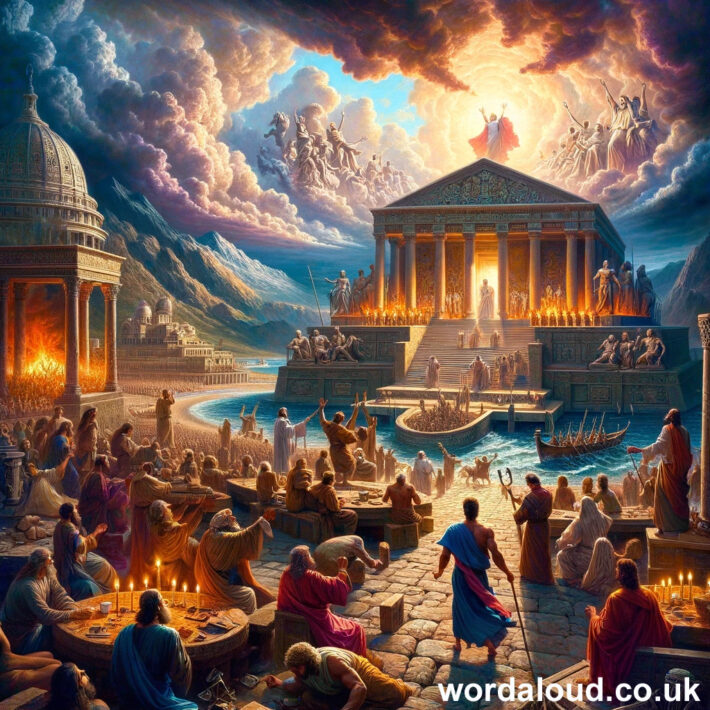
The psalmist recounts the mighty acts of God in Israel’s history, particularly focusing on the Exodus and the conquest of Canaan. These verses serve as a reminder of God’s intervention and salvation. Phrases including ‘Who smote the firstborn of Egypt’ and ‘Who sent tokens and wonders into the midst of thee, O Egypt, upon Pharaoh, and upon all his servants’ recall the plagues and miracles that led to Israel’s liberation from slavery. Following this, the psalm references conquests under Moses and Joshua: ‘Sihon king of the Amorites, and Og king of Bashan, and all the kingdoms of Canaan.’ These accounts serve to remind Israel of their God-given heritage and God’s role as divine warrior and protector.
Contrast With Idols
The psalm sharply contrasts the living God of Israel with the idols of other nations, emphasizing their powerlessness and human origin. The description of idols in verses 15 to 18 as silver and gold, the work of human hands, who cannot speak, see, hear, or breathe, serves to debase these man-made objects and to reaffirm the power and vitality of the living God of Israel. The psalmist’s critique of idols underscores a central tenet of Israelite faith: worship of the living God who actively engages with His creation.
Inclusion Of All In Worship
The psalm calls upon various groups within the Israelite community to bless the Lord: the house of Israel, the house of Aaron, and the house of Levi. This inclusivity signifies that worship is not confined to a specific group but is the duty and privilege of all who belong to the community of faith. It recognizes the different roles within the worship life of Israel, from the general congregation to the priestly class.
Zion As The Center Of Worship
The mention of Zion in the concluding verse, ‘Blessed be the Lord out of Zion, which dwelleth at Jerusalem,’ situates the locus of worship in the holy city of Jerusalem, the dwelling place of God. This affirmation not only gives geographical and cultural context to the psalm but also theological significance. Zion is more than a physical location; it is the symbolic heart of Israel’s religious life, where God’s presence is manifest.
Enduring Nature Of God’s Name
The psalm affirms the enduring nature of God’s name and His memorial throughout all generations. This continuity speaks to the timelessness of God’s character and the ongoing relevance of His deeds. It assures the worshipper that the God who acted in history continues to be present and active in the lives of His people.

Psalm 135 | King James Audio Bible
Praise ye the Lord. Praise ye the name of the Lord; praise him, O ye servants of the Lord.
Ye that stand in the house of the Lord, in the courts of the house of our God,
Praise the Lord; for the Lord is good: sing praises unto his name; for it is pleasant.
For the Lord hath chosen Jacob unto himself, and Israel for his peculiar treasure.
For I know that the Lord is great, and that our Lord is above all gods.
Whatsoever the Lord pleased, that did he in heaven, and in earth, in the seas, and all deep places.
He causeth the vapours to ascend from the ends of the earth; he maketh lightnings for the rain; he bringeth the wind out of his treasures.
Who smote the firstborn of Egypt, both of man and beast.
Who sent tokens and wonders into the midst of thee, O Egypt, upon Pharaoh, and upon all his servants.
Who smote great nations, and slew mighty kings;
Sihon king of the Amorites, and Og king of Bashan, and all the kingdoms of Canaan:
And gave their land for an heritage, an heritage unto Israel his people.
Thy name, O Lord, endureth for ever; and thy memorial, O Lord, throughout all generations.
For the Lord will judge his people, and he will repent himself concerning his servants.
The idols of the heathen are silver and gold, the work of men’s hands.
They have mouths, but they speak not; eyes have they, but they see not;
They have ears, but they hear not; neither is there any breath in their mouths.
They that make them are like unto them: so is every one that trusteth in them.
Bless the Lord, O house of Israel: bless the Lord, O house of Aaron:
Bless the Lord, O house of Levi: ye that fear the Lord, bless the Lord.
Blessed be the Lord out of Zion, which dwelleth at Jerusalem. Praise ye the Lord.
Psalm 135 | King James Audio Bible
- Communal Worship: The opening verses of Psalm 135 invite the community to engage in worship, emphasizing the importance of collective praise and devotion to God.
- Divine Supremacy: The psalm asserts God’s supremacy over other gods, affirming the monotheistic belief central to Israelite faith and contrasting it with the polytheistic practices of surrounding cultures.
- Historical Acts Of God: Recounting pivotal events like the Exodus and the conquests of Canaan, the psalm highlights God’s intervention and power in Israel’s history, serving as reminders of God’s ongoing faithfulness and might.
- Critique Of Idolatry: A significant portion of the psalm is dedicated to contrasting the living God of Israel with lifeless idols, emphasizing the futility and impotence of man-made gods in comparison to the true and living God.
- Inclusivity In Worship: Calls to the house of Israel, Aaron, and Levi to bless the Lord reflect the inclusive nature of worship in the Israelite community, involving all segments from priests to laypersons.
- Theological Symbolism Of Zion: The final blessing from Zion underlines its significance not just as a physical location, but as a theological symbol of God’s presence, kingship, and the centre of worship.
- Continuity of God’s Presence: The enduring nature of God’s name and the ongoing legacy of His deeds underscore the continuous presence and relevance of God throughout generations.
- Biblical Commentaries:
- Theological Expositions:
- Historical and Cultural Studies:
- Online Bible Study Tools:
- Journals and Academic Articles:


The passage belongs to a tradition known as the ‘Two Ways’ teaching. This form sets up a contrast between two modes of life. The ‘Way of Light’ represents the path aligned with God’s purposes, and by implication, the ‘Way of Darkness’ is its opposite—marked by self-interest, deception, violence, and disregard for God’s commandments. The use of this form in early Christian literature suggests its role as one of instruction, particularly for converts preparing for baptism or full entry into the community [ … ]
This sermon by Bernard of Clairvaux presents a disciplined and practical account of the search for wisdom, framed within the moral and spiritual demands of the Christian life. Its structure is hortatory, yet it rests upon a coherent theological vision in which wisdom is both a divine gift and a task requiring sustained human response [ … ]
Saint Charles Borromeo reflects on Advent as the ‘acceptable time’, drawing from Saint Paul’s language to describe a season charged with divine initiative. His tone is pastoral and earnest, urging the faithful not merely to recall a historical event but to participate anew in the grace that Christ’s coming has unleashed. For Saint Charles, the whole mystery of salvation is concentrated in this season: the Father’s mercy, the sending of the Son, the overthrow of Satan’s tyranny, the revelation of truth, the training in virtue, and the inheritance of eternal life. Advent is therefore not only a commemoration but a living conduit of God’s saving work [ … ]