
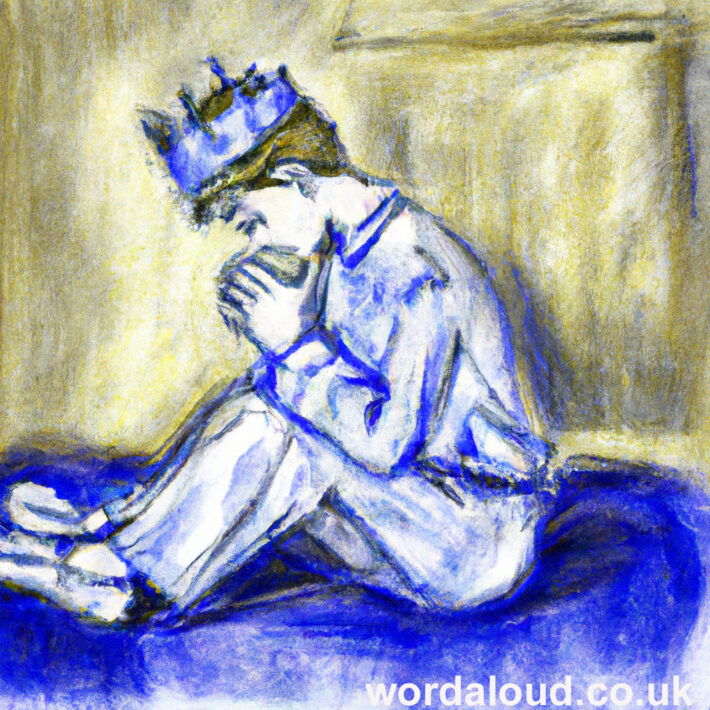
Christian Art | Prayer With Jesus | Psalms | Trust In God Under Persecution | King David As A Boy | Audio KJV | King James Version | Image By Dall-E
Psalm 56 | King James Audio Bible
YouTube: Psalm 56 | KJV | King James Version | Audio Bible | Word Aloud
Psalm 56 is a heartfelt prayer and an expression of profound trust in God amid distress and persecution. The psalmist begins by pleading for God’s mercy, feeling besieged by adversaries who seek to oppress and swallow him up. This prayer encapsulates the psalmist’s raw emotions and the desire for divine intervention in the face of adversity.
The psalmist confronts the reality of daily strife and relentless enemies who gather against him. In these challenging times, fear and uncertainty grip his heart, yet he declares his unwavering trust in God. His faith in God is not shaken; instead, it becomes a source of strength and praise.
Amid the turmoil, the psalmist acknowledges that enemies twist his words and harbour malicious intentions. He is the target of constant surveillance and threats. It is a scenario of treachery and deception where enemies plot against his life.
The psalmist calls upon divine justice, beseeching God to cast down the people who engage in such wickedness. This prayer reflects the psalmist’s plea for God to see his distress and come to his aid.
The psalmist finds solace in the thought that God not only hears his words but also collects his tears, storing them in His bottle and recording them in His book. This symbolism highlights God’s intimate knowledge of the psalmist’s pain and suffering.
Despite his fear and the relentless persecution, the psalmist has unwavering confidence that, when he cries out to God, his enemies will be turned back. His trust in God as a source of refuge and strength is the bedrock of his faith.
Throughout the psalm, the theme of trust in the face of adversity remains central. The psalmist seeks shelter in the Lord and praises His word, demonstrating an unshakeable belief in divine protection and deliverance.

Psalm 56 | King James Audio Bible KJV | Love Revealed By Jesus Christ
Be merciful unto me, O God, for man would swallow me up; he fighting daily oppresseth me.
Mine enemies would daily swallow me up, for they be many that fight against me, O thou Most High.
What time I am afraid, I will trust in thee.
In God I will praise his word, in God I have put my trust; I will not fear what flesh can do unto me.
Every day they wrest my words; all their thoughts are against me for evil.
They gather themselves together, they hide themselves, they mark my steps, when they wait for my soul.
Shall they escape by iniquity? in thine anger cast down the people, O God.
Thou tellest my wanderings, put thou my tears into thy bottle; are they not in thy book?
When I cry unto thee, then shall mine enemies turn back; this I know, for God is for me.
In God will I praise his word; in the Lord will I praise his word.
In God have I put my trust; I will not be afraid what man can do unto me.
Thy vows are upon me, O God; I will render praises unto thee.
For thou hast delivered my soul from death; wilt not thou deliver my feet from falling, that I may walk before God in the light of the living?

Key Themes Of The Psalm For Reflection | Love Revealed By Jesus Christ
- A Cry for God’s Mercy Amid Persecution: At the core of Psalm 56 lies a heartfelt plea for God’s mercy. The psalmist feels surrounded and oppressed by adversaries who seek to harm him. This theme of seeking divine compassion is a universal human experience, as people turn to God in times of distress and persecution.
- Unwavering Trust in God: Despite the fear and turmoil brought on by relentless enemies, the psalmist displays unwavering trust in God. This theme underscores the power of faith in God as a source of strength, even in the face of overwhelming adversity. The psalm is a testament to resilience of the human spirit when anchored in divine belief.
- Treachery and Malicious Intent: The psalmist openly acknowledges treachery and malicious intent of his enemies. This theme reflects harsh realities of life, where individuals face deception, surveillance, and threats from those who wish them harm. The psalmist’s honesty in acknowledging this struggle adds depth to the psalm’s emotional landscape.
- God’s Intimate Knowledge: The psalmist finds comfort in the belief that God not only hears his words but also intimately knows his suffering. The imagery of God collecting tears in a bottle and recording them in a book serves as a poignant symbol of divine empathy and awareness. This theme highlights the idea that God is intimately connected to the human experience.
- A Call for Divine Justice: The psalmist calls upon divine justice, asking God to cast down the wicked and intervene in his distress. This theme reflects the human desire for fairness and righteousness, as individuals often seek divine intervention to right the wrongs and injustices they face.
- Confidence in Divine Intervention: Despite challenging circumstances, the psalmist maintains confidence that crying out to God will lead to the reversal of fortunes. This theme underscores belief that God can turn back enemies and provide refuge and strength to those who trust in Him.
- Praising God’s Word and Seeking Shelter: Throughout the psalm, the psalmist praises God’s word and seeks shelter in the Lord. This reflects a deep connection to faith and a reliance on divine guidance and protection. It is a theme that resonates with many individuals who find solace in faith during difficult times.




Saint Augustine’s commentary on Psalm 60 focuses on the psalmist’s words: “From the ends of the earth I call to you.” Augustine interprets this as the cry of a person who feels distant from God. He explains that this “distance” is not physical but spiritual — a condition of being separated from God by sin, suffering, or inner turmoil [ … ]

Right at the start of Jesus’ ministry, Mark tells us of the fundamental difference between Jesus and other religious teachers. As we listen to these verses, we are struck by the presence of a Christ who is not, as so many in our modern age like to think, only a fine moral teacher, or a wise man with some fascinating spiritual insights to offer us. When Jesus talks about the Scriptures, when he teaches the people about God, he speaks not as the scribes but with authority, and he has that authority because he knows the Father intimately and he is the Son. As the Son, he doesn’t just explain Scripture; it is his right, he has this authority, to change, to add to, to subtract from, to reinterpret what was already received as the word of God [ … ]

Gospel Reading: Matthew 11:28-30 ‘Come unto me, all ye that labour and are heavy laden, and I will give you rest. Take my yoke upon you, and learn of me; for I am meek and lowly in heart: and ye shall find rest unto your souls. For my yoke is easy, and my burden is light.’ In this passage, Jesus extends an invitation to all who are weary and burdened. Jesus promises rest and relief, urging us to take his yoke and learn from him. Jesus’ gentle and humble heart offers rest for our souls, emphasizing that his yoke is easy and his burden light. This passage is a reminder of the hope we have in Christ, who offers us rest and peace amid our struggles. Prayer Dear Jesus, In times of uncertainty and despair, I turn to you, the source of all hope. Fill my heart with your hope that transcends understanding. Help me to trust in your promises and to find joy and peace in your presence. May your hope renew my spirit and give me the strength to face each day with confidence and faith. Let your hope shine through me, bringing light to others who are in need. Amen. Personal Reflection What are the situations in your life that seem hopeless? How can you invite Jesus’ hope into these areas? Reflect on a time when you experienced renewed hope through your faith in Christ. Meditation On The Prayer And Gospel Matthew 11:28-30 is a passage that speaks directly to our need for hope and rest. Jesus’ invitation to come to him is extended to all who are weary and burdened, offering a refuge from the struggles of life. This invitation is not just a call to physical rest but a deeper spiritual rest that brings peace to our souls. Jesus understands the burdens we carry and offers a yoke that is easy and a burden that is light. The imagery of a yoke suggests partnership and guidance; by taking on his yoke, we align ourselves with him, allowing him to share our burdens and guide our steps. This partnership is marked by learning from Jesus, whose gentle and humble heart sets an example for us. The promise of rest for our souls is comforting. In a world where we often feel overwhelmed and stressed, Jesus assures us that he is our source of true rest and peace. His rest is not temporary or superficial but a peace that sustains us through life’s challenges. This promise gives us hope, knowing that no matter what we face, we can find solace in Jesus. Reflecting on this passage, we are reminded of the importance of surrendering our burdens to Jesus. It requires trust and faith to let go of our anxieties and allow him to take control. This surrender is an act of faith, acknowledging that Jesus is capable and willing to carry our burdens. As we learn to trust him more, we experience the peace and rest he promises. The hope we find in Jesus is transformative. It renews our spirits and gives us the strength to persevere. This hope is not dependent on our circumstances but on the nature of Jesus and his promises. It is a hope that empowers us to face each day with confidence, knowing that we are not alone. As we embrace this hope, we are called to share it with others. The hope we receive from Jesus is not meant to be kept to ourselves but to be a light for others who are struggling. Through words of encouragement, acts of kindness, and simply being present, we can extend Jesus’ invitation of hope and rest to those around us. By living out this hope, we reflect Christ’s love and bring his light into the world. In practical terms, fostering hope involves daily practices that keep us connected to Jesus. Spending time in prayer, reading Scripture, and being part of a faith community help us to stay grounded in our faith and renew our hope. These practices remind us of Jesus’ promises and keep our focus on him rather than on our circumstances. Prayer Lord Jesus, You are the anchor of my hope. In moments of doubt and despair, remind me of your promises. Fill my heart with your joy and peace, and let your hope overflow in my life. Help me to trust in your plans and to find strength in your presence. May your hope shine in me, guiding me through every trial and illuminating the path ahead. Use me as a beacon of your hope, bringing comfort and encouragement to those in need. Thank you for the gift of your eternal hope. Amen. Jeremiah 29:11 ‘For I know the thoughts that I think toward you, saith the Lord, thoughts of peace, and not of evil, to give you an expected end.’ Blessing May the God of hope fill you with all joy and peace as you trust in Him. May you overflow with hope by the power of the Holy Spirit, and may His hope guide and sustain you in all things. Amen.
