
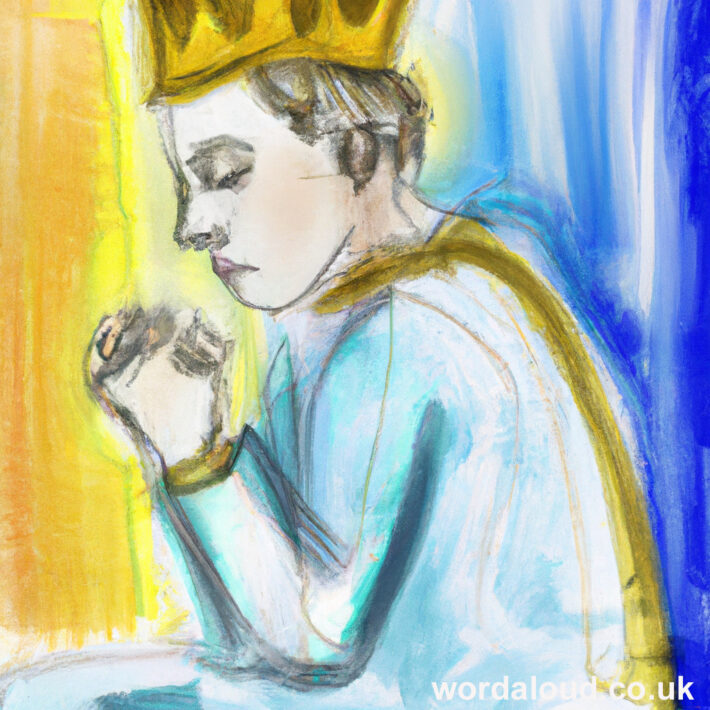
Christian Art | Prayer With Jesus | Psalms | Prayer For Deliverance From Enemies | King David As A Boy | Audio KJV | King James Audio Bible
Psalm 59 | King James Audio Bible
YouTube: Psalm 59 | KJV | King James Version | Audio Bible | Word Aloud
Psalm 59 is attributed to King David. The psalm resonates with themes of seeking protection from enemies, finding refuge in God, and grappling with the challenges of a troubled world. The psalm embodies a deep sense of trust and reliance on the divine, portraying God as the ultimate source of strength, defence, and justice in the face of adversity.
In Psalm 59, King David finds himself in a perilous situation, beset by enemies who seek to harm him. He implores God to deliver him from these adversaries, expressing his faith in the Almighty as protector and shield. The psalm is a heartfelt reflection on nature of wickedness, consequences of deceit and malice, and desire for divine judgment to restore justice and righteousness.
Through the psalm, imagery of enemies surrounding the psalmist, their malicious intent, and urgency of the plea for deliverance create a vivid portrayal of challenges faced by those who walk in righteousness. As the psalmist contemplates the actions of the wicked, he turns to God with unwavering trust, seeking refuge and strength to overcome these adversities.
In this troubled world, Psalm 59 is a testament to the enduring faith of the psalmist and enduring power of the prayer found in the Book of Psalms, offering solace and guidance to those who seek refuge in God.

Psalm 59 | King James Audio Bible KJV | Love Revealed By Jesus Christ
Deliver me from mine enemies, O my God: defend me from them that rise up against me.
Deliver me from the workers of iniquity, and save me from bloody men.
For, lo, they lie in wait for my soul: the mighty are gathered against me; not for my transgression, nor for my sin, O Lord.
They run and prepare themselves without my fault: awake to help me, and behold.
Thou therefore, O Lord God of hosts, the God of Israel, awake to visit all the heathen: be not merciful to any wicked transgressors. Selah.
They return at evening: they make a noise like a dog and go round about the city.
Behold, they belch out with their mouth: swords are in their lips, for who, say they, doth hear?
But thou, O Lord, shalt laugh at them; thou shalt have all the heathen in derision.
Because of his strength will I wait upon thee: for God is my defence.
The God of my mercy shall prevent me: God shall let me see my desire upon mine enemies.
Slay them not, lest my people forget: scatter them by thy power, and bring them down, O Lord our shield.
For the sin of their mouth and the words of their lips let them even be taken in their pride: and for cursing and lying which they speak.
Consume them in wrath, consume them, that they may not be: and let them know that God ruleth in Jacob unto the ends of the earth. Selah.
And at evening let them return; and let them make a noise like a dog, and go round about the city.
Let them wander up and down for meat, and grudge if they be not satisfied.
But I will sing of thy power; yea, I will sing aloud of thy mercy in the morning: for thou hast been my defence and refuge in the day of my trouble.
Unto thee, O my strength, will I sing: for God is my defence, and the God of my mercy.
Key Themes Of The Psalm For Reflection | Love Revealed By Jesus Christ
- Plea For Divine Deliverance: Psalm 59 is a heartfelt plea for divine intervention and deliverance. King David, the psalmist, finds himself in a perilous situation, facing enemies who seek to harm him. He implores God to rescue him from these adversaries, acknowledging vulnerability and need for divine protection.
- Trust In God As Refuge: Through the psalm, we see a deep trust in God as refuge and shield. King David portrays God as a source of safety and strength amidst the turmoil caused by his enemies. This theme underscores the belief that God is a place of sanctuary and security, providing solace and protection to those who put their faith in Him.
- Confrontation With The Wicked: The psalmist’s language vividly describes the wickedness of his enemies, highlighting their deceit, malicious intent, and hostility. This theme touches upon universal human experience of encountering those who intend harm, which leads to a desire for justice and divine intervention.
- Desire For Divine Justice: King David’s plea is not merely for personal deliverance but also for divine justice. He wishes for God to bring judgment upon the wicked and to restore righteousness. This theme reflects the human longing for fairness and retribution in a world where injustice prevails.
- Reflection On Consequences: The psalmist contemplates the consequences of the deceit and malice of his enemies. While he calls for divine judgment, this reflection also serves as a reminder of the moral consequences that evildoers may face. It encourages contemplation of one’s actions and their eventual outcomes.




This prayerful reading of Pope Saint Clement I, one of the earliest bishops of Rome, shows how firmly the first Christian communities understood their life to be grounded in God’s initiative rather than human achievement. Clement addresses God as Creator and Sustainer of all things, and places the Church entirely within God’s ordering of the world [ … ]

Saint Valentine is believed to have been a Christian priest in Rome during the reign of Emperor Claudius II, also known as Claudius Gothicus, in the third century. At that time, the Roman Empire was engaged in various military campaigns, and Claudius was having difficulty recruiting soldiers. Believing that unmarried men made better soldiers, he issued an edict prohibiting young men from marrying. The emperor thought that marriage would make men emotionally attached and therefore less willing to leave for war [ … ]
Psalm 105, a hymn of praise in the Hebrew Bible, is testament to God’s enduring faithfulness and mighty deeds throughout the history of Israel. This psalm is a celebration of God’s covenant with Abraham and the fulfilment of God’s promises through subsequent generations, culminating in the deliverance of the Israelites from Egypt and their journey to the Promised Land [ … ]
