
Christian Art | Prayer With Jesus | Psalms | Majesty Of God’s Rule | King David As A Boy | Audio KJV | Love Revealed By Jesus Christ | King James Audio Bible
Psalm 93 | King James Audio Bible
YouTube: Psalm 93 | KJV | King James Version | Audio Bible | Word Aloud
Psalm 93 declares the authority and lasting nature of God’s rule. The psalmist depicts God as a majestic ruler, emphasizing God’s enduring reign and unchanging authority. A thought is that God’s rule isn’t recent; it has been in place forever, representing a timeless and unwavering sovereignty.
The psalm uses imagery of surging floods to symbolize life’s challenges. Despite the chaos, the psalmist asserts that God is more powerful than the most overwhelming circumstances. Turbulent waves of life are nothing compared to God’s control and strength, offering reassurance to those who trust in God.
The conclusion of the psalm underscores the reliability of God’s promises and inherent holiness of God’s dwelling place. The psalmist assures that God’s promises are steadfast, and His presence is characterized by holiness.
Psalm 93 is a direct proclamation of God’s enduring rule and stability. It invites listeners to reflect on the unchanging nature of God’s authority, God’s control over life’s challenges, and the reliability of God’s promises.

Psalm 93 | King James Audio Bible KJV | Love Revealed By Jesus Christ
The Lord reigneth, he is clothed with majesty; the Lord is clothed with strength, wherewith he hath girded himself: the world also is stablished, that it cannot be moved.
Thy throne is established of old: thou art from everlasting.
The floods have lifted up, O Lord, the floods have lifted up their voice; the floods lift up their waves.
The Lord on high is mightier than the noise of many waters, yea, than the mighty waves of the sea.
Thy testimonies are very sure: holiness becometh thine house, O Lord, for ever.
Psalm 93 | King James Audio Bible KJV | Love Revealed By Jesus Christ
Divine Sovereignty: Psalm 93 centres on the theme of God’s rule and authority over all creation, emphasizing God’s enduring reign.
Eternal Stability: The psalm underscores the timeless nature of God’s throne, highlighting His existence from ancient times and beyond.
Symbolism Of Floods: The surging floods symbolize life’s tumultuous challenges and uncertainties.
God’s Supremacy Over Challenges: Despite chaos represented by the floods, the psalm affirms God’s might and supremacy over life’s overwhelming circumstances.
Assurance And Reassurance: The psalm provides reassurance to those facing difficulties, assuring them of God’s strength and control.
Reliability Of God’s Word: Testimonies of God are portrayed as sure and steadfast, emphasizing reliability of His promises.
Holiness Of God’s Dwelling Place: The psalm concludes by highlighting the holiness that characterizes God’s dwelling place, signifying God’s divine perfection.



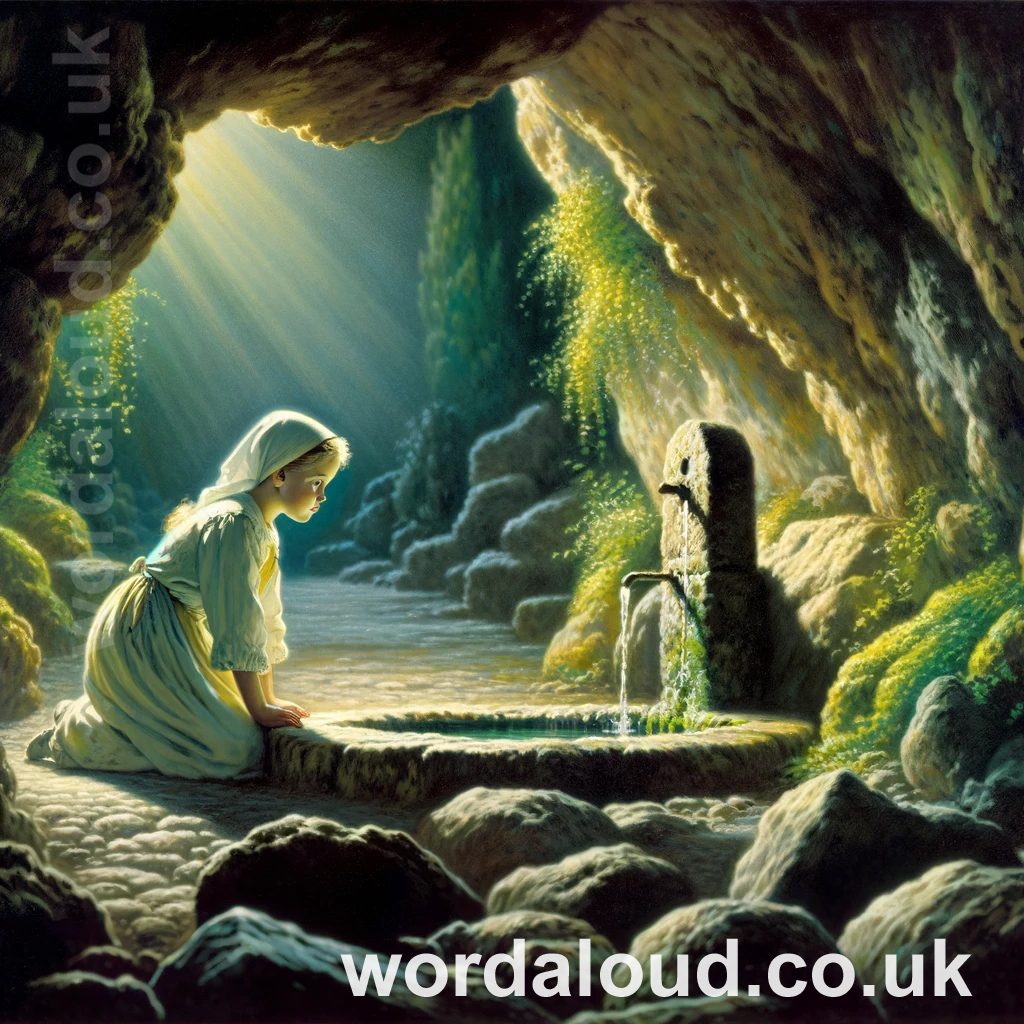
John 4:13-14 (KJV) ‘Jesus answered and said unto her, Whosoever drinketh of this water shall thirst again: But whosoever drinketh of the water that I shall give him shall never thirst; but the water that I shall give him shall be in him a well of water springing up into everlasting life.’ Introduction to the Life of Saint Bernadette Saint Bernadette Soubirous, a humble peasant girl from Lourdes, France, lived her life of faith, humility, and divine grace. Born on January 7, 1844, in the small town of Lourdes, Bernadette was the eldest of nine children in a poor and struggling family. Her father, François Soubirous, was a miller, and her mother, Louise, a laundress. The family lived in a former prison cell known as the Cachot, a damp and cramped space, according to their dire financial situation. Despite their poverty, the Soubirous family was deeply rooted in their Christian faith, a foundation that would profoundly shape Bernadette’s life and spiritual journey. Bernadette’s early years were marked by significant health challenges. She suffered from asthma and other respiratory ailments, which often left her weak and unable to attend school regularly. This lack of formal education meant that Bernadette struggled with reading and writing, and her understanding of Christian doctrine was limited. Nevertheless, she possessed a remarkable simplicity and purity of heart, qualities that would make her an ideal recipient of divine revelations. Bernadette’s life changed irrevocably on February 11, 1858, when she experienced the first of eighteen apparitions of the Blessed Virgin Mary at the grotto of Massabielle. On that cold winter day, Bernadette, her sister Toinette, and a friend were gathering firewood near the grotto when she heard a rustling sound and saw a beautiful lady dressed in white with a blue sash, holding a rosary. The lady, who later identified herself as the Immaculate Conception, appeared to Bernadette over the course of several months, delivering messages of penance, prayer, and the need for a chapel to be built at the site. Despite initial skepticism from her family and the local authorities, Bernadette remained steadfast in her account of the apparitions, enduring intense scrutiny and even ridicule. The apparitions drew enormous attention. Soon, people from all over France and beyond began to visit Lourdes, hoping to witness a miracle. One of the most significant messages conveyed by the Virgin Mary to Bernadette was the instruction to dig in the ground near the grotto, which led to the discovery of a spring. This spring, believed to have healing properties, became the focal point of the pilgrimage to Lourdes. Many miraculous healings have been attributed to the waters of Lourdes, reinforcing the belief in Bernadette’s visions and the sanctity of the site. As the apparitions concluded, Bernadette’s life took a different turn. In 1866, she joined the Sisters of Charity in Nevers, taking the name Sister Marie-Bernard. Her time in the convent was marked by continued poor health and humility, as she carried out menial tasks and lived a life of quiet service. Despite her physical suffering, Bernadette remained devout and accepted her hardships with grace, often repeating the phrase, “I am happier here in my little corner of the convent.” Her unwavering faith and dedication to her religious duties exemplified the depth of her spiritual commitment. Bernadette Soubirous passed away on April 16, 1879, at the age of 35, after a prolonged battle with tuberculosis. Her legacy, however, endured far beyond her earthly life. In 1933, she was canonized as a saint by Pope Pius XI, recognized for her humility, faith, and the miraculous events associated with her life. Today, millions of pilgrims flock to Lourdes each year, seeking spiritual renewal and physical healing at the site of her visions. Saint Bernadette’s life continues to inspire countless individuals around the world, reminding us of the power of faith, the virtue of humility, and the enduring presence of divine grace in our lives. To Visit Lourdes Visiting Lourdes, in the picturesque foothills of the Pyrenees in southwestern France, is an experience that transcends the physical journey, drawing pilgrims into a profound spiritual adventure. The small town, known for the Marian apparitions witnessed by Saint Bernadette Soubirous in 1858, has become one of the world’s most revered pilgrimage sites. As we approach the Sanctuary of Our Lady of Lourdes, the atmosphere is imbued with a palpable sense of reverence and anticipation. The grand basilicas, the tranquil Grotto of Massabielle and the gently flowing waters of the miraculous spring together create a sacred environment that invites reflection, prayer, and a deep connection with the divine. The focal point of any visit to Lourdes is the Grotto, where Bernadette experienced the apparitions of the Blessed Virgin Mary. Here, pilgrims can touch the rock face, light candles, and drink or bathe in the spring’s water, believed to possess healing properties. The profound silence and sense of sacredness at the Grotto allow visitors to contemplate their faith, seek solace and find spiritual renewal. The Rosary Basilica, with its mosaics, and the Basilica of the Immaculate Conception, perched above the Grotto, offer spaces for communal worship and personal meditation. The nightly candlelight processions, where pilgrims from around the globe unite in prayer and song, highlight the universal bond of faith and hope that Lourdes represents. Beyond its physical beauty and historical significance, visiting Lourdes offers a deeply personal and transformative experience. Pilgrims often arrive burdened with ailments, grief, or spiritual crises, seeking comfort and miracles. The stories of healing and faith that emerge from Lourdes are testimonies to the enduring power of belief and the intercession of the Blessed Virgin Mary. The communal aspect of the pilgrimage—sharing meals, prayers, and stories with fellow believers—fosters a sense of solidarity and mutual support. For many, the visit to Lourdes is a journey of healing, not only of the body but also of the soul, providing a renewed sense of purpose, peace, and spiritual clarity that lingers long after returning home. Prayer With Saint Bernadette Prayer for Intercession Dear […]
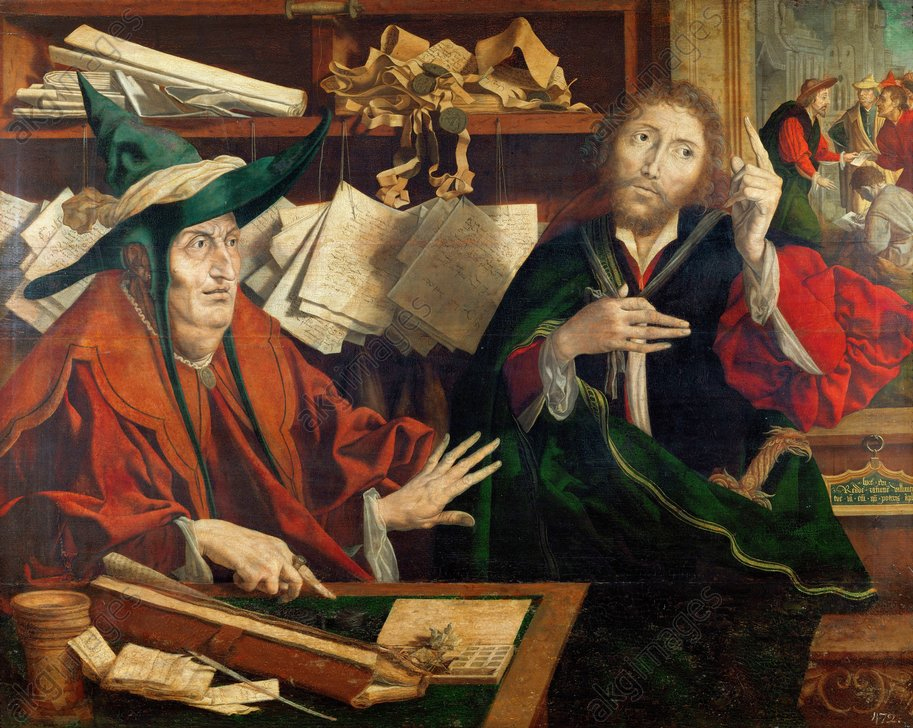
Today’s parable may seem to us to be very strange. Fired for corruption, for being wasteful with the rich man’s property, the dishonest steward goes on to compound the error with outright criminality, marking down the debts of the rich man’s debtors in order to secure future favours. And Jesus praises him! [ … ]

The poem presents a dialogue between the poet and Christ. The poem meditates on themes of suffering, devotion, and humility. The poet addresses Christ as ‘King of grief’ and ‘King of wounds’, acknowledging the paradox of Christ’s suffering in contrast to his divine kingship. The poem opens by framing Christ’s agony as unique among rulers, a grief so profound that it overshadows all others [ … ]