

King James Audio Bible | Luke 4: 17-20
‘The Spirit of the Lord is upon me, because he hath anointed me to preach the gospel to the poor; he hath sent me to heal the brokenhearted, to preach deliverance to the captives, and recovering of sight to the blind, to set at liberty them that are bruised.’ – Luke 4:18
What Is Liberation Theology?
Liberation theology is a movement that emerged in Latin America in the 1960s and 1970s as a response to the region’s deep social and political injustices. It is a theology that emphasizes the importance of social and political action as a means of achieving liberation for the poor and marginalized. At its core, liberation theology seeks to address the structural roots of poverty and oppression, and to empower marginalized communities to take control of their own lives and destinies.
The historical context of the emergence of liberation theology is important to understand. In the 1960s and 1970s, many countries in Latin America experienced social movements and revolutions, as well as the rise of authoritarian regimes. The Catholic Church played an active role in these movements, and many members of the Church saw them as a means of achieving social justice and political liberation. In this context, liberation theology emerged as a way of interpreting the Gospel in light of the social and political realities of Latin America.
The influence of Marxist thought on the development of liberation theology is controversial. According to Gustavo Gutierrez, one of the key figures in the development of liberation theology, Marxism provided a way of understanding the social and economic structures that perpetuate poverty and oppression, but it was not the basis of the movement. As he wrote in his seminal book, A Theology Of Liberation:
‘Marxism, which has had such a strong influence on our continent, offered certain methodological and hermeneutical tools which we have tried to utilize critically, while recognizing their limitations and even their mistakes.’
Leonardo Boff, another influential figure in the development of liberation theology, similarly argued that the movement was not fundamentally Marxist. As he wrote in his book, Church, Charism And Power:
‘Theology of liberation is not Marxism. It uses certain insights and categories from Marxism, but in a critical and selective way. What it shares with Marxism is the belief that there is a fundamental conflict in history between oppressors and oppressed, and that the oppressed must struggle to liberate themselves.’
Despite these arguments, the influence of Marxist thought on liberation theology is undeniable. The movement’s emphasis on social and economic justice, and its critique of capitalism and imperialism, clearly reflect Marxist ideas. As Jon Sobrino, another key figure in the development of liberation theology, wrote in his book, Christology At The Crossroads:
‘Marxism has taught us to look at the world critically, to see the mechanisms of exploitation and oppression that are at work in society. It has taught us to look at reality from the perspective of the poor and the marginalized.’
The role of key figures such as Gutierrez, Boff, and Sobrino in the development of liberation theology cannot be overstated. Gutierrez’s A Theology Of Liberation is widely regarded as the seminal work of the movement, and his ideas have influenced generations of theologians and activists. Boff’s Church, Charism And Power is also a key text in the development of liberation theology, and his advocacy for the rights of the poor and marginalized has made him a controversial figure in the Catholic Church. Sobrino’s work on Christology and the relationship between faith and politics has been influential, particularly in the context of the civil war in El Salvador.
‘Then said Jesus unto his disciples, Verily I say unto you, That a rich man shall hardly enter into the kingdom of heaven. And again I say unto you, It is easier for a camel to go through the eye of a needle, than for a rich man to enter into the kingdom of God.’ – Matthew 19:23-24
A Church For And Of The Poor | Love Revealed By Jesus Christ
Despite facing persecution and repression, liberation theology continued to grow and spread throughout Latin America and beyond. In the 1980s and 1990s, the movement began to influence the Catholic Church at the highest levels.
One prominent critic of liberation theology was Pope Saint John Paul II, who saw the movement as a threat to traditional Catholic doctrine. In 1984, the Vatican’s Congregation for the Doctrine of the Faith issued a document entitled ‘Instruction on Certain Aspects of the “Theology of Liberation”’, which denounced certain elements of liberation theology as incompatible with Catholic teaching. The document accused some liberation theologians of promoting ‘a Marxist conception of class struggle’ and using a ‘political interpretation of faith’ that ignored the spiritual dimension of Catholicism.
The Vatican’s response to liberation theology had a significant impact on the movement, with some theologians modifying their work in order to avoid controversy with the Church hierarchy. Despite this, liberation theology continues to be a vibrant and influential movement within the Catholic Church and beyond, and its impact can be seen in social justice movements and political revolutions around the world.
‘Then Jesus beholding him loved him, and said unto him, One thing thou lackest: go thy way, sell whatsoever thou hast, and give to the poor, and thou shalt have treasure in heaven: and come, take up the cross, and follow me.’ – Mark 10:21
Liberation Theology And The Church
Within the Catholic Church, liberation theology has had a lasting impact on theology and pastoral practice. The movement challenged traditional Catholic teachings and practices, emphasizing the importance of social justice and political action as a means of achieving liberation. This challenge has influenced the way many Catholics think about their faith and their role in society.
Moreover, the movement has also had a significant impact on the ways the Catholic Church thinks about and engages with the world. Liberation theology helped to promote a more engaged and activist approach to pastoral work, encouraging priests and other religious to work alongside the poor and marginalized in the struggle for social and economic justice.
One of the key contributions of liberation theology is its emphasis on the importance of social and political action in achieving liberation for the poor and marginalized. As Gutierrez wrote in A Theology Of Liberation:
‘The Church must insert itself into the struggle for the liberation of the poor. This is not an option but a duty, and one that is demanded by the Gospel itself.’
‘But woe unto you that are rich! for ye have received your consolation.’ – Luke 6:24
A Church For The Poor | Meditations On The Love Of Jesus Christ
Liberation theology has emphasized the importance of solidarity with the poor and marginalized, and the need to listen to their voices and experiences. As Boff wrote in Church, Charism And Power:
‘Solidarity with the poor means living with them, listening to them, and learning from them. It means making their struggle our own, and working with them to achieve their liberation.’
Another important aspect of liberation theology is its emphasis on the relationship between faith and politics. As Sobrino wrote in Christology At The Crossroads:
‘Faith in Jesus Christ requires us to be engaged in the struggle for justice and liberation. It requires us to be involved in the transformation of society, and to work for the establishment of a more just and humane world.’
Liberation theology has challenged traditional notions of power and authority within the Catholic Church. As Boff wrote in Church, Charism And Power:
‘The Church is not a hierarchical institution, but a community of equals. It is a community that includes the poor and marginalized, and that recognizes the charisms of all its members.’
‘Blessed be ye poor: for yours is the kingdom of God.’ – Luke 6:20
Liberation Theology And Catholic Teaching
In terms of criticism and controversy, critics of liberation theology with the Church have argued that the movement’s emphasis on social and political action comes at the expense of traditional Catholic teachings on individual salvation and personal piety. Others have accused liberation theologians of promoting Marxist ideas and of being too closely aligned with leftist political movements.
In recent years, there has been a renewed interest in liberation theology, particularly among young Catholics. Many theologians and activists see the movement as a way of addressing contemporary social and political injustices, such as poverty, inequality, and climate change. As Gustavo Gutierrez wrote in a recent essay:
‘The challenges facing the world today are enormous, and we need a theology that can help us to confront them. Liberation theology is one such theology, one that is grounded in the experience of the poor and the marginalized, and that is committed to building a more just and humane world for all.’
In recent years, the Vatican has taken steps to repair its relationship with liberation theology and with the communities it serves. Pope Francis, a Jesuit from Argentina who was influenced by liberation theology in his early years, has spoken out in support of the movement and has emphasized its importance for the Catholic Church and for the world. In 2015, he declared Archbishop Oscar Romero of El Salvador, who was assassinated in 1980 for his work on behalf of the poor and marginalized, a martyr and beatified him, a move widely seen as a recognition of the role of liberation theology in the Church.
‘And if ye lend to them of whom ye hope to receive, what thank have ye? for sinners also lend to sinners, to receive as much again.’ – Luke 6:34



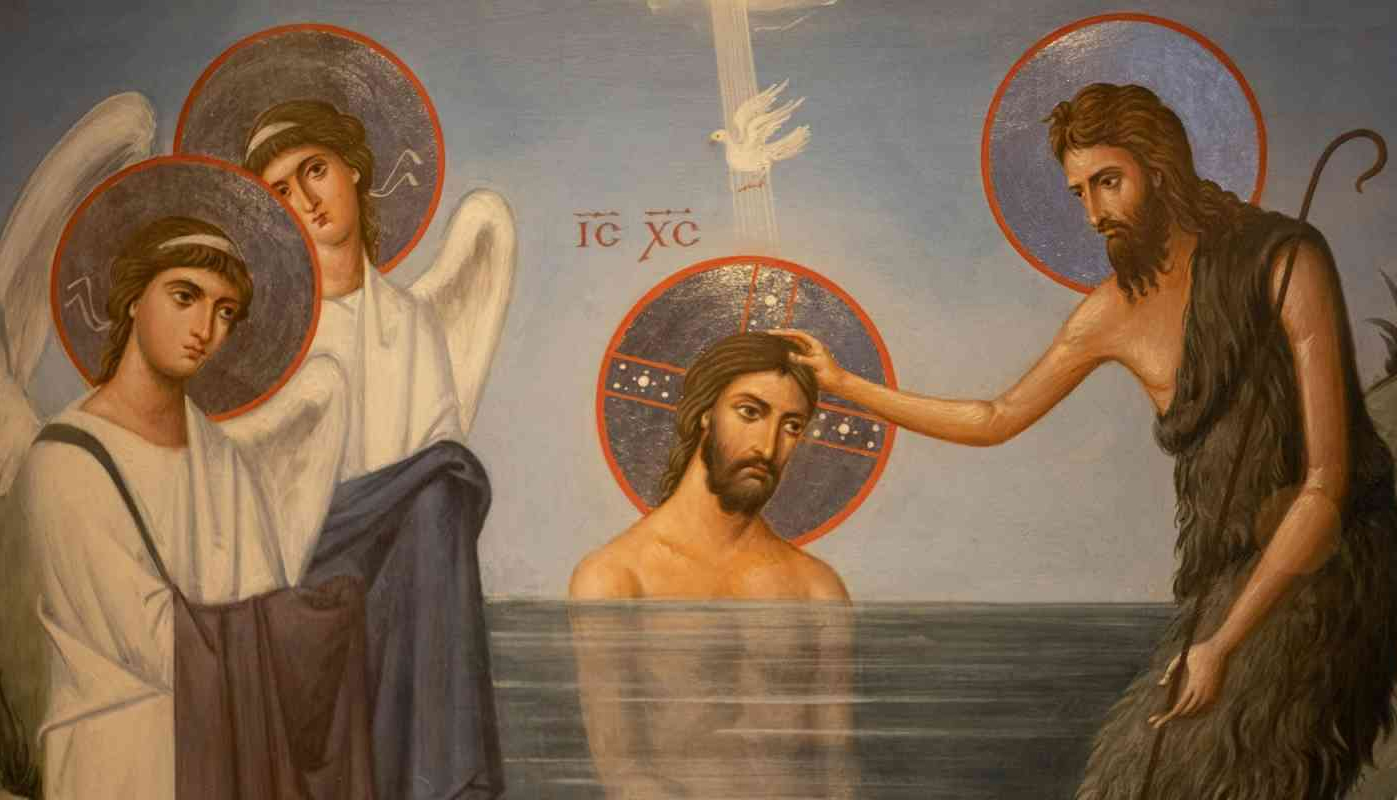
Saint Gregory Nazianzen presents the baptism of Christ as an event that concerns not only Jesus Christ himself but the whole renewal of creation. From the opening lines, Saint Gregory draws the reader into participation: what happens to Jesus Christ is meant to happen to us all. Christ enters the water, and humanity is invited to enter with him; Christ rises, and humanity is raised with Jesus Christ [ … ]

Artificial Intelligence (AI) has raised questions concerning the nature and value of the human person, and the future of humanity, to the forefront of public discussion. Possible consequences of the growth and development of AI include unemployment, the replacement of human labour by artificial systems, a concentration of wealth and economic power away from local communities and towards large technology corporations, civilizational collapse and, at the extreme, catastrophic extinction of humanity. Such possibilities have themselves produced an apocalyptic language around AI. In the light of the book The Revelation Of Saint John The Divine, or Apocalypse, we may interrogate modern technology and AI through the lens of Christian faith, and through an awakened sense of our humanity. In doing so, we follow here and draw upon the encyclical of Pope Leo XIV, Magnifica Humanitas. We consider what the real capabilities and dangers of AI amount to, what Revelation actually says about power and deception, and how a Christian account of the end of history judges both technological fear and technological hope [ … ]

This is among the most perfect of the parables to listen to during Lent – indeed, it has resonances that must extent to each and every time we receive the Eucharist. We are simply not worthy. And God’s mercy extends to us nonetheless. The prayer of the Pharisee is false. It is not true prayer. We see him, standing there in the presence of God and congratulating himself, as if he does not need God for his redemption, as if he can redeem himself [ … ]
