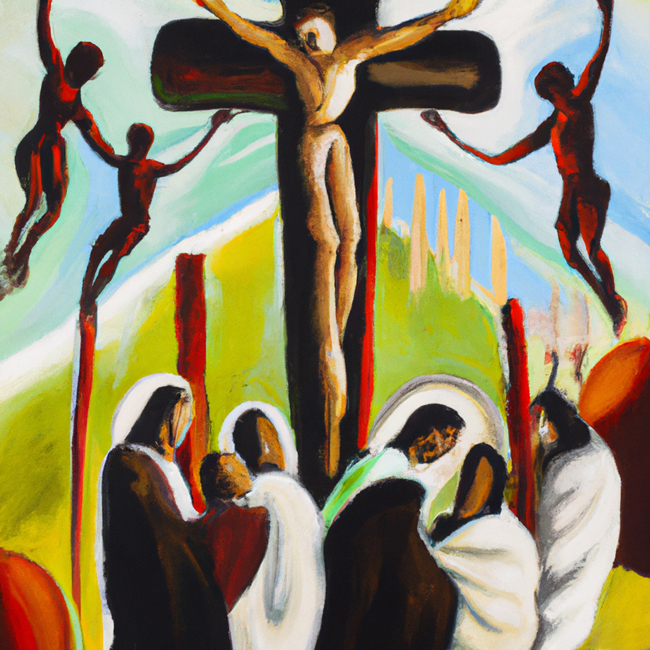
Christian Art | Psalm 22 KJV | King James Audio Bible | The Crucifixion
Psalm 22 KJV | King James Audio Bible | YouTube
Psalm 22 (Vulgate 21) is a powerful expression of abject suffering and lament conjoined with faith and trust in God – in celebration of God – that we might say resonates especially through the season of Lent.
Perhaps composed during the Babylonian exile, the psalmist’s cries of distress and abandonment reflect the experience of being torn away from homeland and cut off from community. In a sense, the psalm thus speaks to universal experience of suffering and dislocation. However, the cry of the psalmist refuses to be generalized in understanding. It is so specific and distinct. The suffering is so – and depth of loss so personally excruciating – the universality of praise thereby arising so much more for each of us.
The Anguish Of Jesus On The Cross
The cry of Jesus on the cross, ‘My God, my God, why hast thou forsaken me?’ is a haunting expression of Jesus’ suffering and abandonment. The psalm has a very special value because we are able to see that it prefigured Christ’s feelings, and provides insight as to how we might articulate meaning in the crucifixion.
There is a deep duality – a stereophonic aspect – to Jesus’ words upon the Cross in this respect. On the one hand, some point simply to the howl of anguish, literally: ‘My God, my God, why hast thou forsaken me?’ Others emphasize that Jesus meant to signify the whole of the psalm, and so Jesus’ words at the time be understood as a movement through suffering and the blackest of despair, towards ultimate confession of God’s truth and fealty – God’s triumph in the Son upon the Cross.
Psalm 22 speaks of the psalmist’s enemies surrounding him, piercing his hands and feet, and dividing his garments among themselves – all of which find parallels in the events of Jesus’ crucifixion. Did Jesus thereby mean to communicate the entirety of the psalm and its completion – or did Jesus howl in irreconcilable anguish? Or are both interpretations, both readings, simultaneously true?
Jesus on the Cross is already a paradox. God become human flesh is put to death grotesquely.
Our recognition of the anguish of Jesus must surely be simultaneously absolute. Crucifixion was brutal and torturous, a form of execution designed to inflict maximum physical and emotional pain on the victim. For Jesus, the experience of being betrayed, arrested, beaten, and mocked must have been overwhelming. Jesus’ cry of abandonment must be understood to express depth of anguish and the sense of being cut off from God.
It can be said that to deny Jesus the fullness of this abject failure on the Cross is to deny the meaning of the Cross – the crucifixion. The anguish of Jesus on the Cross is not simply historical fact, but core Christian theology. Through suffering and death, through abject loss and failure, Jesus entered into the depths of human misery and failure and powerlessness. The fully human aspect of the Incarnation can be said to need this in order to be sufficient in its reduction to nothingness.
This is one side of the story to which we listen, which we hear, before Easter. The other side is the reception of the story in the wake of what we subsequently know happened next – i.e. Easter.
The writer of Hebrews affirms: ‘For we have not an high priest which cannot be touched with the feeling of our infirmities; but was in all points tempted like as we are, yet without sin.’ (Hebrews 4:15, KJV)
Surely it is through the most scandalous nature of God crucified – Jesus on the Cross – that Jesus’ crucifixion represents a profound solidarity between God and humanity.
Download the KJV New Testament | Audio Bible KJV

King James Audio Bible | KJV | Pray The Psalms | Love In Jesus
A Psalm Of Lamentation And Hope
Psalm 22 is structured as a lament, the psalmist expressing deep feelings of distress and abandonment, prior to and through which affirming trust in God. Earlier verses of the psalm (verses 1-21) emphasize the psalmist’s cries of anguish and despair, while there is progressively a movement to expressions of confidence and hope in God’s deliverance. There is throughout a to-and-fro of feeling – movement from blackest darkness to purest light.
The psalmist feels deserted by God and abandoned by his friends, and he describes his enemies mocking and taunting him. His situation is grievous. He is rejected. He is starving. He is mocked – and mocked for faith in God. And yet it is through the acknowledgements, I am a worm, I am nothing, that a gateway continues in its openings to God’s truth.
The present suffering is considered in the light of knowledge, as a memory, of God’s sustenance of the psalmist from his first breath, from the womb. This does not soften the pain of the present tense. The psalmist is poured out like water. The evil-doers have pierced his hands and feet. And yet, through the petition of verses 19-21, there arises the passionate declaration of faith of verses 22 onwards.
My God, my God, why hast thou forsaken me? why art thou so far from helping me, and from the words of my roaring?
O my God, I cry in the day time, but thou hearest not; and in the night season, and am not silent.
But thou art holy, O thou that inhabitest the praises of Israel.
Our fathers trusted in thee: they trusted, and thou didst deliver them.
They cried unto thee, and were delivered: they trusted in thee, and were not confounded.
But I am a worm, and no man; a reproach of men, and despised of the people.
All they that see me laugh me to scorn: they shoot out the lip, they shake the head, saying,
He trusted on the Lord that he would deliver him: let him deliver him, seeing he delighted in him.
But thou art he that took me out of the womb: thou didst make me hope when I was upon my mother’s breasts.
I was cast upon thee from the womb: thou art my God from my mother’s belly.
Be not far from me; for trouble is near; for there is none to help.
Many bulls have compassed me: strong bulls of Bashan have beset me round.
They gaped upon me with their mouths, as a ravening and a roaring lion.
I am poured out like water, and all my bones are out of joint: my heart is like wax; it is melted in the midst of my bowels.
My strength is dried up like a potsherd; and my tongue cleaveth to my jaws; and thou hast brought me into the dust of death.
For dogs have compassed me: the assembly of the wicked have inclosed me: they pierced my hands and my feet.
I may tell all my bones: they look and stare upon me.
They part my garments among them, and cast lots upon my vesture.
But be not thou far from me, O Lord: O my strength, haste thee to help me.
Deliver my soul from the sword; my darling from the power of the dog.
Save me from the lion’s mouth: for thou hast heard me from the horns of the unicorns.
I will declare thy name unto my brethren: in the midst of the congregation will I praise thee.
Ye that fear the Lord, praise him; all ye the seed of Jacob, glorify him; and fear him, all ye the seed of Israel.
For he hath not despised nor abhorred the affliction of the afflicted; neither hath he hid his face from him; but when he cried unto him, he heard.
My praise shall be of thee in the great congregation: I will pay my vows before them that fear him.
The meek shall eat and be satisfied: they shall praise the Lord that seek him: your heart shall live for ever.



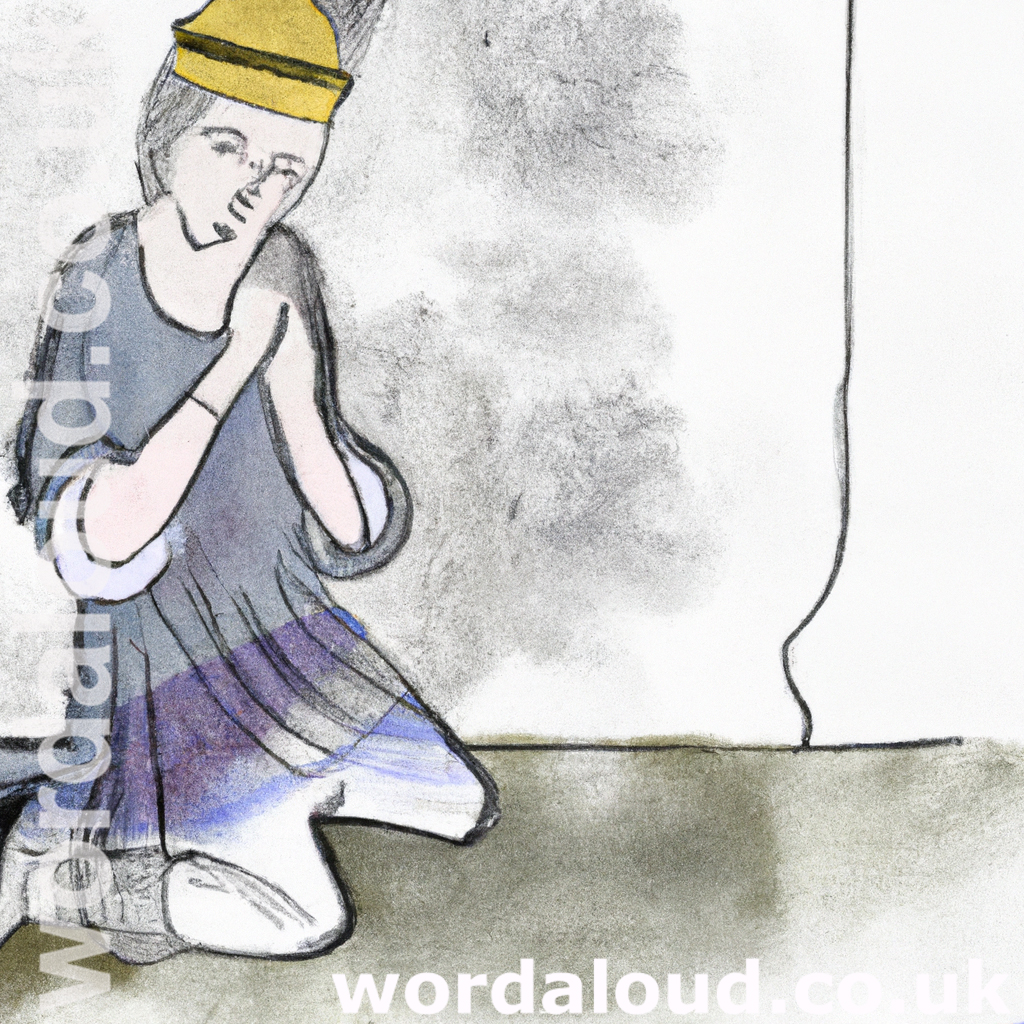
The reading for Saturday of the Third Week of Lent, attributed to Saint Gregory Nazianzus (c. 329–390), is a meditation on mercy as an essential Christian duty. Gregory, one of the Cappadocian Fathers, was a theologian and preacher whose writings shaped Christian thought on the Trinity, Christ, and the moral life. In this reflection, Saint Gregory Nazianzus argues that true worship is not found in sacrifice alone but in acts of love toward the poor [ … ]
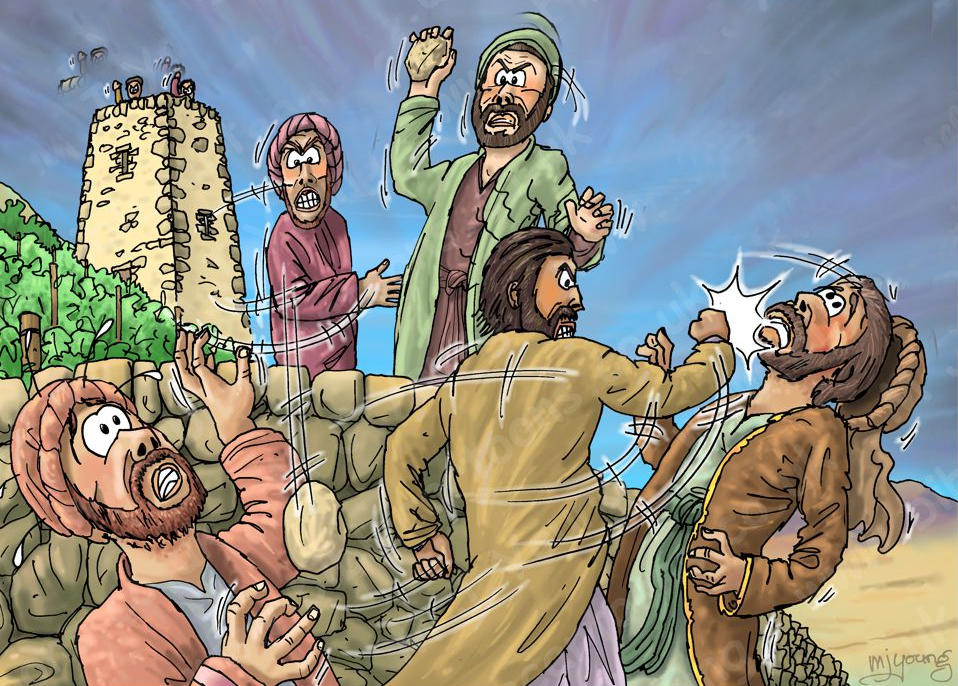
Jesus offers the parable of the wicked tenants as part of a larger discourse in which he responds, in the Temple, to the challenge of the scribes and the elders of the people concerning his authority. The parable leads the entrenched Jewish authorities to see the truth for themselves and yet still to reject the truth about themselves. Though their lives could have been enlightened by the parable, they refuse conversion and rather seek to arrest Jesus. They have the option to choose good; they choose evil [ … ]

Saint Hilary of Poitiers (c. 310–367) was a bishop and doctor of the Church known primarily for his role in defending the Nicene faith against Arianism. This heresy denied the full divinity of Christ and therefore threatened the entire theological foundation of the Incarnation, Trinity, and Eucharist. In his principal theological work, De Trinitate (‘On the Trinity’), Hilary argues forcefully for the unity of the divine and human in Christ. The Eucharistic theology expressed in this passage reflects and supports that Christological argument [ … ]