

Christian Art | Parables Of Jesus | King James Audio Bible KJV
Luke 15: 1-10 | King James Audio Bible KJV | Parables Of Jesus | Week 31 Thursday
1 THEN drew near unto him all the publicans and sinners for to hear him.
2 And the Pharisees and scribes murmured, saying, This man receiveth sinners, and eateth with them.
3 ¶ And he spake this parable unto them, saying,
4 What man of you, having an hundred sheep, if he lose one of them, doth not leave the ninety and nine in the wilderness, and go after that which is lost, until he find it?
5 And when he hath found it, he layeth it on his shoulders, rejoicing.
6 And when he cometh home, he calleth together his friends and neighbours, saying unto them, Rejoice with me; for I have found my sheep which was lost.
7 I say unto you, that likewise joy shall be in heaven over one sinner that repenteth, more than over ninety and nine just persons, which need no repentance.
8 ¶ Either what woman having ten pieces of silver, if she lose one piece, doth not light a candle, and sweep the house, and seek diligently till she find it?
9 And when she hath found it, she calleth her friends and her neighbours together, saying, Rejoice with me; for I have found the piece which I had lost.
10 Likewise, I say unto you, there is joy in the presence of the angels of God over one sinner that repenteth.
The publicans (tax collectors) and other sinners are drawn to hear Jesus’ teaching. Perhaps they feel Jesus offers hope to them especially. While the scribes and Pharisees, despising sinners, find Jesus behaviour as he mixes with such people to be utterly objectionable, Jesus receives all humanity with love, understanding and, where there is faith and repentance, forgiveness. It is as if the people know that they are not condemned but can be accepted by Jesus. He offers them hope.
The scribes and the Pharisees murmur against Jesus, perhaps jealous of his influence over the crowds who flock to him, and Jesus teaches the parables that follow to instruct each one of us, challenging the Pharisee or the scribe or doctor of the Law which may lurk within us.
We are called as Christians not to permit in our lives the Pharisees’ jealous exclusivity and severity of outlook. We are bound to know that, no matter how great his sins may have been, a sinner can be recalled by God, change and become a saint. When we confess and are forgiven, nothing that has gone before matters in the eyes of God –indeed, our sins are not only forgiven; they are forgotten. This loving response of God is the model for us all.
In the parable of the lost sheep, the shepherd behaves in a way which many might regard as irrational and impractical. One sheep has been lost, but ninety nine remain. Will the shepherd really abandon his care of the ninety nine to go to seek out the one? What of the ninety nine while he searches? This might well seem dereliction of duty.
The parable emphasises in this way the great gulf between worldly thinking and the ways, and the power, of God. The ninety nine are safe, it is the one who is need of special attention. The sinner needs God’s special help. This is Jesus’ work. While the Pharisees and the scribes abandoned sinners and excluded them, Christ has come to call the least one of us home. Then there will be such rejoicing, we are all so precious.
‘Another fall, and what a fall! Must you give up hope? No. Humble yourself and through Mary, your Mother, have recourse to the merciful Love of Jesus. A Miserere, have mercy on me, and lift up your heart! And now begin again.’ St Josemaria Escriva
Concluding Prayer | Love Revealed By Jesus Christ
Almighty, ever-living God,
shed the light of your glory
on the peoples who are living in the shadow of death,
as you did long ago,
when our Lord Jesus Christ, the Sun of Justice,
came among us from on high.
We make our prayer through our Lord.


King James Audio Bible | Endnotes
An understanding of the meaning of parables is that within the context of engagement with the parables we are present with Jesus in the Garden of Gethsemane – toward crucifixion of Jesus and hence redemption
The Parable of the Lost Sheep and the Lost Coin, recorded in the Gospel of Luke 15:1-10, is a powerful teaching by Jesus about God’s mercy and love. In these parables, Jesus illustrates the lengths to which God will go to seek out and save those sinners who risk to become lost. The parables, as the Parable of the Prodigal Son, serve as lessons for Christians concerning the nature of God’s relationship with humanity.
The Parable of the Lost Sheep tells the story of a shepherd who leaves his 99 sheep to search for one that is lost. The story highlights the immense love and care that God has for each individual, and his willingness to go to great lengths to save those who are lost. Similarly, in the Parable of the Lost Coin, a woman searches for a lost coin, rejoicing when she finds it. This story highlights God’s joy when, through confession and penitence, a sinner returns to Him.
The Christian Cross, sign of Christian faith, depicts the crucifixion of Jesus and his ultimate sacrifice for the forgiveness of our sins. This sacrifice is God’s love and mercy. It is central to the Church of Jesus Christ – to Christ’s Church. Through a personal relationship with God and acceptance of Jesus’ message, Christians attain salvation and may enter Heaven.
The Sermon on the Mount reflects the Parables of the Lost Sheep and the Lost Coin, thinking also of the Parable of the Prodigal Son. We are powerfully recalled to God’s love and mercy, and to His desire for all individuals to attain salvation and enter Heaven.
Christian prayer encourages individuals to express their needs, gratitude, and hopes, and to seek guidance and wisdom from God. Through prayer, Christians can deepen their relationship with God and find comfort and hope in the face of life’s challenges.
An understanding of the meaning of parables is that within the context of engagement with the parables we are present with Jesus in the Garden of Gethsemane – toward crucifixion of Jesus and hence redemption.



It is the Sermon on the Mount. Our Lord has presented the crowd with the Beatitudes. We have been taught to know the gateway to heaven. These are the great Christian truths to which we aspire [ … ]

Saint Bernard reflects on the challenge of listening to Christ’s words and persevering in discipleship. He recalls the moment in John’s Gospel when some of Jesus’ followers turned away because they could not accept his teaching about the Eucharist (John 6:60–69). This becomes for Bernard a symbol of the two possible responses to God’s word: some recognise it as spirit and life, others find it hard and seek consolation elsewhere [ … ]
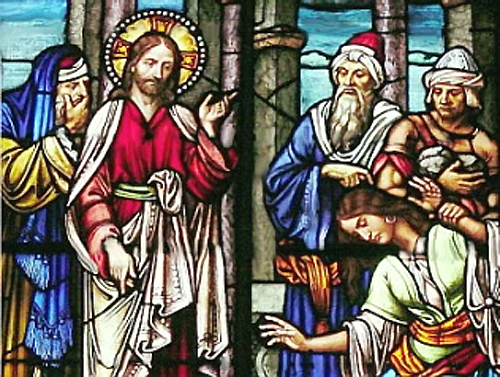
Today’s Gospel verses continue Jesus’ stinging critique of the hypocrisy of the Pharisees. Jesus condemns the Pharisees’ conduct, threatening them with punishment – ‘Woe unto you!’ – if they do not repent and mend their ways. Having over the centuries acquired a degree of power in Jerusalem, the Pharisees now abuse that power. Greedy for honour and recognition as they are, their show of great virtue is merely that, a show, while in essence they live in gross discordance with the truth of God [ … ]
