

A show of images inspired by the Parable of the Prodigal Son is to view on YouTube
Luke 15: 1-3, 11-32 Audio Bible KJV | Sunday Lent 4, Laetare Sunday | King James Audio Bible | Daily Verses
1 Then drew near unto him all the publicans and sinners for to hear him.
2 And the Pharisees and scribes murmured, saying, This man receiveth sinners, and eateth with them.
3 ¶ And he spake this parable unto them…
11 ¶ And he said, A certain man had two sons:
12 And the younger of them said to his father, Father, give me the portion of goods that falleth to me. And he divided unto them his living.
13 And not many days after the younger son gathered all together, and took his journey into a far country, and there wasted his substance with riotous living.
14 And when he had spent all, there arose a mighty famine in that land; and he began to be in want.
15 And he went and joined himself to a citizen of that country; and he sent him into his fields to feed swine.
16 And he would fain have filled his belly with the husks that the swine did eat: and no man gave unto him.
17 And when he came to himself, he said, How many hired servants of my father’s have bread enough and to spare, and I perish with hunger!
18 I will arise and go to my father, and will say unto him, Father, I have sinned against heaven, and before thee,
19 And am no more worthy to be called thy son: make me as one of thy hired servants.
20 And he arose, and came to his father. But when he was yet a great way off, his father saw him, and had compassion, and ran, and fell on his neck, and kissed him.
21 And the son said unto him, Father, I have sinned against heaven, and in thy sight, and am no more worthy to be called thy son.
22 But the father said to his servants, Bring forth the best robe, and put it on him; and put a ring on his hand, and shoes on his feet:
23 And bring hither the fatted calf, and kill it; and let us eat, and be merry:
24 For this my son was dead, and is alive again; he was lost, and is found. And they began to be merry.
25 Now his elder son was in the field: and as he came and drew nigh to the house, he heard musick and dancing.
26 And he called one of the servants, and asked what these things meant.
27 And he said unto him, Thy brother is come; and thy father hath killed the fatted calf, because he hath received him safe and sound.
28 And he was angry, and would not go in: therefore came his father out, and intreated him.
29 And he answering said to his father, Lo, these many years do I serve thee, neither transgressed I at any time thy commandment: and yet thou never gavest me a kid, that I might make merry with my friends:
30 But as soon as this thy son was come, which hath devoured thy living with harlots, thou hast killed for him the fatted calf.
31 And he said unto him, Son, thou art ever with me, and all that I have is thine.
32 It was meet that we should make merry, and be glad: for this thy brother was dead, and is alive again; and was lost, and is found.
The parable of the prodigal son is among the most famous of the parables which Jesus teaches us. Indeed the phrase ‘prodigal son’ is familiar to English speakers who might not tend to read the Bible very often if at all.
In the parable of the prodigal son, the story Jesus tells is so homely and familiar to our lives, and to our most basic human and family instincts, that even without the deeper meanings as we interpret the parable, it would be powerfully moving to hear as a tale of estrangement and difficulty followed by forgiveness and reconciliation through love.
Jesus tells this parable because of the accusation of the Pharisees and scribes: the accusation being that Jesus meets and eats with tax collectors and sinners. Christ’s message is clear: he is come to save sinners. Moreover, he expresses his and his Father’s boundless love and forgiveness of us all. Indeed, we should know that when we confess and repent of our sins and return to God, God rejoices to have us with Him once more. God is really overjoyed. This is a powerful message.
And what is more, we are reminded through the parable that, though we sin, we carry in our heart of hearts the true knowledge of our Father’s love for us. We should be true to this knowledge. This is the truth and the knowledge that brings us home.
To consider the career path of the prodigal son, there are key moments to reflect upon here – the meaning of the parable is very clear:
- The prodigal son receives his just portion from his father.
- He goes away from his father and squanders it.
- He realizes just how low he has brought himself, to the point whereby he is truly nothing and would have eaten of the food of unclean animals. No-one in this foreign land gives him anything. His humanity is not recognized.
- He remembers his father.
- He knows he is not worthy to go to his father with any claim, but hopes and trusts that if he goes to his father and acknowledges his sins and his unworthiness, he may at least count as one of his servants.
- He returns to his father.
- And his father doesn’t care about any of that. His son is home again! He runs to greet him and hug him and gives orders to get ready a feast to welcome his son home!
- What joy! And so this is where we are. This is Christ’s welcome message to us. Let’s go home.
It is right that we consider the reaction of the older son to the return of the prodigal. The older son does not seem to have a very good relationship with his father. He has stayed with him all these years, and yet he doesn’t seem to know him. The older son has wanted a feast before now, but with his friends. He is angry with his father. He refuses to enter the house. He demands to know what is happening. He does not seem to be able to understand the love and solicitude of his father, or his father’s joy in both his sons. He does not even refer to his brother as his brother but, to his father, as ‘this thy son’, ‘this son of yours’. He does not seem to understand his father’s magnanimity or to value the family relationship.
The father’s response to the older son is also fitting: the father reaffirms his love for his elder son, which is in no way lessened by the feast he provides upon the return of the prodigal. The father does not abandon the older son.
Through this parable, Jesus teaches us that God’s generosity is boundless. There is no need, indeed no room, for envy or anger. God’s love and bounty are so great that when we return to him, there is more than enough for us all. This can be a feast for all. Sectarian divisions need no longer apply. We are all invited.
‘God is not wont to refuse a good gift to those who ask. So because God is good and especially good to those who serve him, we must cling to him, and be with him with all our soul and with all our heart and with all our strength. This we must do if we are to be in his light, and see his glory, and enjoy the grace of heavenly joy.’ St Ambrose#



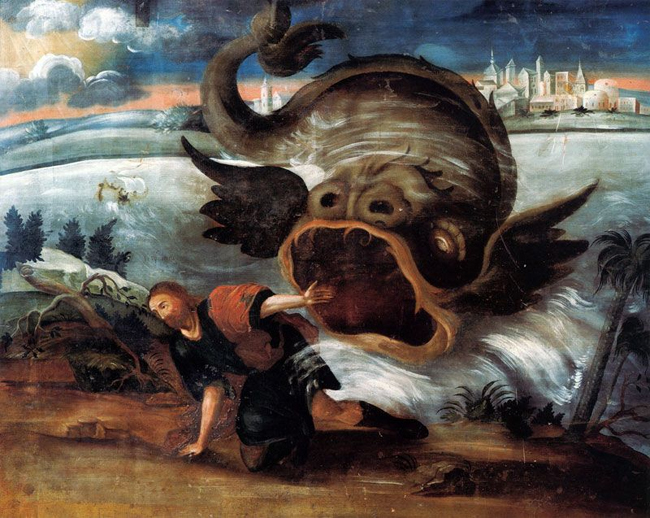
The crowds gather to see and to hear Jesus. Among them, as Matthew relates in his Gospel (Matthew 12: 38-42), are the scribes and Pharisees, who ask for a sign from Jesus to prove his divinity. Jesus refuses to confirm his preaching with dramatic signs. It is his teaching Jesus wishes the people to hear. Through seeking to taunt Jesus, and through their unbelief, the scribes and the Pharisees express the hardness of their hearts. Christ is present to them and they refuse to see. Christ is speaking to them and they refuse to hear. Through the Gospel, we have witnessed Christ’s miracles. And we are called to hear his word. ‘An evil and adulterous generation seeketh after a sign.’ [ … ]
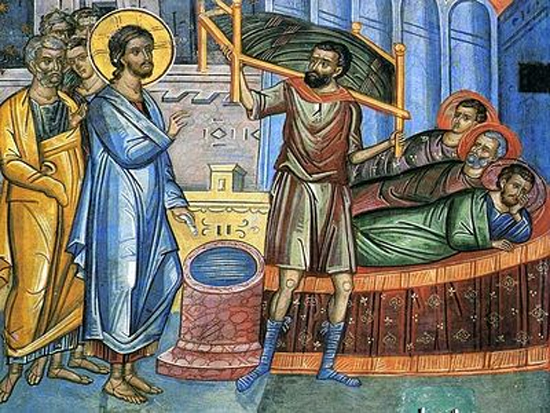
For the Jewish people, the sickness of the paralyzed man was a symptom of underlying sin. It was a punishment, a consequence of one’s own moral evil or of one’s parents. We can imagine the social consequences for the paralyzed man, in the light of the various exclusions which were applied to disabled people [ … ]
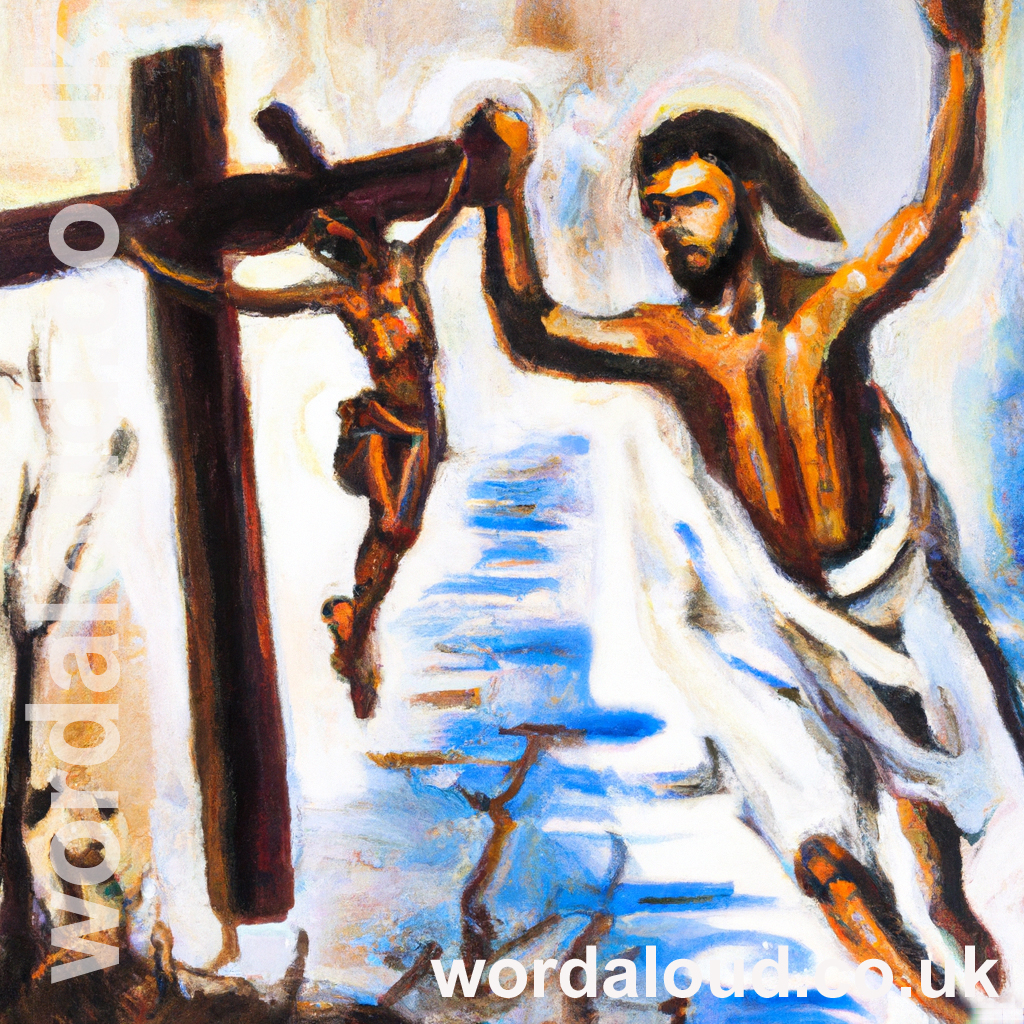
Jesus promises his disciples that they shall be persecuted. It is an extraordinary knowledge to impose. We might wonder at the courage and bravery inspired by Jesus in these most early Christians to witness Jesus Christ and to be the first Christian Church. Gradually, through his time with his disciples, Jesus teaches his disciples to anticipate and to understand the crucifixion – the Christian Cross [ … ]
