Loading...
Poems With Jesus | Christian Faith In Poetry

Poems With Jesus | A Song For Simeon | T.S. Eliot | Audio

A Song For Simeon | T.S. Eliot | Poems With Jesus | Joseph In The Bible

Christian Art | The Story Of Joseph In The Bible

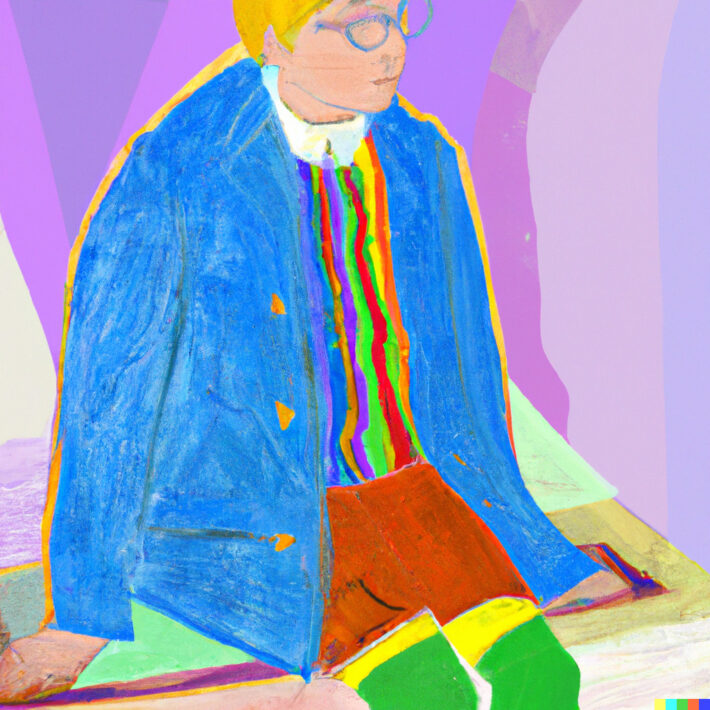
Listen To The Story Of Joseph (And His Amazing Technicolour Dreamcoat) In The Bible – Genesis

A Song For Simeon | T.S. Eliot | Audio

T.S. Eliot’s poem ‘A Song for Simeon’ explores existential themes of mortality and the pursuit of meaning in a world characterized by impermanence. Eliot prompts readers to engage with universal struggles encompassing life, death and spiritual fulfilment.

Eliot’s depiction of Simeon’s existence as ‘light, waiting for the death wind’ encapsulates profound existential dilemma inherent in human life. This imagery of a feather poised in anticipation of an impending gust conjures a sense of fragility, mirroring transient nature of existence. Simeon’s journey becomes emblematic of humanity’s overarching quest to discover meaning amid constraints of mortality. The presence of blooming Roman hyacinths and the feeble illumination of the winter sun suggests paradoxical coexistence of vitality and death, with the ‘stubborn season’ serving as a reminder of life’s inescapable finitude.

Symbolism and Allegory

Imagery of ‘dust in sunlight’ and ‘memory in corners’ serves as metaphors for past experiences and the passage of time. Such symbolism, paired with a thought of ‘waiting for the wind that chills towards the dead land’, evokes nostalgia and a contemplation of an uncertain destiny. The notion of ‘waiting’ weaves through the poem, portraying the tension between human aspirations and mortality. Simeon’s dwelling, representing legacy and familial continuity, stands in stark contrast to the spectre of ‘foreign faces and foreign swords’, of feelings of displacement and loss.

Religious Allusions and Redemption

Simeon’s entreaty, ‘Grant us thy peace, ‘ resonates with the biblical concept of peace as a divine reassurance and salvation. The poem’s structure mirrors Simeon’s quest for peace, transitioning from earthly concerns to spiritual transcendence. Simeon’s virtuous life, evidenced by his benevolence and hospitality, embodies a life well-lived. Yet, uncertainties persist regarding the legacy he bequeaths, highlighting disquiet that accompanies life spent awaiting an elusive promise.

Excerpted

‘Before the stations of the mountain of desolation, Before the certain hour of maternal sorrow, Now at this birth season of decease, Let the Infant, the still unspeaking and unspoken Word, Grant Israel’s consolation To one who has eighty years and no to-morrow.’

Meditations On The Love Of Jesus Christ | Word Aloud | Prayer And Reflection
  • Love Revealed By Jesus Christ | Prayer | Gospels | Audio Bible | KJV | King James Version | Word Aloud

    The psalm calls the world to worship. The psalm unfolds as an harmonious blend of exuberant praise, acknowledging the God’s sovereignty, the divine relationship with His people, and the everlasting nature of God’s goodness, mercy, and truth. As worshippers are beckoned into the presence of God with gladness, Psalm 100 is a profound expression of gratitude and an enduring anthem of celebratory worship [ … ]

  • Palm Sunday | Audio Bible | A Bishop's Homily | Oliver Peers

    We process. Glass exhibition cases, old reliquaries. A forearm here; here a nun’s fingertip. In chapel, at a glance, there are the usual faces. But they all stand to attention. Jonathan breaks from the procession to – fire the organ with oomph and dignity: Ride on! ride on in majesty! The angel-squadrons of the sky look down with sad and wondering eyes to see the approaching sacrifice. When we’ve done the readings, the Arch holds that tree in his hands to deliver the homily. He rocks quietly on his feet, some few seconds, as if balance defeated it. A way you might affect as the Spirit moves… Copying. Then he says: ‘Our palm fronds may seem to us today rather dry. I mean this not in a literal sense, but by the standards of those who originally lined the roadways in order to welcome Jesus into Jerusalem, as they proclaimed Jesus to be the Messiah, who would be clambering up and ripping their palm branches fresh from off the trees. I think perhaps also our faith is somewhat distant from that of the people there on that highroad into Jerusalem, and something of our sense of the meaning has shifted in vividness from what it was then. And of course the expectation of all those many people is markedly different, but in many important respects the same. There are the same essential qualities to all our faith in God, which springs complete from our humanity, and that is one and the same in value for all of us, and time is consistent on this point. So then, let us renew the fullness of Catholic faith, and let us ask the Lord’s blessing as we embark upon our Holy Week. ‘Our Lord enters into Jerusalem in order to refresh us. He is to die in order that we may have life. There is a living reality here, both spiritual and as entangled in the joy of our daily living. We have Ladies’ Day where I grew up. They still have it, and they close the roads off, and little children parade, dressed-up like spring brides. When I was a boy, there was a May Day festival, and there was a May pole on the field, with the people dancing, like Morris dancers might be one way of visualizing this if you’ve never seen it, with their ribbons tied onto the top of the May pole, and they would weave around each other, dressing the pole, which is what we called it. It was like a dance with red and white and blue ribbons all hung off of the top of the May pole, which stood there all year, only like a telegraph pole, but it was concreted in, and then there was a slide, and swings – one baby-swing and two you could have a go at – terrible health and safety but that’s what it was in those days. ‘There was a round-a-bout – we used to run it round and round to try to get it off its central axis. It were rusty as anything and creaked like mad – on concrete. And climb up where it was all greased up at the top. Ruth, who was big as the next four of us, used to sit there sucking on the lollipops we nicked for her from Raddies, and she’d direct matters. We were trying to destroy it, and get it to dislodge from its central axis, and fly away – roll off into that farmer’s field, which he only ever kept for silage, but we never succeeded. There was a car someone had left there so we spent forever smashing that up, until someone who lived in one of the houses there took exception to our doing that, so he put thick grease under the door handles and gave us a right talking to. ‘It would only be a few stands, hot-dogs and things like that. The man selling the hot dogs would have his records on full blast. There’d be a couple of set-up stalls. Air-rifles – that sort of thing. But we all had them, and we all went shooting, of course, if not with twelve bores then with smaller gauge. Or pay a pound – I have no idea how much it was in actual fact then – it might have only been a few pennies – and we’d get all that time smashing up the crockery the man would put up for us to smash on the dressers. That was my particular favourite thing to do at these festivals, by the way, in case you were wondering. You got a little bucket of so many cricket balls. ‘I dread to think what went into those hot dogs. Probably EE rules would forbid it now. But it was a fair mix in those days. A lot of young people then were C of E. We’ve done a lot to hang onto our young people, which is a tremendous encouragement when you consider how things are, while in recent decades the Church of England hasn’t been so successful. People still want it on feast days and what are essentially now civic celebrations. It’s strange to see, though, how all the little stands there people have are run by the police and people like that along those lines. There’s no May pole. That was a sort of faith that ran and ran beneath all the theoreticals of it in the 1960s and the 1970s and into the 1980s. The May pole isn’t there now in the particular place I’m thinking of. Considering May poles were officially suppressed hundreds of years ago – as a part of the protestant reformation. One or two of you are probably thinking I’m remembering things from that time! ‘I should have liked to say that those processionals were so hardwired into us, that even after the last thirty years, when I became a bishop, they are still with us. They were […]

  • Mary Mother Of God And Baby Jesus

    In this reading, Saint Athanasius explains why it was necessary for the Word of God to take a true human body from Mary. Athenasius begins by citing the teaching of the Apostle: the Word took on the descendants of Abraham and became like his brothers in all things. This likeness required a real human body, not an appearance or a substitute [ … ]

Search Google Here | A Holy Land Jerusalem Pilgrimage? | A Safari? | An Escape..