
Christian Art | Prayer With Jesus | Psalms | Prayer For Deliverance From Persecutors
Psalm 17 | King James Audio Bible
YouTube: Psalm 17 KJV | King James Audio Bible | Word Aloud
Psalm 17 is a soul’s conversation with the divine. The psalm captures a sincere plea for justice and refuge, revealing the unyielding strength of faith in the face of challenges.
The psalmist seeks safety from deceit and cruelty. He starts by making a clear plea, an honest prayer that doesn’t hide behind empty words. He calls for a fair judgment from God’s presence, emphasizing equitable assessment. He trusts in God’s scrutiny, confident that his intentions are steadfast.
The psalmist recalls avoiding harmful paths and following the divine word. He asks for guidance, seeking help to stay on the right path. He is sure God will respond, calling on God with confidence. He seeks God’s kindness, hoping it will lead to deliverance.
A metaphor emerges, describing God’s care as being hidden under wings.
The enemies of the psalmist are depicted as consumed by pride. Despite challenges, the psalmist asks for deliverance from the wicked. He reflects on worldly pursuits, contrasting such with God’s righteousness.
The ultimate goal of the psalm is to encounter God’s face and to awaken in God’s likeness.

Psalm 17 | King James Audio Bible KJV
Hear the right, O Lord, attend unto my cry, give ear unto my prayer, that goeth not out of feigned lips.
Let my sentence come forth from thy presence; let thine eyes behold the things that are equal.
Thou hast proved mine heart; thou hast visited me in the night; thou hast tried me, and shalt find nothing; I am purposed that my mouth shall not transgress.
Concerning the works of men, by the word of thy lips I have kept me from the paths of the destroyer.
Hold up my goings in thy paths, that my footsteps slip not.
I have called upon thee, for thou wilt hear me, O God: incline thine ear unto me, and hear my speech.
Shew thy marvellous lovingkindness, O thou that savest by thy right hand them which put their trust in thee from those that rise up against them.
Keep me as the apple of the eye, hide me under the shadow of thy wings,
From the wicked that oppress me, from my deadly enemies, who compass me about.
They are enclosed in their own fat: with their mouth they speak proudly.
They have now compassed us in our steps: they have set their eyes bowing down to the earth;
Like as a lion that is greedy of his prey, and as it were a young lion lurking in secret places.
Arise, O Lord, disappoint him, cast him down: deliver my soul from the wicked, which is thy sword:
From men which are thy hand, O Lord, from men of the world, which have their portion in this life, and whose belly thou fillest with thy hid treasure: they are full of children, and leave the rest of their substance to their babes.
As for me, I will behold thy face in righteousness: I shall be satisfied, when I awake, with thy likeness.


Key Themes Of The Psalm For Reflection | Love Revealed By Jesus Christ
- Divine Appeal: Psalm 17 depicts a heartfelt conversation with the divine, where the psalmist earnestly seeks justice and refuge.
- Trust Amid Challenges: The psalmist’s trust in God remains unwavering, even in the face of deceit and adversity.
- Yearning for Fairness: The psalm captures the yearning for fairness and vindication, drawing a parallel to a courtroom scene.
- Equitable Judgment: A call for equitable judgment from God’s presence highlights the importance of divine assessment.
- Guided by Faith: The psalmist’s path is guided by faith, avoiding harmful ways and seeking divine guidance.
- Confidence in Response: Confidence in God’s responsiveness is expressed, as the psalmist believes their plea will be heard.
- Hope in Deliverance: The psalmist hopes for God’s kindness to lead to deliverance from adversaries.
- Divine Protection: A metaphor of being hidden under God’s wings conveys the idea of divine care and protection.
- Pride and Arrogance: The psalm contrasts humility with the pride and arrogance displayed by the enemies.
- Seeking Refuge: Despite challenges, the psalmist seeks refuge from the wicked, viewing them as instruments of divine justice.
- Reflection on Values: The psalm reflects on the contrast between worldly pursuits and the righteousness of God.
- Yearning for Divine Encounter: The ultimate aspiration is to encounter God’s face and awaken in His likeness.
- Faith Amid Complexity: Psalm 17 captures the interplay between faith and adversity, emphasizing the pursuit of justice, refuge, and the unwavering strength of trust in God.


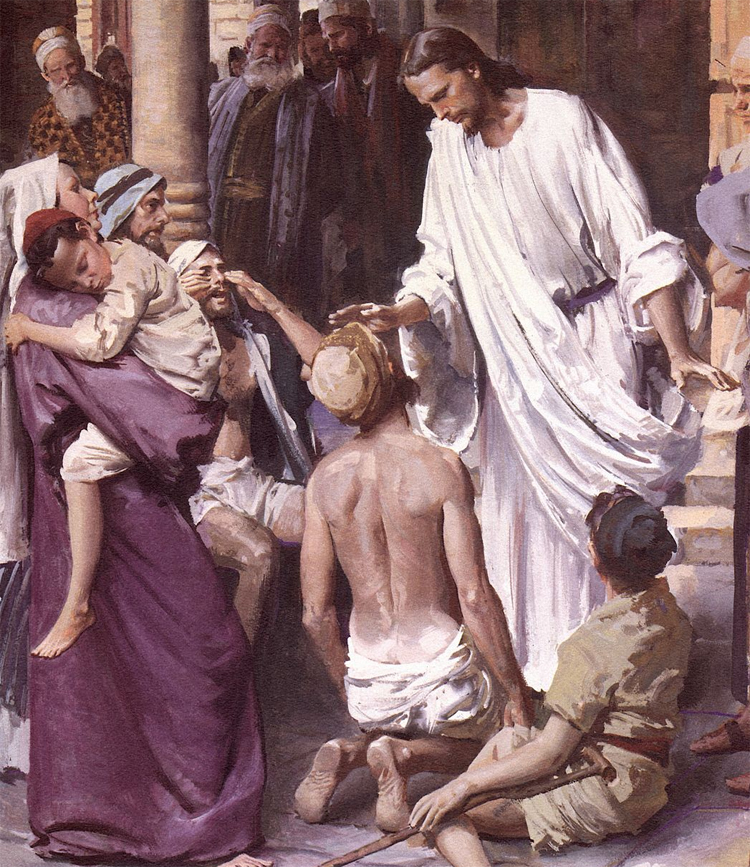
We are reminded once more in this Gospel reading of the huge numbers of people who flock to Jesus. Jesus’ fame and popularity are extraordinary, while his mission proceeds at what we might think an incredibly fast pace. There is such need on the part of the people for salvation, no matter the extent of their consciousness as to how Jesus asks to save us all [ … ]
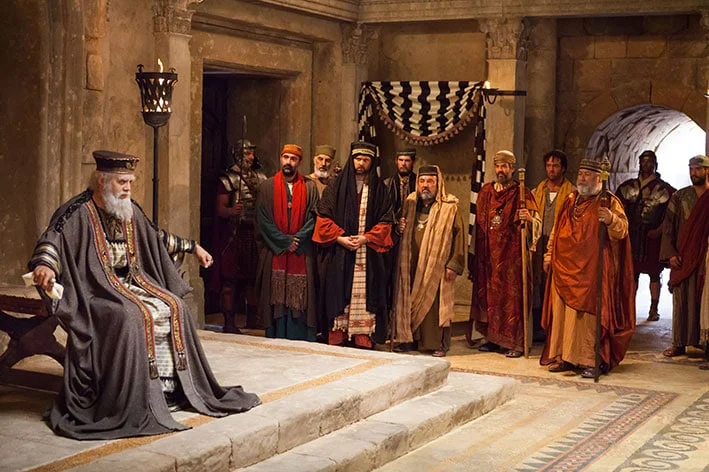
King James Audio Bible | KJV | King James Version King Herod There were several individuals named Herod who played significant roles in ancient history, particularly in the history of the Roman Empire and the region of Palestine. Here is a brief overview of the most notable Herods: Herod the Great: Also known as Herod I, he was a Roman client king of Judea, ruling from 37 BC to 4 BC. He is perhaps most famous for his role in the biblical story of the birth of Jesus, in which it is said that he ordered the slaughter of all male children in Bethlehem under the age of two in an attempt to kill the newborn Jesus. Herod Antipas: Also known as Herod II, he was the son of Herod the Great and ruled over Galilee and Perea, two regions in Palestine, from 4 BC to 39 AD. He is mentioned in the New Testament as the ruler who imprisoned John the Baptist and later had him beheaded. Herod Agrippa I: Also known as Herod III, he was the grandson of Herod the Great and ruled over Judea from 41 to 44 AD. He is mentioned in the New Testament as the ruler who imprisoned the apostle Paul. Herod Agrippa II: Also known as Herod IV, he was the great-grandson of Herod the Great and ruled over parts of Palestine and Syria from 50 to 100 AD. He is mentioned in the New Testament as the ruler who heard Paul’s defence before the Roman governor Festus. These rulers, who were known as the Herodian dynasty, were not Jewish but rather descended from a Greek family that had converted to Judaism. Despite this, they were appointed as rulers by the Roman Empire and were generally unpopular among the Jewish population due to their collaboration with the Roman occupation and their often brutal methods of rule. Herod The Great Herod the Great, also known as Herod I, was a Roman client king of Judea who ruled from 37 BC to 4 BC. He was born in 73 BC in Idumea, a region in southern Palestine, and was the son of Antipater the Idumean, an Edomite who had been appointed as a governor of Judea by the Roman general Pompey. Herod rose to power after the Roman general Julius Caesar appointed him as king of Judea in 40 BC. He consolidated his power over the next few years by defeating his rivals and establishing himself as the undisputed ruler of the region. As king, Herod embarked on a massive building program that included the expansion and renovation of the Temple in Jerusalem, the construction of the port city of Caesarea Maritima, and the fortification of several cities in Judea. He also commissioned the construction of a number of palaces and other buildings, including the famous Herodium, a palace-fortress located south of Jerusalem. Despite his many accomplishments, Herod was a controversial figure who was known for his harsh rule and his willingness to use violence to maintain his power. He was married several times and had a large number of children, several of whom he had executed when they posed a threat to his rule. One of the most famous stories associated with Herod is the biblical account of the birth of Jesus, in which it is said that he ordered the slaughter of all male children in Bethlehem under the age of two in an attempt to kill the newborn Jesus. According to the New Testament, Jesus was saved by his parents, who fled to Egypt, and later returned to Palestine after Herod’s death. Herod died in 4 BC at the age of 70, leaving a legacy as one of the most significant rulers in the history of ancient Palestine. Herod Antipas Herod Antipas, also known as Herod II, was the son of Herod the Great and ruled over Galilee and Perea, two regions in Palestine, from 4 BC to 39 AD. He was born in 20 BC and was named after his father’s patron, the Roman emperor Augustus. Like his father, Herod Antipas was known for his ambitious building projects, including the construction of the city of Tiberias on the Sea of Galilee and the expansion of the Temple in Jerusalem. He was also known for his political cunning and his ability to navigate the complex political landscape of the Roman Empire. Herod Antipas is mentioned in the New Testament as the ruler who imprisoned John the Baptist, a prominent religious figure who criticized Herod’s marriage to his sister-in-law, Herodias. According to the New Testament, John was eventually beheaded at the request of Herodias’ daughter, Salome, who danced for Herod and his guests at a banquet. Herod Antipas is also mentioned in the New Testament as the ruler who oversaw the trial and execution of Jesus. Although he initially wanted to release Jesus, he ultimately handed him over to the Roman authorities at the urging of the Jewish religious leaders. Herod Antipas’ rule came to an end in 39 AD when the Roman emperor Caligula exiled him to Gaul, modern-day France. He died in exile a few years later. Herod Agrippa I Herod Agrippa I, also known as Herod III, was the grandson of Herod the Great and ruled over Judea from 41 to 44 AD. He was born in 10 BC and was the son of Aristobulus and Bernice, two of Herod the Great’s children. Herod Agrippa I was well-educated and fluent in both Greek and Hebrew, and he was highly regarded by the Roman authorities for his loyalty and his ability to maintain order in Judea. He was appointed as king of Judea in 41 AD by the Roman emperor Claudius, who was impressed by his abilities and saw him as a reliable ally in the region. As king, Herod Agrippa I continued the building projects of his grandfather and expanded the Temple in Jerusalem. He also implemented a number of reforms aimed at improving the lives of the […]

Psalm 63 offers solace and inspiration to those who seek God’s presence, even in the midst of life’s trials. It serves as a reminder that our pursuit of the Divine should be unwavering, prioritizing our connection with God above all else. It acknowledges profound joy and spiritual fulfilment that come from seeking and experiencing God’s love and protection [ … ]