
Christian Art | Prayer With Jesus | The Psalms
Psalm 7 | King James Audio Bible
YouTube: Psalm 7 KJV | King James Audio Bible | Word Aloud
Psalm 7 expresses the psalmist’s struggle against unfairness and his plea for God’s protection.
The psalm extends from individual predicament towards cosmic reality – the overarching knowledge of God as the reality of the universe. We can imagine being wrongly accused and treated badly by others. In Psalm 7, the psalmist is upset about being treated unfairly and asks God for help.
In the beginning, the psalmist expresses his trust in God. He asks for refuge, knowing that to be with God is spiritual home and justice.
There is a vivid picture where the psalmist compares his situation to a lion tearing its prey. There is a visceral, animal sense of the psalmist’s torment. This is no abstract dilemma; the whole being of the psalmist is entailed.
Then, the psalmist looks at his own actions. He declares his innocence, especially in relation to dealings with others, and asks for justice considering any sin. There is a call for himself to be brought to account. Implicitly, there is firm belief that the psalmist has abided by God’s law and justice. This is in context of surrender to God’s will.
The psalmist asks God to make things right. He wants God to judge people fairly, separating the good from the bad based on their hearts. There is belief in the universality of God’s justice, both in a supernatural sense and in the assembly of people – God’s justice carried forth on Earth.
The psalm is hopeful. The psalmist trusts that God will protect those with good hearts. He believes God will take action against the wrong things people do.
The psalmist describes how the troublemakers bring harm upon themselves with their own deceitful plans. Their actions have consequences upon themselves. Such is the nature of evil.
The psalmist believes that God is righteous and can be relied upon. God tests His faithful, and yet this test is fair – there is justice.
Psalm 7 expresses a desire for fairness and protection from those who are causing harm. It reminds us that when things are tough, we find refuge and trust in God’s justice.
Indeed, the whole universe, the whole divine plan of salvation, is with us there.
Psalm 7 | King James Audio Bible KJV | Prayer To Jesus
O Lord my God, in thee do I put my trust: save me from all them that persecute me, and deliver me:
Lest he tear my soul like a lion, rending it in pieces, while there is none to deliver.
O Lord my God, if I have done this; if there be iniquity in my hands;
If I have rewarded evil unto him that was at peace with me; (yea, I have delivered him that without cause is mine enemy:)
Let the enemy persecute my soul, and take it; yea, let him tread down my life upon the earth, and lay mine honour in the dust. Selah.
Arise, O Lord, in thine anger, lift up thyself because of the rage of mine enemies: and awake for me to the judgment that thou hast commanded.
So shall the congregation of the people compass thee about: for their sakes therefore return thou on high.
The Lord shall judge the people: judge me, O Lord, according to my righteousness, and according to mine integrity that is in me.
Oh let the wickedness of the wicked come to an end; but establish the just: for the righteous God trieth the hearts and reins.
My defence is of God, which saveth the upright in heart.
God judgeth the righteous, and God is angry with the wicked every day.
If he turn not, he will whet his sword; he hath bent his bow, and made it ready.
He hath also prepared for him the instruments of death; he ordaineth his arrows against the persecutors.
Behold, he travaileth with iniquity, and hath conceived mischief, and brought forth falsehood.
He made a pit, and digged it, and is fallen into the ditch which he made.
His mischief shall return upon his own head, and his violent dealing shall come down upon his own pate.
I will praise the Lord according to his righteousness: and will sing praise to the name of the Lord most high.


Key Themes Of The Psalm For Reflection | Love Revealed
- Seeking God’s Protection: The psalmist starts by seeking God’s help and protection from those who are causing trouble and harm.
- Facing Unfair Accusations: The psalmist grapples with being wrongly accused and treated unfairly by others, highlighting the theme of injustice.
- Divine Justice: The psalmist appeals to God’s sense of justice, asking for a fair evaluation of hearts and actions.
- Self-Reflection: The psalmist examines his own actions and asserts his innocence, showing a commitment to fairness and righteousness.
- Trust in God’s Defence: Amidst adversity, the psalmist places trust in God as a defence, emphasizing God’s role as a protector.
- Consequences of Wrongdoing: The psalmist describes the negative outcomes that result from the deceitful plans of the wicked, underscoring the theme of accountability.
- Divine Judgment: The psalmist believes in God’s role as a just Judge, separating the righteous from the wicked based on their intentions.
- Hope and Confidence: The psalmist’s tone shifts to hope and confidence, trusting that God will take action against wrongdoing and uphold fairness.
- Praise and Trust: The psalmist concludes by praising God’s righteousness and expressing trust in His reliability as a source of refuge and justice.
- Seeking Refuge in God: Psalm 7 portrays a journey of seeking refuge in God amidst adversity, appealing for justice and finding hope in divine protection.


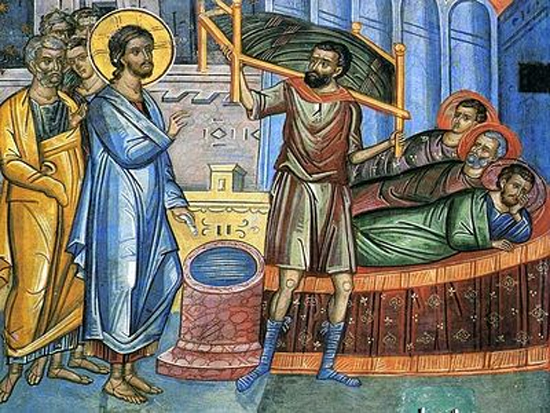
For the Jewish people, the sickness of the paralyzed man was a symptom of underlying sin. It was a punishment, a consequence of one’s own moral evil or of one’s parents. We can imagine the social consequences for the paralyzed man, in the light of the various exclusions which were applied to disabled people [ … ]

This is an extraordinary scene. Many, many people are gathered with Jesus to hear his teaching, which is the Sermon on the Mount. The people will not all be friends; there will be different, sectarian groups, and rivalries between them. Some of those gathered to listen to Jesus will be suspicious of others. Nor can the people yet understand what is happening here, just who and what Jesus is. The people have flocked to – see someone, hear someone, someone new and extraordinary, someone perhaps who can answer their needs. Their coming to Jesus is an expression of hope and longing. Who knows what thoughts there must have been as people looked around to see all those others gathered. This is a vast company of strangers [ … ]
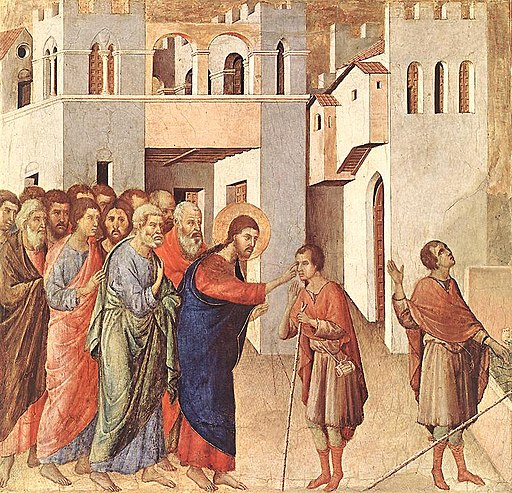
Mark has shown Jesus earlier (Mark 7: 32-33) using the sign of the laying on of hands as part of the miracle of healing. Normally when Jesus heals, the healing is instant. With the blind man at Bethsaida this is not the case. The healing is more gradual, passing through stages before being complete [ … ]