

Matthew 5: 14-15, Mark 4: 21-25, Luke 8: 16-18 | Here from Saint Luke’s Gospel:
Monday Week 25, Ordinary Time
16 ¶ No man, when he hath lighted a candle, covereth it with a vessel, or putteth it under a bed; but setteth it on a candlestick, that they which enter in may see the light.
17 For nothing is secret, that shall not be made manifest; neither any thing hid, that shall not be known and come abroad.
18 Take heed therefore how ye hear: for whosoever hath, to him shall be given; and whosoever hath not, from him shall be taken even that which he seemeth to have. (Luke 8: 16-18)
We are called as Christians not only to love God and to offer our days to Him, but also to shine as a living example to the people we meet each day. We are called to that apostolate which is a part of being a Christian, to proclaim the truth of Christ to the world.
There are all sorts of ways in which we can approach this mission. There are those who feel called to preach the Gospel aloud in busy streets, asking passers by to pause for a moment and listen to the word of God. For others, it might seem a brave act to say to a person who might not know us very well, in the course of conversation: I am a Christian.
There are questions we may ask ourselves. Would another person know that I am a Christian? What do I do that shines the light of Christ upon the people I meet each day? Do I love other people as God loves me? Do I give this love to everyone, or only to my friends? Am I a living witness to the message of faith, hope and charity?
We are called by Christ to evangelize, to live in community, to work to grow the mystical body of the Church, to call others to the love and knowledge of Jesus Christ.
We pray for divine assistance that we may do good in the world. We pray that others may see our good works, not for the sake of ourselves but so that they may be called themselves to glorify God and to perceive the true and full meaning of human life.
May the light of Christ shine through our lives, and so, never diminished but only magnified, ignite the lives of others.
‘He who died for us is all that I seek; he who rose again for us is my whole desire. The pangs of birth are upon me; have patience with me, brothers, and do not shut me out from life, do not wish me to be stillborn. Here is one who longs only to be God’s; do not make a present of him to the world again, or delude him with the things of the earth. Suffer me to attain to light, light pure and undefiled; for only when I am come thither shall I be truly a man. Leave me to imitate the passion of my God.’ St Ignatius of Antioch

Audio Bible KJV | Endnotes
Jesus’ Parable of the Lamp Under a Bushel encourages Christians to live our faith boldly and without fear. In the parable, Jesus speaks of a person who places their lamp under a bushel basket, preventing its light from shining. This is a powerful allegory for how we can hide our true selves and our faith from others, out of fear – societal pressure and other forms of embarrassment.
As Christians, we are called to be salt and light in the world. (Matthew 5:13-14) This means shining our light for all to see. It involves being tasty!
We remember that faith is not meant to be hidden or kept to ourselves; it is meant to be shared and lived out loud. As it is written in the Gospel of Matthew (28:19-20): ‘Go ye therefore, and teach all nations, baptizing them in the name of the Father, and of the Son, and of the Holy Ghost: Teaching them to observe all things whatsoever I have commanded you.’
One of the most important ways we can build confidence and strength to live our faith boldly is through prayer and worship. Through prayer, we can connect with God and find the strength and courage we need to face the challenges of life and to live out our faith in the world. Worship, too, is a powerful tool that can help us focus on God and His love for us, and this can help us overcome any fear or doubt that might hold us back.
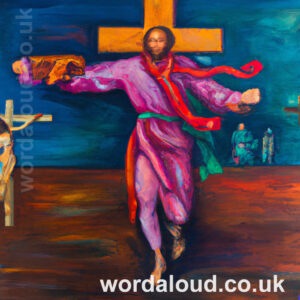
The Christian Cross is powerful as the sign of faith – it is the sacrifice that Jesus made for us. As we meditate and focus on the crucifixion of Jesus, we know the depth of God’s love for us and the lengths He was willing to go to save us. This gives courage and confidence we need to live out our faith boldly, no matter what others might say or do.
Through faith in Jesus and living in obedience to His will, Christians dare hope with confidence for salvation from sin and the hope of eternal life in heaven, breaking free from the influence of Satan and living a life that brings glory to God.
As we explore through the parables of Jesus relationship with God, an understanding of the meaning of parables is that within the context of engagement with the parables we are present with Jesus in the Garden of Gethsemane – toward crucifixion of Jesus and hence redemption.


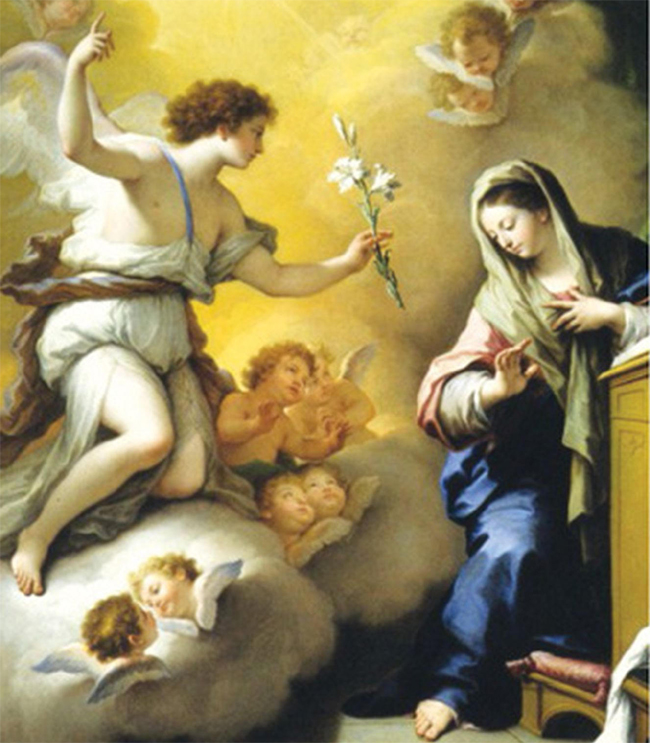
The Archangel Gabriel is prominently featured in the New Testament of the Christian Bible. Gabriel’s first appearance is in the Gospel of Luke, where he appears to Zechariah to announce the birth of his son, John the Baptist. Zechariah questions the angel, and Gabriel responds with the famous words, ‘And the angel answering said unto him, I am Gabriel, that stand in the presence of God; and am sent to speak unto thee, and to shew thee these glad tidings.’ (Luke 1:19) [ … ]
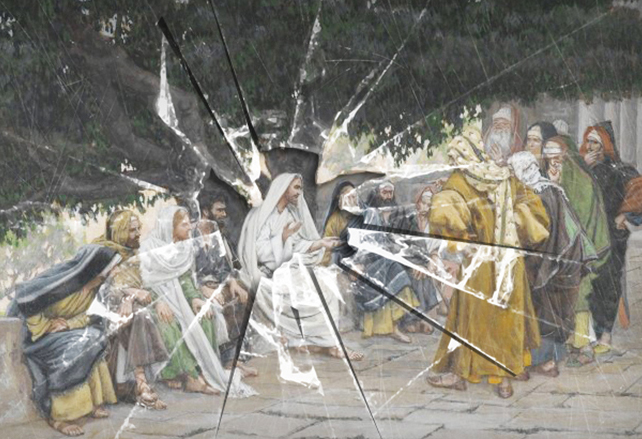
As Jesus’ popularity grows, so too do those opposing voices ranged against him. Jesus has worked saving miracles, and now the scribes come from Jerusalem declare that this has not been holy work but rather diabolical. This sounds to modern day listeners to be absurd, although we might wonder at Jesus’ manner as he exorcised demons, and bear in mind that his friends and family thought he had lost his wits and was beside himself. Certainly, the intention of the scribes is to find fault and seize on anything they can to try to vilify Jesus. They are looking to reject the good news and are happy to pervert the truth if they feel by doing so they may harm Jesus [ … ]
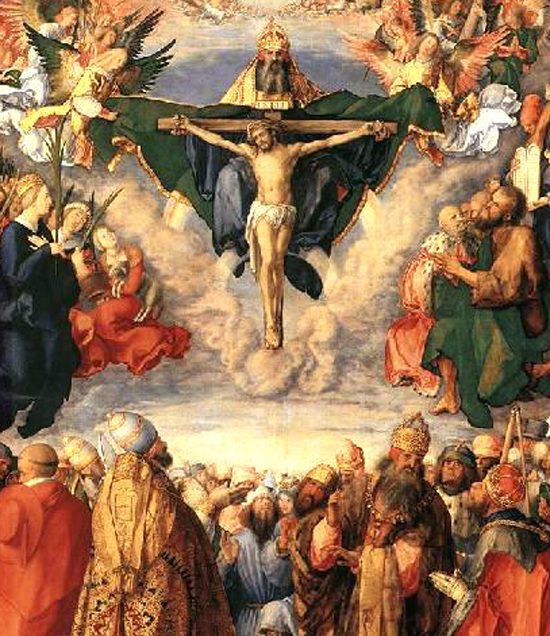
It is in Chapter 11 of Matthew’s Gospel that Jesus’ mission has encountered serious difficulties. Through Chapters 11 and 12 there are challenges, which confirm what Jesus has told the disciples in the Discourse of the Mission, concerning his bringing not peace but a sword, of Jesus’ Mission being a sign of Christian contradiction. There is real enmity in the region of Galilee, the scribes and the Pharisees especially rejecting the truth of Jesus, while even John the Baptist fails to understand [ … ]