
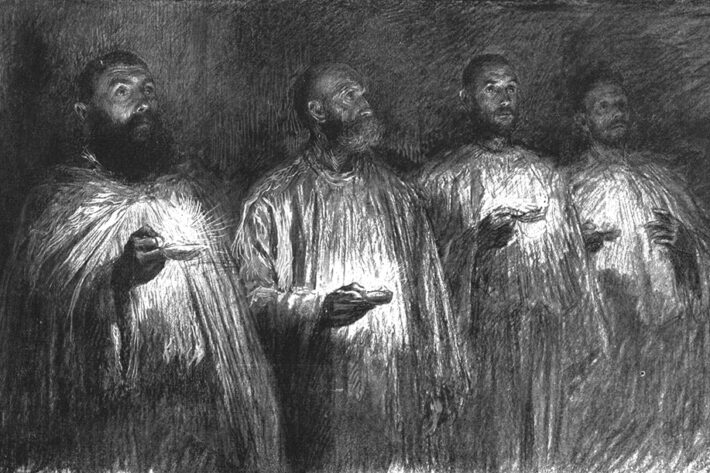
Christian Art | King James Audio Bible | Parables Of Jesus | Servants Await Their Master | A Parable
Luke 12: 35-38 | King James Audio Bible | KJV | Week 29 Tuesday
35 Let your loins be girded about, and your lights burning;
36 And ye yourselves like unto men that wait for their lord, when he will return from the wedding; that when he cometh and knocketh, they may open unto him immediately.
37 Blessed are those servants, whom the lord when he cometh shall find watching: verily I say unto you, that he shall gird himself, and make them to sit down to meat, and will come forth and serve them.
38 And if he shall come in the second watch, or come in the third watch, and find them so, blessed are those servants.
Jesus tells us to be vigilant. In Christ’s time, when the Jews would usually wear long, flowing garments, it was the practice to hitch them up, to gird oneself, in order to be ready to perform certain kinds of work. To gird oneself, therefore, and to keep lights burning, meant to be ready for action. Before the flight from Egypt, at the moment of the Passover, the Israelites had to gird themselves, to be ready to be able to leave immediately (Exodus 12:11).
The watchfulness of the servants expresses love for their master and a spirit of prayer and fortitude in faith. So we must be always preparing for Christ, even as we live in his Kingdom, his Church, so that we may be ready for his definitive coming. We may live in a joyful state of high expectation: this next moment in time may be the one.
We have, then, a promise of happiness. Our service to our master becomes reciprocal: the master becomes the servants’ servant. We are reminded of Christ’s words to his disciples telling them that the Son of Man came to serve, and that they are called to a life of service in the world. We are reminded of Christ’s washing the disciples’ feet at the last supper. Our joy is an exchange of love and service.
The Song of Solomon expresses the sleeplessness of a lover awaiting the return of his beloved:
2 ¶ I sleep, but my heart waketh: it is the voice of my beloved that knocketh, saying, Open to me, my sister, my love, my dove, my undefiled: for my head is filled with dew, and my locks with the drops of the night.
3 I have put off my coat; how shall I put it on? I have washed my feet; how shall I defile them?
4 My beloved put in his hand by the hole of the door, and my bowels were moved for him.
5 I rose up to open to my beloved; and my hands dropped with myrrh, and my fingers with sweet smelling myrrh, upon the handles of the lock.
6 I opened to my beloved; but my beloved had withdrawn himself, and was gone: my soul failed when he spake: I sought him, but I could not find him; I called him, but he gave me no answer.
7 The watchmen that went about the city found me, they smote me, they wounded me; the keepers of the walls took away my veil from me.
8 I charge you, O daughters of Jerusalem, if ye find my beloved, that ye tell him, that I am sick of love. (Song of Solomon 5: 2-8)


King James Audio Bible | Endnotes
The Parable of the Servants Awaiting their Master, recorded in the Gospel of Saint Luke 12:35-38, is a powerful teaching by Jesus about faithfulness, responsibility, and accountability. The parable highlights the importance of being ready and prepared to meet the return of the master, who represents God in this parable.
The parable is a reminder to Christians of the importance of being vigilant and ready for the return of Jesus. Christians believe that Jesus will return to earth one day and that we must be prepared to give an account of our lives and actions. The Christian Cross is key sign of this belief – as in prayer and devotion we recall the crucifixion of Jesus and his ultimate sacrifice for the forgiveness of ournsins.
The Church helps believers to grow in our faith and to become more like Jesus. Our Christian gifts recall our life with Jesus and provide comfort and inspiration for believers.
The Sermon on the Mount calls Christians to the promise of renewal and our ultimate hope of life with Jesus in heaven. The Parable of the Servants Awaiting their Master is a powerful reminder of the importance of being vigilant, responsible, and accountable in our lives.
Christian prayer, including both individual and communal prayer, is an essential aspect of a faithful life. Through prayer, Christians can deepen our relationship with God, seek guidance and wisdom, and find comfort and hope in the face of life’s challenges.
No matter if as the prodigal son we have strayed, we are called to renewal in Jesus. As we explore through the parables of Jesus relationship with God, an understanding of the meaning of parables is that within the context of engagement with the parables we are present with Jesus in the Garden of Gethsemane – toward crucifixion of Jesus and hence redemption.


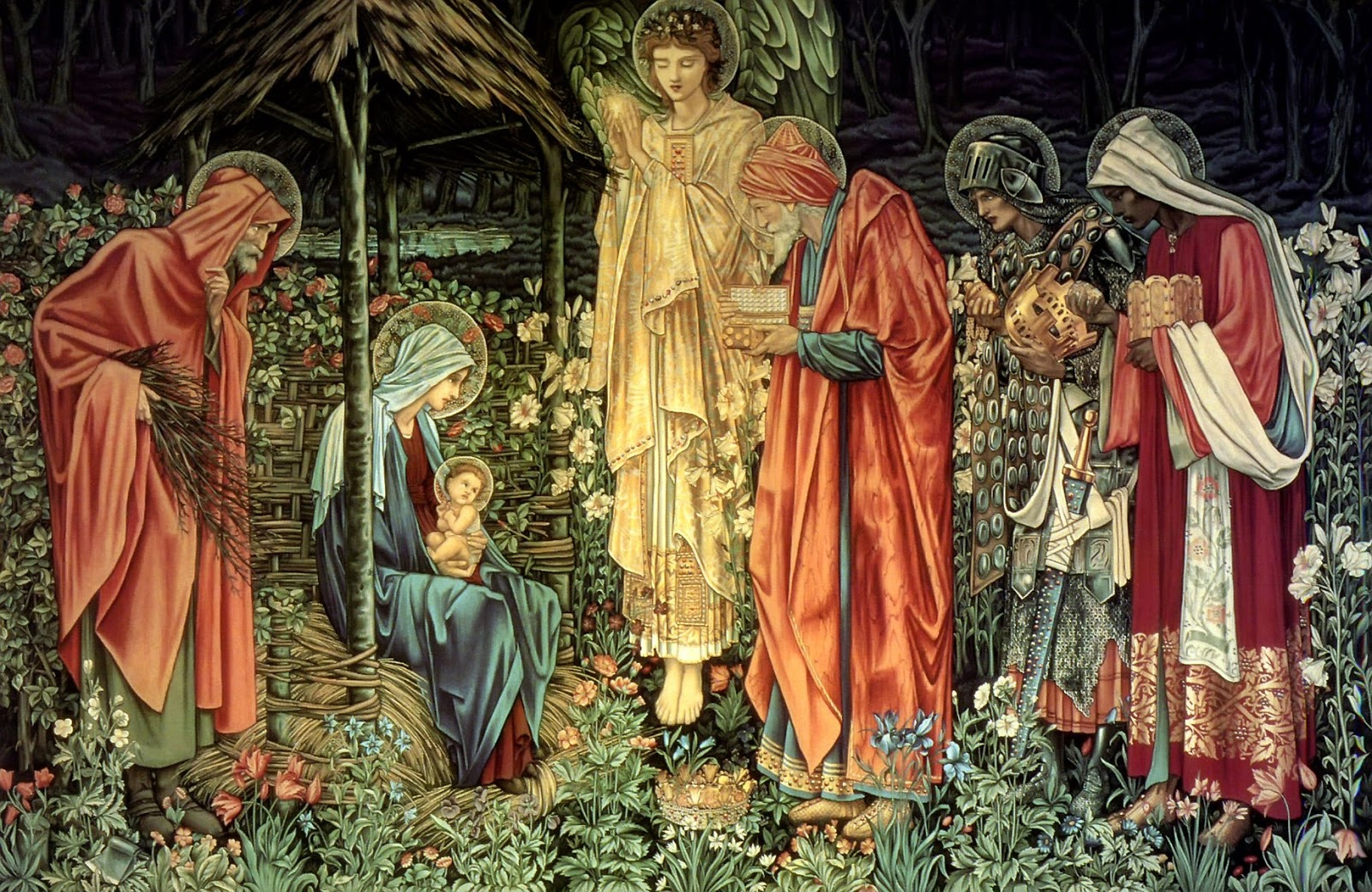
The word “epiphany” comes from the Greek word “epiphaneia,” which means “manifestation” or “appearance.” In the Christian tradition, the Epiphany is considered to be the day when the divinity of Jesus was revealed to the world through the visit of the Magi, also known as the three wise men or kings, who brought gifts to the newborn Jesus [ … ]

In this reflection on Psalm 126, Saint Augustine teaches that the true Solomon is not simply Israel’s famous king, but Jesus Christ himself. Solomon’s name means ‘Bringer of Peace’. While Solomon built the first temple in Jerusalem, Christ builds the true temple, the Church—made not from stones but from living people, drawn from every nation and brought into unity [ … ]

Saint Gaudentius of Brescia (c. 5th century) was a bishop and gifted preacher in Northern Italy, a contemporary and friend of Saint Ambrose. His teaching on the Eucharist reveals the rich sacramental theology of the early Church—faithful to Scripture, shaped by apostolic tradition, and full of pastoral insight. This passage draws us deep into the heart of Christian worship: the Eucharist. Here, bread and wine become the very body and blood of Christ. Through this transformation, the faithful participate in the Paschal Mystery—Christ’s Passion, Resurrection, and glorification [ … ]