
Christian Art | Presentation Of The Lord In The Temple
Luke 2: 22-35 – Christmastide, 29th December (Audio Bible, Spoken Word)
22 And when the days of her purification according to the law of Moses were accomplished, they brought him to Jerusalem, to present him to the Lord;
23 (As it is written in the law of the Lord, Every male that openeth the womb shall be called holy to the Lord;)
24 And to offer a sacrifice according to that which is said in the law of the Lord, A pair of turtledoves, or two young pigeons.
25 And, behold, there was a man in Jerusalem, whose name was Simeon; and the same man was just and devout, waiting for the consolation of Israel: and the Holy Ghost was upon him.
26 And it was revealed unto him by the Holy Ghost, that he should not see death, before he had seen the Lord’s Christ.
27 And he came by the Spirit into the temple: and when the parents brought in the child Jesus, to do for him after the custom of the law,
28 Then took he him up in his arms, and blessed God, and said,
29 Lord, now lettest thou thy servant depart in peace, according to thy word:
30 For mine eyes have seen thy salvation,
31 Which thou hast prepared before the face of all people;
32 A light to lighten the Gentiles, and the glory of thy people Israel.
33 And Joseph and his mother marvelled at those things which were spoken of him.
34 And Simeon blessed them, and said unto Mary his mother, Behold, this child is set for the fall and rising again of many in Israel; and for a sign which shall be spoken against;
35 (Yea, a sword shall pierce through thy own soul also,) that the thoughts of many hearts may be revealed.
The first two chapters of the Gospel of Luke are more than history, as we now understand the term. The narrative captures core truths of the events which took place upon the birth of Jesus. They serve as a mirror in which we discover the meaning of the birth of Jesus and recognize that Jesus came to fulfil the promise of the Old Testament. They reflect the longing of the human heart as we find out about Jesus. To the Christians of Luke’s time, the infancy narrative of Luke’s Gospel offered a lesson in how to persevere in adversity as the Old Law gave way to the New. The attitude of Mary is a model to us all, as we welcome Jesus into our own lives, through family and faith. We marvel just as Joseph and Mary marvelled. Mary’s obedience teaches the way.
The Holy Family goes to Jerusalem to fulfil the requirements of the Law of Moses – the purification of the mother and the presentation and then redemption, the buying back, of the first born. According to Leviticus, a woman who bore a child was unclean, the period of legal impurity lasting for forty days, and ending with a rite of purification. Family and faith, Mary chooses to submit herself to the Law. Jesus is not come to abolish the Law, but to fulfil it.
Simeon is a righteous and devout man who has kept watch all his life for the coming of the Lord. Now he sees that the time has come. Simeon recognizes Jesus as the promised Messiah. This is through revelation. He offers himself to the Lord as a willing servant, rejoicing that he has seen the coming of salvation. Simeon’s prophecy recognizes that Jesus has come to be a light to all nations, including the people of Israel, the prayer toward the ‘up’ family and faith. The prophecy also recognizes that there will be very challenging times ahead. Christ will be a sign of contradiction – there will be struggle and there will be rejection, as there will be liberation from all evil for those who see the light of truth in Christ.
The offering Mary and Joseph bring to the Temple is a poor man’s offering, of two turtledoves or two young pigeons, rather than of a lamb. It is in this spirit of poverty that Jesus comes to us. This teaches us how we are to receive Jesus, opening ourselves to Jesus’ love and mercy in a spirit of poverty. It is when we dare to approach the Lord in such a spirit, casting off from ourselves all pride, all egotism and conceit, all pretention, that we can be truly ready to receive God’s Word, and it is then that we may rejoice with Simeon in the love, in the peace, of Christ.
‘Purification! You and I certainly do need purification. Atonement and, more than atonement, Love. Love as a searing iron to cauterize our soul’s uncleanness, and as a fire to kindle with divine flames the wretchedness of our hearts.’ St Josemaria Escriva.

Purification Of Mary And Presentation Of Jesus In The Temple | Endnotes
In Luke 2:22–24, the account of the Purification of Mary and the Presentation of Jesus is rooted in Jewish law and ritual practice as laid down in the Torah. Luke frames the early life of Jesus within the observance of the Law of Moses to emphasize the faithfulness of Mary and Joseph and to situate Jesus fully within Israel’s religious tradition.
According to Leviticus 12, childbirth rendered a woman ritually unclean, not in a moral sense, but in a ceremonial one that restricted participation in worship and access to sacred space. After giving birth to a male child, a woman was considered unclean for seven days, followed by an additional thirty-three days during which she was required to refrain from entering the Temple. At the end of this forty-day period, she was to present herself at the Temple with a purification offering: normally a lamb for a burnt offering and a bird for a sin offering. However, the law explicitly provided for the poor, allowing those unable to afford a lamb to offer two birds instead. Luke’s mention that Mary offers ‘a pair of turtledoves or two young pigeons’ indicates the modest economic status of Jesus’ family and underscores their obedience to the law even in simplicity.
Alongside the purification rite for Mary, Luke describes the presentation of Jesus as the firstborn son, a practice rooted in Israel’s foundational memory of the Exodus. In Exodus 13, God commands that every firstborn male belongs to the Lord, recalling the final plague in Egypt in which the firstborn of the Egyptians died while Israel’s were spared. Over time, this command developed into the practice of ‘redeeming’ the firstborn son, acknowledging that the child ultimately belonged to God. While later Jewish custom involved a monetary redemption payment, Luke emphasizes the act of presentation itself, highlighting the dedication of Jesus to God’s purposes.
Luke weaves these two legal obligations together, presenting them as a single pilgrimage to the Temple in Jerusalem. This narrative choice reflects common practice and allows Luke to show that Jesus’ life, from its earliest days, is framed by fidelity to the covenant. Importantly, although Christian theology later affirmed Mary’s freedom from sin and Jesus’ divine sonship, Luke does not exempt them from Jewish ritual obligations. Instead, he portrays them as fully participating in Israel’s religious life, reinforcing continuity between Israel’s law and God’s unfolding plan of salvation.
The Temple setting is significant. As the centre of Jewish worship, sacrifice, and identity, the Temple was the proper place for fulfilling both purification and presentation rites. By bringing Jesus there as an infant, Luke signals that Israel’s hopes, laws, and worship converge in him. What appears at first to be a routine act of legal observance becomes, in Luke’s narrative, the moment when God’s promises begin to be publicly revealed.
Candlemas
Candlemas is the Christian feast that commemorates the Presentation of Jesus in the Temple and the Purification of Mary, as described in Luke 2:22–40. It is celebrated on 2 February, forty days after Christmas, reflecting the timing prescribed in Jewish law for purification after childbirth and the presentation of a firstborn son. The feast marks the final event of the Christmas cycle in the Church’s liturgical calendar.
The name Candlemas comes from the tradition of blessing and lighting candles during the liturgy. This practice is rooted in the words of Simeon, who proclaims the infant Jesus to be ‘a light for revelation to the Gentiles and glory for your people Israel’. Candles therefore symbolize Christ as the true light entering the world and dispelling darkness. In many churches, processions with candles accompany the celebration, visually expressing this theme of divine light.
Historically, the feast was observed in Jerusalem by the fourth century and spread throughout the Christian world soon afterward. In Western Christianity it was long known as the Purification of Mary, while in modern liturgical usage it is commonly called the Feast of the Presentation of the Lord, reflecting a stronger focus on Christ. Candlemas stands at an intersection of Jewish tradition and Christian faith, celebrating both obedience to the Law and the revelation of Christ as the light of the world.

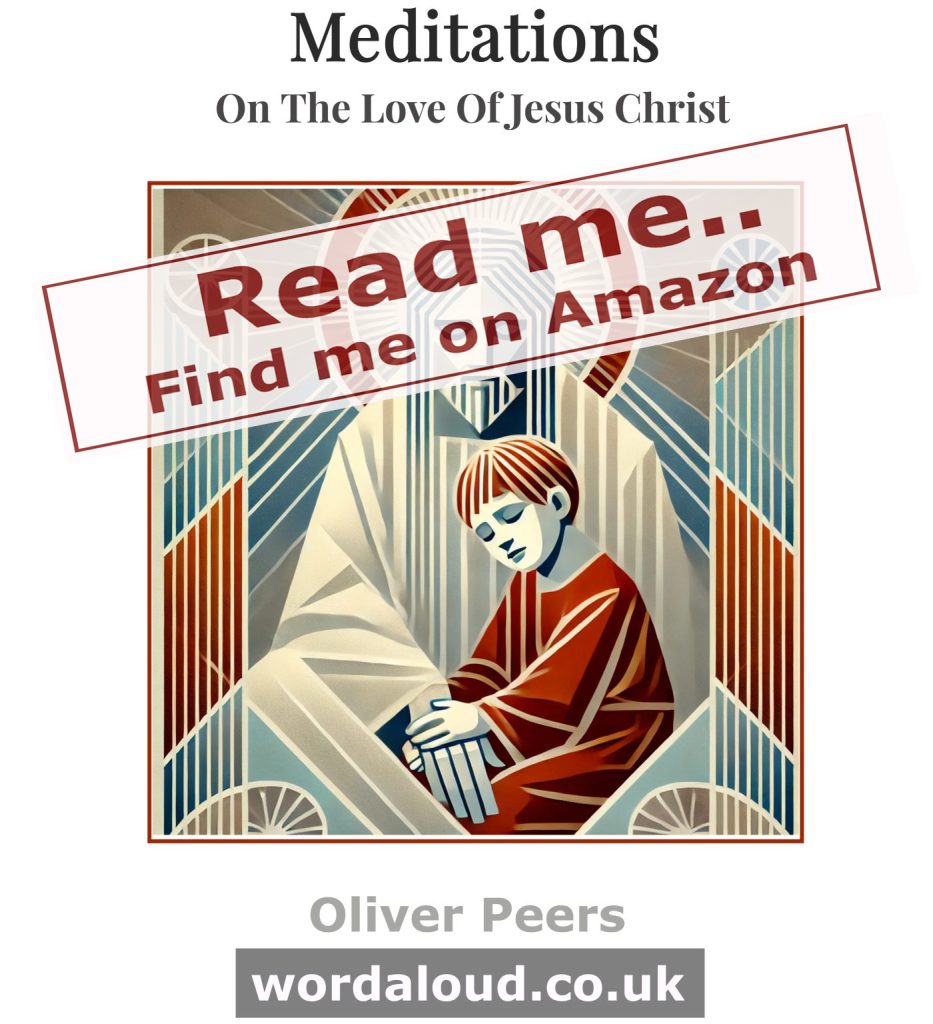
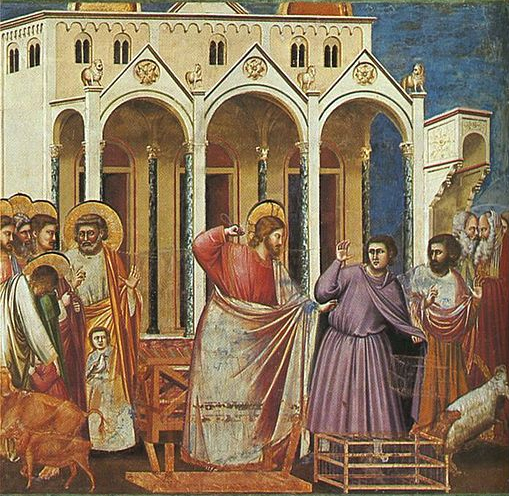
The Passover was the most important religious feast for the Jewish people. It was celebrated on the fourteenth day of the month of Nisan, a spring month whose date, according to our solar calendar, varies following the lunar cycle, just as Easter does. It was followed by the festival week of Azymes, an English word (derived from the Greek ἄζυμος) for unleavened bread in Biblical times [ … ]

This passage from Lumen gentium, the Dogmatic Constitution on the Church promulgated at the Second Vatican Council, is a profound exposition on the life-giving, unifying and guiding presence of the Holy Spirit in the Church. It articulates not only doctrinal truths about the Spirit’s nature and mission but also gives pastoral encouragement to the faithful to discern and receive the Spirit’s activity in their lives [ … ]
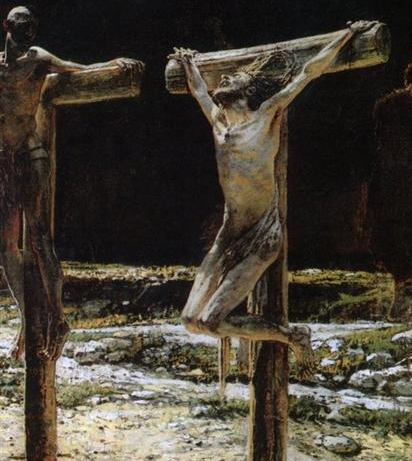
Jesus orders his disciples to keep his true identity, as the Messiah, a secret. We might wonder why this should be. One answer to this is that many of the people of whom we read in the Bible were hoping for and expecting the coming of the Messiah, who would lead the Jewish people to freedom, and yet their expectation – of a new judge or great warrior king – was not in accord with Christ’s true purpose, namely to serve and to suffer and so to save [ … ]