King James Audio Bible | KJV | King James Version
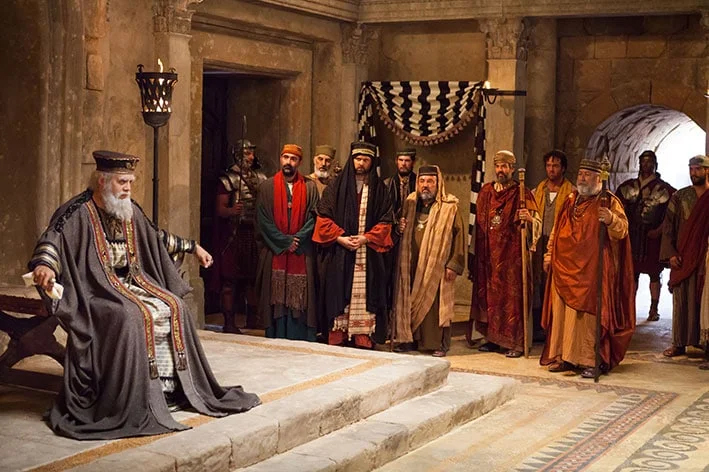
King Herod
There were several individuals named Herod who played significant roles in ancient history, particularly in the history of the Roman Empire and the region of Palestine. Here is a brief overview of the most notable Herods:
- Herod the Great: Also known as Herod I, he was a Roman client king of Judea, ruling from 37 BC to 4 BC. He is perhaps most famous for his role in the biblical story of the birth of Jesus, in which it is said that he ordered the slaughter of all male children in Bethlehem under the age of two in an attempt to kill the newborn Jesus.
- Herod Antipas: Also known as Herod II, he was the son of Herod the Great and ruled over Galilee and Perea, two regions in Palestine, from 4 BC to 39 AD. He is mentioned in the New Testament as the ruler who imprisoned John the Baptist and later had him beheaded.
- Herod Agrippa I: Also known as Herod III, he was the grandson of Herod the Great and ruled over Judea from 41 to 44 AD. He is mentioned in the New Testament as the ruler who imprisoned the apostle Paul.
- Herod Agrippa II: Also known as Herod IV, he was the great-grandson of Herod the Great and ruled over parts of Palestine and Syria from 50 to 100 AD. He is mentioned in the New Testament as the ruler who heard Paul’s defence before the Roman governor Festus.
These rulers, who were known as the Herodian dynasty, were not Jewish but rather descended from a Greek family that had converted to Judaism. Despite this, they were appointed as rulers by the Roman Empire and were generally unpopular among the Jewish population due to their collaboration with the Roman occupation and their often brutal methods of rule.
Herod The Great
Herod the Great, also known as Herod I, was a Roman client king of Judea who ruled from 37 BC to 4 BC. He was born in 73 BC in Idumea, a region in southern Palestine, and was the son of Antipater the Idumean, an Edomite who had been appointed as a governor of Judea by the Roman general Pompey.
Herod rose to power after the Roman general Julius Caesar appointed him as king of Judea in 40 BC. He consolidated his power over the next few years by defeating his rivals and establishing himself as the undisputed ruler of the region.
As king, Herod embarked on a massive building program that included the expansion and renovation of the Temple in Jerusalem, the construction of the port city of Caesarea Maritima, and the fortification of several cities in Judea. He also commissioned the construction of a number of palaces and other buildings, including the famous Herodium, a palace-fortress located south of Jerusalem.
Despite his many accomplishments, Herod was a controversial figure who was known for his harsh rule and his willingness to use violence to maintain his power. He was married several times and had a large number of children, several of whom he had executed when they posed a threat to his rule.
One of the most famous stories associated with Herod is the biblical account of the birth of Jesus, in which it is said that he ordered the slaughter of all male children in Bethlehem under the age of two in an attempt to kill the newborn Jesus. According to the New Testament, Jesus was saved by his parents, who fled to Egypt, and later returned to Palestine after Herod’s death.
Herod died in 4 BC at the age of 70, leaving a legacy as one of the most significant rulers in the history of ancient Palestine.
Herod Antipas
Herod Antipas, also known as Herod II, was the son of Herod the Great and ruled over Galilee and Perea, two regions in Palestine, from 4 BC to 39 AD. He was born in 20 BC and was named after his father’s patron, the Roman emperor Augustus.
Like his father, Herod Antipas was known for his ambitious building projects, including the construction of the city of Tiberias on the Sea of Galilee and the expansion of the Temple in Jerusalem. He was also known for his political cunning and his ability to navigate the complex political landscape of the Roman Empire.
Herod Antipas is mentioned in the New Testament as the ruler who imprisoned John the Baptist, a prominent religious figure who criticized Herod’s marriage to his sister-in-law, Herodias. According to the New Testament, John was eventually beheaded at the request of Herodias’ daughter, Salome, who danced for Herod and his guests at a banquet.
Herod Antipas is also mentioned in the New Testament as the ruler who oversaw the trial and execution of Jesus. Although he initially wanted to release Jesus, he ultimately handed him over to the Roman authorities at the urging of the Jewish religious leaders.
Herod Antipas’ rule came to an end in 39 AD when the Roman emperor Caligula exiled him to Gaul, modern-day France. He died in exile a few years later.
Herod Agrippa I
Herod Agrippa I, also known as Herod III, was the grandson of Herod the Great and ruled over Judea from 41 to 44 AD. He was born in 10 BC and was the son of Aristobulus and Bernice, two of Herod the Great’s children.
Herod Agrippa I was well-educated and fluent in both Greek and Hebrew, and he was highly regarded by the Roman authorities for his loyalty and his ability to maintain order in Judea. He was appointed as king of Judea in 41 AD by the Roman emperor Claudius, who was impressed by his abilities and saw him as a reliable ally in the region.
As king, Herod Agrippa I continued the building projects of his grandfather and expanded the Temple in Jerusalem. He also implemented a number of reforms aimed at improving the lives of the Jewish people, including the construction of public works and the establishment of a system of courts to administer justice.
Herod Agrippa I is mentioned in the New Testament as the ruler who imprisoned the apostle Paul. According to the New Testament, Paul was arrested in Jerusalem and brought before Herod Agrippa I, who had him imprisoned for several years before releasing him and allowing him to continue his missionary work.
Herod Agrippa I died in 44 AD at the age of 34. His sudden death was widely mourned, and he was succeeded by his son, Herod Agrippa II.
Herod Agrippa II
Herod Agrippa II, also known as Herod IV, was the great-grandson of Herod the Great and ruled over parts of Palestine and Syria from 50 to 100 AD. He was born in 27 AD and was the son of Herod Agrippa I and Cypros, a Nabatean princess.
Herod Agrippa II was well-educated and fluent in both Greek and Hebrew, and he was highly regarded by the Roman authorities for his loyalty and his ability to maintain order in the region. He was appointed as the ruler of the regions of Chalcis and Abila by the Roman emperor Claudius in 50 AD, and later expanded his rule to include parts of Palestine and Syria.
As ruler, Herod Agrippa II was known for his diplomatic skills and his ability to navigate the complex political landscape of the Roman Empire. He was also known for his support of the Jewish people and his efforts to improve their lives, including the construction of public works and the establishment of a system of courts to administer justice.
Herod Agrippa II is mentioned in the New Testament as the ruler who heard Paul’s defence before the Roman governor Festus. According to the New Testament, Paul was arrested in Jerusalem and brought before the governor, who then appealed to Herod Agrippa II to hear his case. After hearing Paul’s defence, Herod Agrippa II declared him innocent and released him.
Herod Agrippa II ruled until his death in 100 AD, at the age of 73. He was survived by his son, Aristobulus, who later became the ruler of Chalcis.
AD 70
In AD 70, the Roman Empire under the leadership of Emperor Vespasian and his son, Emperor Titus, launched a military campaign against the Jews in Palestine in response to a rebellion that had broken out in the region. The campaign, which is known as the First Jewish-Roman War, ended in the complete destruction of the city of Jerusalem and the Temple, which had been the centre of Jewish religious and political life for centuries.
The destruction of Jerusalem and the Temple was a major turning point in Jewish history, and it is still remembered and commemorated by Jews around the world as the holiday of Tisha B’Av. The war also marked the end of the Herodian dynasty, as the last of the Herods, Herod Agrippa II, was forced to flee the region and seek refuge in Rome.
The First Jewish-Roman War had far-reaching consequences for the Jews, as it effectively ended their independence and brought them under Roman rule. The war also led to the diaspora, the dispersion of the Jewish people from their homeland, as many Jews were forced to flee the region and seek refuge in other parts of the Roman Empire and beyond.



Throughout the psalm, the psalmist’s emotions are evident. He’s troubled and tired, wondering how long his suffering will continue. There is, crucially, an entire emotional as intellectual self-revelation in prayer and openness to God. There is honesty – honesty in prayer absolute [ … ]
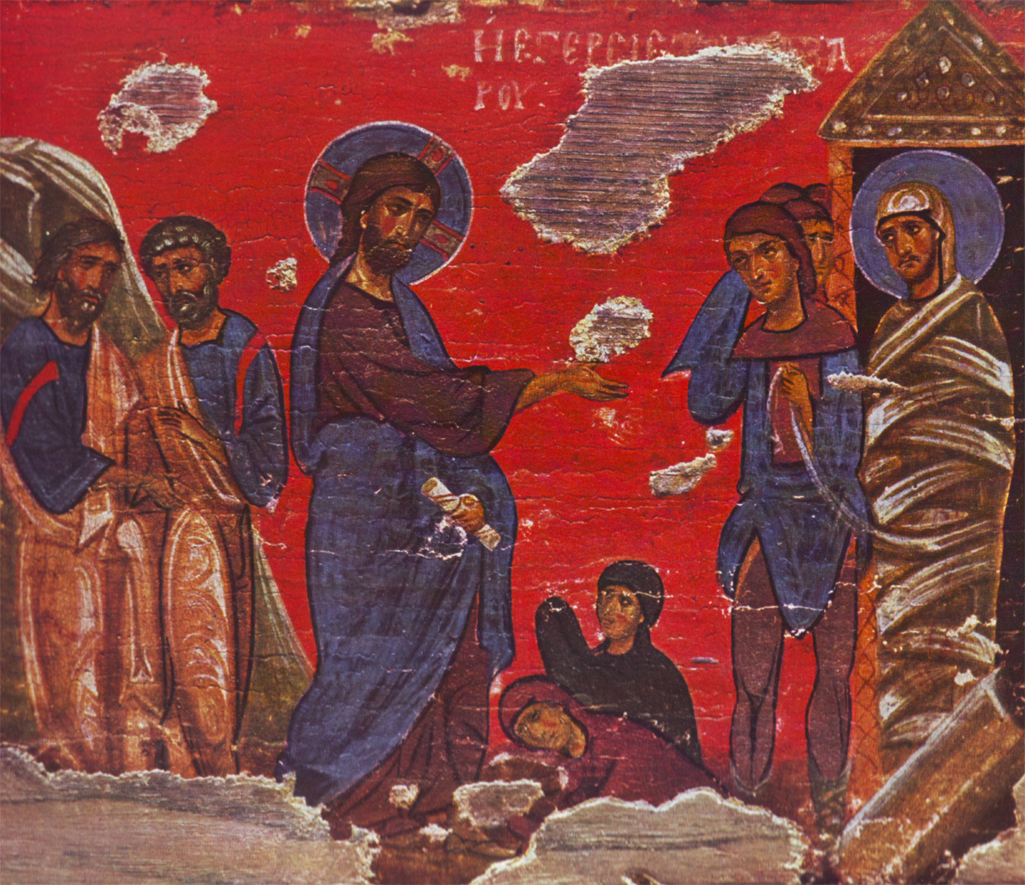
‘Death,’ says His Grace, ‘throws it all apart. For we are not as we should be. Faith requires our adjustment to God’s truth. God’s triumph in a very real sense requires in us the loss of our everything. Which, as with Mary at the other end of Jesus’s life, is God’s truth.’ The Gospel reading is of John 11: 1-45, which is a long passage, and His Grace’s homiletic theme commences in textual wilderness. Our brokenness – in this place – a family home. Our faith, our doubt, our death… The irruption – death, doubt, fear – within our precious scenes and our most intimate places. Our domesticity. His Grace speaks from the chair, as is a bishop’s prerogative, and says: ‘So much is obscure in the Gospels. We’re always reaching through them. We’re never there. Really, we never are. Our knowledge, our understanding, of the Gospels is never complete, and with each reading comes a new revelation. There are always new riches there. Just as there are between all of us, between myself and you. The Gospels are living texts. This is a part of the conversation we have with our own Christianity. It is a part of who we are in our relationship with Jesus. We are in this sense always on the brink. ‘So yes, there is plenty that doesn’t seem to make sense. As one of the order of bishops, we would be lying if we said that weren’t the case. They are not easy texts to encounter, if by that word we may signify something more than a superficial glancing off against, but rather a profound search for the word of God. The Gospels are written by people who had their own ideas, and often didn’t know what had really happened. Luke is quite explicit on this point. His is an investigation, from the explicitly claimed point of view of an historian, rather than that of a first-hand witness, who attempts, so he says, to set out an orderly account, out of the chaos, the sheer muddle, that has been handed down to him. It is possible to imagine Luke researching and composing his account after many years, when there has arisen a desire to know what exactly happened, and this implies a certain call to faith and certain demands of historicity, to historical exactitude. So in these different ways, the people of the first years of Christian faith are in the dark. There is also a decisive need to define the life of Jesus. And people didn’t get Jesus. The whole meaning of Christianity is only now beginning to take root throughout the composition. So much needs to be evangelized. The light shines almost in tentative fashion like that first star, which drew the wise men from the east to our Lord’s cradle. ‘John’s is widely held to be a very late Gospel. There are others who say that John’s Gospel might have been the first to acquire its true shape, because it most fully expresses Jesus, as we know him to be, as members of the Catholic Church. We don’t really know when any of this is being written, but we get a feel in John of a Gospel refined over many years, through a community. So there’s a lot going on there that I’d like you to think about. ‘What I would like to suggest to you is that, while within the Gospels we are often confronted with clues, guesswork, stories that have been handed down through so many people, and so in this sense we might find ourselves to be in the wilderness, this is the very desolate space itself to which we must give ourselves in order to experience Christ’s full redemption in our lives. I suggest it is for God’s glory that we do so. ‘As we become aware of ourselves, in this seminary, we find ourselves in a very secure, comfortable setting, and there are signs of Easter everywhere. Within the very fabric of these buildings, our Lord is risen; our Lord lives. But now this is our Lenten journey, where death enters, where death breaks us. We are to ride into Jerusalem in triumph, and then we are to be utterly broken, all hope gone, our hope extinguished. And really, I suggest to you, it is only by inhabiting this thought, as if we don’t know Easter is there, that our new life can follow, just when we have given up all hope, when every promise that Jesus made to us seems to have been cancelled. ‘And here now we have the story of Lazarus. I should like to suggest to you that we have a very powerful call now. In our very comfortable space, our domesticity, with all this comfort, where so very little might seem to happen each day, so it might seem to you, there is a disturbance within all of this comfort, and that is a disturbance within ourselves, and that is our call to Jesus. I think it is correct to say that our most comfortable places break in the light of Jesus from the inside, in order that we may take the necessary steps to be with Jesus. ‘Faith is not comfortable. I think that we can all receive the message of the rolling away of the rock from the tomb of Lazarus to say something of vital importance to ourselves concerning our openness to God’s love. The rock we roll away can come in all sorts of guises, but we know when we are blocked, and I firmly believe if we are truthful then we know where those blocks might be. ‘Next Sunday, which will be Palm Sunday, we process as it were to Jerusalem, to begin our Holy Week. Now as I speak to you we are on the brink. Even now, I suggest it might be very good for all of us to lay aside what we think we know, to fall apart a little, and so […]

The Sabbath is rooted in God’s own example. After creating the heavens and the earth in six days, God rested on the seventh day and blessed it, setting it apart as a holy day (Genesis 2:2-3). This pattern of rest and blessing established the foundation for the observance of the Sabbath [ … ]