
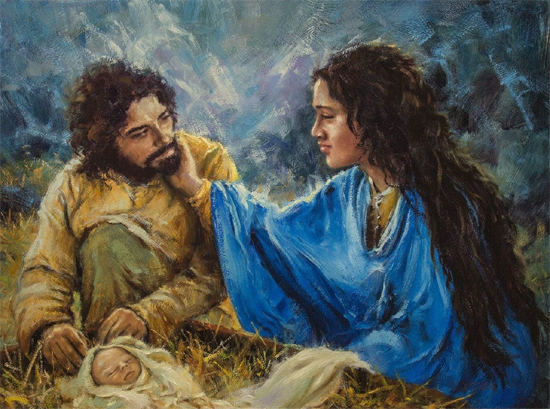
In The Bleak Mid-Winter, Frosty Winds Made Moan..
As Christians, we celebrate the birth of Jesus on Christmas Day, observed on December 25th each year. While the date of Jesus’ birth is not known, and is not in the Bible, the celebration of Christmas Day on December 25th has been a tradition since at least the 4th century. It is thought that the early Christian church may have chosen this date in order to co-opt the celebrations of the winter solstice and other pre-Christian holidays that were observed around this time of year.
Despite the fact that the exact date of Jesus’ birth is not known, the celebration of Christmas Day is an opportunity to remember the teachings, miracles and self-sacrifice of Jesus and to celebrate the hope and love that he brought into the world. It is a time for reflection, prayer, and the expression of our faith. It is a time for fellowship and the celebration of community, as we come together with our loved ones to exchange gifts and share meals.
As we celebrate Christmas Day this year, let us remember the significance of this holiday and the impact that Jesus has had on our lives. Let us take this opportunity to express our gratitude and to share the love of Christ with others. May this Christmas be a time of joy, hope, and renewal for us all.
The Winter Solstice According To The Julian Calendar
The exact date of Jesus’ birth is not known, and it is not clear when the celebration of Christmas Day began. However, the holiday has been observed on December 25th since at least the 4th century.
One of the key figures in the early history of Christmas Day was the Roman Emperor Constantine, who converted to Christianity and declared that December 25th would be observed as a holiday to honor the birth of Jesus in AD 336. Constantine’s declaration was likely influenced by the fact that December 25th was already a significant date in the Roman calendar, as it was the day of the winter solstice, this according to the Julian calendar, which was a time of celebration in many ancient cultures.
It is possible that the early Christian church may have chosen December 25th as the date for Christmas in order to co-opt these pagan celebrations and give them a Christian significance. However, the reasons for the association of Christmas with December 25th are not definitively known.
It should be said that, at the time, and owing to changes and imperfections in the calendar, the 25th December was the solstice.
How Was Christmas Celebrated?
It is difficult to say exactly how Christmas Day was celebrated in AD 336, as there is very little written record of the early celebrations of the holiday. However, it is likely that the celebration of Christmas Day in AD 336 was relatively simple, as the holiday was still in its early stages of development.
It is possible that the early celebrations of Christmas Day may have involved the exchange of gifts, the singing of hymns and carols, and the attendance of religious services. The celebration of Christmas Day may also have involved the commemoration of the birth of Jesus through the reading of biblical passages and the performance of religious plays.
The exact practices and traditions of the early celebrations of Christmas Day are not well understood, as there is very little written record of these early celebrations.
What Was The Significance Of December 25th In The Roman Calendar?
In the Roman calendar, December 25th was a significant date because it was the day of the winter solstice, which marked the shortest day of the year and the beginning of the winter season. The winter solstice was a time of celebration in many ancient cultures, and it was believed to be a time of renewal and rebirth. Many ancient cultures celebrated the solstice with feasts and festivals, and it is possible that the early Christian church may have chosen December 25th as the date for Christmas in order to co-opt these pagan celebrations and give them a Christian significance.
What Are Examples Of Pre-Christian Celebrations Of The Solstice?
There were many pre-Christian celebrations that took place around the time of the winter solstice in ancient cultures. These celebrations involved feasts and festivals that were intended to honor gods and to mark the end of one year and the beginning of the next. Examples of pre-Christian celebrations that took place around the time of the winter solstice include:
Yule: This was a festival that was celebrated by the ancient Germanic and Scandinavian peoples. Yule was a time of feasting, gift-giving, and the burning of Yule logs. It was believed to be a time of renewal and rebirth, and it was often associated with the god Odin.
Saturnalia: This was a Roman festival that was held in honor of the god Saturn. It was a time of feasting, gift-giving, and the temporary reversal of social roles. During Saturnalia, slaves and masters would switch places, and businesses and schools would be closed.
Winter Solstice Celebrations: Many ancient cultures, including the ancient Egyptians, Greeks, and Romans, celebrated the winter solstice with feasts and festivals. The winter solstice, which occurs around December 21st, marks the shortest day of the year and the beginning of the winter season. It was believed to be a time of renewal and rebirth, and many ancient cultures celebrated the solstice with feasts and festivals.
Inti Raymi: This was a festival that was celebrated by the ancient Inca people in Peru. Inti Raymi was a time of feasting and sacrifice that was held in honor of the sun god, Inti. It was believed to be a time of renewal and rebirth, and it was often associated with the winter solstice.
Dongzhi Festival: This is a festival that is still celebrated today in China and other parts of East Asia. Dongzhi Festival, also known as the Winter Solstice Festival, is a time of feasting and the exchange of gifts. It is believed to be a time of renewal and rebirth, and it is often associated with the winter solstice.
Hōzuki Matsuri: This is a festival that is celebrated in Japan during the winter solstice. Hōzuki Matsuri, also known as the Chinese Lantern Festival, is a time of feasting and the display of lanterns made from the hōzuki plant. It is believed to be a time of renewal and rebirth, and it is often associated with the winter solstice.
Dies Natalis Solis Invicti: This was a Roman festival that was held in honor of the sun god, Sol Invictus. It was celebrated on December 25th, and it was believed to be a time of renewal and rebirth. The festival of Dies Natalis Solis Invicti may have influenced the early Christian church’s decision to celebrate Christmas on December 25th.
Kalends: This was a festival that was celebrated by the ancient Romans on the first day of each month. The Kalends were a time of feasting, gift-giving, and the exchange of New Year’s greetings. It is possible that the early Christian church may have incorporated elements of the Kalends into the celebration of Christmas.
Brumalia: This was a Roman festival that was held in honor of Dionysus, the god of wine and fertility. It was a time of feasting and the exchange of gifts, and it took place around the time of the winter solstice. It is possible that the early Christian church may have incorporated elements of the Brumalia into the celebration of Christmas.
What Was Happening In The British Isles?
Very little is known. Some historians believe that the ancient Celts may have celebrated the winter solstice with the festival of Samhain, which was a time of feasting, gift-giving, and the honoring of ancestors. Samhain was believed to be a time when the boundaries between the living and the dead were blurred, and it was a time when the Celts believed that the spirits of the dead could return to the mortal world. Some historians believe that the festival of Samhain may have been incorporated into the Christian celebration of All Saints’ Day and All Souls’ Day, which are observed on November 1st and 2nd, respectively.
What Was The Significance Of December 25th In The Roman Calendar?
In the (Julian) Roman calendar, December 25th was a significant date because it was the day of the winter solstice, which marked the shortest day of the year and the beginning of the winter season. The winter solstice was a time of celebration in many ancient cultures, and it was believed to be a time of renewal and rebirth. Many ancient cultures celebrated the solstice with feasts and festivals, and it is possible that the early Christian church may have chosen December 25th as the date for Christmas in order to co-opt these pagan celebrations and give them a Christian significance.
Of Course It Is The Case That The Whole World Anticipated Jesus
Why should Jesus not have been born on this day?
It might seem perfect – therefore do.



Psalm 135 blends praise with remembrance, theological declaration with historical reflection. The psalm invites the community of faith to recognize and proclaim the greatness of God, to remember God’s acts in history, and to affirm their identity as God’s chosen people. The psalm serves as a bridge between past and present, human and divine, inviting its readers into a space where history, theology and worship intersect [ … ]

The poem contemplates the poet’s relationship to Christ’s sacrifice, focusing on themes of inadequacy, grace, and surrender. It opens with the poet’s realization that human efforts cannot ‘deal with’ or match Christ’s ‘mighty passion’, which represents Christ’s intense suffering and ultimate sacrifice. The poet acknowledges that even if he were to die for Christ, he would still ‘lag behind’, as his own sins are deserving of condemnation. This indicates a sense of spiritual and moral inferiority, highlighting a gap between human and divine capacity for sacrifice and atonement [ … ]

The poem explores the transitory nature of human life and its obligations within the framework of divine order. The poem contrasts rest and action, reflecting on a tension between weariness and demands of purposeful living. The opening line of the poem establishes a choice: to rest or to engage. The speaker’s – Herbert’s soul rejects passivity and expresses a desire to act, reflecting a concern with spiritual stagnation [ … ]
