
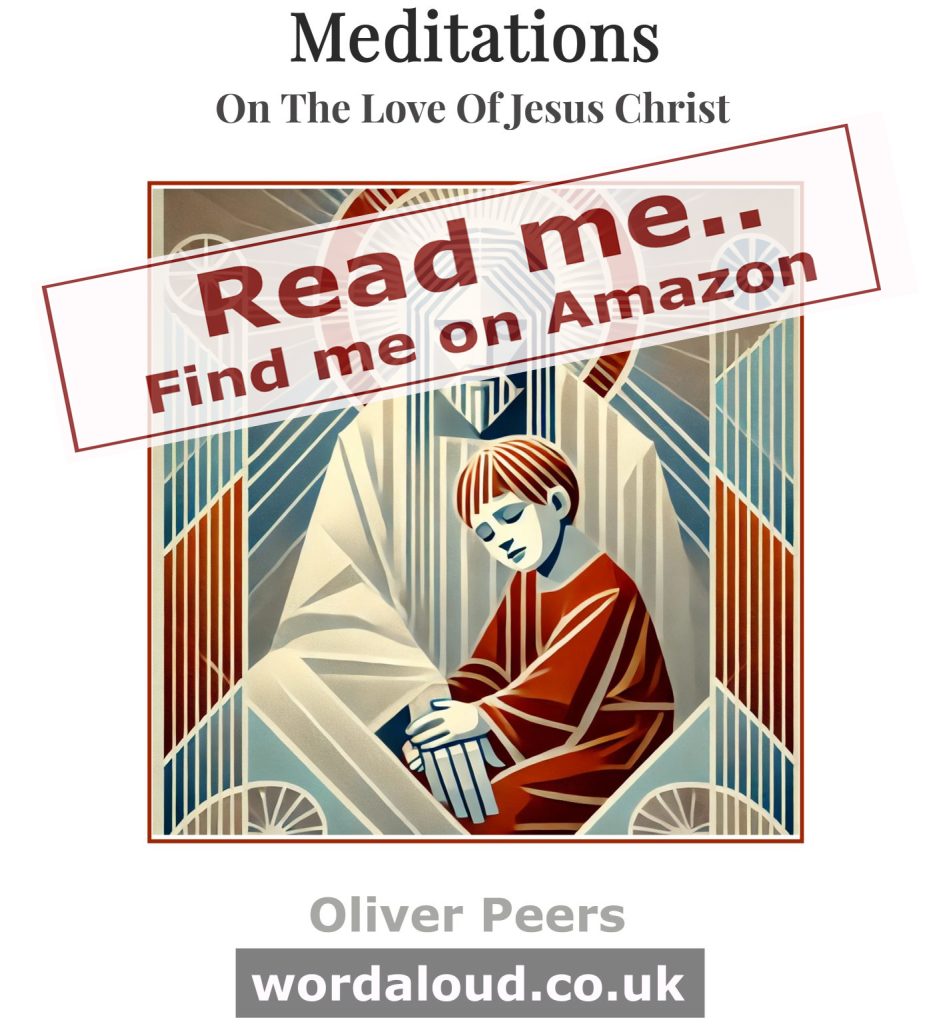
Christian Art | Boy At Prayer | Jesus With A Child
Office Of Readings | Sunday, Lent Week 4 | Laetare Sunday | From A Treatise On John By Saint Augustine | Christ The Way | Light, Truth, Life
‘Christ is the way to light, to truth, to life.’
A Treatise On John By Saint Augustine
The reading for the Fourth Sunday of Lent (Laetare Sunday) reflects key themes from Saint Augustine’s theology, especially his understanding of Christ as the ‘way, the truth, and the life’ (John 14:6). Saint Augustine frequently emphasized the journey of the soul toward God, a journey that requires divine grace to overcome sin and spiritual blindness. His doctrine of illumination—whereby human understanding is enlightened by God—resonates in this reading, as he speaks of Christ as the light that heals spiritual blindness and leads believers to truth.
A key theme in Augustine’s thought, found in this passage, is his understanding of grace and human effort. He insists that following Christ is not a purely human endeavour; rather, it is God who awakens, heals, and strengthens the believer. This reflects Augustine’s own spiritual journey, as described in his Confessions, where Augustine wrestled with sin and limitations of human will before surrendering to God’s grace.
Saint Augustine’s focus on eschatology—the ultimate fulfilment of the Christian life in seeing God ‘face to face’—is central here. Augustine often spoke of the beatific vision as the final goal of the Christian life, and in this passage, he encourages believers to persevere on the path that leads to that promised vision of God.
Command And Promise | Christ As The Light Of The World
The passage begins with Christ’s declaration: ‘I am the light of the world; he who follows me will not walk in darkness, but will have the light of life.’ (John 8:12) Saint Augustine immediately draws attention to the dual nature of this statement—it is both a command and a promise. Christ does not simply offer enlightenment as a passive gift; Jesus Christ calls for an active response. To receive the light of life, one must follow Jesus.
Augustine frequently emphasizes the reality of spiritual blindness, a consequence of sin that prevents humanity from perceiving divine truth. In his Confessions, he recounts his own struggle to recognize God’s presence, describing himself as ‘walking in darkness’ despite his intellectual pursuits. This personal experience undergirds Augustine’s theological conviction that only divine illumination can lift the soul from error to truth. Thus, in this passage, he exhorts believers to throw off ‘the chains that prevent us from following him’ and walk in Christ’s light.
The imagery of chains recalls Psalm 116:16: ‘You have broken my chains.’ For Augustine, the human will is bound by the weight of sin, incapable of moving toward God without grace. True liberation comes only from Christ, who, as Psalm 146:7 says, ‘sets the prisoners free.’ This reflects Augustine’s doctrine of grace, in which the human soul, though weakened by sin, is healed and strengthened by divine assistance.
Healing Spiritual Blindness: Christ’s Saliva And The Earth
A striking image in this passage is Augustine’s reference to Christ’s healing of the man born blind (John 9:6-7). Augustine interprets this miracle allegorically:
‘His saliva was mixed with earth to anoint the man born blind. We are of Adam’s stock, blind from our birth; we need him to give us light.’
The act of mixing saliva with earth is rich in symbolism. The saliva, coming from Christ’s mouth, represents divine wisdom and truth. The earth represents humanity’s fallen nature—formed from dust, yet disfigured by sin. By uniting the two, Christ enacts the mystery of the Incarnation, in which divine truth assumes human flesh to bring healing and salvation. Augustine, following the Psalms, recalls: ‘Truth has sprung up from the earth’ (Psalm 85:11), a verse often interpreted as a prophecy of Christ’s coming.
For Augustine, the blindness of the man in John 9 signifies original sin—a condition inherited from Adam that leaves humanity in darkness. The anointing of his eyes with a mixture of earth and saliva represents the necessity of both divine grace and human humility. Just as the blind man had to allow Christ to touch him, so too must believers surrender themselves to God’s transformative work.
This theme of healing aligns with Augustine’s Confessions, where he describes his conversion as an opening of his inner eyes. His intellectual journey had been filled with errors, but when he turned to God in humility, he received true sight. He thus exhorts believers to acknowledge their blindness and seek Christ’s healing.
Beatific Vision | Seeing God Face To Face
Augustine then shifts from the present journey of faith to its ultimate fulfilment:
‘We shall be in possession of the truth when we see face to face. This is his promise to us. Who would dare to hope for something that God in his goodness did not choose to promise or bestow?’
Here, Augustine references 1 Corinthians 13:12: ‘Now we see in a mirror dimly, but then face to face.’ This expresses the eschatological hope that underpins his theology: the believer’s final destiny is to behold God in his fullness.
In his treatise De Trinitate, Augustine describes human knowledge of God in this life as partial and obscured, like a reflection in a mirror. While faith grants some understanding, it is only in eternity that the soul will attain direct vision of God. He reinforces this with another biblical reference, 1 John 3:2:
‘We know that when he is revealed we shall be like him, for we shall see him as he is.’
This doctrine of the beatific vision was central to Augustine’s spirituality. He saw the Christian life as a journey toward this ultimate union with God, made possible through grace. This vision, however, is not merely a future hope; it begins now through faith, which illuminates the mind and purifies the heart.
Following The Way | Christ As The Path To Truth And Life
In the final section, Augustine presents Christ’s words from John 14:6:
‘I am the way, the truth, and the life.’
This verse encapsulates the entire structure of the Christian journey. Christ is not only the destination (truth and life) but also the means of reaching it (the way). Augustine anticipates a common human objection—’I desire truth and life, but how do I reach them?’—and immediately answers it: the way itself has come to us.
Augustine warns against complacency:
‘You are not being told, ‘Labour to find the way by which you can come to truth and life.’ That is not it at all. Do not be sluggish! Get up! The way has itself come to you, it has woken you from sleep.’
This echoes Romans 13:11: ‘It is now the hour for you to wake from sleep.’ For Augustine, Christ is not merely an example to follow but an active presence that awakens and enables believers to walk in righteousness. The way is not something to be invented or searched for; it is given freely in Christ.
Augustine also addresses obstacles to following Christ:
- Lameness (spiritual weakness, caused by sin)
- Blindness (lack of understanding, healed by divine revelation)
Even those who feel unable to walk will find healing in Christ. This again returns to the theme of grace—human effort alone is insufficient, but divine assistance makes the journey possible.

A Treatise On John By Saint Augustine
The Lord tells us: I am the light of the world; he who follows me will not walk in darkness, but will have the light of life. In these few words he gives a command and makes a promise. Let us do what he commands so that we may not blush to covet what he promises and to hear him say on the day of judgement: ‘I laid down certain conditions for obtaining my promises. Have you fulfilled them?’ If you say: ‘What did you command, Lord our God?’ he will tell you: ‘I commanded you to follow me. You asked for advice on how to enter into life. What life, if not the life about which it is written: With you is the fountain of life?’
Let us do now what he commands. Let us follow in the footsteps of the Lord. Let us throw off the chains that prevent us from following him. Who can throw off these shackles without the aid of the one addressed in these words: You have broken my chains? Another psalm says of him: The Lord frees those in chains, the Lord raises up the downcast.
Those who have been freed and raised up follow the light. The light they follow speaks to them: I am the light of the world; he who follows me will not walk in darkness. The Lord gives light to the blind. Brethren, that light shines on us now, for we have had our eyes anointed with the eye-salve of faith. His saliva was mixed with earth to anoint the man born blind. We are of Adam’s stock, blind from our birth; we need him to give us light. He mixed saliva with earth, and so it was prophesied: Truth has sprung up from the earth. He himself has said: I am the way, the truth and the life.
We shall be in possession of the truth when we see face to face. This is his promise to us. Who would dare to hope for something that God in his goodness did not choose to promise or bestow?
We shall see face to face. The Apostle says: Now I know in part, now obscurely through a mirror, but then face to face. John the Apostle says in one of his letters: Dearly beloved, we are now children of God, and it has not yet been revealed what we shall be. We know that when he is revealed we shall be like him, for we shall see him as he is. This is a great promise.
If you love me, follow me. ‘I do love you,’ you protest, ‘but how do I follow you?’ If the Lord your God said to you: ‘I am the truth and the life,’ in your desire for truth, in your love for life, you would certainly ask him to show you the way to reach them. You would say to yourself: ‘Truth is a great reality, life is a great reality; if only it were possible for my soul to find them!’
You ask how to follow him? Listen to what he said before anything else: ‘I am the way’. So before he told you where to go, he told you how. ‘I am the way,’ he said. The way where? ‘The truth and the life’. First he told you how to go, then where you were going. ‘I am the way, the truth and the life’. At one with the Father, he is the truth and the life; taking on flesh, he becomes the way.
You are not being told, ‘Labour to find the way by which you can come to truth and life’. That is not it at all. Do not be sluggish! Get up! The way has itself come to you, it has woken you from sleep. So since you have been woken from sleep, get up and walk.
Or perhaps you are indeed trying to walk but cannot do it, because your feet hurt. Why are your feet hurting? Has avarice caused you to run over rough ground? The word of God heals even the lame. Or perhaps your feet are sound but you cannot see the way to follow. Even so: he gives sight even to the blind.


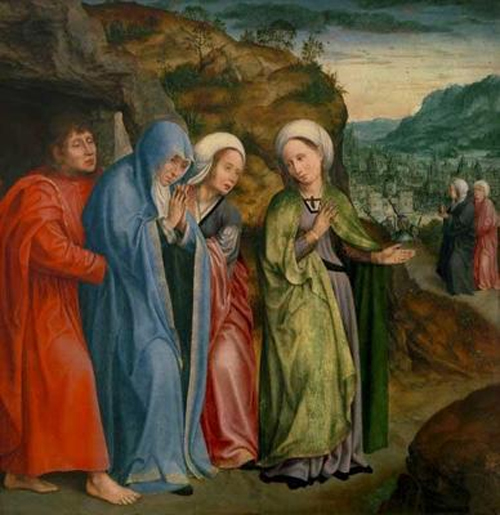
Yesterday, we heard in the Gospel of Jesus’ most merciful response to the woman who came to him begging forgiveness for her sins. Today we learn more about Jesus’ relationships with women. Given the understandings of the time, this Gospel account of the women in Jesus’ life is surprising and also inspiring. Luke’s Gospel has been considered the Gospel of women. In these Bible verses, we find the women who followed Jesus, as disciples, to be accounted as equivalent to the men [ … ]
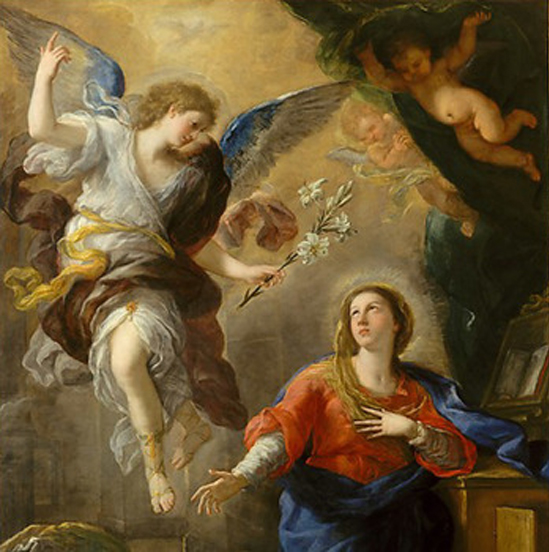
Sometimes, when I read my Bible, I pause in the reading and say to myself: ‘This bit’s real.’ It would be fair to say, I have issues with Mary, because, contrary to what we are taught to say, Mary isn’t my mother. Rather: Mum is. One bit of the Bible-text says this: And when his family heard it, they went out to seize him, for people were saying, “He is beside himself.” … And his mother and his brothers came; and standing outside they sent to him and called him. And a crowd was sitting about him; and they said to him, “Your mother and your brothers are outside, asking for you.” And he replied, “Who are my mother and my brothers?” And looking around on those who sat about him, he said, “Here are my mother and my brothers! Whoever does the will of God is my brother, and sister, and mother.” (Mark 3: 21; 31-35.) Here she comes. She is in considerable distress. I can imagine that. I can relate to that. To save her boy from whatever he’s got himself into this time. And you’re not telling me there isn’t something inside that. Her boy is beside himself. Radical. Radicalized. Radicalizing. A misunderstood word. /ˈradɪk(ə)l/ adjective & noun. 1 Forming the root, basis, or foundation; original, primary. 2a Inherent in the nature of a thing or person; fundamental. b Of action, change, an idea: going to the root or origin; far-reaching, thorough. c Advocating thorough or far-reaching change. d Characterized by departure from tradition; progressive; unorthodox. ‘He has a demon! And he is mad!’ – thus ‘the Jews’. (e.g. John 10: 20.) Come home! It’s all she wants. His family want him back now. But it is an exclusive cult: there is an inside and there is an outside; and on the outside, they are not meant to understand, lest they be converted. He has defined himself as different from anything she was. Only at the end does Jesus say to his Mum – and with savage, bitter irony: ‘Woman, behold your son.’ And then he dies. Hail Mary, full of grace, the Lord is with thee. Blessed art thou among women and blessed is the fruit of thy womb Jesus. Holy Mary, Mother of God, pray for us sinners now and at the hour of our death. We ask that we might find Mary in our hearts as a Yes! place for Jesus. It is also recommended that we pray to Jesus that we may be further in oneness with Mary. It is self-emptying, such that we only exist insofar as we are responsive to God’s Word. * Last term, and put-out to pasture, the old Archbishop Emeritus came over to stay for a few days and did the odd class with us. He spoke of Yes! as the meaning of Mary’s virginity. And we were not very nice about him. One or two took umbrage. One or two got the hump. In a sense, his Grace, the Arch, basically wanted to move anyone he’d ever known from a high-place – a mountain – received theological ‘truth’ – to an imminent, human plane. Earthing the spiritual. Recalibrating metrics of life’s believability toward a spiritual sense of things. He might have asked the impermissible question: what happened? His Grace described it. God’s love as a cloud. This descended upon Mary – and subsumed her. Within the cloud, Mary capitulated utterly. She became only and purely a response to God’s love. As he spoke, the Arch cradled her. He carried her in his lap – in his hands. His Grace was a consecrated bishop. He was faith. He sat squat, a rounded man, hands cupped and ankles crossed, fingers interlocked, with parted thighs. Rumpled, washed, speckled. A lifetime’s skin… There could be no doubt His Grace spoke through long-term personal relationship with Mary. It was Julian went for him: ‘So are you saying Mary was a Virgin? Or are you not saying Mary was a Virgin?’ Nasty. No, it wasn’t pretty. Julian twisting his silver ring. For a moment, what Julian had said to the Arch simply failed to communicate. No, for a moment, that dumped on the air meant nothing. Then His Grace said: ‘There is a range of possible meanings we may understand in the question of Mary’s virginity. For example, there are understandings of the word virginity entailed in the action of giving birth.’ Julian said: ‘Duh! So had she had sex or hadn’t she?’ Trigger words. No, it wasn’t pretty. On that went for a little while. At length, Julian’s point seemed reluctantly conceded. Then the Arch told us a new story, an additionally human event, the more to baffle us. Controversially, he told us that Mary could not have been Joseph’s first wife, for this would not have been the way of things in the society of that time. His belief was that Joseph must have taken Mary into his household through pity. That would be normal, he said, for Joseph to bring a young, vulnerable girl, who is about to have a baby, within his protection, not meaning to enjoy with her marital relations, but through kindness. ‘And this story of the inn and stable,’ the Archbishop said, ‘it can’t have been like that really. Joseph has travelled with Mary to stay with his family, at home in Bethlehem, and they don’t want Mary in their house, for reasons which I am sure we can understand. It must have been there was considerable resistance to Mary. But Mary gives birth, and who can resist a baby? That’s what happened. It must have been. ‘I’m convinced that must have been how it happened really.’ Later that term, toward the beginning of Advent, we met boys who had been here before, in Valladolid, and now were in regular seminary. They had heard and recited verbatim all the Archbishop had said to them. Their spot-on impressions of each of the fathers were scathing. […]

Psalm 77 expresses the psalmist’s distress and spiritual turmoil, interwoven with remembrance of God’s wonders and faithfulness. This psalm serves as a raw and honest lament, portraying the psalmist’s cry for help in times of trouble, wrestling with doubt, and the ultimate anchor found in the recollection of God’s mighty deeds [ … ]