
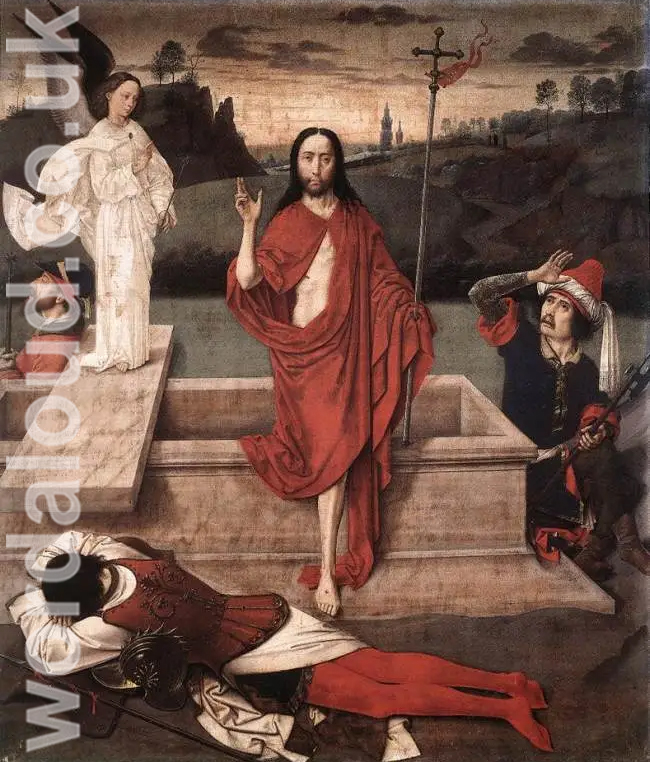
Christian Art | Resurrection | Jesus Christ Is Risen
Office Of Readings | Week 28, Wednesday, Ordinary Time | A Reading From The Discourses Of Saint Maximus The Confessor Addressed To Thalassius | The Light That Enlightens Every Man
‘The light that illumines all men.’
Saint Maximus the Confessor interprets Christ’s saying about the lamp set upon a lamp stand (Matthew 5:15; Luke 8:16) as a theological statement about the Incarnation and the Church. The ‘lamp’ is Christ himself — the eternal Word of the Father, who has taken human nature and become visible within creation. The imagery unites revelation and embodiment: divine wisdom, formerly hidden, is now manifest through the humanity of Jesus.
Maximus identifies the lamp stand as the Church, which bears and displays the light of Christ to the world. The Church, by preaching the word and living according to the commandments, makes visible the truth that enlightens all people. Thus the metaphor extends from Christ to his body: what Christ is by nature, the Church continues by grace.
The text contrasts two forms of concealment. The first belongs to the time of the Law, when the divine word was ‘under a bushel’ — veiled beneath the literal sense of Scripture and perceived only dimly. The second form of concealment occurs when believers restrict divine truth to external observance or intellectual possession. For Maximus, to interpret Scripture or faith only in a literal or material way is to hide the lamp once again, withholding illumination from both oneself and others.
He therefore distinguishes between the letter and the spirit. When the word of God is understood only through the letter, it remains confined to human categories and cannot enlighten the mind. When it is received in the Spirit, it becomes a source of knowledge and transformation. The lamp burns truly when contemplation and action are joined — when the believer’s life embodies what the intellect perceives.
Maximus thus presents the light of Christ as dynamic and participatory. The divine word enlightens by being proclaimed, enacted, and understood. The Church is the setting of this light, not as a structure of control but as the place where truth is communicated through faith and life. Illumination is not confined to private understanding but shared through teaching and witness, so that ‘all in the house’ — the world — may be enlightened.
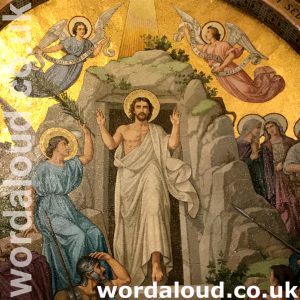
A Reading From The Discourses Of Saint Maximus The Confessor Addressed To Thalassius | The Light That Enlightens Every Man
The lamp set upon the lamp stand is Jesus Christ, the true light from the Father, the light that enlightens every man who comes into the world. In taking our own flesh he has become, and is rightly called, a lamp, for he is the connatural wisdom and word of the Father. He is proclaimed in the Church of God in accordance with orthodox faith, and he is lifted up and resplendent among the nations through the lives of those who live virtuously in observance of the commandments. So he gives light to all in the house (that is, in this world), just as he himself, God the Word, says: No one lights a lamp and puts it under a bushel, but on a stand, and it gives light to all in the house. Clearly he is calling himself the lamp, he who was by nature God, and became flesh according to God’s saving purpose.
I think the great David understood this when he spoke of the Lord as a lamp, saying: For God delivers us from the darkness of ignorance and sin, and hence he is greeted as a lamp in Scripture.
Lamp-like indeed, he alone dispelled the gloom of ignorance and the darkness of evil and became the way of salvation for all men. Through virtue and knowledge, he leads to the Father those who are resolved to walk by him, who is the way of righteousness, in obedience to the divine commandments. He has designated holy Church the lamp stand, over which the word of God sheds light through preaching, and illumines with the rays of truth whoever is in this house which is the world, and fills the minds of all men with divine knowledge.
This word is most unwilling to be kept under a bushel; it wills to be set in a high place, upon the sublime beauty of the Church. For while the word was hidden under the bushel, that is, under the letter of the law, it deprived all men of eternal light. For then it could not give spiritual contemplation to men striving to strip themselves of a sensuality that is illusory, capable only of deceit, and able to perceive only decadent bodies like their own. But the word wills to be set upon a lamp stand, the Church, where rational worship is offered in the spirit, that it may enlighten all men. For the letter, when it is not spiritually understood, bears a carnal sense only, which restricts its expression and does not allow the real force of what is written to reach the hearer’s mind.
Let us, then, not light the lamp by contemplation and action, only to put it under a bushel – that lamp, I mean, which is the enlightening word of knowledge – lest we be condemned for restricting by the letter the incomprehensible power of wisdom. Rather let us place it upon the lamp stand of holy Church, on the heights of true contemplation, where it may kindle for all men the light of divine teaching.
Christian Prayer With Jesus
Light of the Father,
who became flesh to reveal truth to the world,
set our minds upon your word
and place within us the brightness of your wisdom.
May your Church, the lampstand of your presence,
shine with integrity and understanding,
that all who dwell in this world
may see your light and walk in your way,
through Jesus Christ our Lord.
Amen.
Glossary Of Christian Terms
Lamp – A symbol of Christ as the Incarnate Word, revealing divine truth within the created order.
Lampstand – The Church, which holds and displays the light of Christ through preaching and witness.
Letter and Spirit – A distinction between the outward, literal sense of Scripture (letter) and its inward, spiritual meaning (spirit).
Contemplation and Action – The twofold movement of Christian life: contemplation seeks knowledge of God, and action expresses that knowledge in conduct.
Illumination – The enlightening of the human mind and heart by divine truth, a central theme in patristic theology.
Incarnation – The act by which the eternal Word of God became human in the person of Jesus Christ.



The world into which Jesus was born was not just one of imperial power—it was a world of cruelty, excess, and moral depravity beyond modern comprehension. The Caesars were not merely rulers; they were demigods in their own eyes, demanding worship, reveling in debauchery, and enforcing their will through brutality. Rome was a world where the strong crushed the weak, where spectacles of torture and death entertained the masses, and where mercy was seen as weakness [ … ]
The Priestly Prayer of Jesus concludes the discourse of the Last Supper. Immediately afterwards, Jesus will be arrested, betrayed. Jesus prays to his Father in a very moving way. He offers to the Father the imminent sacrifice of himself, praying that his sacrifice may be acceptable to the Father, that his holy human nature may be glorified. Jesus’ prayer is spoken aloud, so that his disciples and we also may receive his last testament, as Jesus intercedes on our behalf with the Father [ … ]

The Church teaches that marriage is a sacrament, which means that it is an outward sign of an inward grace. In marriage, a man and a woman are united in a way that reflects the union between Christ and the Church [ … ]
