
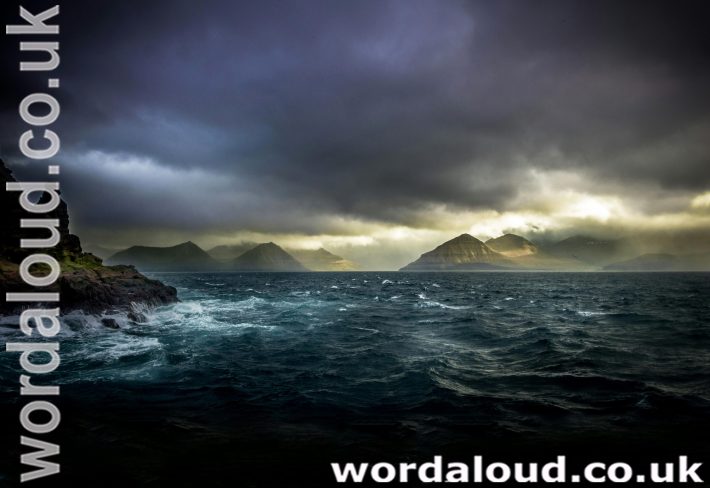
The Wanderer
Oft him anhaga are gebideð,
metudes miltse, þeah þe he modcearig
geond lagulade longe sceolde
hreran mid hondum hrimcealde sæ,
wadan wræclastas. Wyrd bið ful aræd.
Swa cwæð eardstapa earfeþa gemyndig,
wraþra wælsleahta, winemæga hryre:
‘Oft ic sceolde ana uhtna gehwylce
mine ceare cwiþan. Nis nu cwicra nan
þe ic him modsefan minne durre
sweotule asecgan. Ic to soþe wat
þæt biþ in eorle indryhten þeaw,
þæt he his ferðlocan fæste binde,
healde his hordcofan, hycge swa he wille.
Ne mæg werig mod wyrde wiðstondan,
ne se hreo hyge helpe gefremman;
forþon domgeorne dreorigne oft
in hyra breostcofan bindað fæste.
Swa ic modsefan minne sceolde,
oft earmcearig, eðle bidæled,
freomægum feor, feorhceare gebindan,
siþþan geara iu goldwine minne
hrusan heolstre biwrah ond ic hean þonan
wod wintercearig ofer waþema gebind,
sohte sele dreorig sinces bryttan,
hwær ic feor oþþe neah findan meahte
þone þe me in meoduhealle min mine
wisse oþþe mec freondleasne frefran wolde,
weman mid wynnum. Wat se þe cunnað
hu sliþen bið sorg to geferan
þam þe him lyt hafað leofra geholena.
Warað hine wræclast, nales wunden gold,
ferðloca freorig, nalas foldan blæd.
Gemon he selesecgas ond sincþege,
hu hine on geoguðe his goldwine
wenede to wiste. Wyn eal gedreas.
Forþon wat se þe sceal his wine dryhtnes
leofes larcwidum longe forþolian,
þonne sorg ond slæp somod ætgædre
earmne anhogan oft gebindað.
Þinceð him on mode þæt he his mondryhten
clyppe ond cysse ond on cneo lecge
honda ond heafod, swa he hwilum ær
in geardagum giefstolas breac.
Þonne onwæcneð eft wineleas guma,
gesihð him biforan fealwe wegas,
baþian brimfuglas, brædan feþra,
hreosan hrim ond snaw hagle gemenged.
Þonne beoð þy hefigran heortan benne,
sare æfter swæsne. Sorg bið geniwad
þonne maga gemynd mod geondhweorfeð;
greteð gliwstafum, georne geondsceawað
secga geseldan. Swimmað eft on weg
fleotendra ferð, no þær fela bringeð
cuðra cwidegiedda. Cearo bið geniwad
þam þe sendan sceal swiþe geneahhe
ofer waþema gebind werigne sefan.
Forþon ic geþencan ne mæg geond þas woruld
for hwan modsefa min ne gesweorceð,
þonne ic eorla lif eal geondþence,
hu hi færlice flet ofgeafon,
modge magoþegnas. Swa þes middangeard
eardað forð, ond ealra fela
weorþeð on wæste. Wyrde bið ful aræd.
Swa cwæð snottor on mode, gesæt him sundor æt rune.
Til bið se þe his treowe gehealdeð,
ne sceal næfre his torn to rycene
beorn of his breostum acyþan,
nemþe he ær þa bote cunne,
eorl mid elne gefremman. Wel bið þam þe him are seceð,
frofre to fæder on heofonum, þær us eal seo fæstnung stondeð.’
The Wanderer | Commentary
The Wanderer is preserved in the Exeter Book, a manuscript compiled in the late tenth century. It is an elegy, though this label is a modern critical category. The poem addresses exile, loss, memory, and the search for meaning within a transient world. It presents an individual speaker reflecting on past experience and present condition, and moves toward more general statements about human life. The poem traces a development from the experience of exile to a broader reflection on transience, concluding with a shift toward a religious framework. The poem combines personal expression with more generalised reflection.
Textual and Historical Context
The Exeter Book contains a range of Old English verse, including religious and secular material. The Wanderer is composed in alliterative metre, with each line divided into two half-lines by a caesura. The verse reflects features associated with oral poetic practice, including patterned sound and formulaic expression.
The social background of the poem includes the system often described as the comitatus, in which relationships between a lord and his retainers structured social identity. The loss of a lord involved both material and social consequences. The poem also reflects a Christian framework, evident in references to divine mercy and in its conclusion. These elements appear alongside features associated with earlier Germanic traditions.
Voice, Structure, and Form
The poem begins with a generalising statement about a solitary figure and then moves into the first-person voice of the wanderer. Later sections introduce more general reflections. This has led to different interpretations of the number of speakers involved. Some readings identify distinct voices, while others treat the poem as a single developing perspective.
The structure moves between personal recollection and general observation. The use of alliterative metre and caesura contributes to the pacing of the poem. Each half-line often presents a related idea, creating a pattern of statement and extension. The presence of gnomic statements marks a shift toward generalisation, as the speaker moves from individual experience to broader claims.
Exile and the Collapse of the Social World
The central figure is described as an anhaga, a solitary individual who has lost his social group. In the cultural context reflected in the poem, identity is linked to relationships with a lord and companions. The absence of these relationships produces both social and personal dislocation.
The speaker describes a condition in which thought must be contained rather than expressed. The phrase ‘ferðlocan fæste binde’ indicates the binding of the mind or thought. This reflects an expectation of restraint. At the same time, it limits the possibility of sharing grief.
The absence of the hall, which functioned as a centre of communal life, reinforces this condition. Without it, there is no setting for interaction or exchange. The speaker’s situation reflects a loss of both social structure and shared space.
Memory, Dream, and the Ubi Sunt Motif
The poem moves between recollection and present experience. The speaker recalls earlier conditions associated with the hall and companionship, which are set against present isolation. This contrast appears in the dream passage, where the speaker imagines interaction with his lord and then returns to waking awareness.
The ubi sunt passage introduces a series of questions beginning with ‘Hwær cwom…?’ (‘Where is…?’). These questions refer to elements of the earlier social world. The repetition of the form emphasises absence. The passage does not provide answers, and the effect is cumulative.
Memory functions in two ways. It preserves knowledge of earlier conditions, but it also reintroduces awareness of their absence. The movement between recollection and present experience contributes to the structure of the poem.
Landscape, the Sea, and Environment
The poem opens with an image of the sea, described as ‘hrimcealde sæ’. This establishes a setting characterised by exposure and movement. The speaker’s passage across the sea marks separation from earlier conditions.
The environment is described through references to winter, frost, and desolate terrain. These elements correspond to the speaker’s condition, though they also represent features of the external world. The landscape is not limited to symbolic function; it forms part of the context in which the speaker exists.
The sea can be read in relation to repetition and continuity. Its movement provides a parallel to the recurring patterns of thought in the poem. The environment contributes to the articulation of the speaker’s situation without reducing it to a simple reflection of emotion.
Wyrd, Transience, and Reflection
The statement ‘Wyrd bið ful aræd’ introduces the concept of fate. This suggests that events occur within a fixed or determined framework. The poem does not present a means of altering this condition but instead reflects on its implications.
Later sections include statements about the temporary nature of wealth, relationships, and life. These observations extend beyond the speaker’s individual experience. The poem moves from specific loss to general statements about change.
This development is marked by a shift in tone, from recollection to reflection. The speaker adopts a more detached perspective, presenting observations that apply beyond the immediate situation.
Christian Framework and Conclusion
The final section introduces references to God and to a form of stability associated with heaven. This contrasts with earlier descriptions of change and loss. The shift has been interpreted in different ways, including as a structural addition or as part of the poem’s development.
The conclusion presents a distinction between earthly conditions, which are subject to change, and a form of permanence located outside them. This introduces a framework in which earlier experiences can be reinterpreted.
The movement toward this conclusion does not remove the earlier emphasis on loss but places it within a broader structure.




Saint Gregory begins by contrasting superficial knowledge of God with actual participation in God’s life. It is not enough to know about God; we must come to possess Him inwardly. Drawing on the doctrine of the imago Dei (image of God), Gregory teaches that the divine image implanted within us at creation has been tarnished by sin. Yet this image is not destroyed—it can be restored. The human heart, when purified, becomes like a polished mirror capable of reflecting divine light [ … ]
- Daily Bible Verses | Mission Of The Twelve Apostles | King James Audio Bible KJV | Preach The Gospel

Jesus has amazed the people with his teaching and with his signs and healing miracles. Now Jesus entrusts and enables the Twelve to go out and to do the same. In calling the Twelve, Jesus intensifies the announcement of the good news. Here is a further stage by which Jesus founds his Church, sending his disciples out on mission and giving them power [ … ]
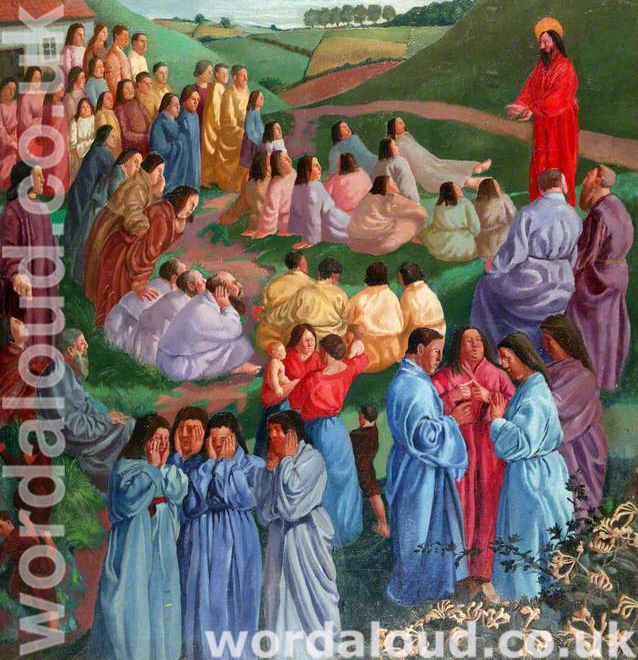
Pope Saint Leo the Great continues his exposition of the Beatitudes, moving from the blessing on the poor in spirit to those pronounced on those who mourn and on the meek (Matthew 5:4–5). His reflections trace both the inner character of these dispositions and their eschatological fulfilment [ … ]
