
Find me on Amazon:
Amazon UK | Amazon USA
‘The time is fulfilled, and the kingdom of God is at hand: repent ye, and believe the gospel.’ (Mark 1:15)
The Kingdom stands at the centre of the preaching of Jesus. He announces its coming, describes it in parables, reveals it in his works, and teaches his disciples to seek it before all else. Yet the Kingdom is not confined to his teaching. It provides a context in which his life, death and resurrection may themselves be understood.
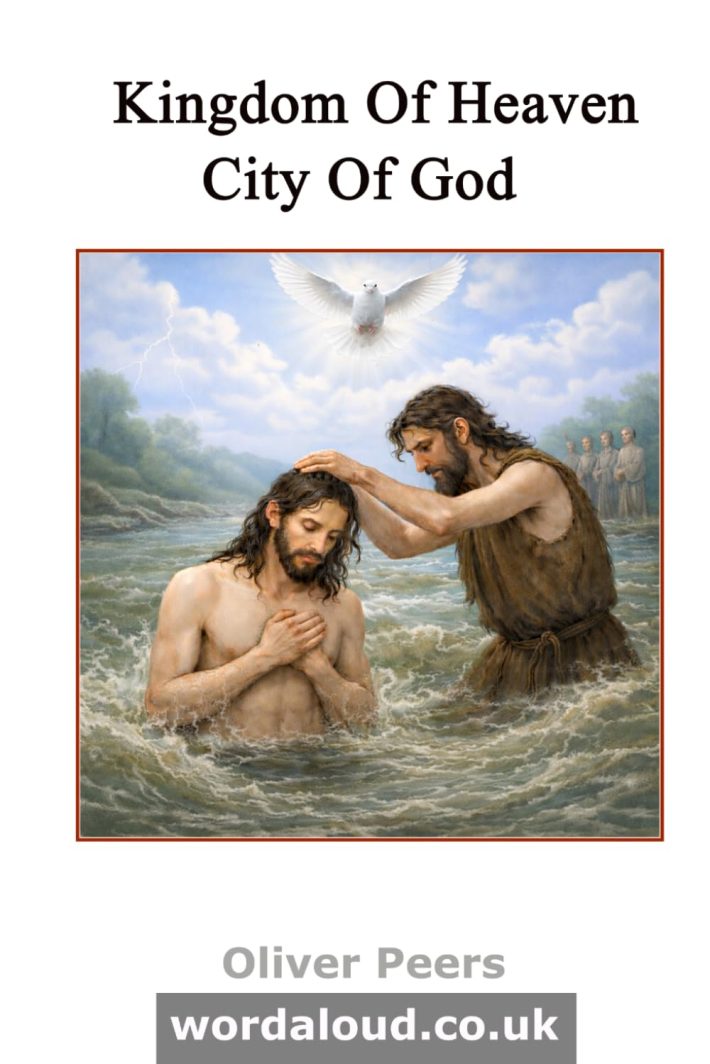
Kingdom of Heaven, City of God is a series of reflections on the life, teaching, death and resurrection of Jesus, centred upon his proclamation of the Kingdom of God. From the first preaching of the Kingdom in the Gospels to Christ’s Passion and Resurrection, the reflections consider the Kingdom as the context of his teaching and the purpose towards which his mission leads.
The book draws closely upon Scripture: upon the parables, miracles and acts of mercy of Jesus; upon his call to repentance and faith; and upon his teaching concerning the life of those who enter the Kingdom. The Kingdom is not simply something promised for the future. It is made present in Christ and begins to take form in the lives of those who follow him.
The reflections lead finally to the book of Revelation and the consummation of the Kingdom. The City of God, the New Jerusalem, brings into a single vision themes already present throughout the Gospels: the presence of God with his people, the defeat of sin and death, and the restoration of creation.
These reflections are intended as readings alongside the Gospels and as material for prayer: an attempt to consider what Jesus means by the Kingdom of God, how that Kingdom is revealed in his life and teaching, and what it means to seek it.




On Palm Sunday, the Church invites us to enter once again into the drama and mystery of Christ’s final journey to Jerusalem—a journey not just toward a city, but toward suffering, death, and glory. In his beautiful and contemplative homily, On the Palm Branches, Saint Andrew of Crete opens this moment to us not as passive observers of history, but as participants in Christ’s Passion, called to walk with him and to imitate his self-offering [ … ]
Psalm 102 explores human vulnerability, search for divine solace, and the resilient thread of hope that persists even in the darkest moments [ … ]

The Jews of Jesus’ time hold varying and confused views as to the resurrection of the dead, indeed the Sadducees denying resurrection. The concept of the immortal soul had developed through time. It was with Christ that we attained full and perfect knowledge of the soul’s immortality and of the life to come [ … ]
