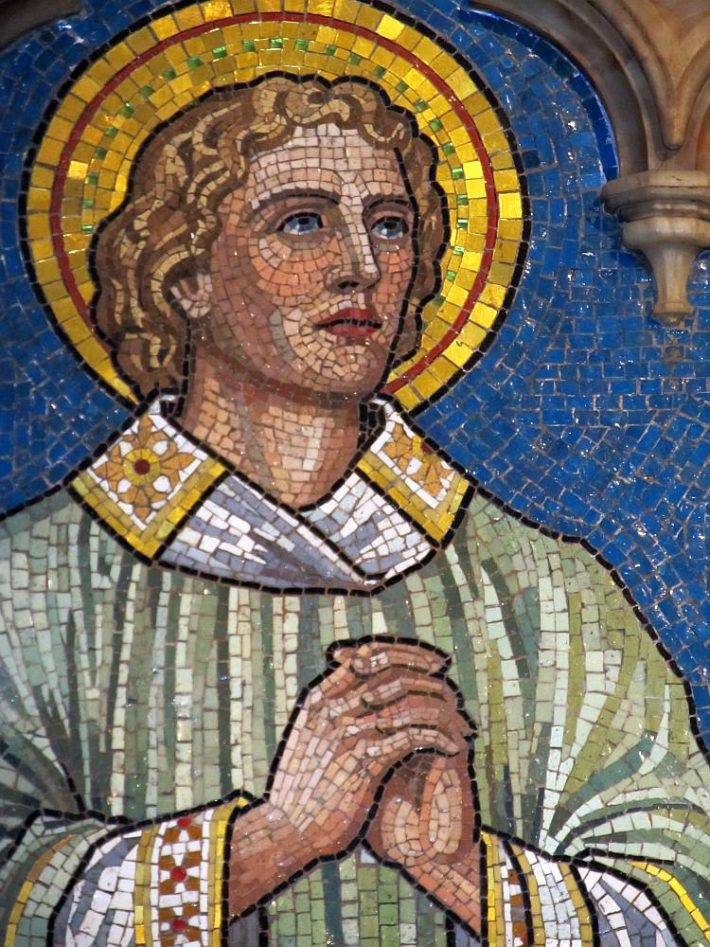
Christian Art : Saint Stephen
‘Lord, Lay Not This Sin To Their Charge’ | Saint Stephen | Acts 7
Acts 7 is among the most profound and dramatic passages in the New Testament. Saint Stephen, the first Christian martyr, stands before the council and offers not merely a defence of himself, but a sweeping interpretation of the whole history of Israel. His speech traces the movement of God’s covenantal action through Abraham, Joseph, Moses, the tabernacle, and the prophets, culminating in a fierce indictment of those who resisted the Holy Spirit and betrayed Jesus.
The chapter serves several purposes at once. It is historical, theological, prophetic, and Christological. It reveals the continuity of the Gospel with Israel’s sacred history while also exposing the tragic pattern of resistance which culminated in the rejection of Jesus. The Fathers of the Church recognised in Stephen not only the Church’s first martyr, but also a figure who perfectly imitated Christ in wisdom, forgiveness, and holy courage.
As the chapter opens, Stephen stands accused before the high priest:
‘Then said the high priest, Are these things so?’
—Acts 7:1 (KJV)
Stephen’s response is remarkable for its calmness and breadth. Rather than beginning with self-justification, he begins with Abraham:
‘The God of glory appeared unto our father Abraham, when he was in Mesopotamia.’
—Acts 7:2 (KJV)
The phrase ‘the God of glory’ establishes the theological movement of the speech. God’s presence is not confined to Jerusalem, nor to the temple alone. Before Abraham entered the promised land, before circumcision, before Sinai, God had already revealed Himself. This becomes one of Stephen’s central arguments: the divine presence cannot be reduced to sacred geography.
The speech proceeds through the patriarchal narratives, especially the story of Joseph:
‘And the patriarchs, moved with envy, sold Joseph into Egypt: but God was with him.’
—Acts 7:9 (KJV)
The words ‘but God was with him’ are crucial. Joseph, rejected by his brethren, nevertheless becomes the means of their salvation. The Fathers repeatedly recognised Joseph as a type of Christ. Rejected by his own people, Christ nevertheless becomes the redeemer of those who condemned him.
John Chrysostom observes that Stephen deliberately emphasises the sins of Israel’s forefathers not to condemn the nation itself, but to reveal a recurring spiritual pattern: the righteous are repeatedly resisted before later being recognised.
This theme intensifies in Stephen’s treatment of Moses. Moses too was initially rejected:
‘Who made thee a ruler and a judge over us?’
—Acts 7:27 (KJV)
Stephen emphasises the irony:
‘This Moses whom they refused, saying, Who made thee a ruler and a judge? the same did God send to be a ruler and a deliverer.’
—Acts 7:35 (KJV)
The parallel with Christ is unmistakable. The one rejected by the people is precisely the one appointed by God for their salvation.
The Fathers saw in Moses a foreshadowing of Christ not only as deliverer, but also as mediator. Moses ascends the mountain, receives divine revelation, and intercedes for the people. Yet even whilst Moses communes with God, Israel turns towards idolatry:
‘And they made a calf in those days, and offered sacrifice unto the idol.’
—Acts 7:41 (KJV)
Stephen’s speech thus becomes a meditation upon the tragedy of human resistance to grace. Divine revelation is repeatedly met with rebellion. The prophets are rejected, the covenant violated, and the messengers of God persecuted.
This interpretation reaches a decisive climax in Stephen’s citation of the prophet Amos:
‘Howbeit the most High dwelleth not in temples made with hands.’
—Acts 7:48 (KJV)
This statement lies near the centre of the controversy surrounding Stephen. His opponents had accused him of speaking against the temple. Stephen does not despise the temple itself; rather, he rejects any attempt to confine God within merely external forms.
He immediately continues:
‘Heaven is my throne, and earth is my footstool.’
—Acts 7:49 (KJV)
The God of Israel is Lord of heaven and earth. The temple was given as a sign of divine presence, yet God transcends every earthly structure. The Fathers frequently interpreted this passage ecclesiologically and spiritually. The true temple becomes the people of God united to Christ.
Augustine of Hippo writes that God seeks not stones adorned with gold, but hearts transformed by grace. The external sanctuary prefigures the inward dwelling of God within the faithful soul.
At this point Stephen’s tone changes abruptly from historical narration to prophetic rebuke:
‘Ye stiffnecked and uncircumcised in heart and ears, ye do always resist the Holy Ghost.’
—Acts 7:51 (KJV)
The language recalls the prophets of the Old Testament. Stephen’s accusation is severe because he perceives continuity between the rejection of the prophets and the rejection of Christ himself:
‘Which of the prophets have not your fathers persecuted?’
—Acts 7:52 (KJV)
The phrase ‘the Just One’ or ‘the Righteous One’ is profoundly significant. Christ is presented as the culmination of all prophetic expectation and the fulfilment of Israel’s history.
The council’s response is immediate and furious:
‘When they heard these things, they were cut to the heart, and they gnashed on him with their teeth.’
—Acts 7:54 (KJV)
The contrast between Stephen and his accusers now becomes absolute. Whilst the council rages with violence, Stephen is filled with heavenly vision:
‘But he, being full of the Holy Ghost, looked up steadfastly into heaven, and saw the glory of God, and Jesus standing on the right hand of God.’
—Acts 7:55 (KJV)
This vision is one of the most extraordinary Christological moments in Acts. Stephen beholds the exalted Christ standing at the right hand of the Father.
The Fathers reflected deeply upon the detail that Christ is standing rather than seated. Gregory the Great suggests that Christ stands to receive his martyr. Others interpret the posture as an image of divine advocacy and welcome.
Stephen declares:
‘Behold, I see the heavens opened, and the Son of man standing on the right hand of God.’
—Acts 7:56 (KJV)
The title ‘Son of man’ recalls Christ’s own words before the Sanhedrin and the vision of Daniel. The crucified Jesus is now revealed as the exalted heavenly Lord.
Unable to endure the testimony, the crowd drives Stephen outside the city and stones him:
‘And the witnesses laid down their clothes at a young man’s feet, whose name was Saul.’
—Acts 7:58 (KJV)
This brief statement carries immense significance. Saul, who later becomes Saint Paul, first appears in Scripture at the martyrdom of Stephen. The persecutor stands silently beside the first martyr of the Church.
The Fathers often regarded this moment providentially. The blood of Stephen becomes, in a sense, the seed of Paul’s conversion. Augustine famously declares:
‘If Stephen had not prayed, the Church would not have had Paul.’
As Stephen dies, his final words consciously echo the crucifixion of Christ:
‘Lord Jesus, receive my spirit.’
—Acts 7:59 (KJV)
and:
‘Lord, lay not this sin to their charge.’
—Acts 7:60 (KJV)
Stephen dies as he has lived: conformed to Christ. His martyrdom is not merely heroic endurance but participation in the life of Jesus himself.
The Fathers consistently emphasised this imitation of Christ. Stephen forgives his murderers just as Christ forgave his executioners. He entrusts his spirit to Christ just as Christ entrusted himself to the Father. In this way martyrdom becomes not destruction, but victory.
Cyprian of Carthage writes that the martyrs conquer not by killing but by dying faithfully. Stephen therefore reveals the paradoxical triumph at the heart of Christianity: weakness becomes strength, suffering becomes witness, and death becomes entrance into glory.
Acts 7 also marks a decisive turning point in the history of the early Church. Stephen’s death initiates persecution, dispersion, and missionary expansion. The Gospel begins to move beyond Jerusalem towards the nations. Thus the martyrdom of Stephen becomes inseparable from the universal mission of the Church.
Theologically, the chapter teaches several interconnected truths. First, God’s covenantal action unfolds throughout history with remarkable continuity. The Gospel does not abolish Israel’s history but fulfils it. Secondly, human beings repeatedly resist divine grace through pride, idolatry, and attachment to outward forms. Thirdly, Christ stands at the centre of all revelation as the rejected yet exalted Righteous One.
Finally, Acts 7 presents martyrdom as the fullest earthly witness to Christ. Stephen’s courage arises not from stoicism, but from vision. He sees heaven opened. The glory of God eclipses earthly violence. This heavenly orientation explains the serenity and forgiveness of the martyrs throughout Christian history.
The power of Acts 7 lies in this union of truth and holiness. Stephen proclaims the Gospel fearlessly, yet without hatred. He rebukes sin while praying for sinners. He confronts violence without becoming violent himself. In him doctrine and sanctity are inseparable.
Christians are continually tempted either to compromise truth for the sake of peace or to defend truth without charity. Stephen does neither. He speaks boldly because he loves God, and he forgives because he has seen Christ.
In the final moments of his life, Stephen becomes an image of the crucified and risen Lord. The stones of his persecutors cannot extinguish the glory already revealed to him. Heaven stands open, Christ reigns at the right hand of the Father, and the martyr falls asleep in hope of resurrection.
‘And when he had said this, he fell asleep.’
—Acts 7:60 (KJV)
The phrase is gentle and profoundly Christian. Death itself has been transformed. For those united to Christ, martyrdom is not defeat but passage into eternal life.


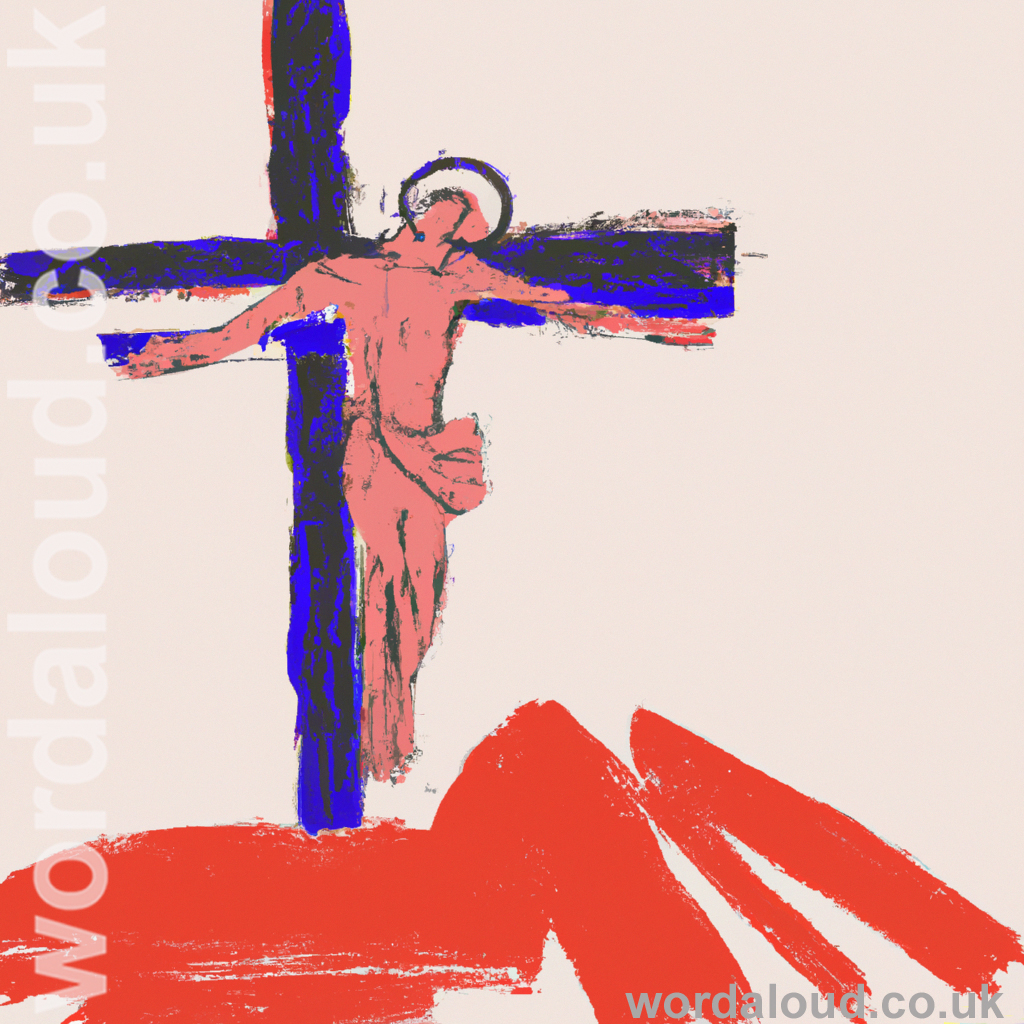
Saint Ambrose of Milan (c. 340–397), one of the Latin Fathers of the Church, offers in this commentary a theological reflection on Psalm 49(48), where it is written: ‘Brother cannot redeem brother, nor give to God a ransom for him’ (Ps 49:7). Ambrose interprets this in light of Christ’s unique role as Redeemer, contrasting human limitation with divine sufficiency [ … ]
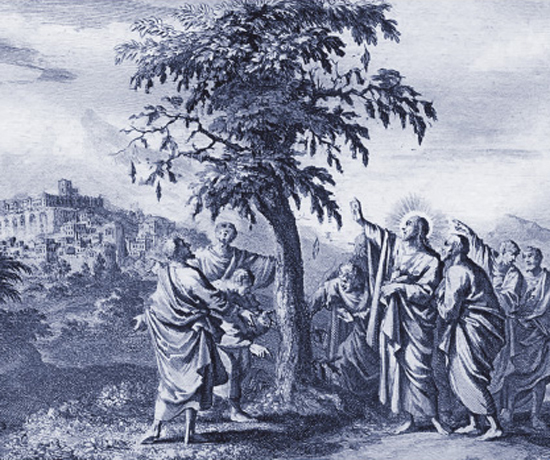
Just as Jesus’ listeners know how to interpret signs in nature, the trees beginning to bud and shoot new leaves as they come to life in spring, so Jesus tells them that, when they see and experience the upheavals described by Jesus in our Gospel verses of the past few days, they will know that the Kingdom of God is near [ … ]
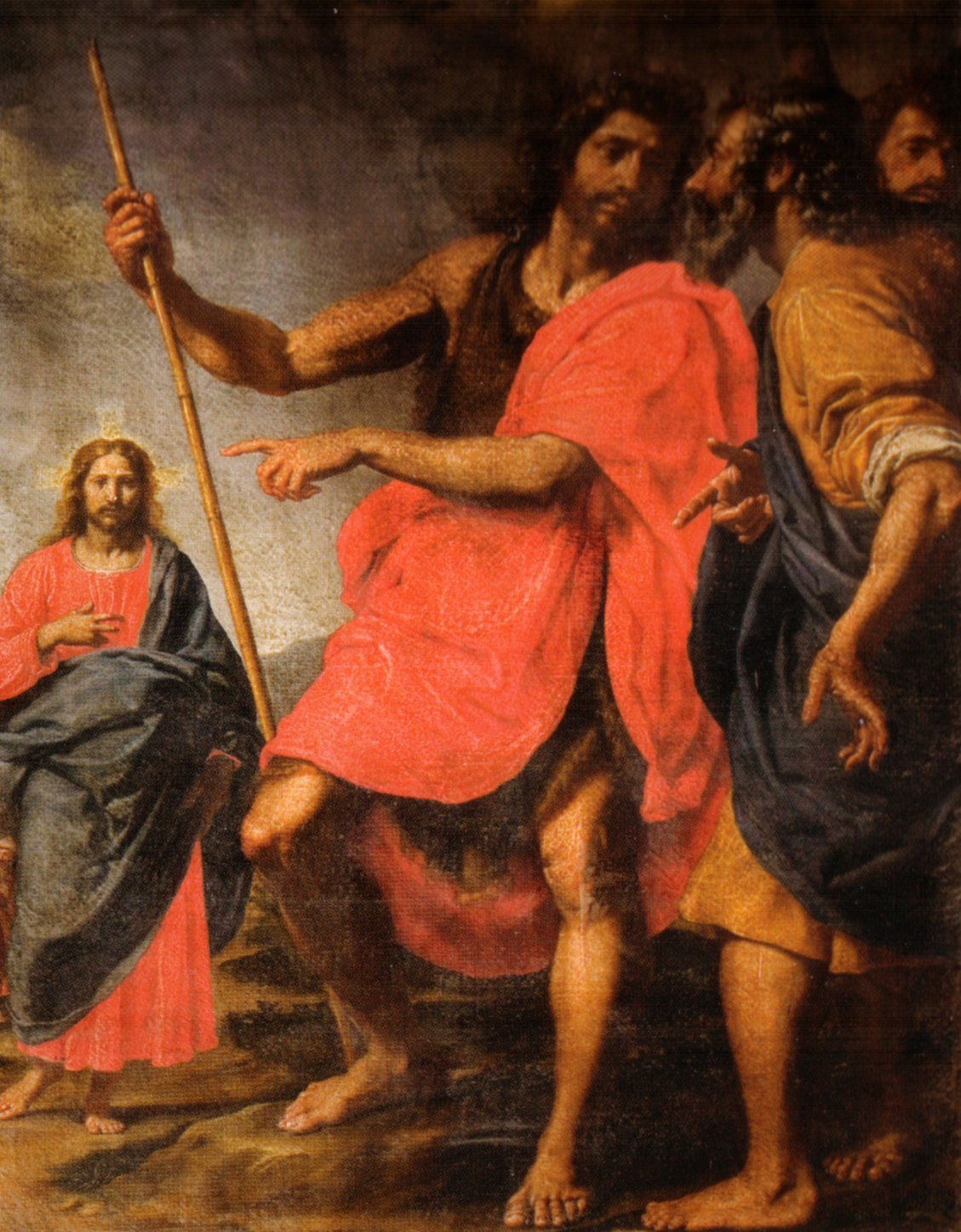
The first two disciples called by Jesus are disciples of John the Baptist. It is he who looks to Jesus and directs his disciples to look and so behold the Lamb of God. They are sent by John, through being told by him to recognize Jesus. John shows them the way to Jesus – as ‘the voice of one crying in the wilderness, Make straight the way of the Lord.’ [ … ]