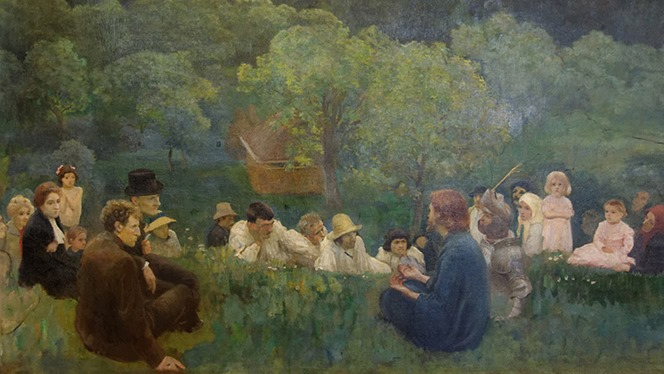
Christian Art | Jesus Preaching In Nazareth
Luke 4: 16-30 – Week 22 Ordinary Time, Monday (Audio Bible KJV, Spoken Word)
16 ¶ And he came to Nazareth, where he had been brought up: and, as his custom was, he went into the synagogue on the sabbath day, and stood up for to read.
17 And there was delivered unto him the book of the prophet Esaias. And when he had opened the book, he found the place where it was written,
18 The Spirit of the Lord is upon me, because he hath anointed me to preach the gospel to the poor; he hath sent me to heal the brokenhearted, to preach deliverance to the captives, and recovering of sight to the blind, to set at liberty them that are bruised,
19 To preach the acceptable year of the Lord.
20 And he closed the book, and he gave it again to the minister, and sat down. And the eyes of all them that were in the synagogue were fastened on him.
21 And he began to say unto them, This day is this scripture fulfilled in your ears.
22 And all bare him witness, and wondered at the gracious words which proceeded out of his mouth. And they said, Is not this Joseph’s son?
23 And he said unto them, Ye will surely say unto me this proverb, Physician, heal thyself: whatsoever we have heard done in Capernaum, do also here in thy country.
24 And he said, Verily I say unto you, No prophet is accepted in his own country.
25 But I tell you of a truth, many widows were in Israel in the days of Elias, when the heaven was shut up three years and six months, when great famine was throughout all the land;
26 But unto none of them was Elias sent, save unto Sarepta, a city of Sidon, unto a woman that was a widow.
27 And many lepers were in Israel in the time of Eliseus the prophet; and none of them was cleansed, saving Naaman the Syrian.
28 And all they in the synagogue, when they heard these things, were filled with wrath,
29 And rose up, and thrust him out of the city, and led him unto the brow of the hill whereon their city was built, that they might cast him down headlong.
30 But he passing through the midst of them went his way.
The three synoptic Gospels tell us of this episode of Jesus’ life, when he returned home to Nazareth and preached in the synagogue there. Luke’s Gospel gives us the text of Isaiah read by Jesus, in which Jesus’ announces his messianic mission – to bring the good news to the poor, to live and to identify with the poor, to heal us and set us at liberty from sin. As Jesus closes the book, he omits the following from Isaiah 61: 2: ‘…and the day of vengeance of our God.’ This is deliberate interruption. Jesus is not come to maintain old enmities. Jesus’ way is peace. It is the people of all the world who are to be blessed in Christ.
Jesus announces himself as the fulfilment of the prophecy. What follows may seem curious in Luke: ‘And all bare him witness, and wondered at the gracious words which proceeded out of his mouth.’ All speak well of Jesus. The people’s response is wonder. As they ask, ‘Is not this Joseph’s son?’ we may feel we empathize with this question, and see it as being of a piece with the wonder. Jesus’ next words might then seem very strange.
If we look to Matthew’s and Mark’s Gospels, we find slightly different accounts of this episode, which might help us to understand why Jesus speaks as he does. Matthew writes (Matthew 13):
54 And when he was come into his own country, he taught them in their synagogue, insomuch that they were astonished, and said, Whence hath this man this wisdom, and these mighty works?
55 Is not this the carpenter’s son? is not his mother called Mary? and his brethren, James, and Joses, and Simon, and Judas?
56 And his sisters, are they not all with us? Whence then hath this man all these things?
57 And they were offended in him.
We find, then, that wonder is here become astonishment, and the question, ‘Is not this Joseph’s son?’ is elaborated in order to seek to locate Jesus firmly and precisely within the known community, this very location within the known community thereby becoming a denial of Jesus and all he truly is, which utterly transcends what these people can know. This comes as a denial, on the part of the people, of the possibility of freedom, completion, redemption within the community. There is a denial of the potential for Jesus to be here, for absolute good to be realised and discovered within this community. It is as if we were to say: I know you, I know who and what you are, therefore I cannot see Jesus in you. This does not sound like a loving place we might want to be in.
Jesus speaks against those people of Nazareth now in the synagogue. He sees that the people of Nazareth will demand miracles too, this to satisfy their vanity, not to convert them and draw them closer to God. Jesus reproaches the people, speaking of the Old Testament prophets, who were sent by God not to the people of Israel but to foreigners. Jesus reminds the people of the hardness of heart so often evident in the history of the people of Israel, as they turned away from God, sinful, disobedient, hopelessly in error. The crowd now has that same hardness of heart, lacking in faith and humility, in love of God, and this in the synagogue, where they should praise God and not their own pride above all. The people’s anger is so extreme that they seek to kill Jesus. Jesus mysteriously passes through them – his time is not yet – leaving the people to their hatred and their drawing away.
Concluding Prayer
O Lord, you will not withhold
your compassion from me.
Your merciful love and your truth
will always guard me.
For I am beset with evils
too many to be counted.
My sins have fallen upon me
and my sight fails me.
They are more than the hairs of my head
and my heart sinks.
O Lord, come to my rescue,
Lord, come to my aid. (Psalm 39/40)
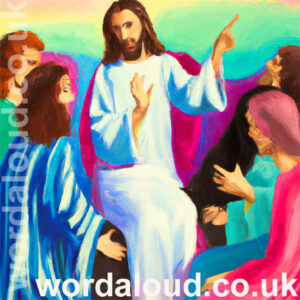




George Herbert’s ‘Love Built a Stately House’ is an allegorical poem exploring themes of divine grace, human fallibility, and spiritual struggle between sin and redemption. The poem uses the metaphor of a grand house to represent the soul and its vulnerability to the forces of Fortune, Pleasure, Sin, and ultimately, divine restoration through Love and Grace [ … ]

In the poem, Herbert describes an altar made of a broken heart, cemented with tears. This suggests that the altar is not a physical structure but a symbol of the poet’s contrite and humble heart, offered to God. The act of constructing this altar signifies repentance and a desire for spiritual renewal [ … ]
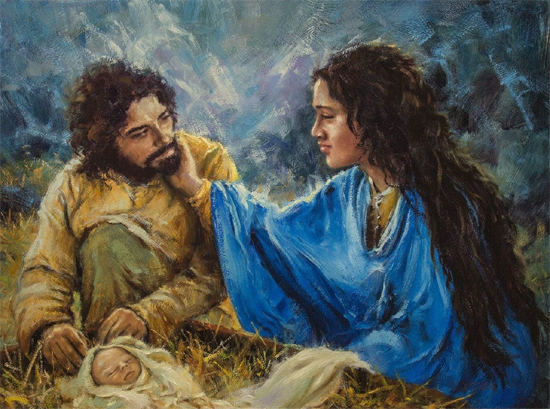
As Christians, we celebrate the birth of Jesus on Christmas Day, observed on December 25th each year. While the date of Jesus’ birth is not known, and is not in the Bible, the celebration of Christmas Day on December 25th has been a tradition since at least the 4th century. It is thought that the early Christian church may have chosen this date in order to co-opt the celebrations of the winter solstice and other pre-Christian holidays that were observed around this time of year [ … ]