Office Of Readings | Thursday, Lent Week 2 | Commentary Of Saint Hilary On The Psalms
‘Concerning the true fear of the Lord.’
Saint Hilary of Poitiers
Saint Hilary of Poitiers (c. 310–367) was a bishop, theologian, and one of the most significant defenders of Nicene orthodoxy in the West during the Arian controversy. His works were instrumental in articulating a Trinitarian theology that aligned with the Council of Nicaea.
Saint Hilary’s commentary on Psalm 128 explores the meaning of the fear of the Lord, distinguishing it from common human fear. Unlike the instinctive dread that arises from danger or suffering, the fear of the Lord is something to be learned, cultivated through wisdom, obedience, and love. Saint Hilary emphasizes that Scripture does not present fear as an isolated virtue but as part of a broader journey that involves seeking wisdom, following God’s commandments, and ultimately arriving at a love that perfects fear. The fear of God, therefore, is not servile terror but a reverent disposition that shapes the believer’s entire way of life.
His reading of the Psalm is deeply Christological. Throughout his works, Saint Hilary interprets the Psalms as prefiguring Christ, and here he subtly connects the idea of walking in God’s ways to Christ’s own claim: I am the way, the truth, and the life. The many ways of the Lord—revealed in the Law, the Prophets, the Gospel, and the teachings of the Apostles—ultimately converge in Christ, through whom the believer finds the path to eternal life. By learning the fear of the Lord, one is not simply following rules but walking a path that leads to deeper communion with God.
Saint Hilary also highlights the transformative role of grace in shaping this reverence. In the Old Testament, the fear of God was linked to obedience to the Law, but in the New Covenant, it is perfected in love. The believer no longer fears as a slave but as a son or daughter, responding to God’s holiness with awe and devotion rather than mere dread of punishment. This echoes Saint Paul’s teaching that you did not receive a spirit of slavery to fall back into fear, but you received a spirit of adoption. Saint Hilary’s interpretation suggests that the fear of the Lord is not diminished in the New Covenant but elevated, taking on the form of a loving and trusting relationship with God.
This passage also reflects Saint Hilary’s broader theological concerns, particularly his opposition to Arianism. The Arians viewed Christ as a created being, subordinate to the Father, whereas Saint Hilary defended Christ’s full divinity. His emphasis on wisdom and divine instruction subtly reinforces the idea that true understanding of God comes through Christ, the eternal Word. The fear of the Lord in this context is not just ethical but doctrinal: to walk in God’s ways means to remain faithful to the true teaching about Christ.
For Saint Hilary, the journey toward fearing the Lord is also a journey toward wisdom, obedience, and ultimately love. The one who truly fears God does not live in anxiety but in blessedness, walking in the ways that lead to life.
From The Commentary Of Saint Hilary On The Psalms
Blessed are those who fear the Lord, who walk in his ways. Notice that when Scripture speaks of the fear of the Lord it does not leave the phrase in isolation, as if it were a complete summary of faith. No, many things are added to it, or are presupposed by it. From these we may learn its meaning and excellence. In the book of Proverbs Solomon tells us: If you cry out for wisdom and raise your voice for understanding, if you look for it as for silver and search for it as for treasure, then you will understand the fear of the Lord. We see here the difficult journey we must undertake before we can arrive at the fear of the Lord.
We must begin by crying out for wisdom. We must hand over to our intellect the duty of making every decision. We must look for wisdom and search for it. Then we must understand the fear of the Lord.
‘Fear’ is not to be taken in the sense that common usage gives it. Fear in this ordinary sense is the trepidation our weak humanity feels when it is afraid of suffering something it does not want to happen. We are afraid, or made afraid, because of a guilty conscience, the rights of someone more powerful, an attack from one who is stronger, sickness, encountering a wild beast, suffering evil in any form. This kind of fear is not taught: it happens because we are weak. We do not have to learn what we should fear: objects of fear bring their own terror with them.
But of the fear of the Lord this is what is written: Come, my children, listen to me, I shall teach you the fear of the Lord. The fear of the Lord has then to be learned because it can be taught. It does not lie in terror, but in something that can be taught. It does not arise from the fearfulness of our nature; it has to be acquired by obedience to the commandments, by holiness of life and by knowledge of the truth.
For us the fear of God consists wholly in love, and perfect love of God brings our fear of him to its perfection. Our love for God is entrusted with its own responsibility: to observe his counsels, to obey his laws, to trust his promises. Let us hear what Scripture says: And now, Israel, what does the Lord your God ask of you except to fear the Lord your God and walk in his ways and love him and keep his commandments with your whole heart and your whole soul, so that it may be well for you?
The ways of the Lord are many, though he is himself the way. When he speaks of himself he calls himself the way and shows us the reason why he called himself the way: No one can come to the Father except through me.
We must ask for these many ways, we must travel along these many ways, to find the one that is good. That is, we shall find the one way of eternal life through the guidance of many teachers. These ways are found in the law, in the prophets, in the gospels, in the writings of the apostles, in the different good works by which we fulfil the commandments. Blessed are those who walk these ways in the fear of the Lord.


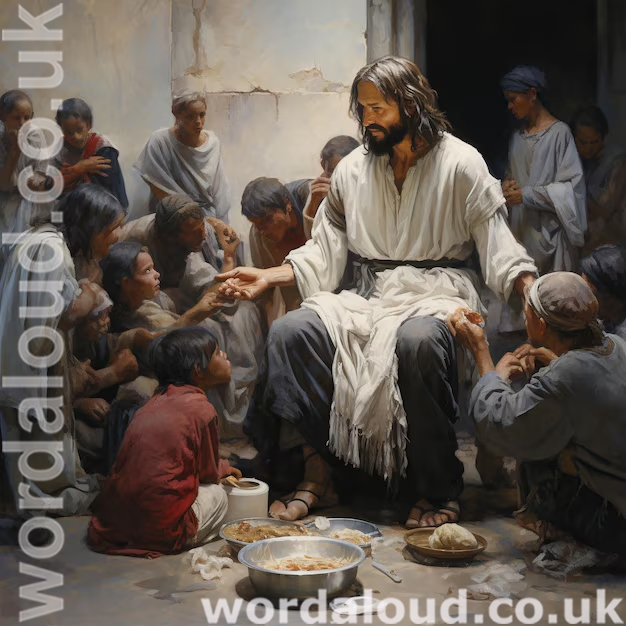
This passage from Gaudium et Spes moves from principle to application, describing the Christian obligation to promote peace through justice, solidarity, and practical service. The Council presents this not as an abstract ideal but as a concrete expression of discipleship within a world divided by inequality and conflict [ … ]
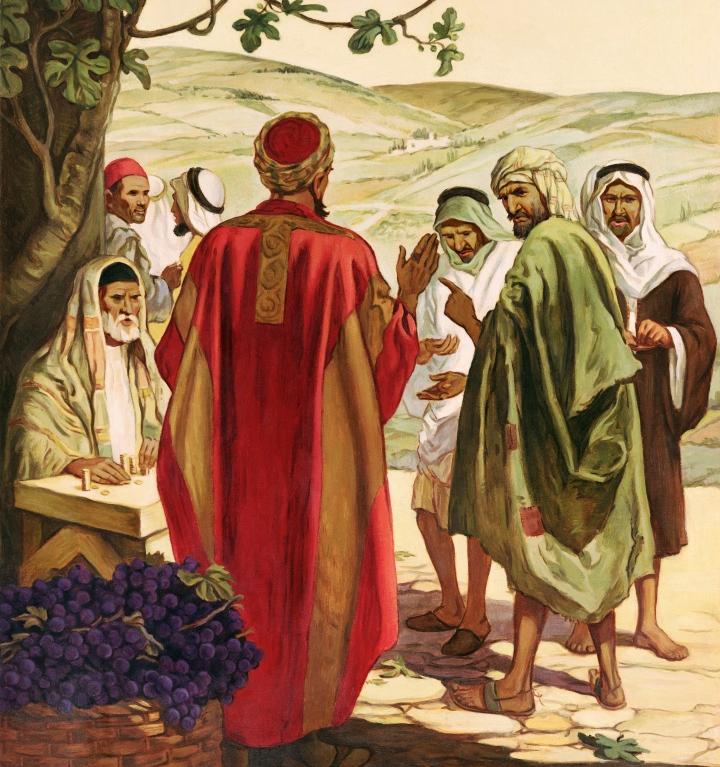
The parable of the workers in the vineyard is addressed especially to the Jewish people, who were called long ago by God to be his people. Now, through the course of the day, new labourers are hired to go into the vineyard. These are the Gentiles, non-Jewish people, who are called now to become part of the new people of God [ … ]
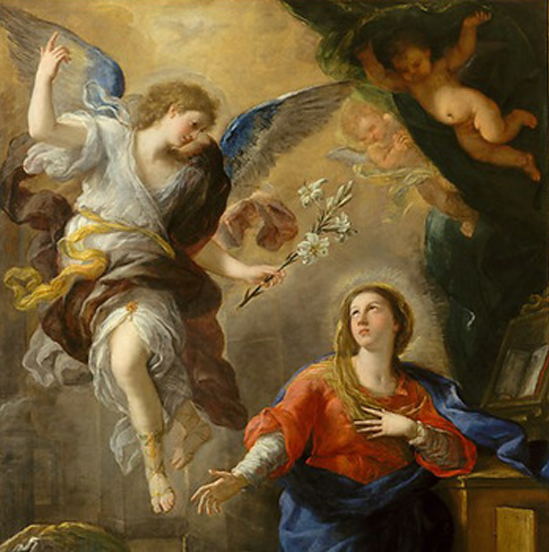
Sometimes, when I read my Bible, I pause in the reading and say to myself: ‘This bit’s real.’ It would be fair to say, I have issues with Mary, because, contrary to what we are taught to say, Mary isn’t my mother. Rather: Mum is. One bit of the Bible-text says this: And when his family heard it, they went out to seize him, for people were saying, “He is beside himself.” … And his mother and his brothers came; and standing outside they sent to him and called him. And a crowd was sitting about him; and they said to him, “Your mother and your brothers are outside, asking for you.” And he replied, “Who are my mother and my brothers?” And looking around on those who sat about him, he said, “Here are my mother and my brothers! Whoever does the will of God is my brother, and sister, and mother.” (Mark 3: 21; 31-35.) Here she comes. She is in considerable distress. I can imagine that. I can relate to that. To save her boy from whatever he’s got himself into this time. And you’re not telling me there isn’t something inside that. Her boy is beside himself. Radical. Radicalized. Radicalizing. A misunderstood word. /ˈradɪk(ə)l/ adjective & noun. 1 Forming the root, basis, or foundation; original, primary. 2a Inherent in the nature of a thing or person; fundamental. b Of action, change, an idea: going to the root or origin; far-reaching, thorough. c Advocating thorough or far-reaching change. d Characterized by departure from tradition; progressive; unorthodox. ‘He has a demon! And he is mad!’ – thus ‘the Jews’. (e.g. John 10: 20.) Come home! It’s all she wants. His family want him back now. But it is an exclusive cult: there is an inside and there is an outside; and on the outside, they are not meant to understand, lest they be converted. He has defined himself as different from anything she was. Only at the end does Jesus say to his Mum – and with savage, bitter irony: ‘Woman, behold your son.’ And then he dies. Hail Mary, full of grace, the Lord is with thee. Blessed art thou among women and blessed is the fruit of thy womb Jesus. Holy Mary, Mother of God, pray for us sinners now and at the hour of our death. We ask that we might find Mary in our hearts as a Yes! place for Jesus. It is also recommended that we pray to Jesus that we may be further in oneness with Mary. It is self-emptying, such that we only exist insofar as we are responsive to God’s Word. * Last term, and put-out to pasture, the old Archbishop Emeritus came over to stay for a few days and did the odd class with us. He spoke of Yes! as the meaning of Mary’s virginity. And we were not very nice about him. One or two took umbrage. One or two got the hump. In a sense, his Grace, the Arch, basically wanted to move anyone he’d ever known from a high-place – a mountain – received theological ‘truth’ – to an imminent, human plane. Earthing the spiritual. Recalibrating metrics of life’s believability toward a spiritual sense of things. He might have asked the impermissible question: what happened? His Grace described it. God’s love as a cloud. This descended upon Mary – and subsumed her. Within the cloud, Mary capitulated utterly. She became only and purely a response to God’s love. As he spoke, the Arch cradled her. He carried her in his lap – in his hands. His Grace was a consecrated bishop. He was faith. He sat squat, a rounded man, hands cupped and ankles crossed, fingers interlocked, with parted thighs. Rumpled, washed, speckled. A lifetime’s skin… There could be no doubt His Grace spoke through long-term personal relationship with Mary. It was Julian went for him: ‘So are you saying Mary was a Virgin? Or are you not saying Mary was a Virgin?’ Nasty. No, it wasn’t pretty. Julian twisting his silver ring. For a moment, what Julian had said to the Arch simply failed to communicate. No, for a moment, that dumped on the air meant nothing. Then His Grace said: ‘There is a range of possible meanings we may understand in the question of Mary’s virginity. For example, there are understandings of the word virginity entailed in the action of giving birth.’ Julian said: ‘Duh! So had she had sex or hadn’t she?’ Trigger words. No, it wasn’t pretty. On that went for a little while. At length, Julian’s point seemed reluctantly conceded. Then the Arch told us a new story, an additionally human event, the more to baffle us. Controversially, he told us that Mary could not have been Joseph’s first wife, for this would not have been the way of things in the society of that time. His belief was that Joseph must have taken Mary into his household through pity. That would be normal, he said, for Joseph to bring a young, vulnerable girl, who is about to have a baby, within his protection, not meaning to enjoy with her marital relations, but through kindness. ‘And this story of the inn and stable,’ the Archbishop said, ‘it can’t have been like that really. Joseph has travelled with Mary to stay with his family, at home in Bethlehem, and they don’t want Mary in their house, for reasons which I am sure we can understand. It must have been there was considerable resistance to Mary. But Mary gives birth, and who can resist a baby? That’s what happened. It must have been. ‘I’m convinced that must have been how it happened really.’ Later that term, toward the beginning of Advent, we met boys who had been here before, in Valladolid, and now were in regular seminary. They had heard and recited verbatim all the Archbishop had said to them. Their spot-on impressions of each of the fathers were scathing. […]