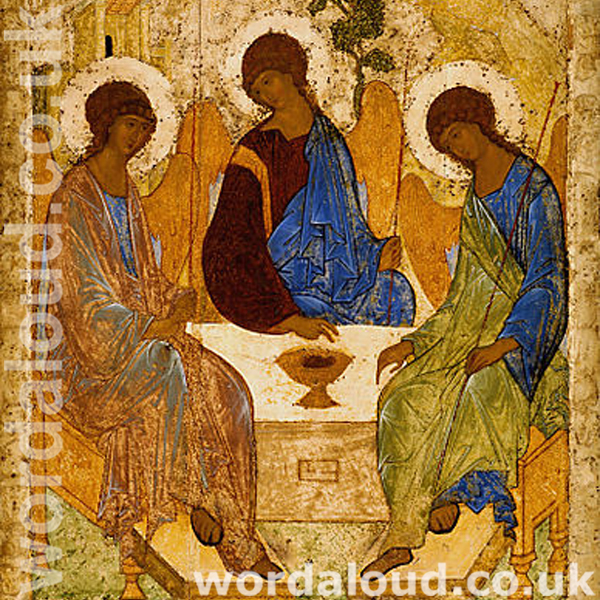
Christian Art | Trinity | Love Revealed By Jesus Christ
Office Of Readings | Week 4, Monday, Ordinary Time | A Reading From The Discourse Of Saint Hilary Of Poitiers On The Psalms | The Company Of Those Who Believed Were Of One Heart And Soul
‘The hearts and minds of all believers were one.’
In this reading from his commentary on the Psalms, Saint Hilary of Poitiers reflects on the meaning of unity within the Church, drawing from Psalm 133 (Vg. 132) and from the life of the early Christian community. Unity is presented not as uniformity, but as a shared purpose rooted in faith and love.
Hilary begins by explaining why it is both ‘good and pleasant’ for brothers to dwell in unity. Unity creates the Church as an assembly, not merely as a gathering of individuals. The word ‘brothers’ points to a relationship formed by common intention and affection, rather than by natural ties alone. The Church comes into being where hearts and minds are aligned in faith.
Hilary then recalls the description from the Acts of the Apostles, where the first believers were said to be of one heart and one mind. This becomes the model for the people of God. Hilary presents the Church as a family under one Father, animated by one Spirit, living together as members of one body. Unity is therefore theological before it is social: it arises from participation in the life of God.
To deepen this teaching, Hilary turns to the image of Aaron’s anointing. The oil poured on Aaron’s head symbolised priestly consecration and divine choice. Hilary understands this anointing as a figure pointing beyond itself, towards Christ and the Church. The oil is not political or worldly, like the oil used to anoint kings, but spiritual, described as the ‘oil of gladness’.
This anointing, Hilary explains, has different effects depending on how it is received. When it meets an unclean heart, it brings judgment; when it is received in love, it produces harmony and a pleasing fragrance. He links this to Paul’s image of Christians as the fragrance of Christ, suggesting that unity makes the life of the Church pleasing to God.
The final image concerns the oil flowing from Aaron’s head to his beard. Hilary interprets the beard as a sign of maturity. Unity in the Church requires growth beyond spiritual infancy. While Christians are called to innocence in relation to evil, they are also called to maturity in understanding and faith. Drawing again on Paul, Hilary warns against remaining dependent on ‘milk’ rather than progressing to solid food.
A Reading From The Discourse Of Saint Hilary Of Poitiers On The Psalms | The Company Of Those Who Believed Were Of One Heart And Soul
Behold, how good and pleasant it is for brothers to dwell in unity. It is good and pleasant for brothers to dwell in unity, because when they do so their association creates the assembly of the Church. The term ‘brothers’ describes the bond of affection arising from their singleness of purpose.
We read that when the apostles first preached, the chief instruction they gave lay in this saying: The hearts and minds of all believers were one. So it is fitting for the people of God to be brothers under one Father, to be united under one Spirit, to live in harmony under one roof, to be limbs of one body.
It is pleasant and good for brothers to dwell in unity. The prophet suggested a comparison for this good and pleasant activity when he said: It is like the ointment on the head which ran down over the beard of Aaron, down upon the collar of his garment. Aaron’s oil was made of the perfumes used to anoint a priest. It was God’s decision that his priest should have this consecration first, and that our Lord too should be anointed, but not visibly, by those who are joined with him. Aaron’s anointing did not belong to this world; it was not done with the horn used for kings, but with the oil of gladness. So afterward Aaron was called the anointed one as the Law prescribed.
When this oil is poured out upon men of unclean heart, it snuffs out their lives, but when it is received as an anointing of love, it exudes the sweet odor of harmony with God. As Paul says, we are the goodly fragrance of Christ. So just as it is pleasing to God when Aaron was anointed priest with this oil, so it is good and pleasant for brothers to dwell in unity.
Now the oil ran down from his head to his beard. A beard adorns a man of mature years. We must not be children before Christ except in the restricted scriptural sense of being children in wickedness but not in our way of thinking. Now Paul calls all who lack faith, children, because they are too weak to take solid food and still need milk. As he says: I fed you with milk rather than the solid food for which you were not yet ready; and you are still not ready.
Christian Prayer With Jesus Christ
God of unity and peace,
you call your people to be of one heart and one mind.
Pour out upon us the oil of gladness,
that we may live in harmony with you and with one another.
Cleanse our hearts from division and pride,
and deepen in us a shared love for your truth.
Help us to grow to maturity in faith,
no longer content with what is partial or shallow.
May your Spirit bind us together
as members of one body,
so that our life together
may be pleasing in your sight.
Through Jesus Christ our Lord.
Amen
Glossary Of Christian Terms
Unity | Shared faith, purpose, and love within the Church
Brothers | Believers bound together by faith rather than by blood
Assembly of the Church | The gathered community of believers
One heart and mind | Complete agreement in faith and intention
Anointing | A sign of being chosen and consecrated by God
Oil of gladness | A symbol of spiritual joy and divine favour
Aaron | The first high priest of Israel
Fragrance of Christ | The spiritual witness of believers’ lives
Maturity | Growth in understanding and faith
Spiritual infancy | An early stage of faith needing further growth
Milk and solid food | Images used by Paul to describe stages of spiritual development
Harmony | Right relationship among believers and with God



The purification rituals of the Jews were originally laid down, in Exodus, for the priests to perform before they offered sacrifices to God. These rules were then later extended to all Jews, to be performed before every meal. This was as there developed a greater and greater call for all Jews to be a priestly people, particularly in the light of national set-backs, which were ascribed to infidelities to God [ … ]
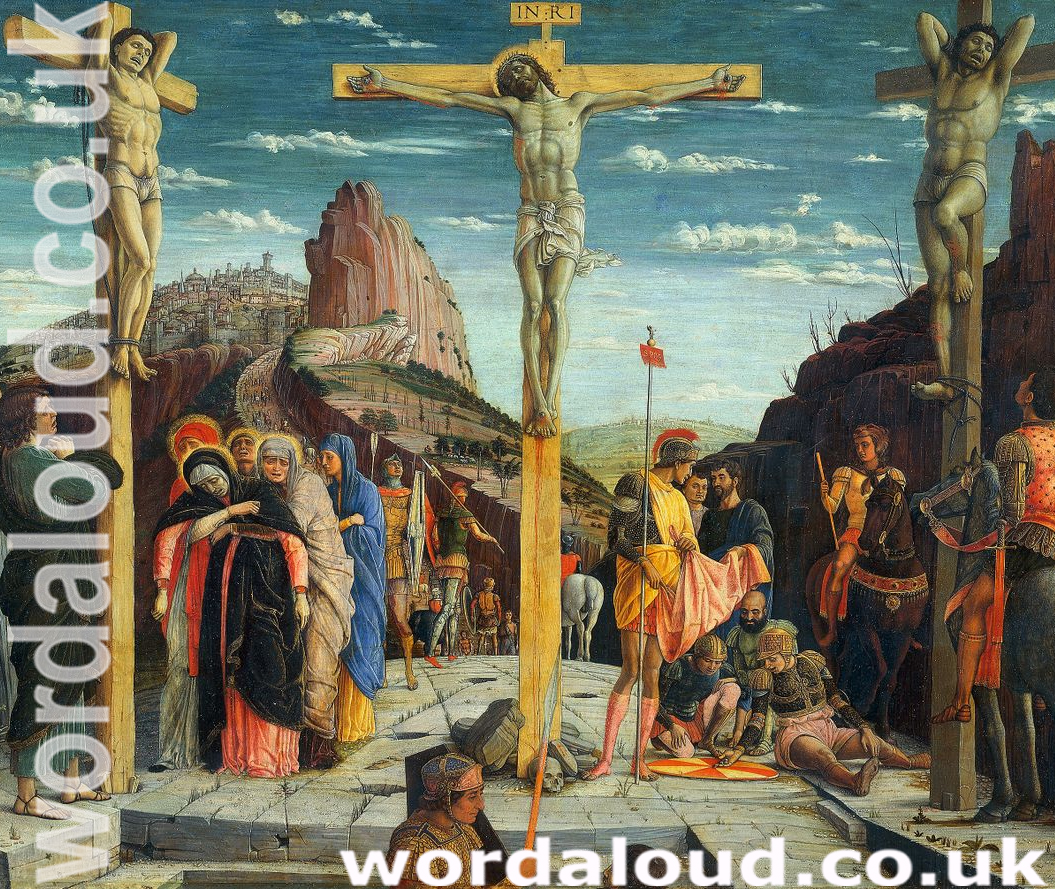
Christian Art | Our Lord Jesus On The Cross | God The Father | God The Son Office Of Readings | Advent December 23rd | A Reading From The Treatise Of Saint Hippolytus Against The Heresy Of Noetus | The Hidden Sacrament Is Revealed ‘The hidden sacrament is revealed.’ In this reading, Saint Hippolytus writes against the Noetic heresy, which denied the real distinction between the Father and the Son by treating them as the same person acting under different names. The purpose of Saint Hippolytus is to defend the Church’s confession of one God who is not solitary, but who exists with his Word and Spirit. Hippolytus begins by setting a principle: knowledge of God comes from the Holy Scriptures, not from speculation or private reasoning. Faith is not shaped by human preference but by what God has chosen to reveal. The Father determines how He is believed, the Son how He is glorified, and the Spirit how He is received. This establishes Scripture as the rule of faith and guards against theological invention. Hippolytus then affirms that God existed alone before creation, with nothing co-eternal alongside Him. At the same time, God was not without reason, wisdom, or power. Hippolytus insists that plurality within God does not compromise divine unity. God contains within himself Word, wisdom, and counsel. Creation begins when God wills and manifests His Word. The Word is not created from nothing but proceeds from God and acts as the agent of creation. The Word is first invisible to the created world, though known to God. When God chooses, He makes the Word visible, described as ‘Light of Light’. This language safeguards both distinction and unity: the Word comes from God and reveals God, without being separate from Him. The manifestation of the Word is ordered towards salvation, so that the world may see and be saved. Hippolytus identifies this Word clearly with the Son of God. Through him all things were made, and he alone comes forth from the Father. The Law and the prophets belong to the same saving plan. God speaks through them by the Holy Spirit, so that they proclaim not their own ideas but the Father’s will. Revelation is therefore coherent: creation, prophecy, and incarnation belong to one divine purpose. Hippolytus appeals to the Gospel of John to show continuity between prophecy and fulfilment. The Word spoken of by the prophets is the Word made flesh. Though the world was made through him, it failed to recognise him. This failure does not negate God’s plan but reveals the depth of the mystery now disclosed. A Reading From The Treatise Of Saint Hippolytus Against The Heresy Of Noetus | The Hidden Sacrament Is Revealed There is, brethren, one God, the knowledge of whom we gain from the Holy Scriptures and from no other source. Whatever things the Holy Scriptures declare, at these let us look; and whatever they teach, let us learn it; and as the Father wills our belief to be, let us believe; and as he wills the Son to be glorified, let us glorify him; and as he wills the Holy Spirit to be bestowed, let us receive him. Not according to our own will, nor according to our own mind, nor yet storming by force the things which are given by God, but even as he has chosen to teach them by the Holy Scriptures, so let us discern them. God, subsisting alone, and having nothing coeval with himself, chose to create the world. And conceiving the world in mind, and willing and uttering the Word, he made it; and at once it appeared, formed it in the way he desired. For us it is sufficient simply to know that nothing was coeval with God. Outside him there was nothing; but he, while existing alone, yet existed in plurality. For he did not lack reason, or wisdom, or power, or counsel. All things were in him, and he was the All. At a time and in a manner chosen by him he made his Word manifest, and through his Word he made all things. He bears this Word in himself, as yet invisible to the created world. He makes him visible, uttering the voice first, and begetting him as Light of Light. He presents him to the world as its Lord; and whereas the Word was visible formerly to God alone, and invisible to the world which is made, God makes the Word visible in order that the world might see him and be able to be saved. This is the mind which came forth into the world and was manifested as the Son of God. All things came into being through him, and he alone comes from the Father. He gave us the Law and the prophets; and in giving them, he made them speak by the Holy Ghost, in order that, receiving the inspiration of the Father’s power, they might declare the Father’s counsel and will. Thus, then, was the Word made manifest, even as the blessed John says. For he sums up the things that were said by the prophets, and shows that this is the Word, by whom all things were made. In the beginning was the Word, and the Word was with God, and the Word was God. All things were made by him, and without him nothing was made. And later, The world was made by him, and the world did not know him; he came to his own, and his own did not receive him. Christian Prayer With Jesus Lord God,You are one, and from You come the Word and the Spirit.You have chosen to make Yourself known, not by human effort,but by what You have revealed in the scriptures. You spoke Your Word, and all things were made.You made that Word visible, so that the world might see and be saved.Grant that we may receive what You give,believe what You teach,and worship You as You have shown Yourself to be. Keep us […]
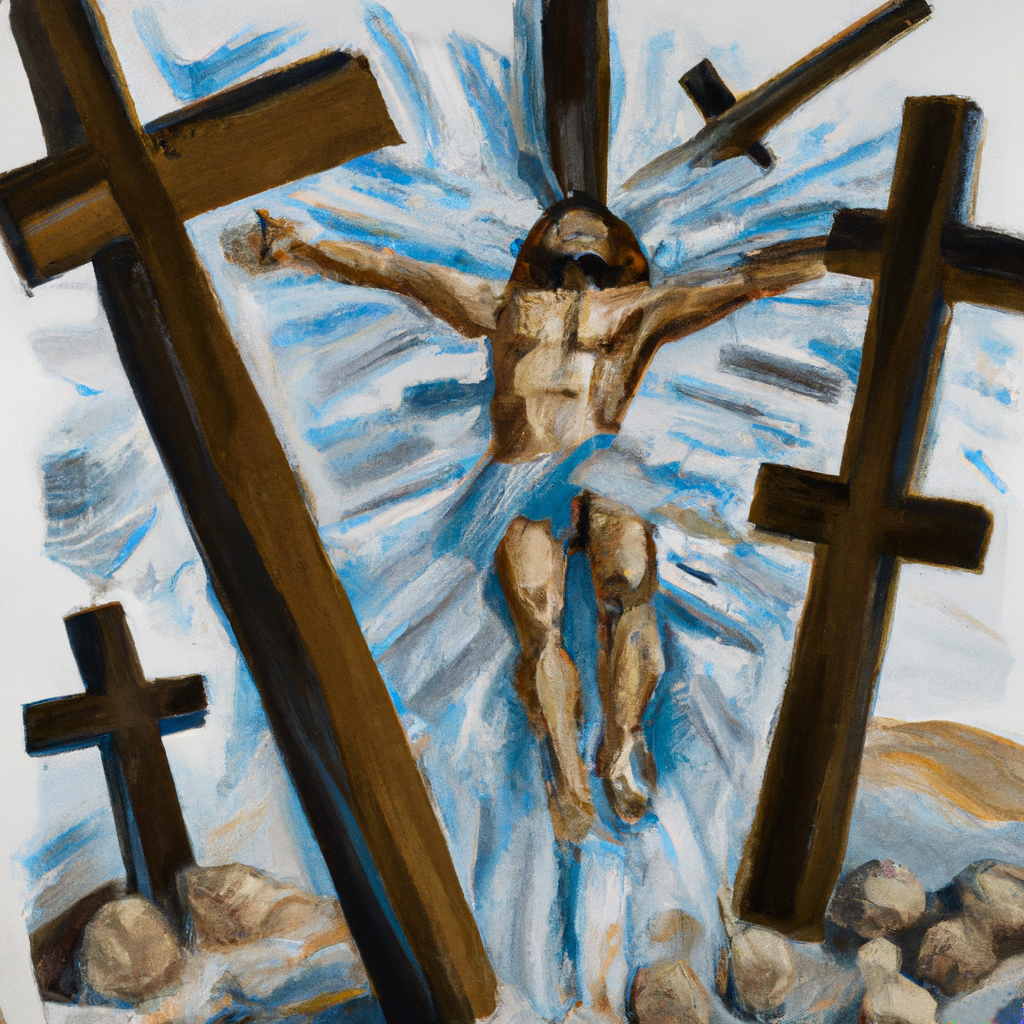
O Lord, as I begin this journey through the Stations of the Cross, I ask you to be with me and guide me. Help me to open my heart to your love and to be present to your presence in each moment. May this time of meditation deepen my understanding of your sacrifice and strengthen my faith in your redeeming power. I ask this in your holy name. Amen [ … ]